

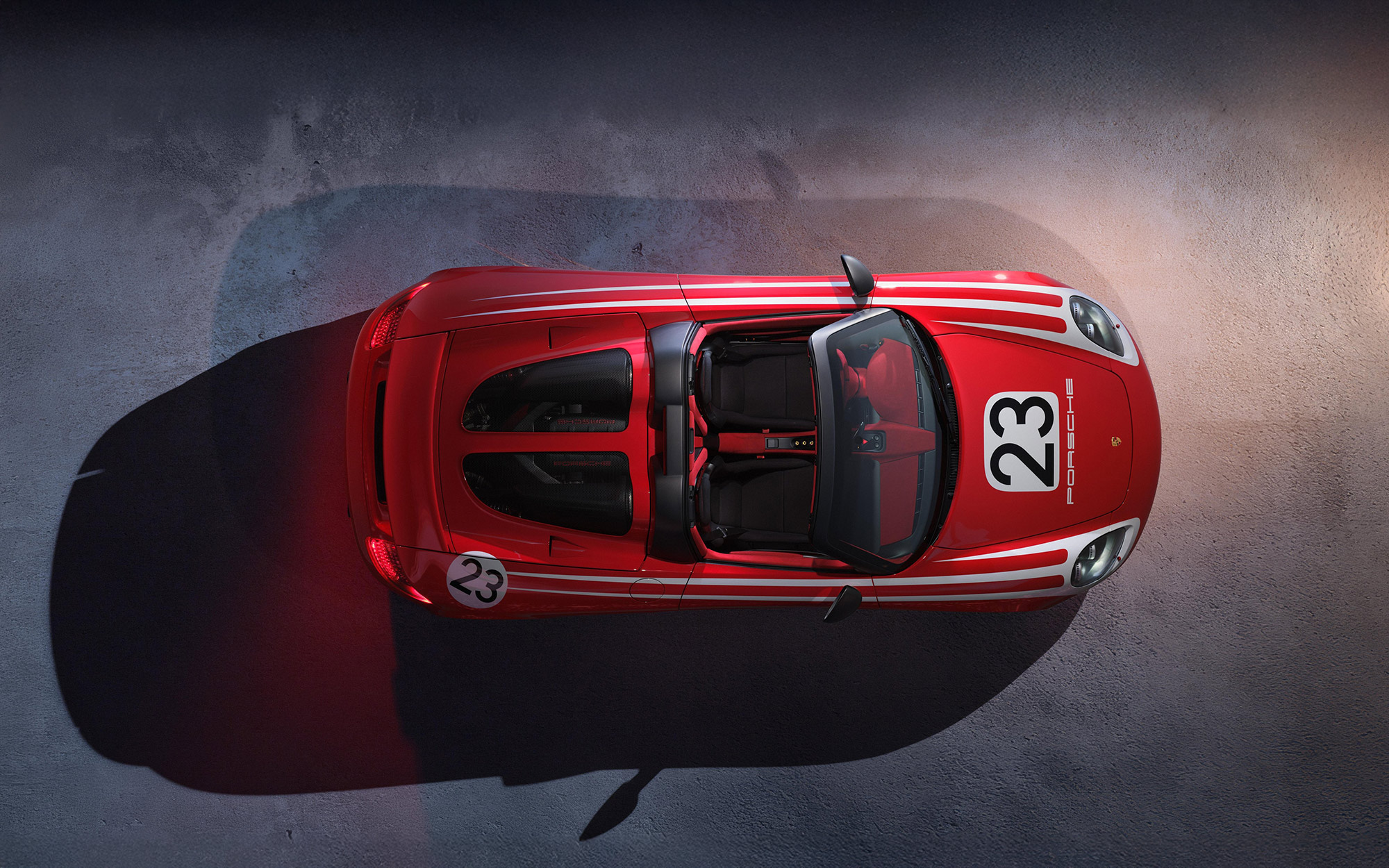

One of Porsche’s most revered modern supercars has been given a second life through the brand’s most exclusive personalization channel. As part of the Porsche Sonderwunsch program, a 2005 Carrera GT owned by Puerto Rican enthusiast Victor Gómez has been fully restored, technically renewed to as-new condition, and reimagined in a bespoke Salzburg Design livery inspired by Porsche’s first overall victory at the 24 Hours of Le Mans in 1970. The result is a Carrera GT that connects two defining eras of Porsche motorsport and road car history.

What is a “Re-Commission” from Porsche?
Factory Re-Commission is an ultra-exclusive offering within Porsche’s Sonderwunsch program, aimed at owners who want their existing vehicles comprehensively renewed by the manufacturer itself. Unlike a conventional restoration, a Factory Re-Commission involves complete disassembly of the vehicle, in-depth mechanical overhauls, and documentation that effectively returns the car to a verified zero-kilometer condition. This process is available for select modern classics and historic models and is carried out by Porsche specialists using factory methods, parts, and standards.
Beyond the technical work, Factory Re-Commission also allows for full redesigns of exterior and interior specifications. Customers work directly with Porsche designers and engineers to develop bespoke color schemes, materials, and finishes. Every idea is evaluated for feasibility and durability, approved to Porsche quality standards, and then recorded in the company archive to ensure long-term traceability of all changes made to the vehicle.
Details on this Carrera GT
Victor Gómez’s Carrera GT began life as a standard silver example from the 2005 model year. As part of its Factory Re-Commission, the car was completely stripped down, with major components including the naturally aspirated V10 engine overhauled from the ground up. Carbon fiber body panels were refinished, and the vehicle was returned to documented zero-kilometer condition before the personalization phase began.
The defining feature of the project is its Salzburg Design livery, a direct reference to the red-and-white Porsche 917 short-tail that secured Porsche’s first overall Le Mans victory in 1970, driven by Hans Herrmann and Richard Attwood. Translating that iconic design onto the Carrera GT was no small task. The geometry, proportions, and panel gaps of the mid-engined supercar differ dramatically from the long, low 917 prototype, requiring extensive design development. Sketches and renderings were followed by full-scale taping of the car to refine the flow of the graphics. Under the guidance of Porsche designer Grant Larson and his team, bespoke templates were created to ensure the historic livery worked harmoniously with the Carrera GT’s shape.
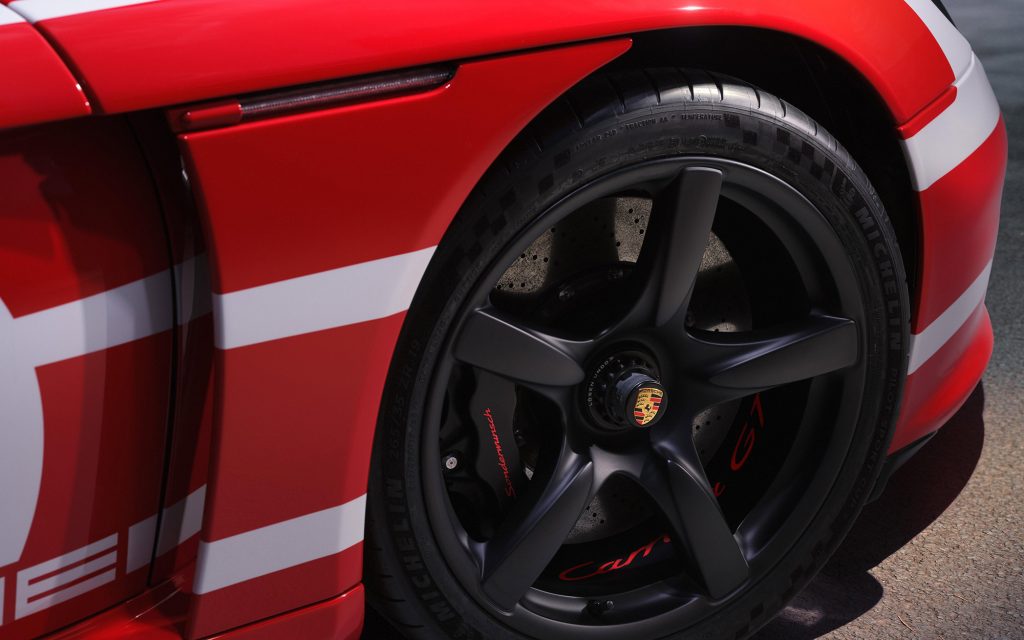
The final exterior is hand-painted in Indian Red and white, complete with the legendary number 23. A transparent protective film was applied so Gómez can drive the car on public roads, something he intends to do in his native Puerto Rico. Matte black carbon fiber elements provide contrast, appearing on the roof panels, A- and B-pillars, mirror caps, front air duct elements, and rear diffuser. The engine cover grilles are finished in matte black anodized metal, while the original five-spoke wheels are painted black and fitted with full-color Porsche crests.
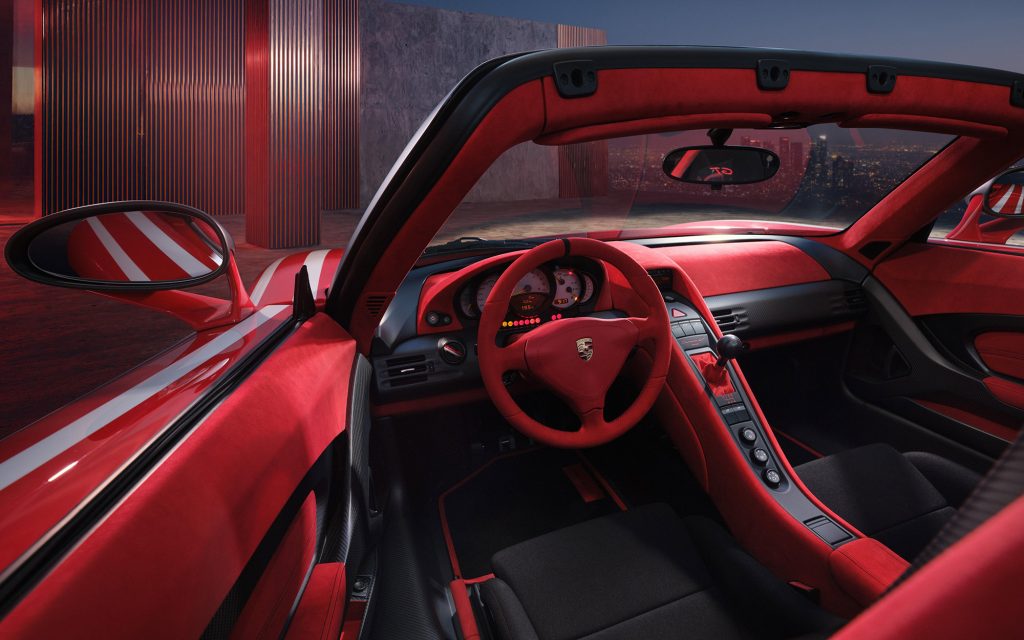
Inside, the Carrera GT is equally distinctive. Large sections of the cabin are trimmed in Alcantara finished in Indian Red, including parts of the dashboard, door panels, steering wheel rim, and center console. The material even extends to the front luggage compartment and a matching luggage set. Matte carbon fiber accents reappear on the seat shells, dashboard air vent surrounds, and instrument cover. For the seat centers, side bolsters, and headrests, Porsche selected black FIA-approved textile originally developed for the 918 Spyder, a motorsport-grade fabric that reinforces the car’s racing lineage.
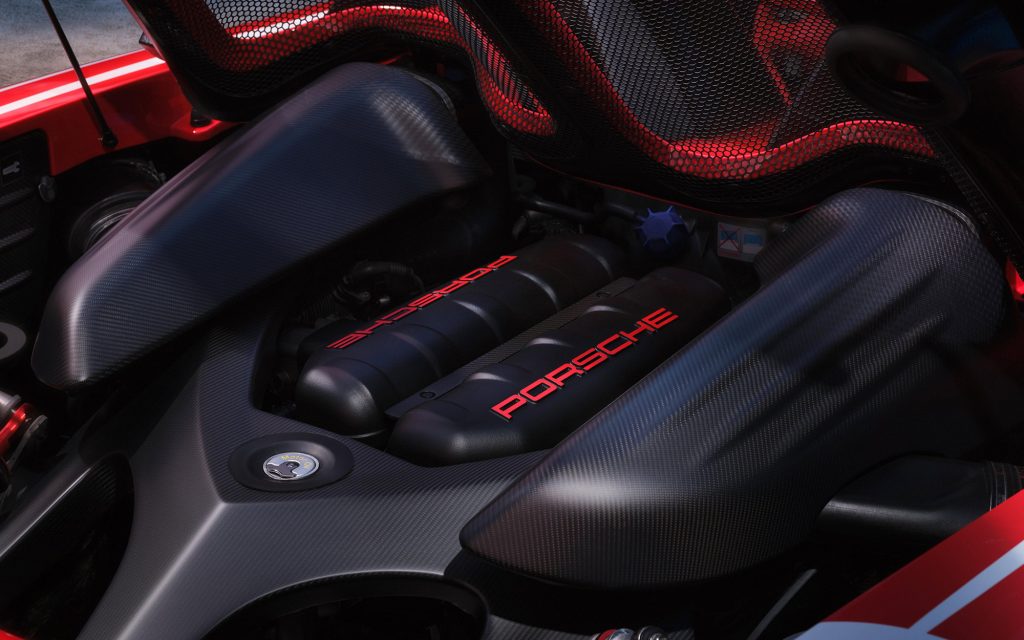
As a foundation, the Carrera GT remains one of Porsche’s most important road cars. Launched in 2003, it features a carbon fiber monocoque and a mid-mounted 5.7-liter naturally aspirated V10 originally developed for Le Mans prototype racing. Producing 612 horsepower and weighing just 1,380 kilograms, it was capable of 330 km/h and delivered a driving experience deeply rooted in endurance racing technology.
In this Factory Re-Commissioned Salzburg Design specification, Gómez’s Carrera GT becomes more than a restored supercar. It stands as a bridge between Porsche’s first Le Mans triumph and one of its most uncompromising road cars, reinterpreted through modern craftsmanship while remaining anchored in the brand’s racing heritage.