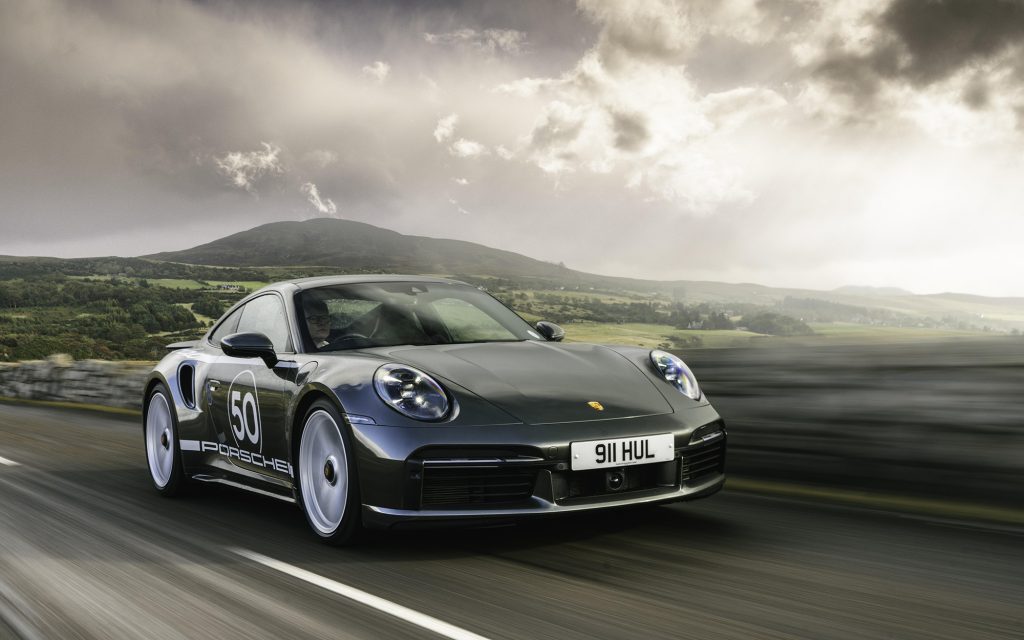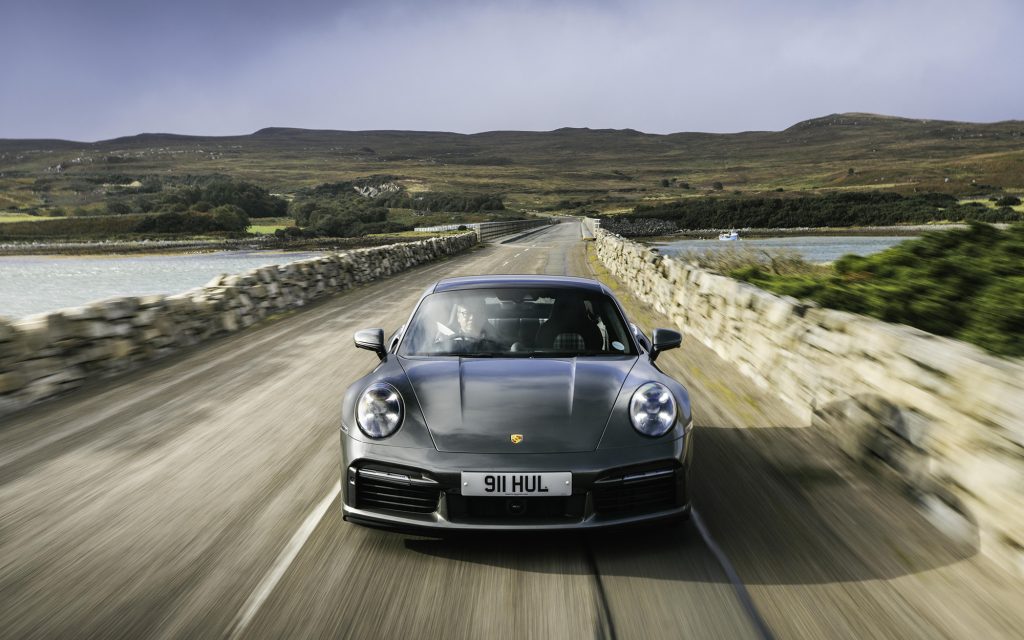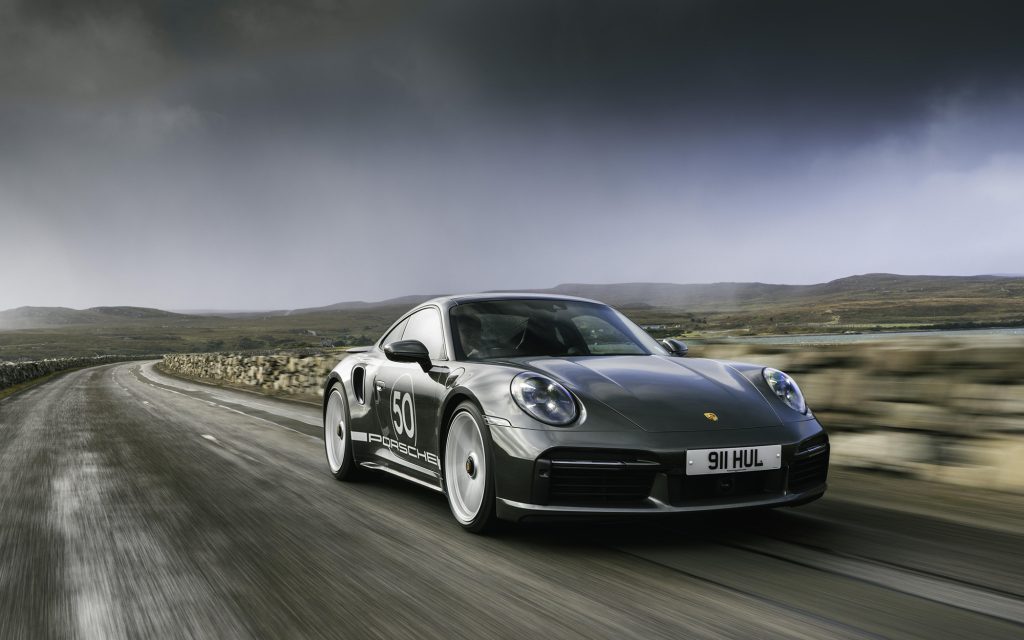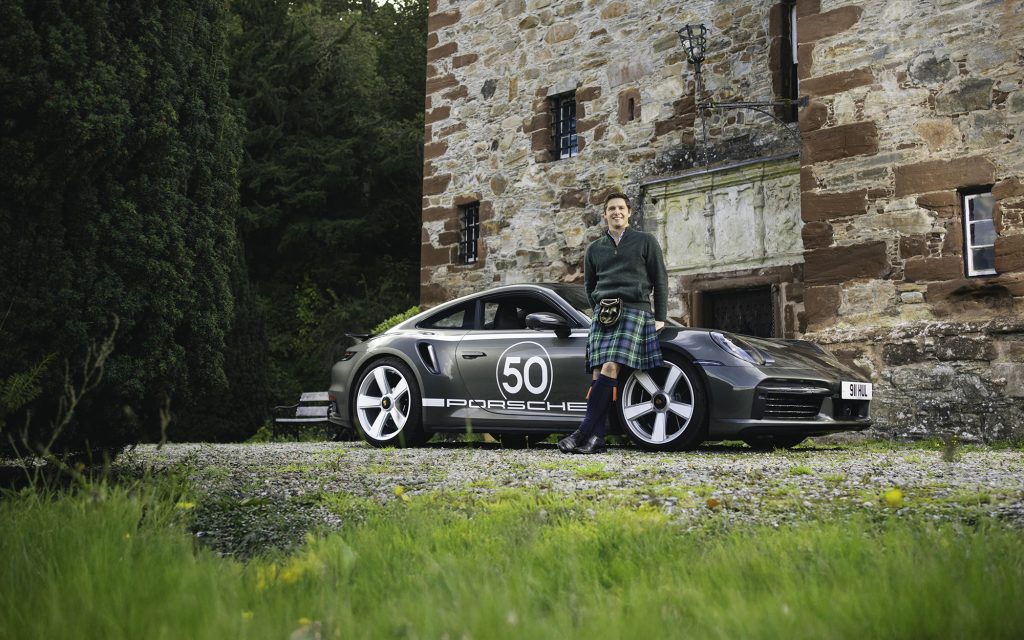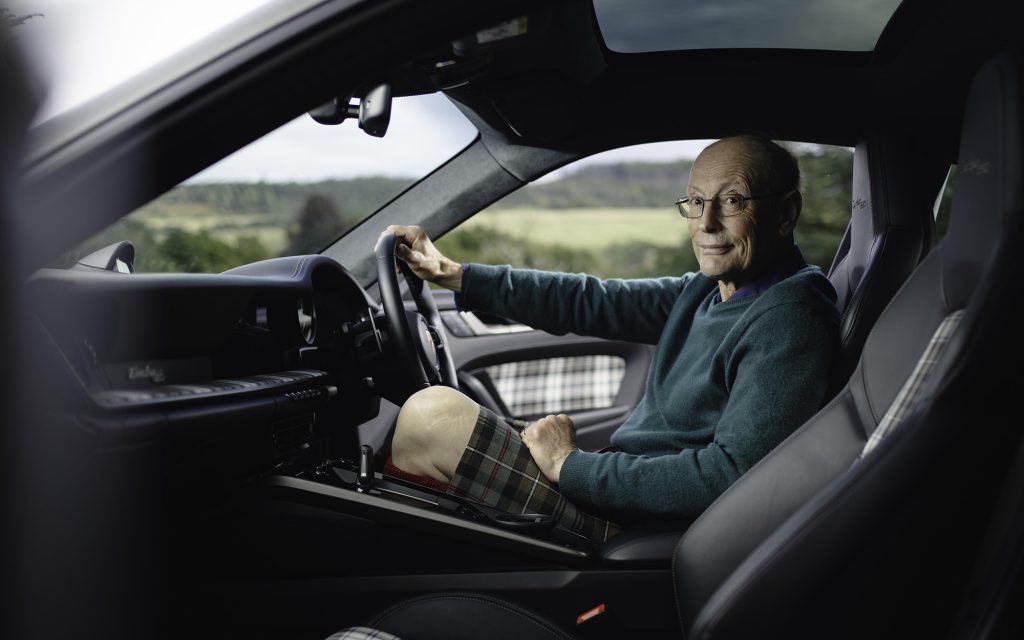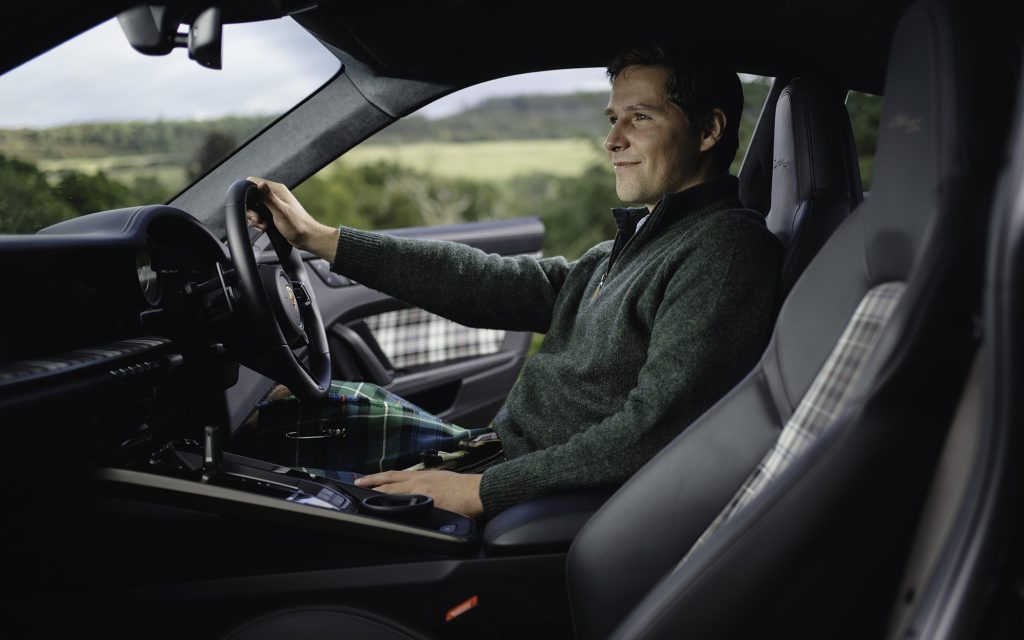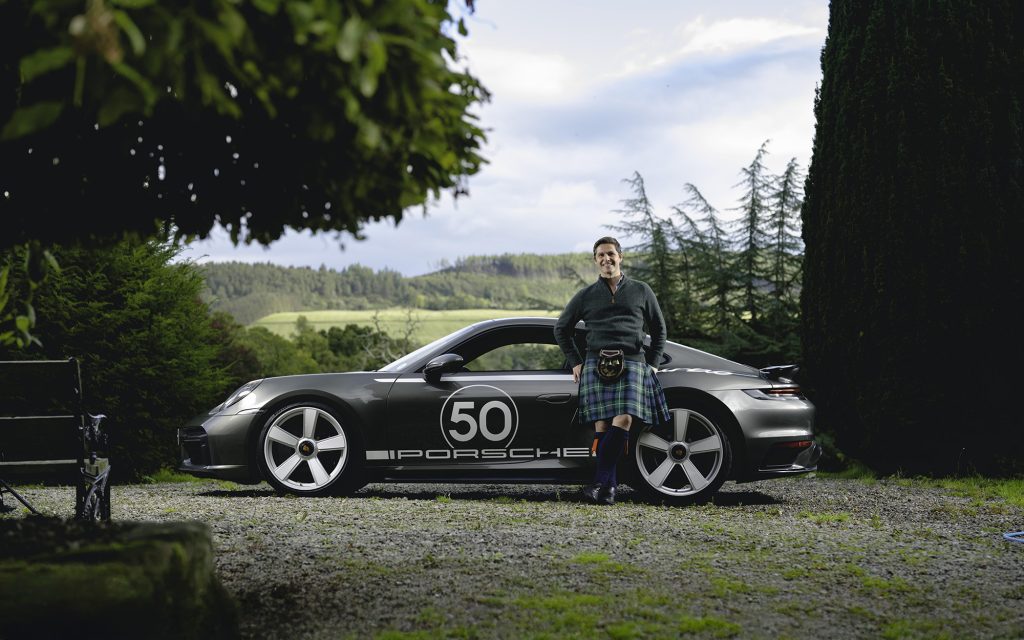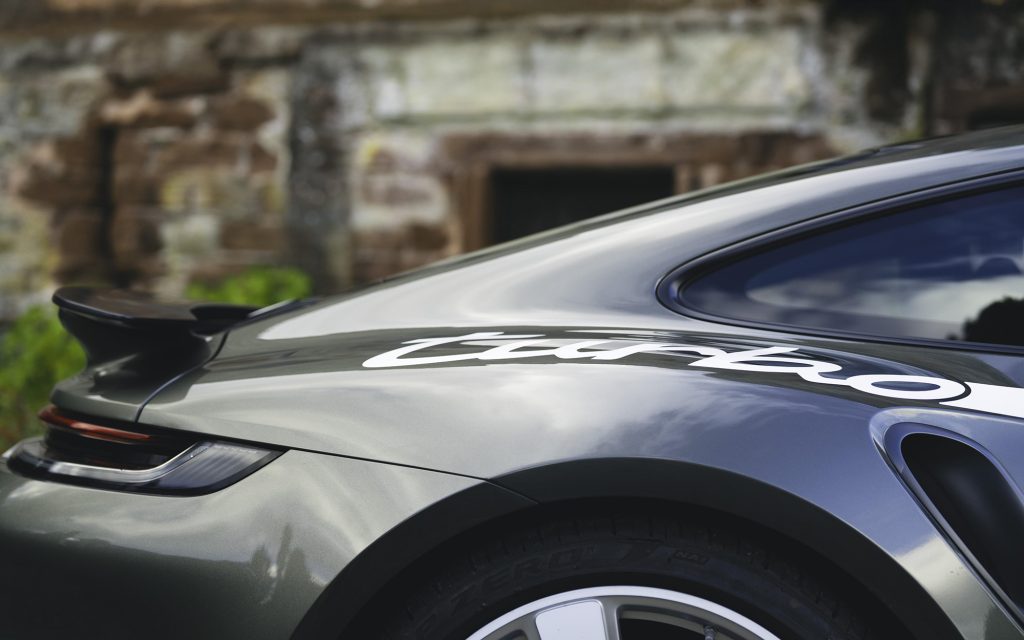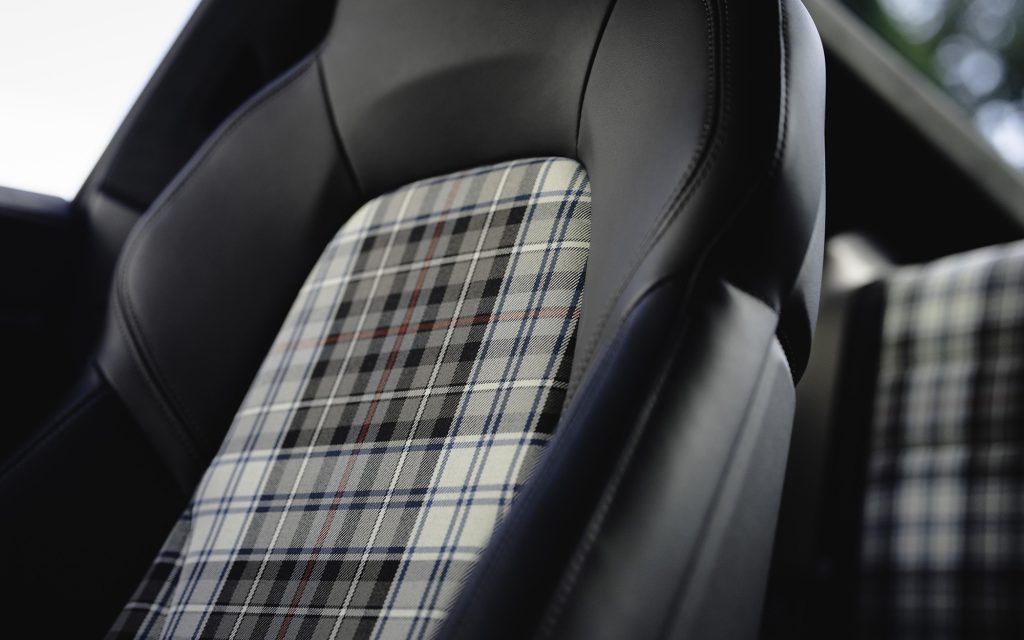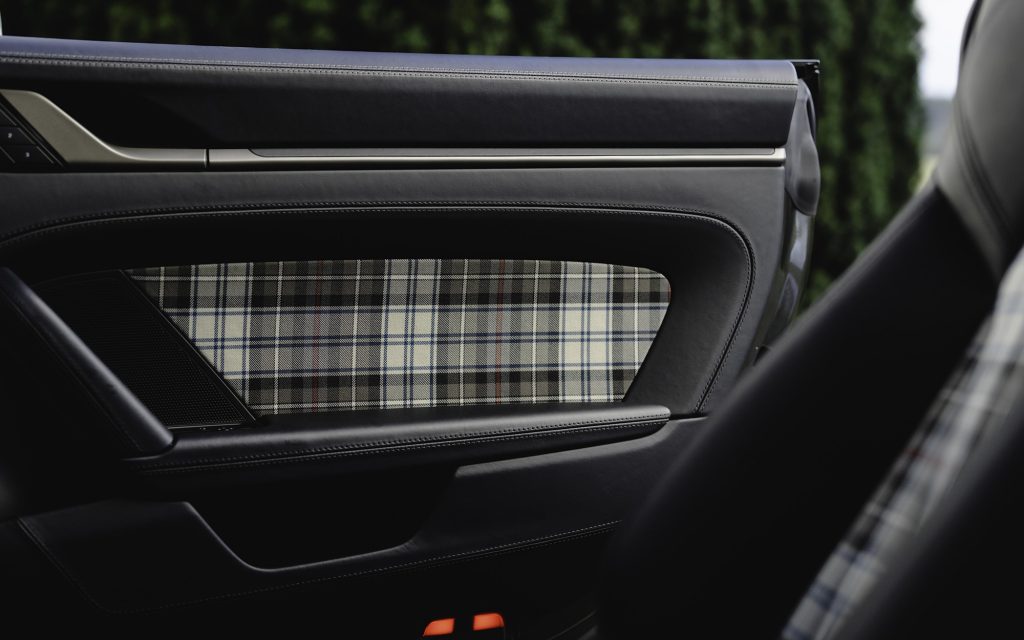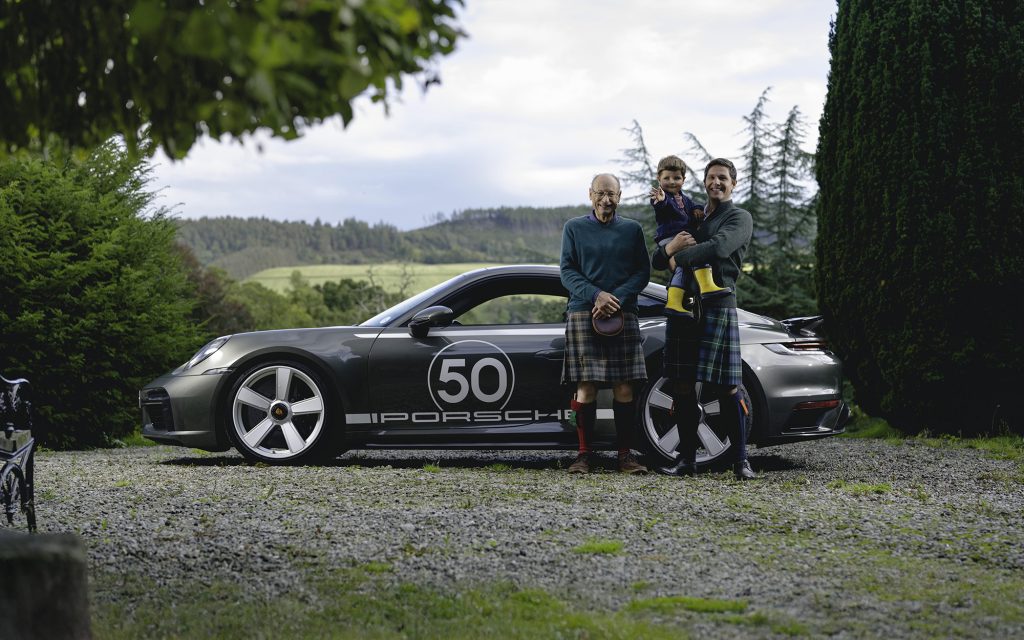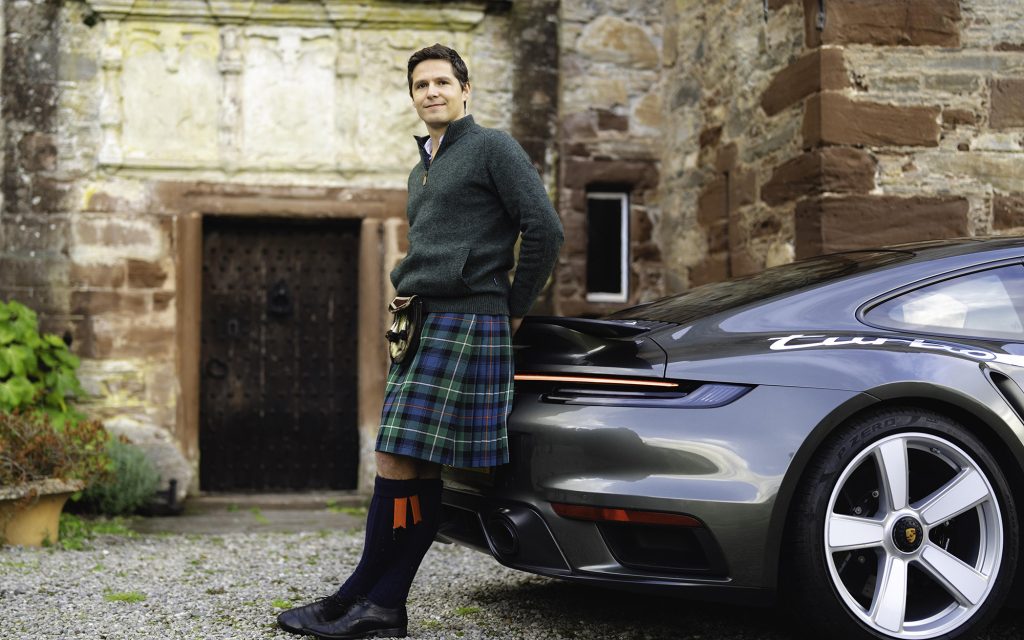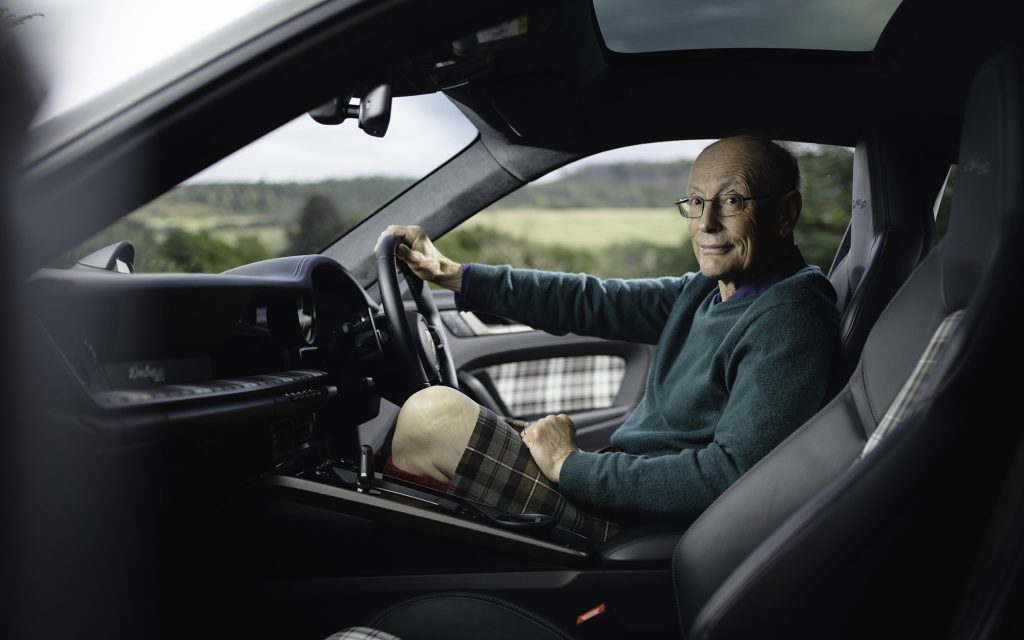

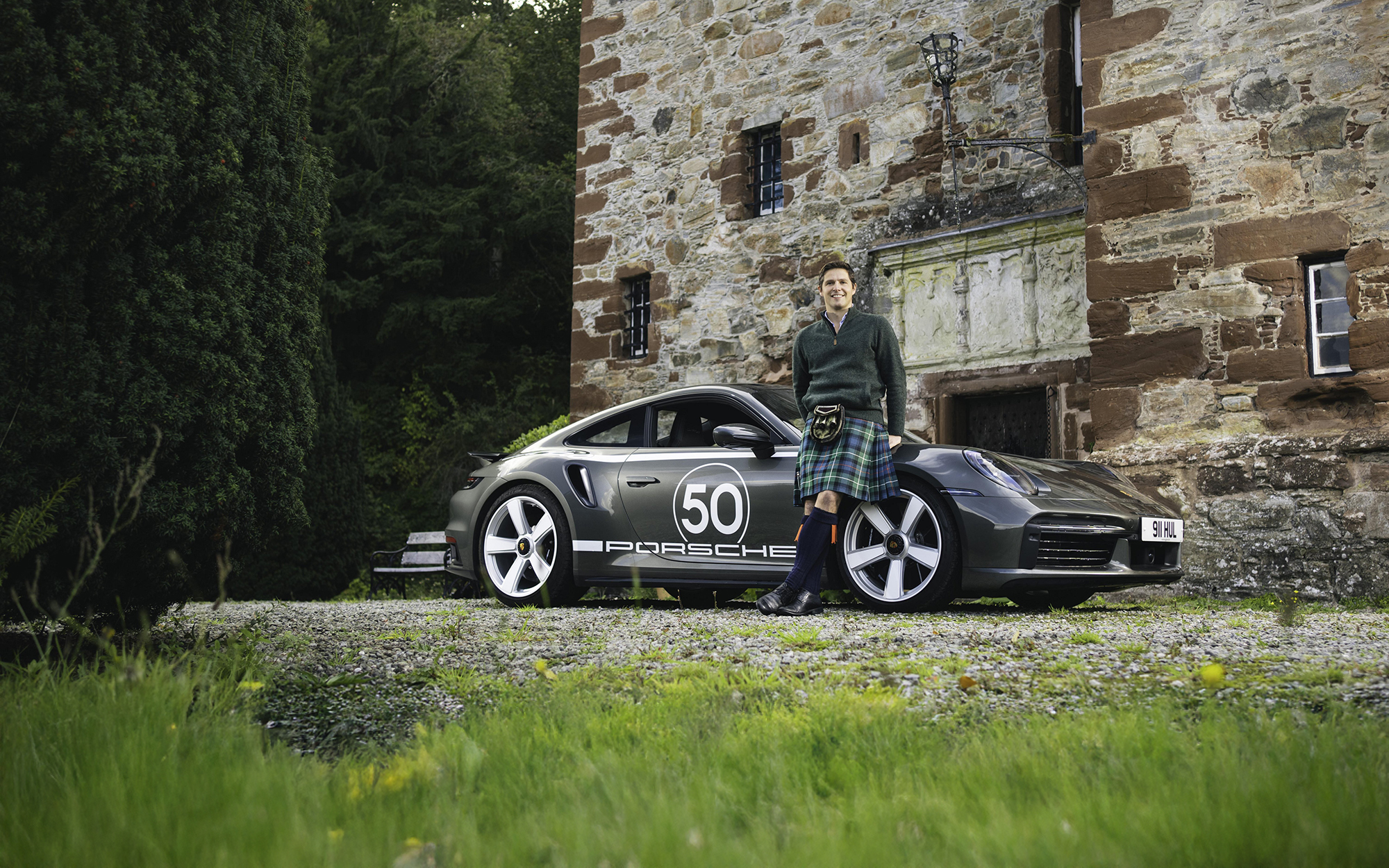

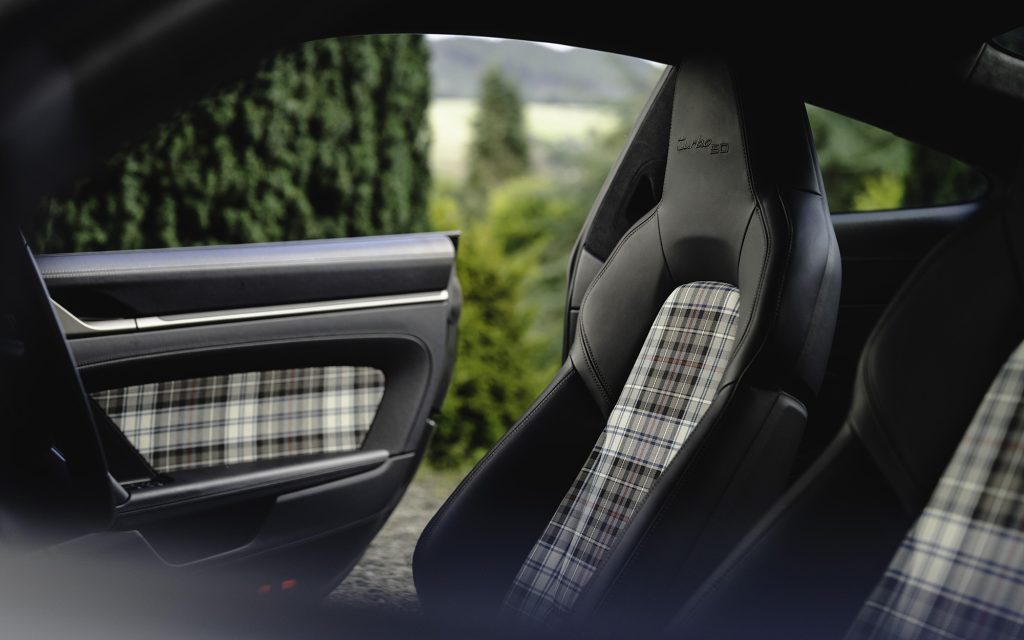
When the door of the 911 Turbo 50 Years opens to reveal an interior trimmed in Weathered Dress Mackenzie tartan, the reaction is immediate and telling. Standing outside Castle Leod in the Scottish Highlands, Viscount Tarbat, heir to the Mackenzie clan, breaks into a grin. “I suppose that means we’re now officially the fastest clan,” he jokes. The moment neatly captures what Porsche has achieved with this anniversary model: a tangible link between motorsport performance, design heritage, and centuries-old cultural identity.
Set against the backdrop of Castle Leod, one of Scotland’s oldest continuously inhabited buildings and ancestral home of the Mackenzie clan, the tartan-clad 911 Turbo becomes more than a car. It is a rolling symbol of continuity, connecting Porsche’s design language of the 1970s with a living tradition that still resonates around the world today.
What’s the Heritage Behind Porsche’s Tartan Interiors?
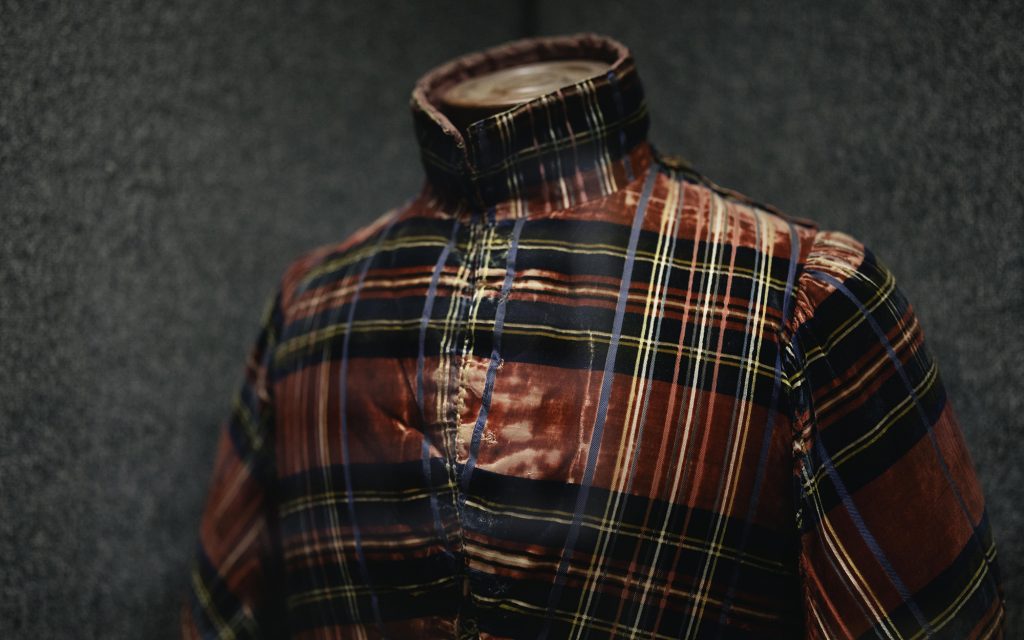
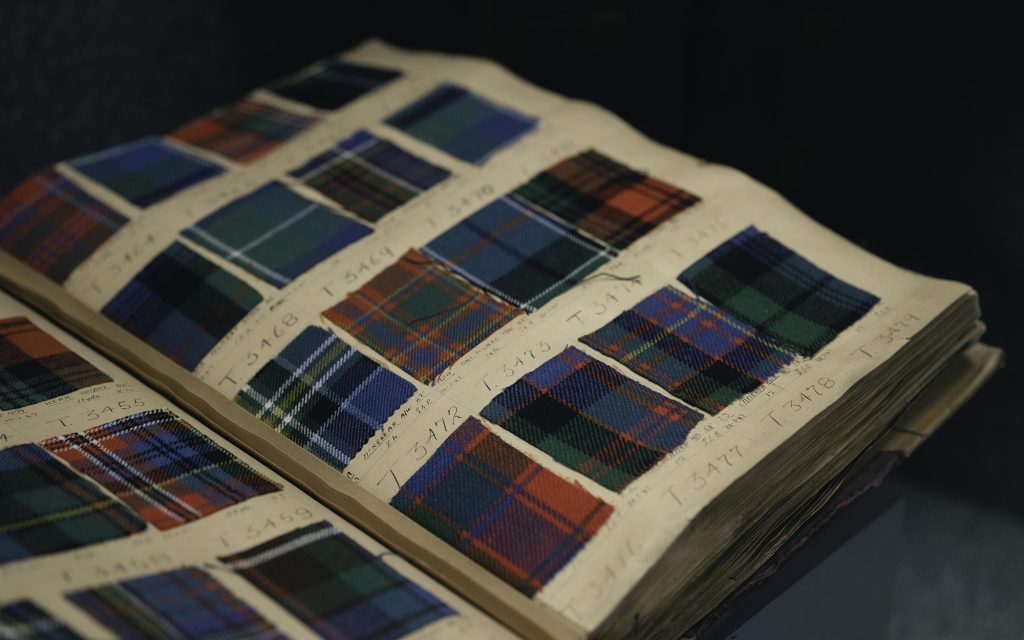
Porsche’s relationship with tartan interiors began not as a marketing exercise, but as an expression of personal style. In the early 1970s, then chief designer Anatole Lapine famously wore tartan trousers to work, sparking the idea of bringing similar patterns into Porsche interiors. The result was a series of experimental and one-off applications that would later become some of the brand’s most distinctive period details.
One of the earliest examples was the 911 Turbo RSR concept of 1973, which featured Black Watch tartan seat centers in black, blue, and green. Shortly afterward, the very first production 911 Turbo presented to Louise Piech for her 70th birthday in 1974 featured Maclachlan tartan, a bold red-and-blue pattern that set the tone for Porsche’s willingness to blend tradition with avant-garde design.
By 1975, tartan upholstery had become an official option for the 911 Turbo, with three different patterns available to customers. According to Dorothea Müller-Goodwyn, a member of Porsche’s styling team during that era, the original intent had been to source fabrics directly from Scotland. However, the traditional weavers were unable to meet the strict requirements for lightfastness and abrasion resistance demanded by automotive use. As a result, Porsche turned to an automotive textile manufacturer in Germany’s Swabian Alps to produce suitable materials that retained the character of the original designs.
The success of tartan in the Turbo quickly led to its adoption across other 911 models, embedding the look firmly into Porsche’s visual identity during the 1970s. Among the most notable applications was the Mackenzie tartan used in Ferry Porsche’s Oak Green Metallic 911 Turbo, a deeply personal specification that tied the company founder’s car to a specific historical pattern.
Details on This Car and the Living Tradition of Tartan
For the 911 Turbo 50 Years, Porsche revisited that lineage with a modern interpretation of the Mackenzie tartan. The Weathered Dress Mackenzie used in the anniversary model features more subdued greens, browns, and whites, reflecting both contemporary tastes and the evolution of the pattern itself. Seeing it arrive at Castle Leod, a place now familiar to many as the inspiration for Castle Leoch in the Outlander series, brings the story full circle.
For the Mackenzie clan, tartan remains a unifying symbol rather than a relic. Clan chief John, Earl of Cromartie, describes it as an expression of belonging that transcends borders, politics, and beliefs. With an estimated two million Mackenzie clan members worldwide, from Scotland and Canada to Australia, Europe, and South America, tartan functions much like a badge of identity. In that sense, the parallel to Porsche ownership is hard to ignore.
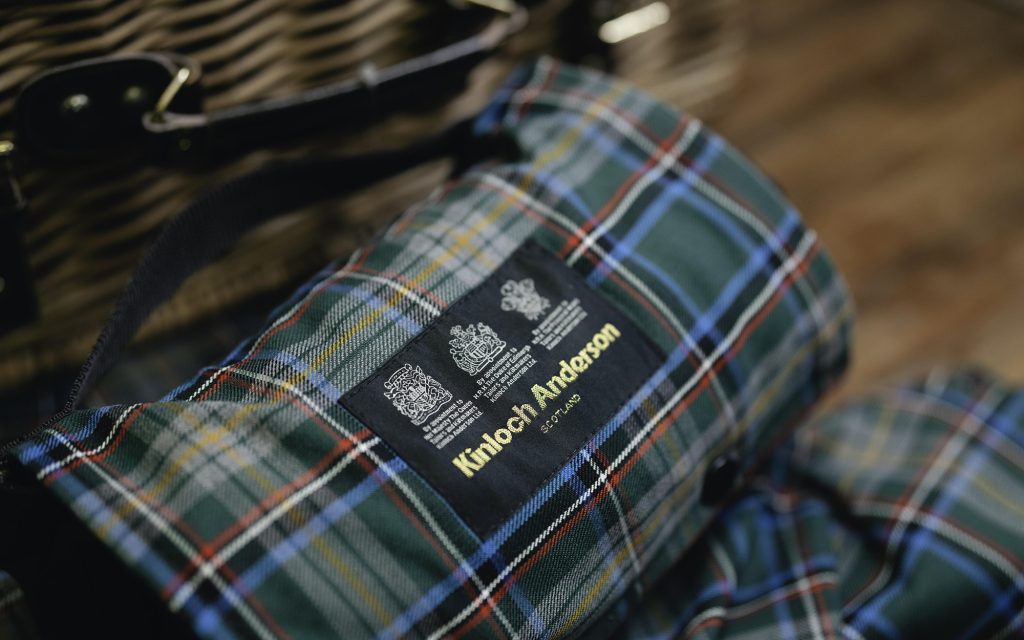
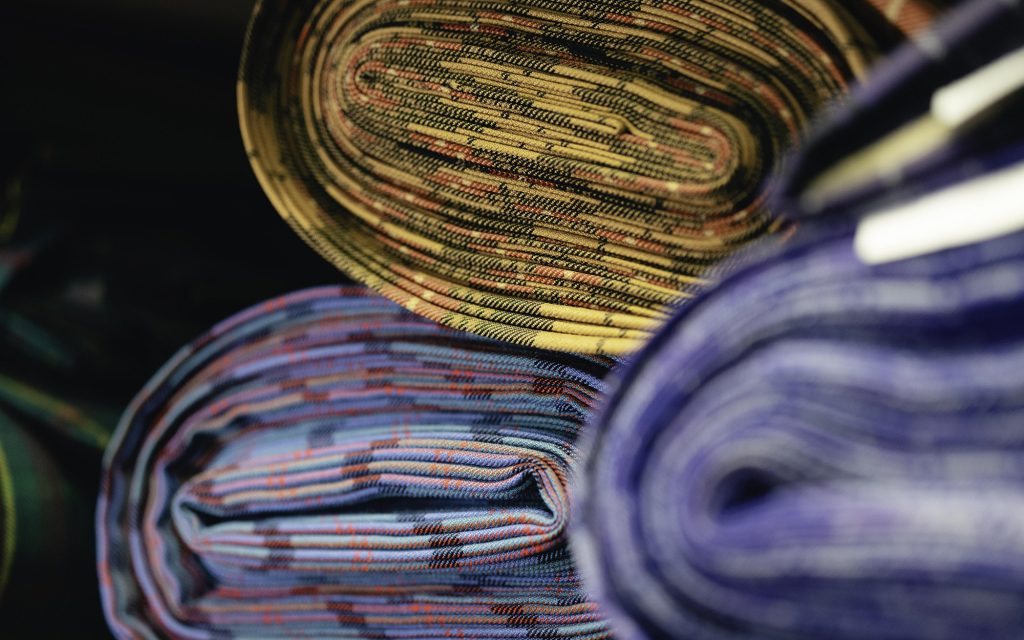
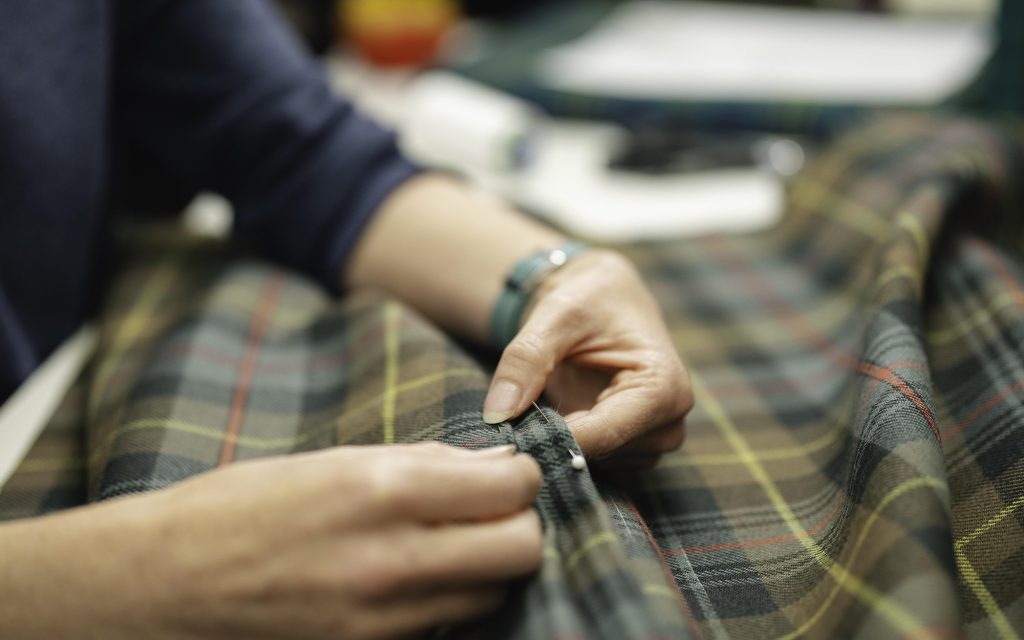
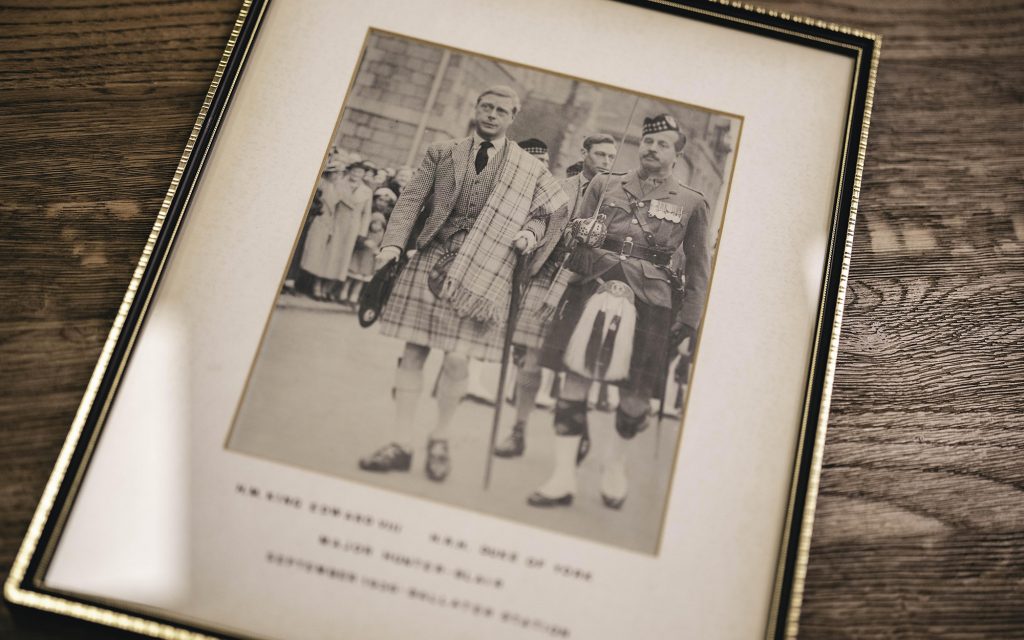
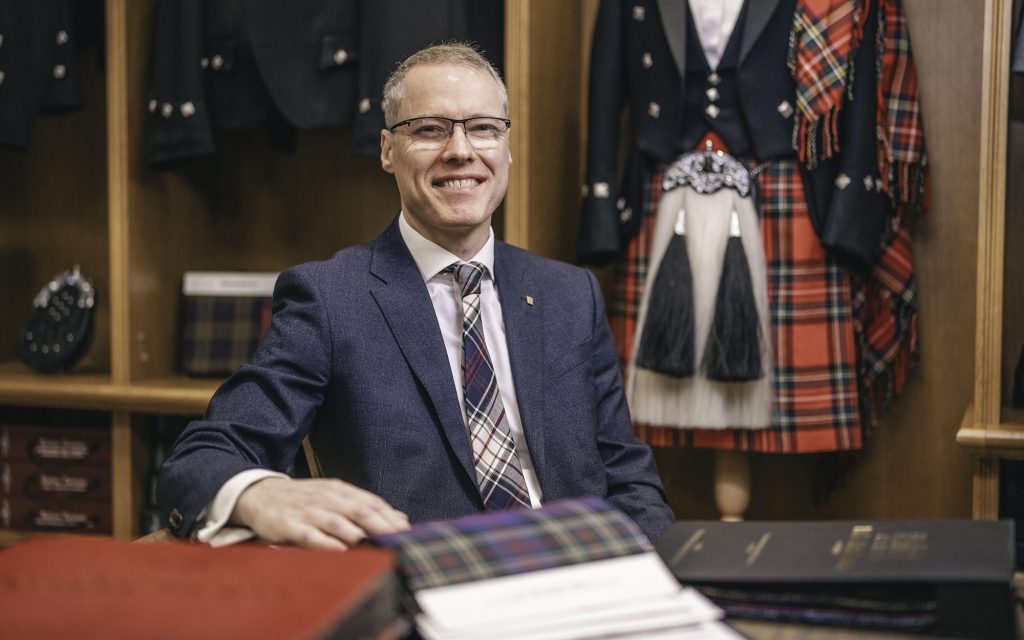
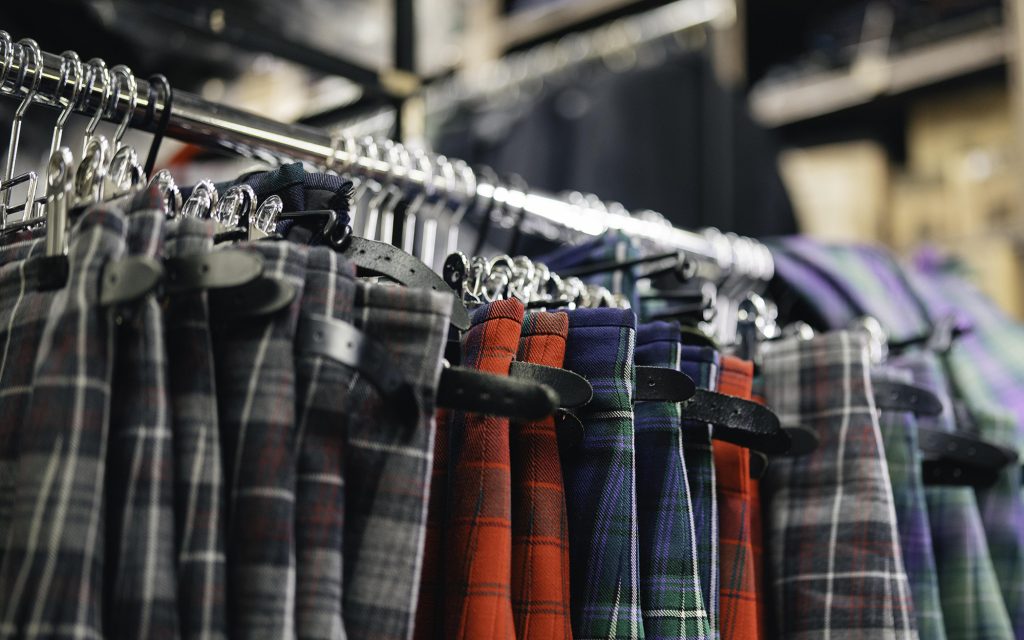
To better understand the broader significance of tartan, the journey continues to Kinloch Anderson in Edinburgh, one of Scotland’s most respected tartan houses and supplier to the British royal family since 1903. There, sixth-generation custodian John Kinloch Anderson explains how tartans originally reflected local landscapes, with dyes derived from nearby vegetation, before becoming associated with specific clans. Though clan tartans were outlawed after the Jacobite rebellion of 1745, they were later revived and codified, eventually becoming a global cultural symbol. Today, more than 2,000 tartans are commercially woven, with thousands more registered officially.
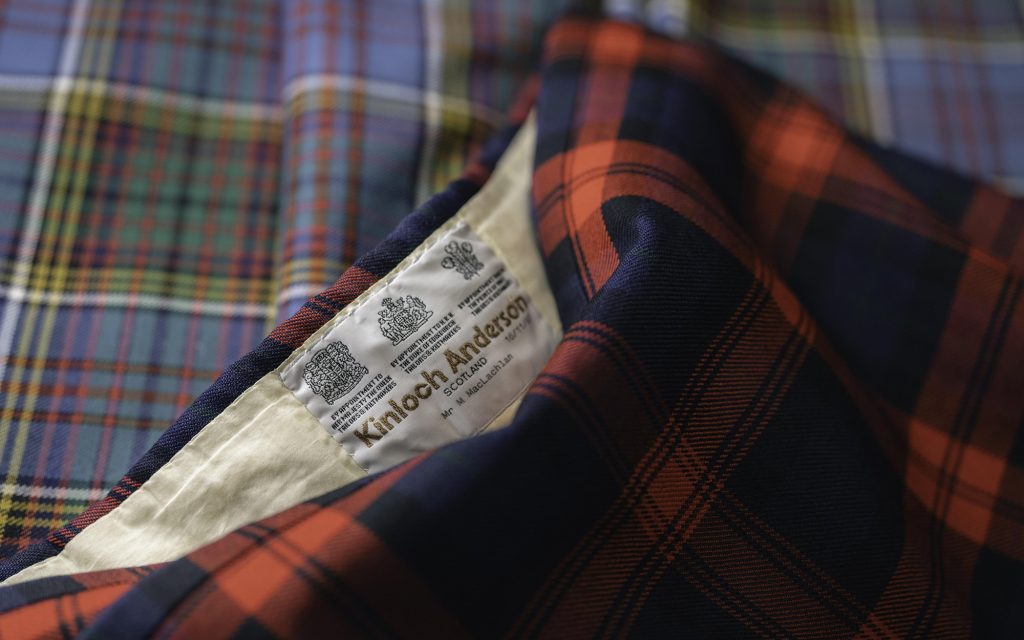
It was during the tartan revival of the 1970s, an era defined by cultural crossovers and bold fashion, that Porsche’s designers first embraced the look. Kinloch Anderson notes that it is entirely possible the very trousers worn by Anatole Lapine on that influential day were produced by his family’s mill. Decades later, the connection continues, with Porsche collaborating once again to reinterpret tartan for modern applications.
Through Porsche’s Sonderwunsch programme, this heritage remains alive and adaptable. Customers can still specify tartan seat centers and interior trims, often guided by Porsche Museum archivists to ensure historical accuracy or meaningful personal connections. Original fabrics are now also offered for the restoration of historic models, with delivery certificates serving as references to a car’s original configuration.
In the 911 Turbo 50 Years, tartan is not a novelty or a retro flourish. It is a thread that ties together design, motorsport, personal identity, and history. Like the Turbo itself, it proves that true icons evolve without ever forgetting where they came from.