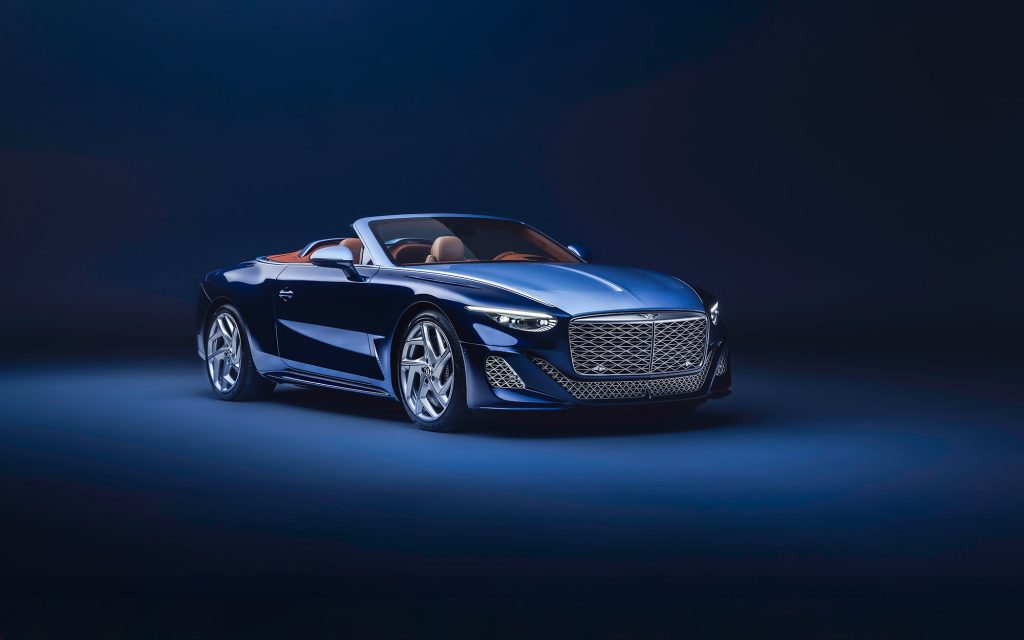

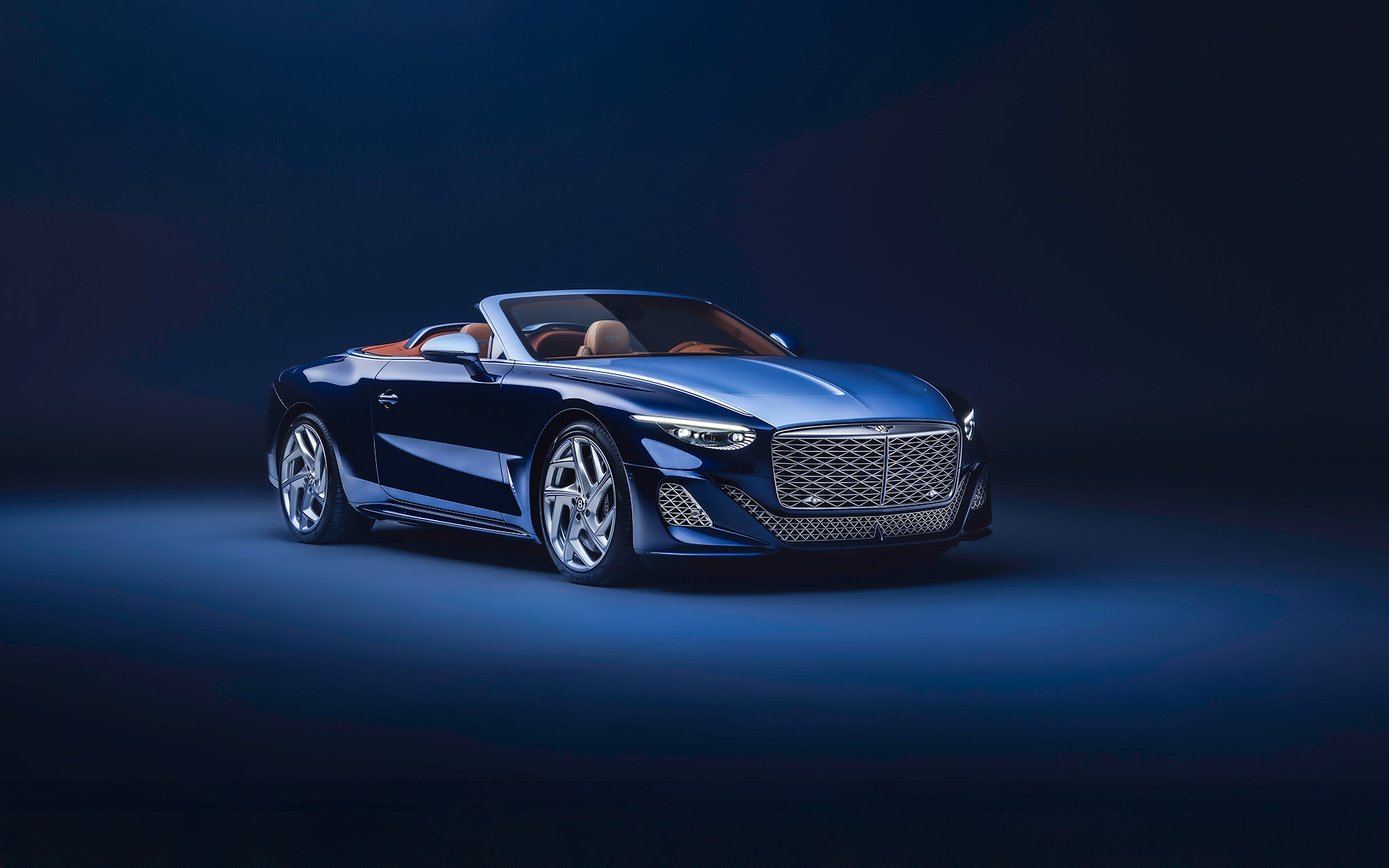

In the rarefied world of coachbuilt Bentleys, excess alone is never the point. What matters is intent—how every surface, finish, and flourish comes together to form a singular vision. With Batur Convertible #4, Bentley Mulliner delivers a case study in modern curation, one shaped not by trends or resale value, but by permanence. This is a “forever car,” conceived with the kind of patience and authorship that defines the very best commissions.
That mindset belongs to its owner, Sonia Breslow, a repeat Mulliner client whose collection already includes a Blower Continuation Series, a Speed Six Continuation Series, and the landmark Bacalar. For Breslow, the appeal lies in authorship. Designing a coachbuilt Bentley is not about ticking options boxes; it is about composing a cohesive object, one detail at a time, until the whole feels inevitable.
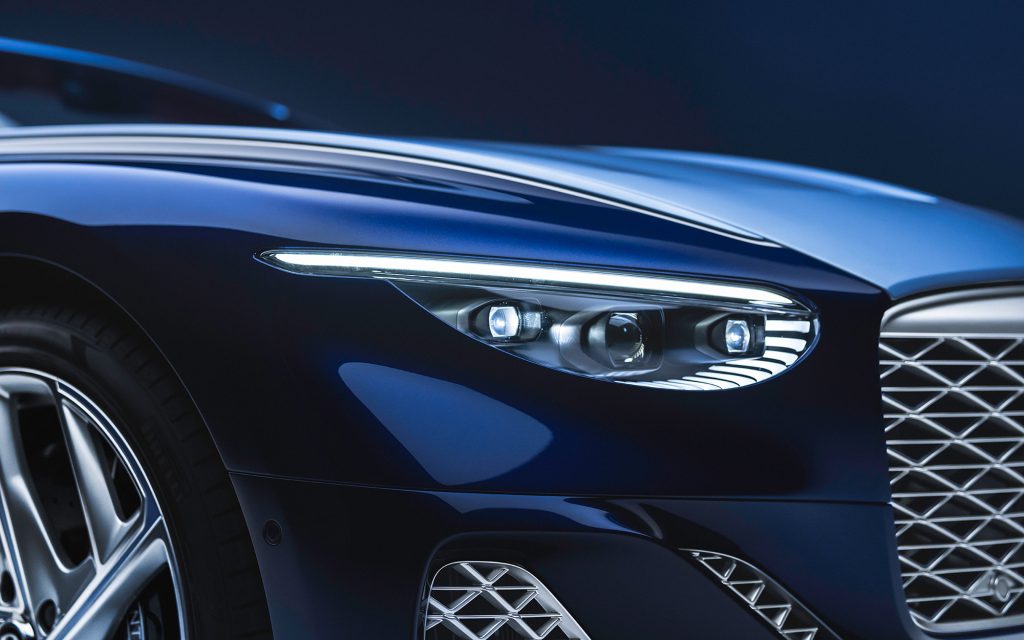
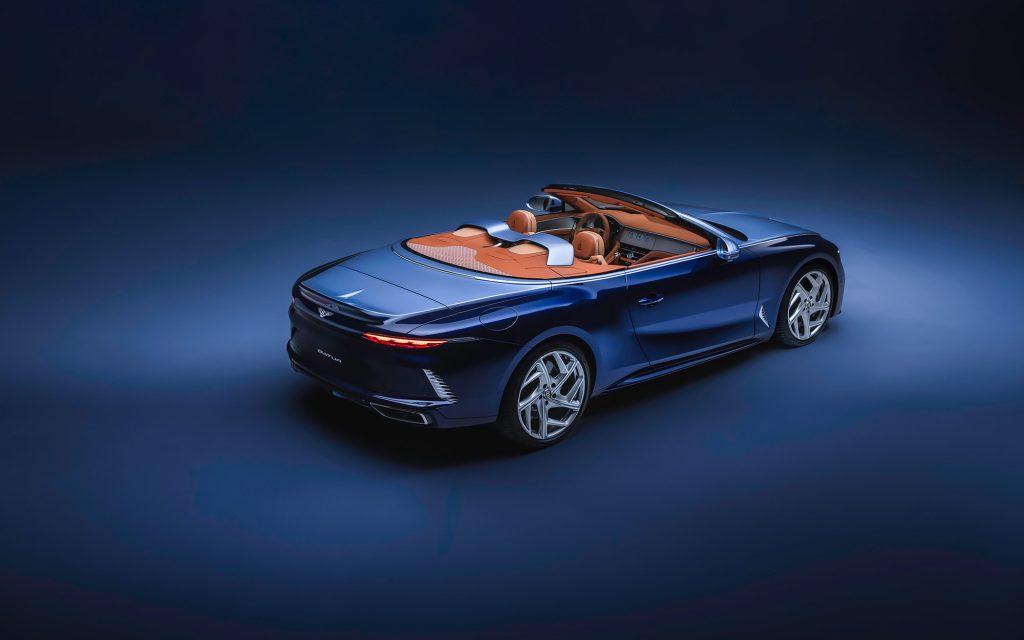
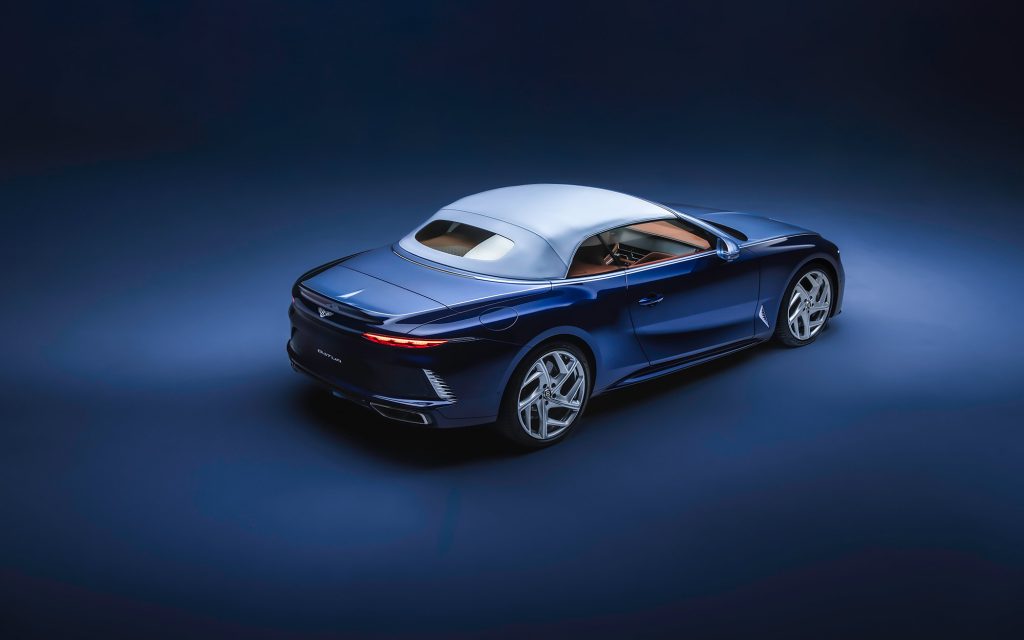
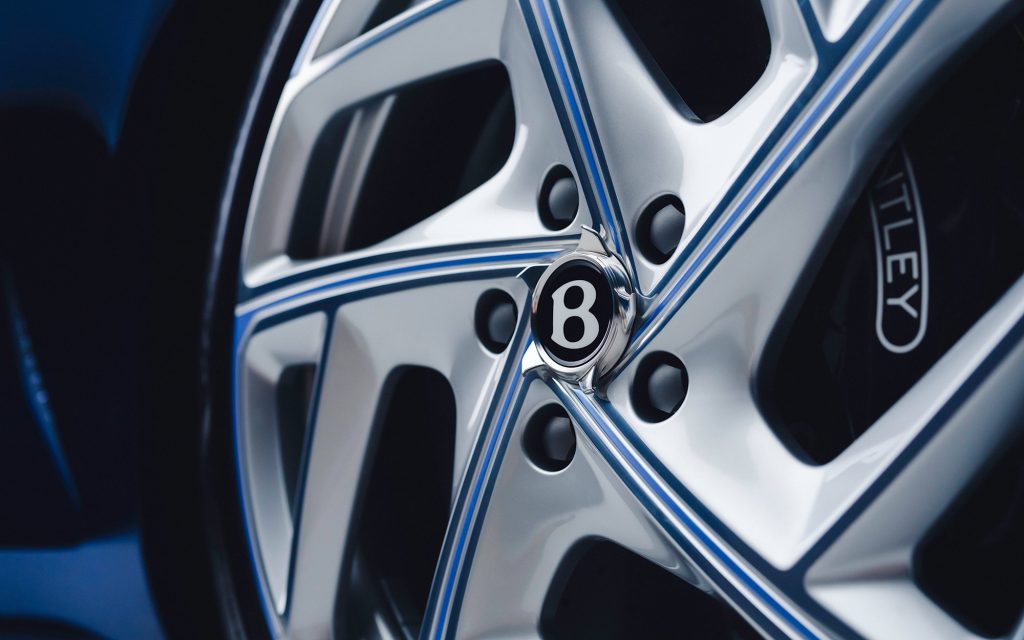
The headline theme of Batur Convertible #4 is co-creation—specifically four first-ever applications that quietly push Mulliner’s craft forward. The exterior debuts the brand’s first customer-defined tri-tone scheme, finished with a precise 6 mm gloss-silver fine line that visually stretches the Batur’s “endless bonnet.” Breslow Blue crowns the car, while a darker Midnight Breslow Blue anchors the lower body, accented with matching pinstripes, wheel details, and mirror caps. Even the fabric roof is color-matched, a Mulliner first, so that when stowed it reveals an Airbridge painted in the same bespoke hue.
Step closer and the story becomes more intimate. Polished titanium exhaust finishers and bright silver grilles lend a jewelry-like contrast, but the real signature moment happens when the door opens. A client-designed animated welcome lamp projects Breslow’s handwritten name onto the ground, shaped by more than 415,000 microscopic mirrors. It’s subtle, almost poetic—personalization you experience rather than announce.
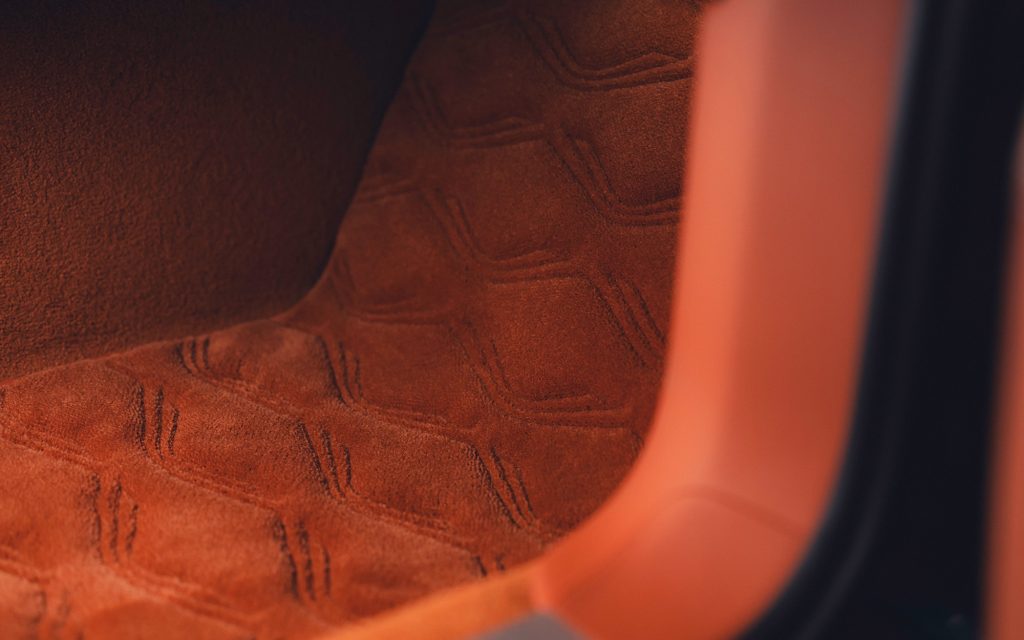
Inside, the cabin trades drama for warmth. Autumnal tans and caramel tones are offset by soft blue accents that echo the exterior Breslow Blue, visually pulling the Airbridge color into the interior architecture. Contrast stitching flows seamlessly from tonneau to seats, headrests, and instrument panel. Look closer still and you’ll find the outline of Mount Batur—the car’s namesake—quietly worked into the deep-pile floor mats, a detail that rewards attention rather than demands it.
Mulliner’s material experimentation continues across the fascia. A bright aluminum engine-spin finish nods to early Bentleys, while the rotating display features bespoke gauge faces and a satin blue clock. Most telling, though, is the debut use of three-dimensionally printed platinum. The steering wheel’s top dead center marker and each organ stop are rendered in the precious metal—tiny components, perhaps, but emblematic of how far bespoke craftsmanship has evolved.
For all its delicacy, Batur Convertible #4 does not soften its mechanical intent. Beneath the sculpted surfaces sits Bentley’s most powerful W12 to date: a 740-horsepower, hand-assembled 6.0-liter twin-turbocharged engine. It is a reminder that Mulliner’s flagship coachbuilt cars are not static objets d’art, but grand tourers built to be driven, savored, and lived with.
In the end, the “power of four” is less about novelty than confidence—confidence in collaboration, in restraint, and in knowing exactly when something is finished. Batur Convertible #4 stands as one of Mulliner’s most luxurious commissions yet, not because it tries to impress, but because it knows precisely who it’s for.