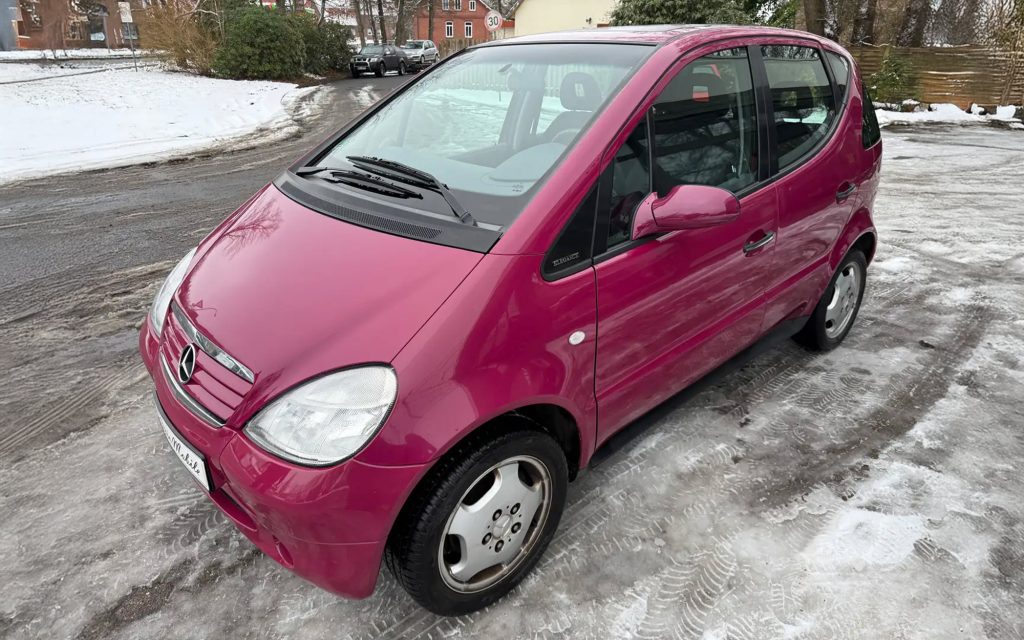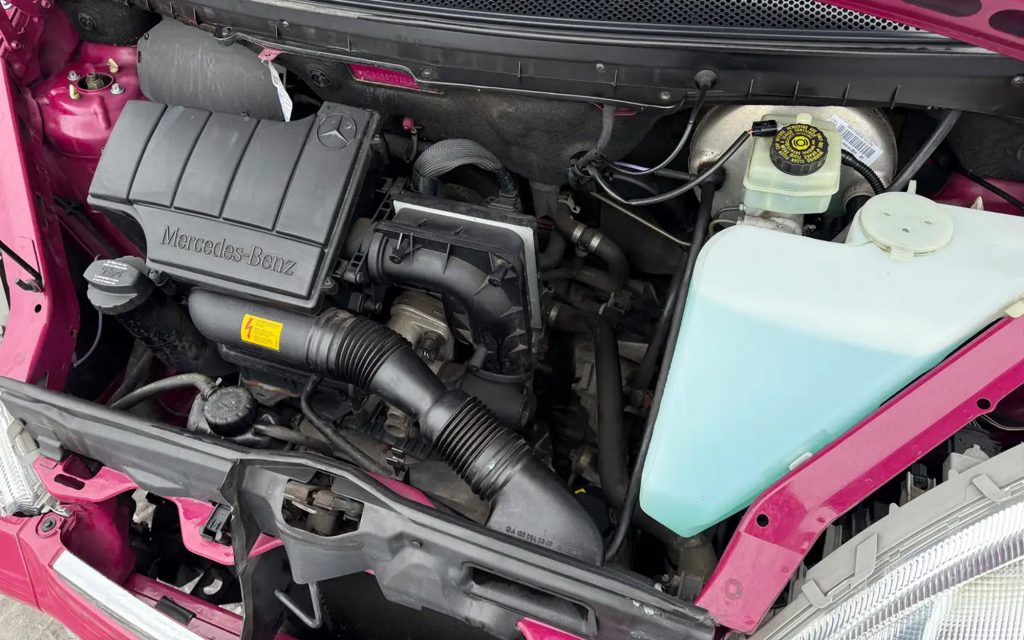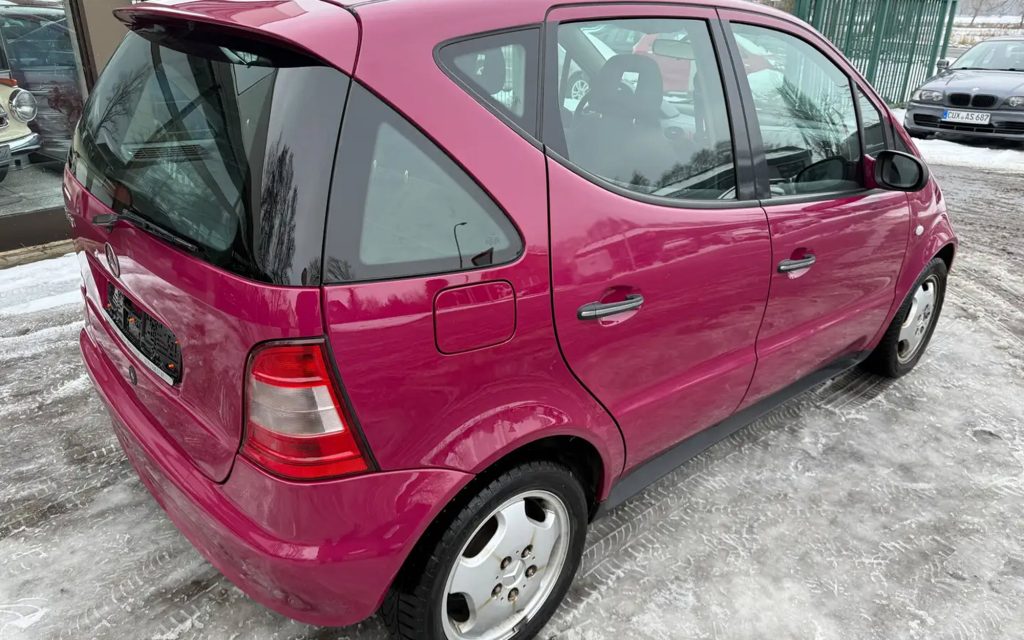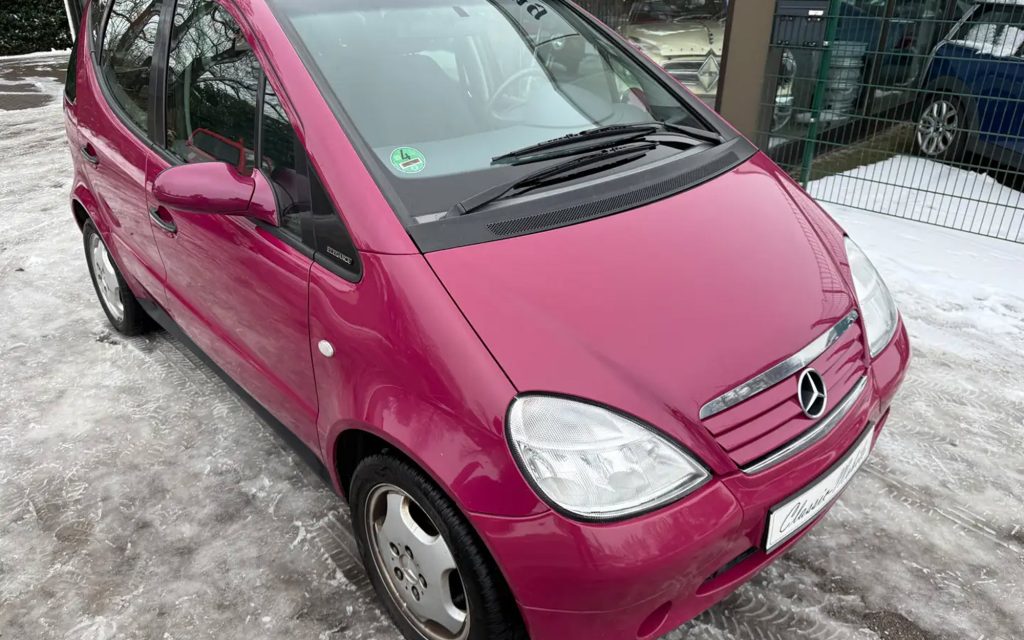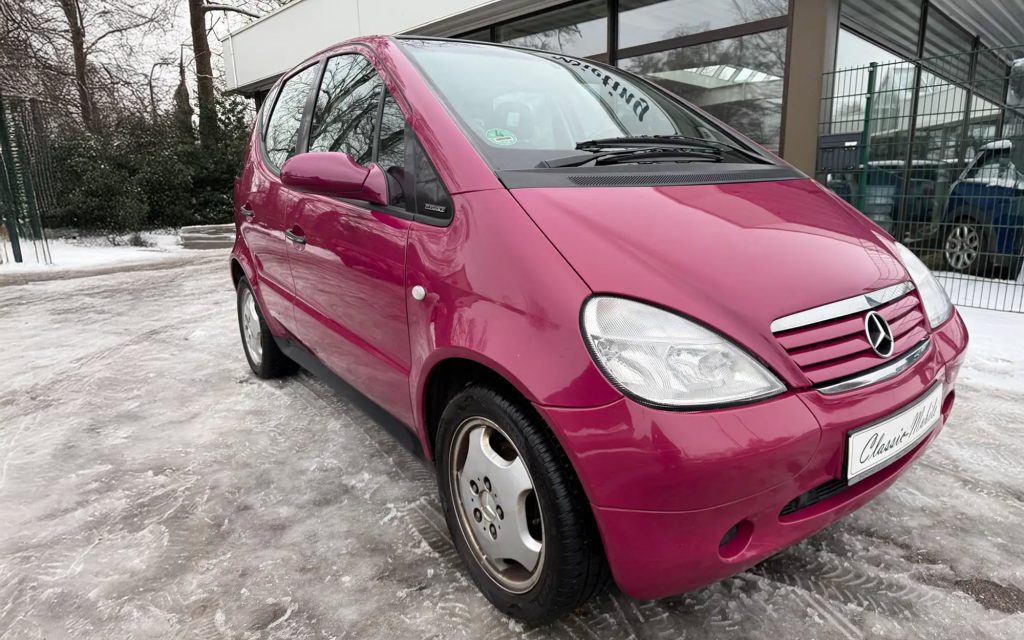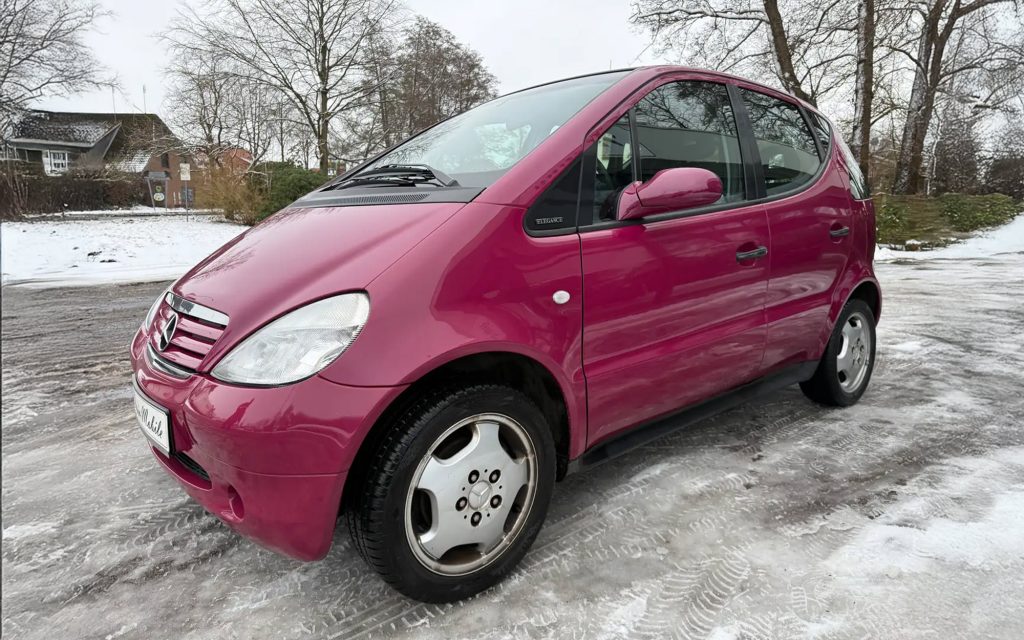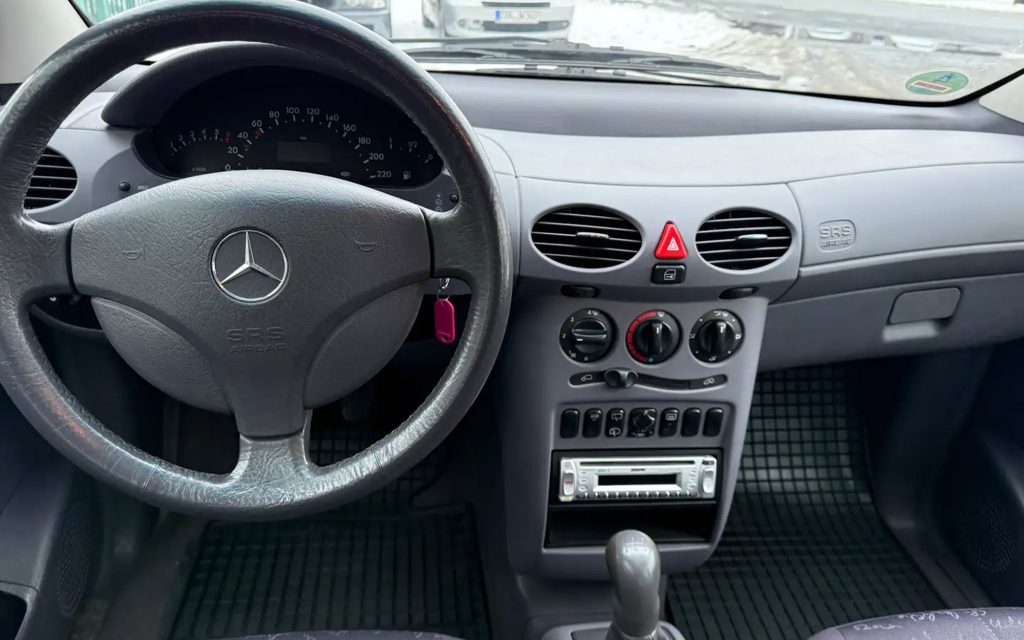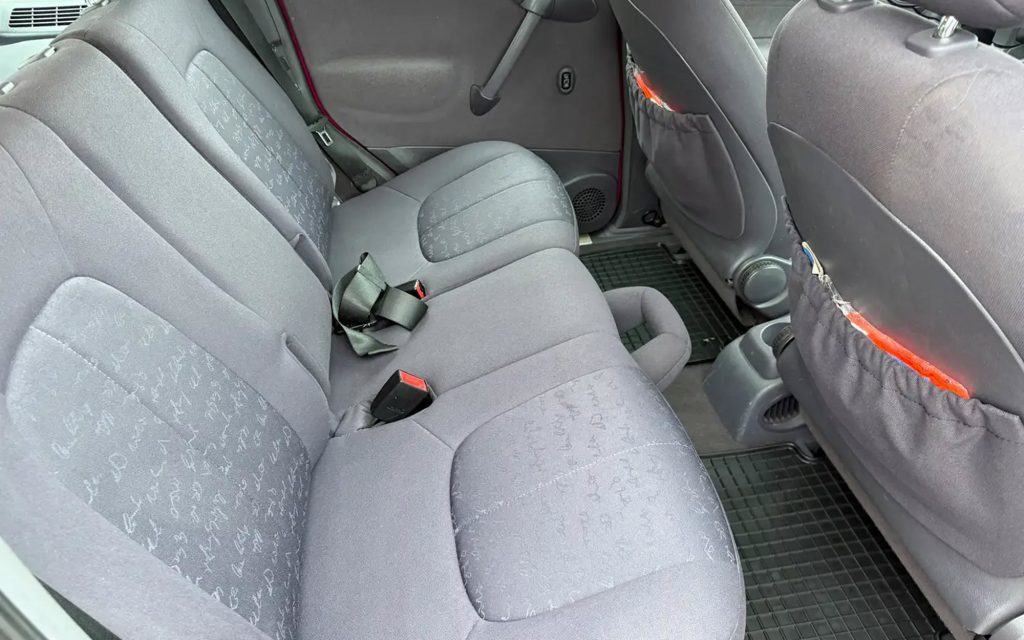

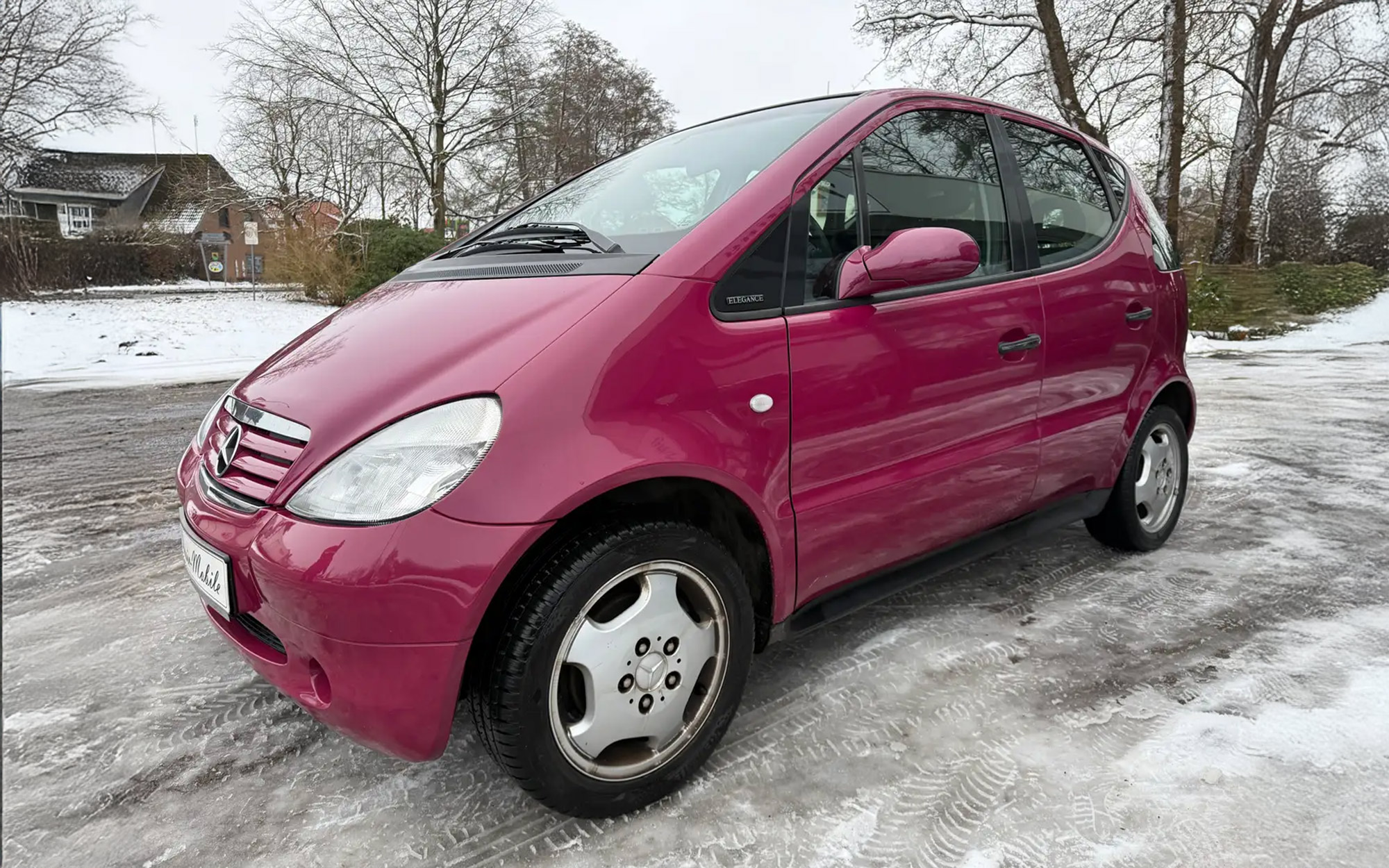

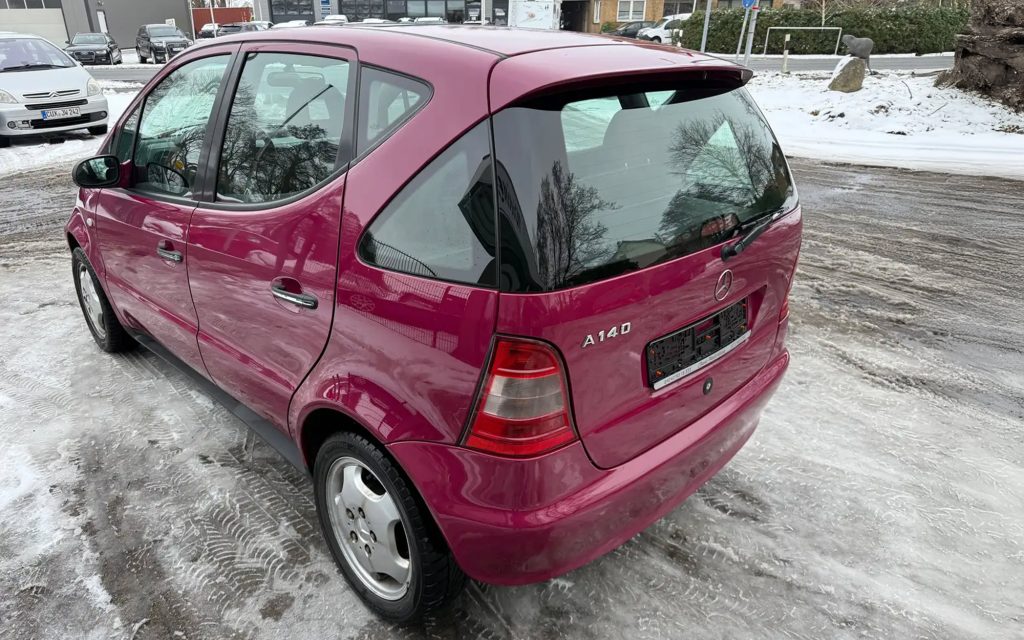
What: 1999 Mercedes-Benz A 140
Color: Flora vio (floraviolet; metallic UNI; 381; Mercedes-Benz)
VIN: unknown
Mileage: 117,400 km
Price: € 2.950
Location: Beverstedt, Germany
Listing: Classic-Mobile Wieting
This 1999 A 140 Elegance, currently listed on AutoScout24, is about as unassuming as cars get—82 horsepower, front-wheel drive, tall-roof packaging, and a spec sheet that leans heavily toward practicality over performance. Even within the W168 A-Class range, the A 140 sits at the bottom of the hierarchy.
But this one has something most don’t: Flora Violet.
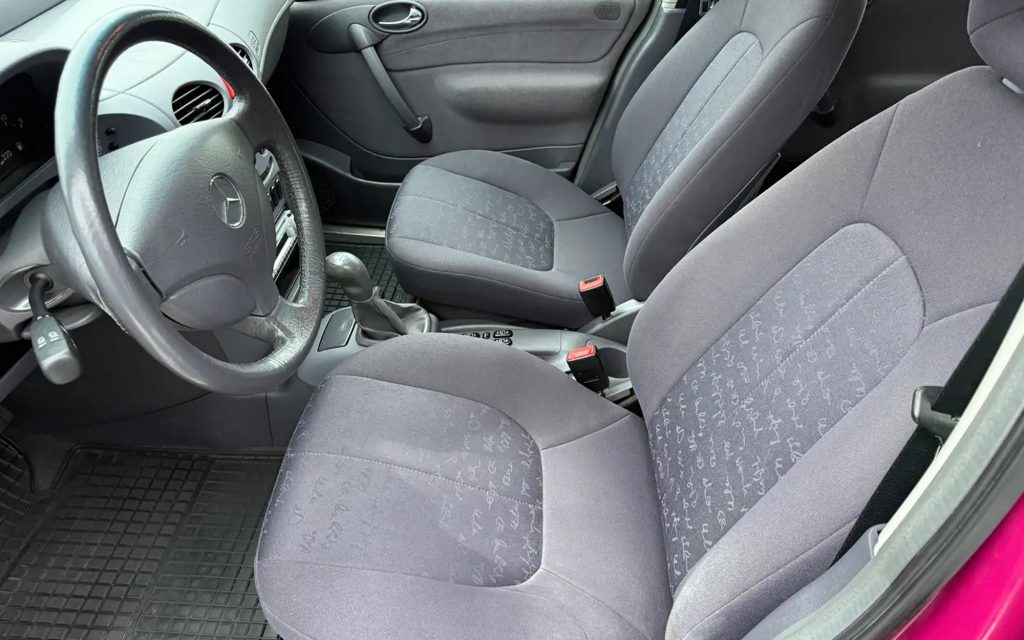
It’s the kind of color that was fairly standard in the 1990s – an era that gave us similar hues such as Porsche’s similar yet unforgettable Carrera Cup-derived Rubystar. Today, it stands out today simply because so few cars were ordered this way. The W168 generation offered a wide palette typical of late-1990s Mercedes, but most buyers stuck to silver, black, or blue. Violet shades like this quietly disappeared from order sheets not long after.
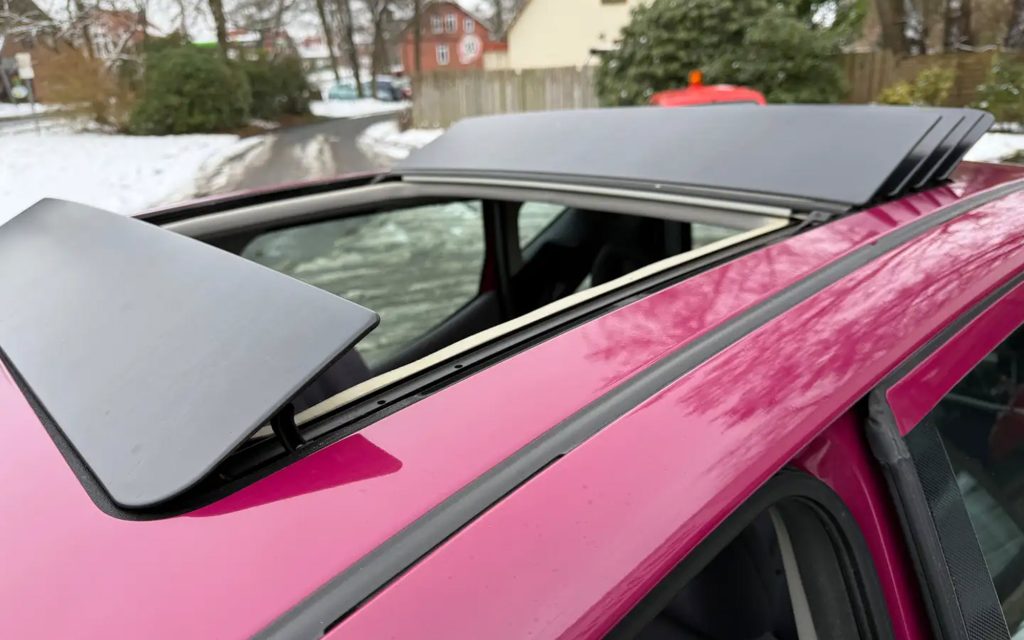
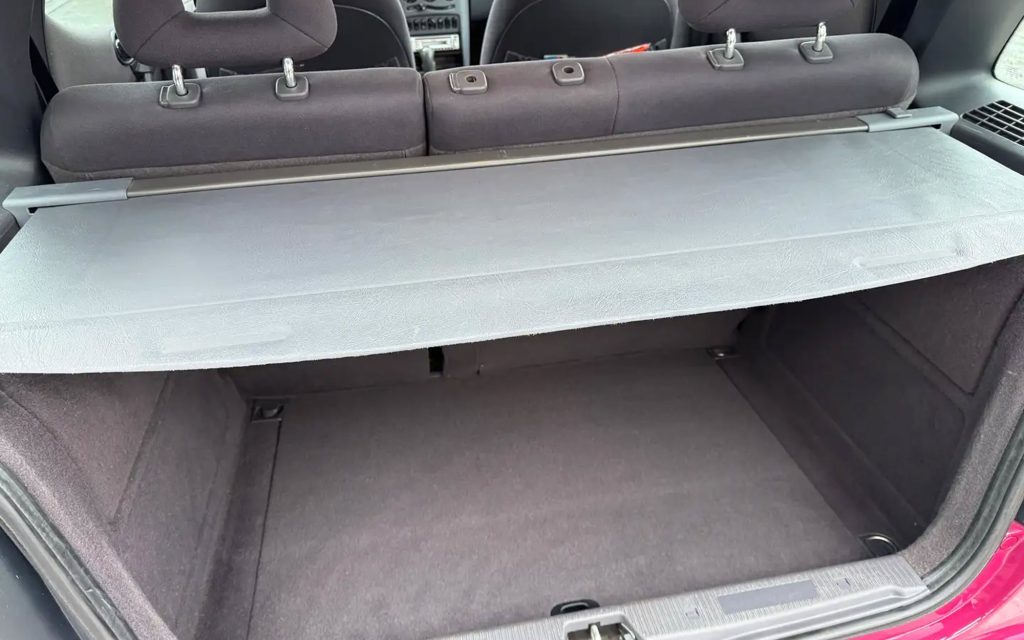
The rest of the spec reads like a time capsule. Elegance trim brings a slightly more upscale finish, and this example is noted as a one-owner car with just over 117,000 km. A lamella sunroof adds a period-correct feature that’s all but extinct today. Power comes from the familiar 1.4-liter inline-four producing 82 horsepower, consistent across most A 140 listings of the era.
Values for these cars remain firmly in budget territory, typically ranging from around €1,000 to €4,000 depending on condition and mileage. This example sits toward the middle of that range, reflecting its mileage and apparent condition rather than any collector premium.
That’s what makes it interesting.
The W168 A-Class has started to age into relevance as an early example of Mercedes experimenting with packaging and safety engineering—sandwich-floor construction, compact footprint, and a focus on urban usability before that became industry standard. Most examples are used up and disposable.
This one isn’t special because of performance, rarity in the traditional sense, or even specification. It’s special because it’s survived in a color that most people ignored when new—and that’s exactly the kind of detail that starts to help it once a car crosses the 25-year threshold – i.e. importable into markets like the USA where it would really stand out as unique.
It’s mundane, but it’s also the kind of mundane that won’t be easy to find again in a few years.