

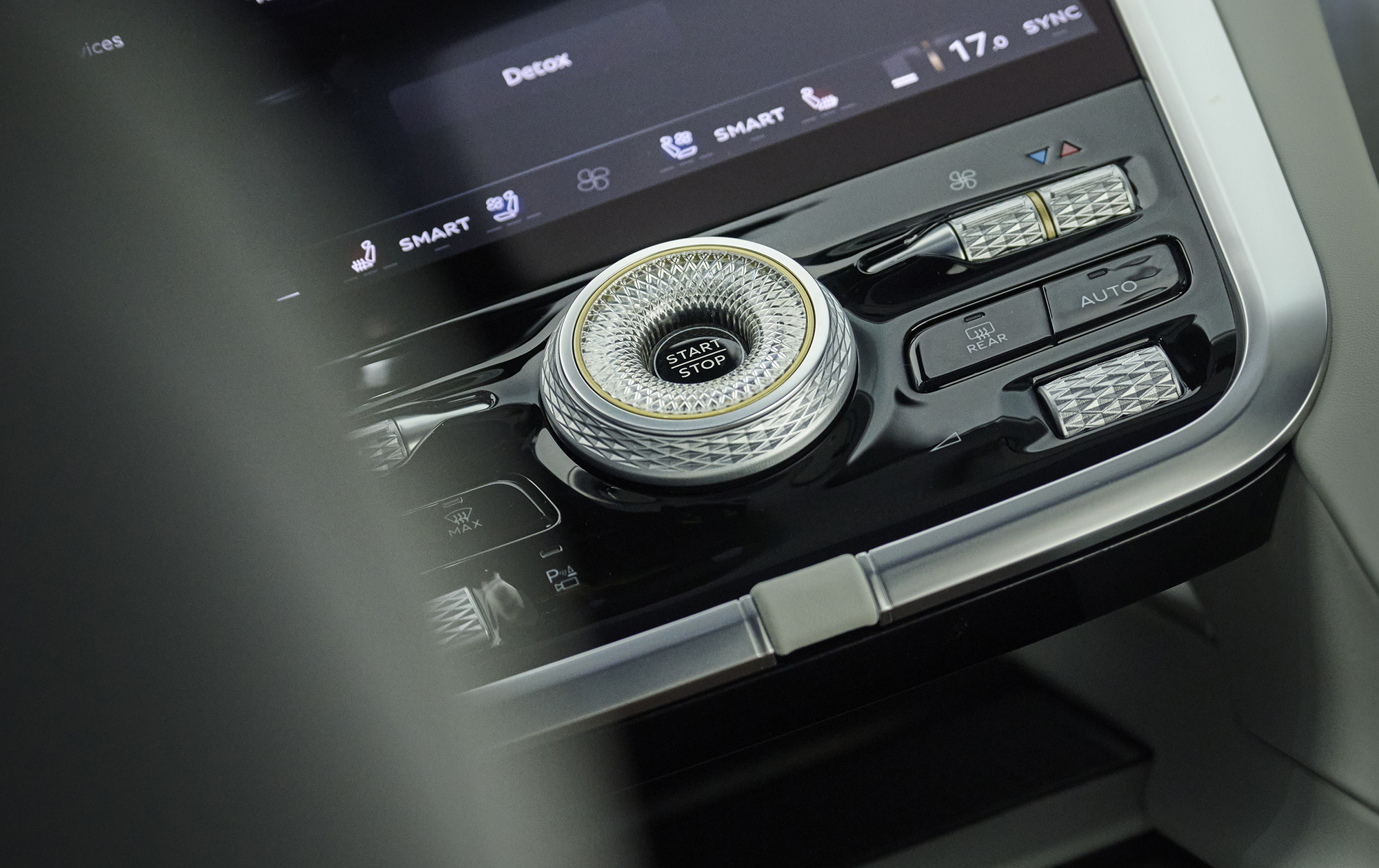

Bentley is using its new Torcal to explore a different definition of automotive personalization. Rather than simply allowing occupants to select suspension settings, ambient lighting or seat positions individually, a new system called the Curation Engine coordinates multiple functions to alter the character of the entire car.
The idea is to tailor the driving environment not simply to how someone wants the Torcal to perform, but how they want to feel while traveling in it.
Positioned prominently in the center of the cabin, the Curation Engine controls both the Torcal’s dynamic characteristics and a second layer of what Bentley calls Experience Modes. These coordinate lighting, sound, climate control, air quality and the amount of digital information presented to occupants.
Bentley says the combinations have been developed using principles of sensory neuroscience, with individual elements calibrated to work together rather than functioning as a collection of unrelated settings.
It’s an interesting evolution of something luxury manufacturers have been doing for years. Modern cars already offer an extraordinary degree of adjustment, particularly at Bentley’s end of the market. Suspension, throttle response, steering, seat position, massage programs, climate control, ambient lighting and audio can all be changed individually.
The Torcal instead attempts to package those adjustments around an intended experience.
Four primary environments are available: Bentley, Comfort, Sport and Refresh.
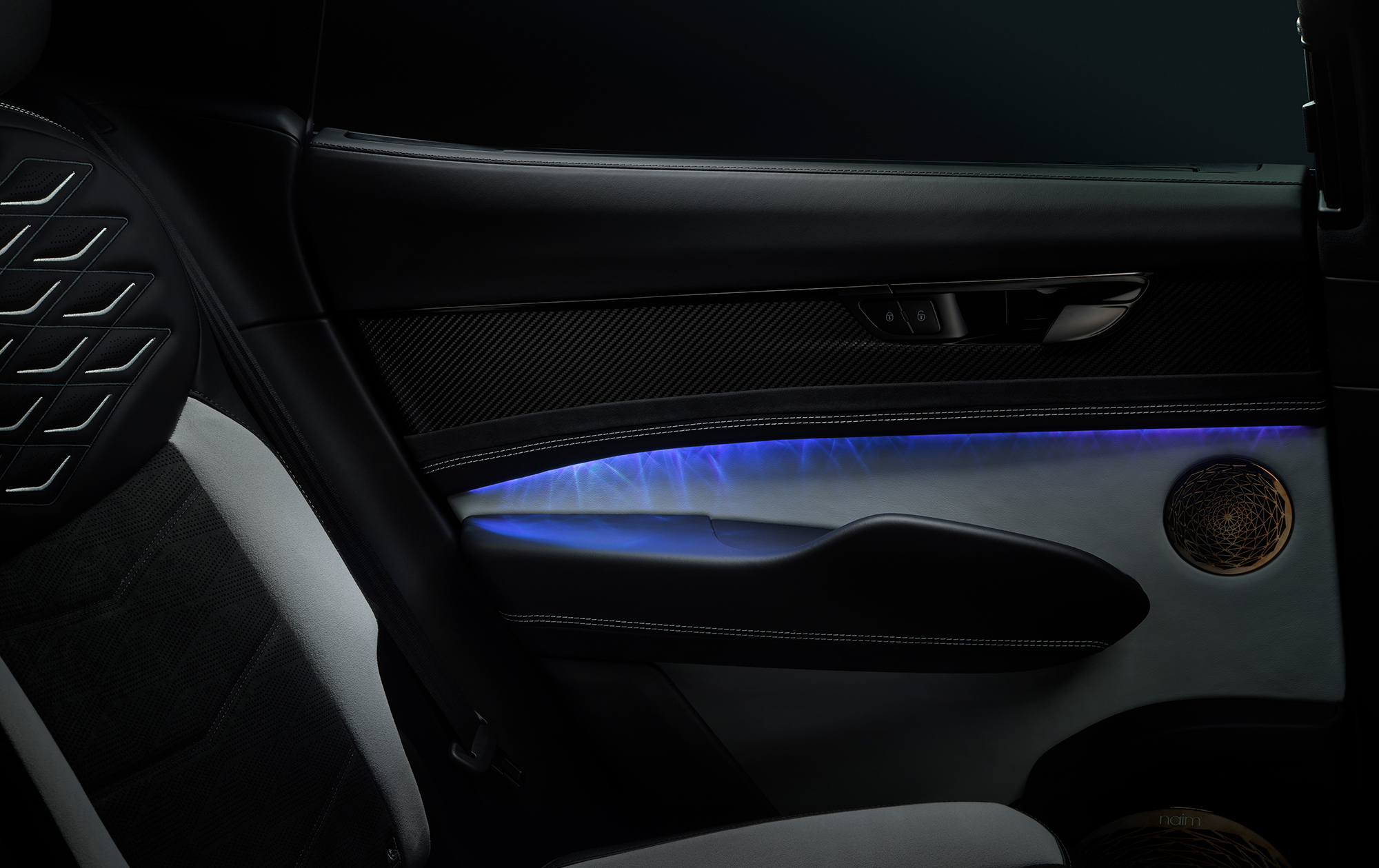
Bentley Mode
Bentley Mode is the default and is intended to provide the most balanced interpretation of the Torcal.
Rather than prioritizing either comfort or performance, it combines the two in keeping with Bentley’s traditional grand touring approach. Vehicle dynamics remain engaging while the cabin maintains the warmer, more relaxed atmosphere expected of a luxury car.
In practical terms, this is the Torcal’s everyday setting and the baseline from which the other experiences diverge.
Comfort Mode
Comfort Mode shifts the emphasis toward reducing stimulation.
Lighting is softened and the overall cabin environment becomes calmer, while occupants can select a digital detox function that reduces the amount of information being presented on the car’s displays.
That’s a noteworthy addition at a time when increasingly elaborate screen interfaces have become one of the primary ways manufacturers demonstrate technological sophistication. Bentley is effectively acknowledging that luxury can sometimes mean seeing less information rather than more of it.
The setting is intended primarily for longer journeys or situations where occupants would prefer to disengage from the constant stream of information presented by a modern automobile.
Sport Mode
Sport Mode moves in the opposite direction.
The Torcal’s dynamic settings become more aggressive while the sensory environment changes with them. Audio becomes more immersive, visual information is focused and the cabin adopts a more purposeful character.
The objective is to reinforce the driver’s connection with the car rather than simply sharpening throttle, steering and suspension responses.
This is where the Curation Engine differs most clearly from a conventional drive-mode selector. The mechanical changes are accompanied by corresponding alterations to what the driver sees and hears, creating a broader transition in the personality of the car.
Refresh Mode
The most unusual setting is Refresh Mode, which Bentley has developed specifically for the Torcal.
Rather than making the car more comfortable or sporting, Refresh is intended to increase alertness during longer journeys. Fresh-air circulation increases, cabin lighting becomes brighter and the overall environment is designed to feel lighter and more invigorating.
Bentley positions it as a tool for combating fatigue, effectively using the cabin’s climate and sensory systems to change the occupants’ state of mind rather than simply maintaining a desired temperature.
Whether owners ultimately use these carefully orchestrated environments as Bentley intends remains to be seen. Luxury-car buyers have traditionally valued the ability to configure individual functions precisely to their own preferences, and bundling those functions into predefined experiences represents a different approach.
But there’s a larger idea behind the Curation Engine that may prove significant.
Personalization in luxury automobiles has traditionally focused on the physical specification of the car. Customers choose colors, hides, veneers, stitching, wheels and increasingly elaborate bespoke details to create something uniquely theirs. Once the car is built, however, much of that personalization becomes fixed.
The Torcal adds a more fluid layer. Its interior can change character depending on whether the driver wants engagement, relaxation or simply a little help remaining alert after several hours on the road.
That makes the Curation Engine less about adding another collection of features and more about coordinating technology Bentley already has at its disposal. Instead of asking the driver to adjust the car one system at a time, the Torcal attempts to understand the desired experience and configure the environment around it.
For a company whose cars have long been designed around crossing large distances quickly and comfortably, tailoring the grand touring experience to the mood of the people making the journey is a logical next step.