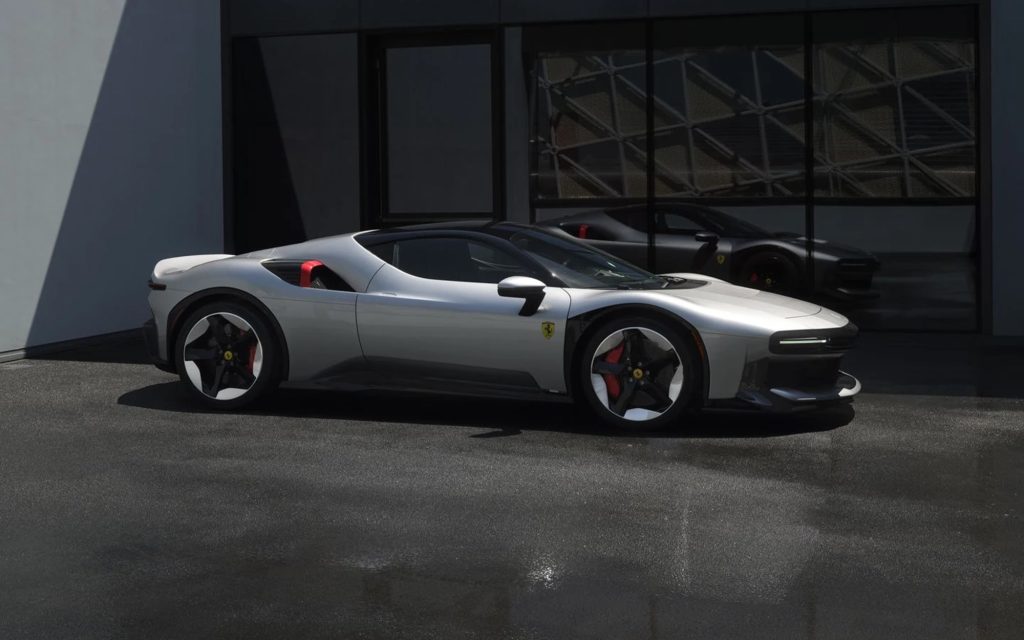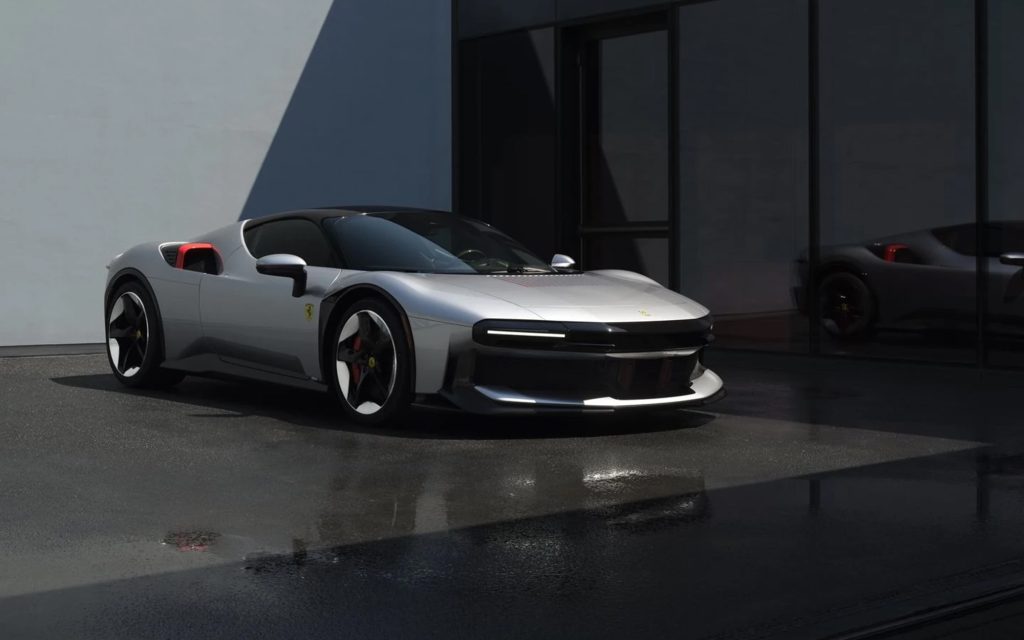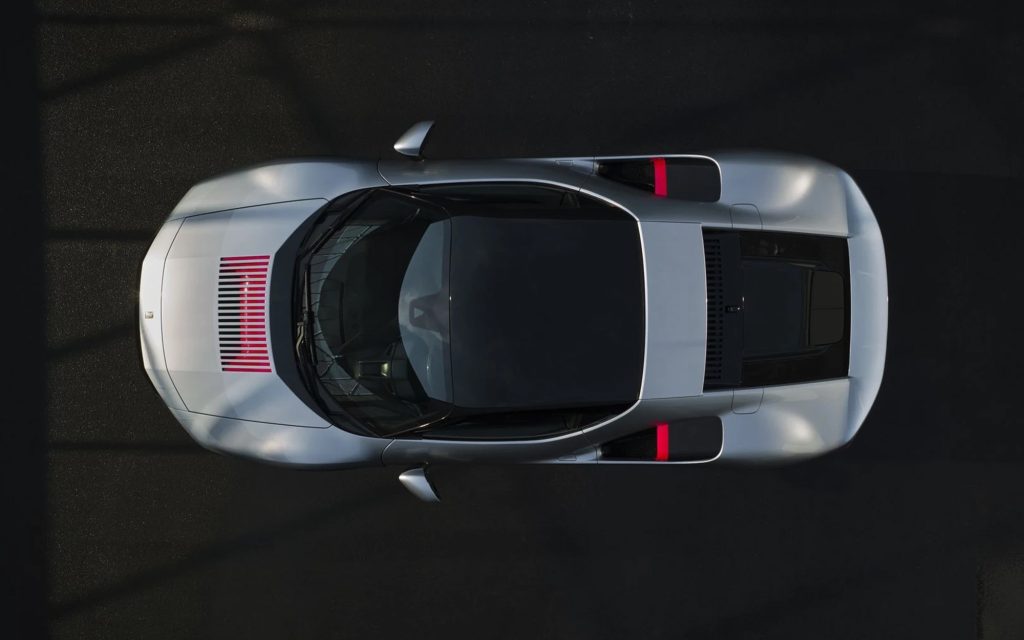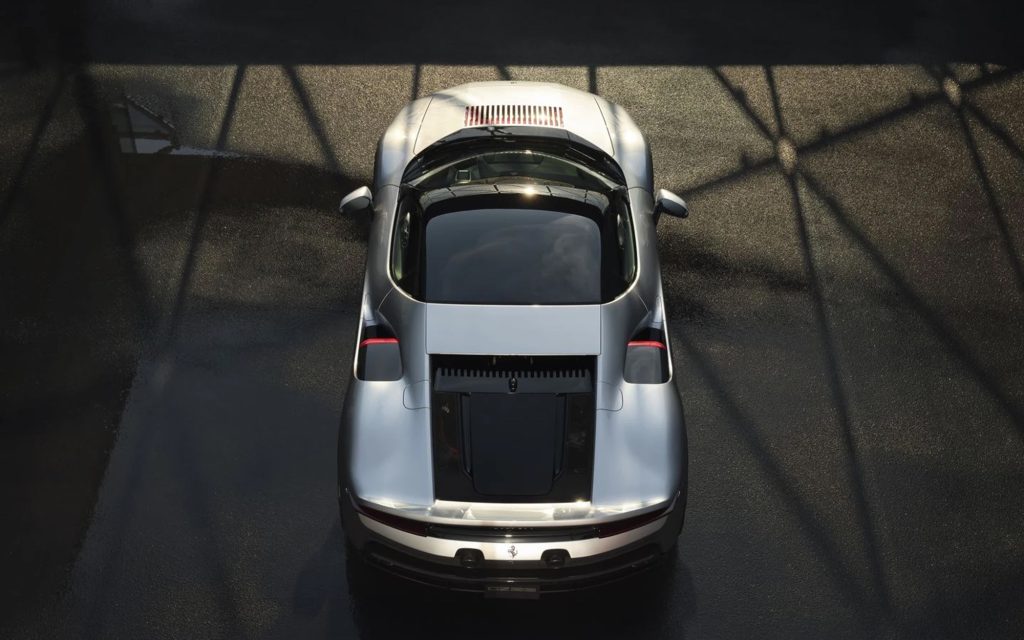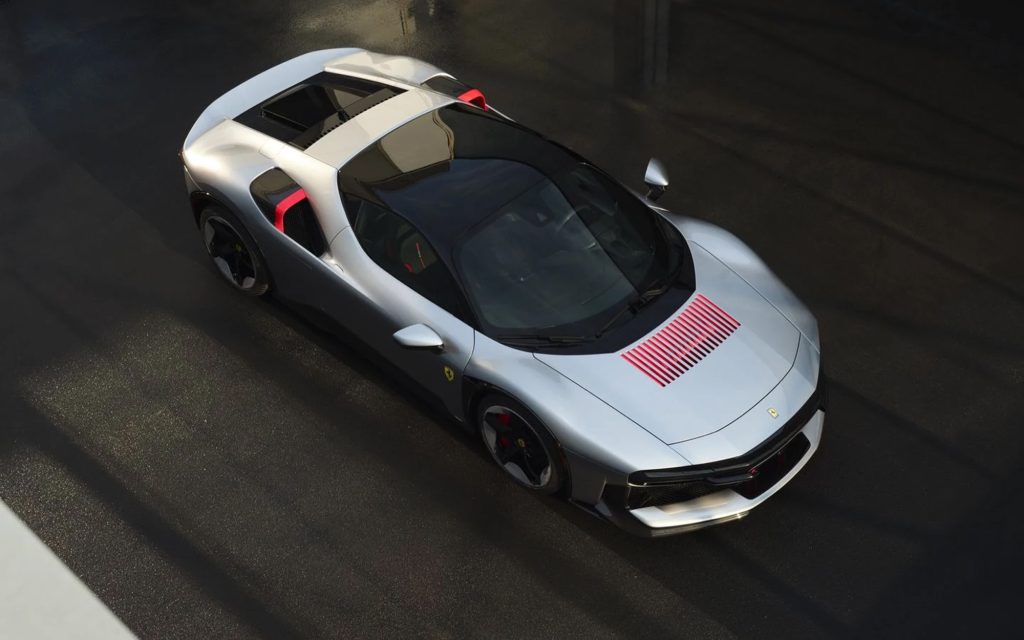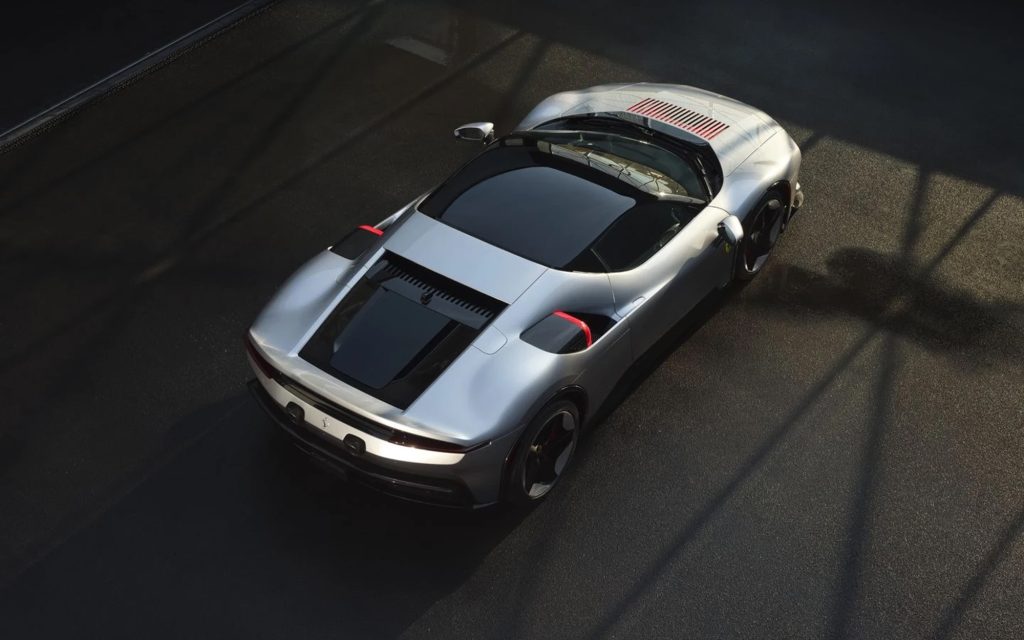


Ferrari has revealed the CZ26, a new one-off created through the company’s Special Projects program for a U.S. client. Based on the SF90 Stradale, the CZ26 retains the plug-in hybrid supercar’s mechanical package while introducing completely new bodywork, aerodynamics and interior detailing.
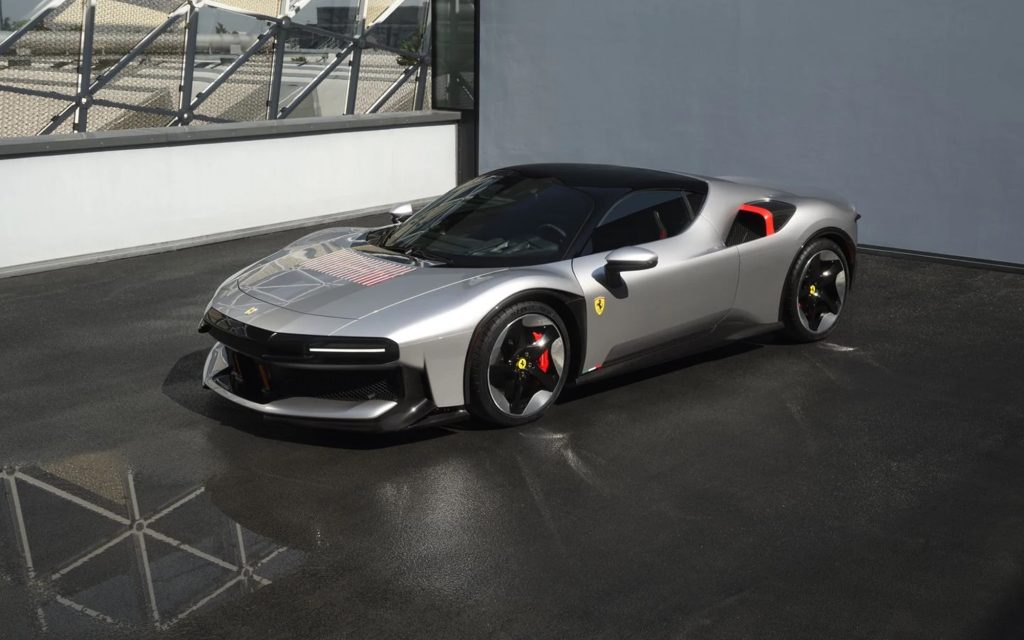
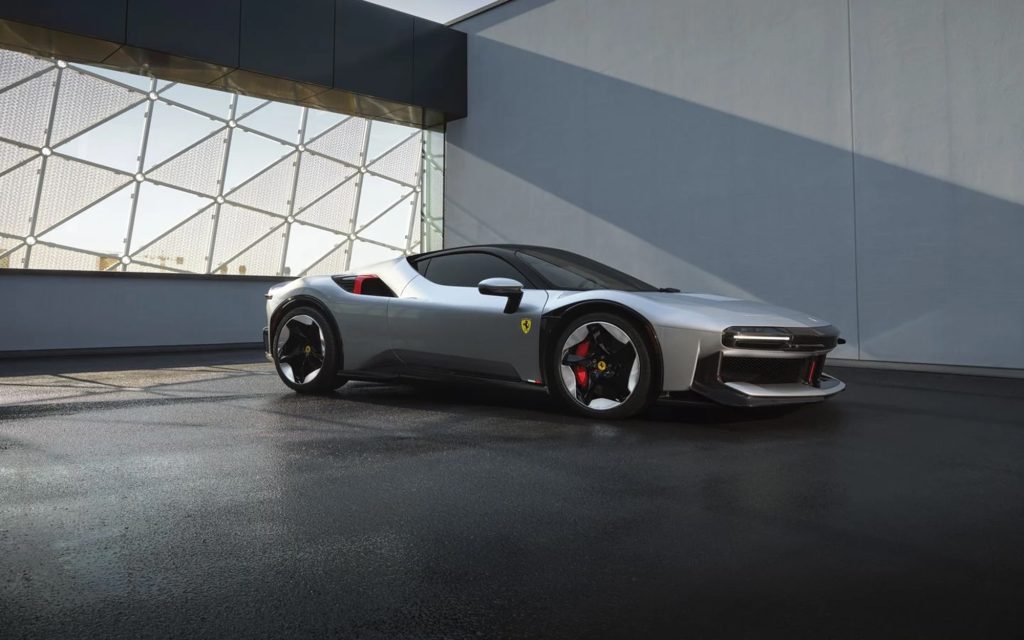
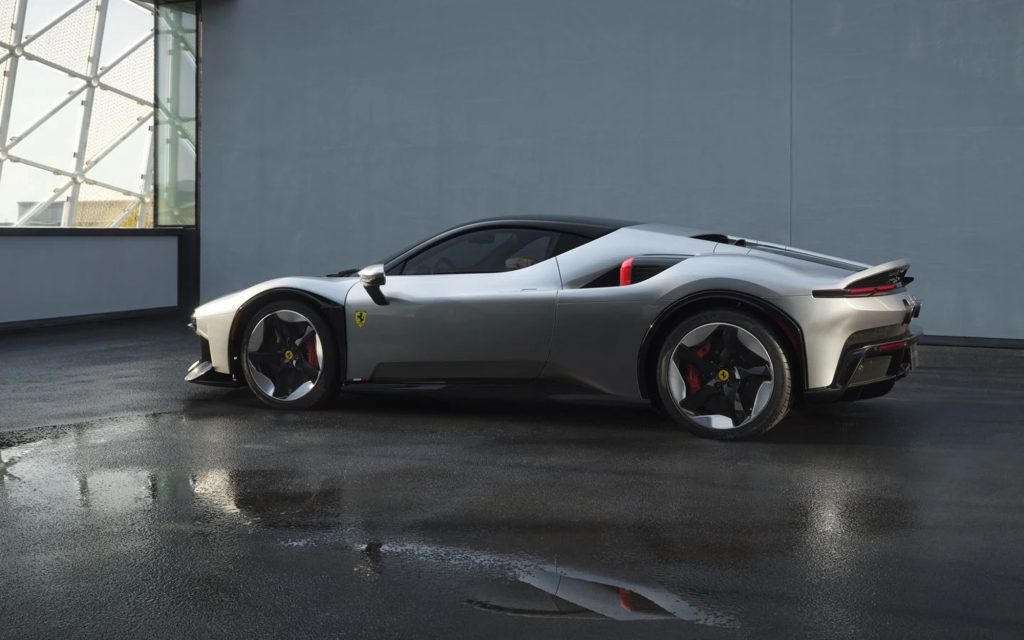
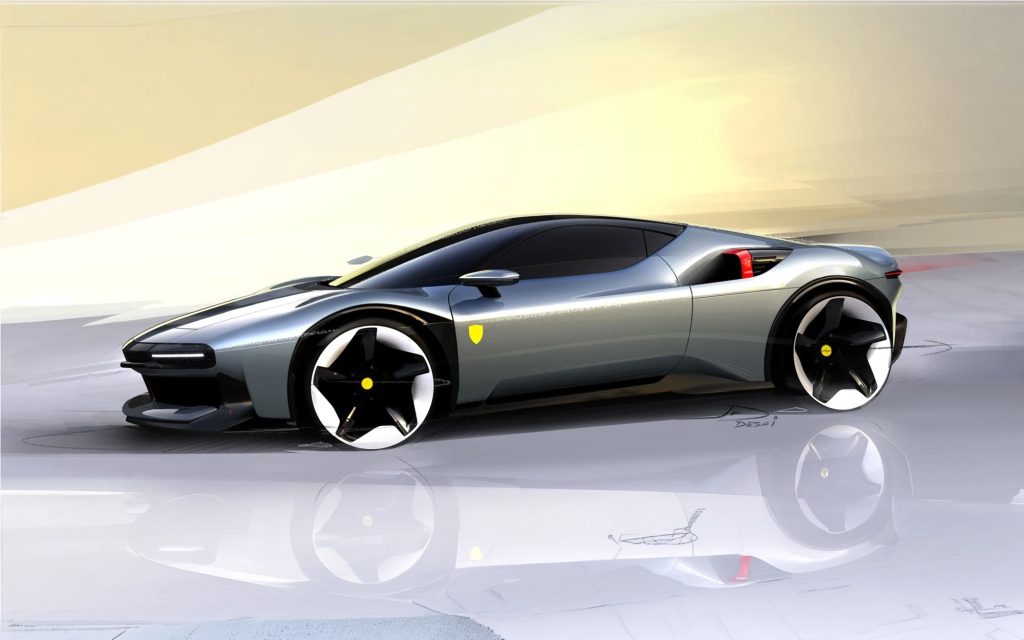
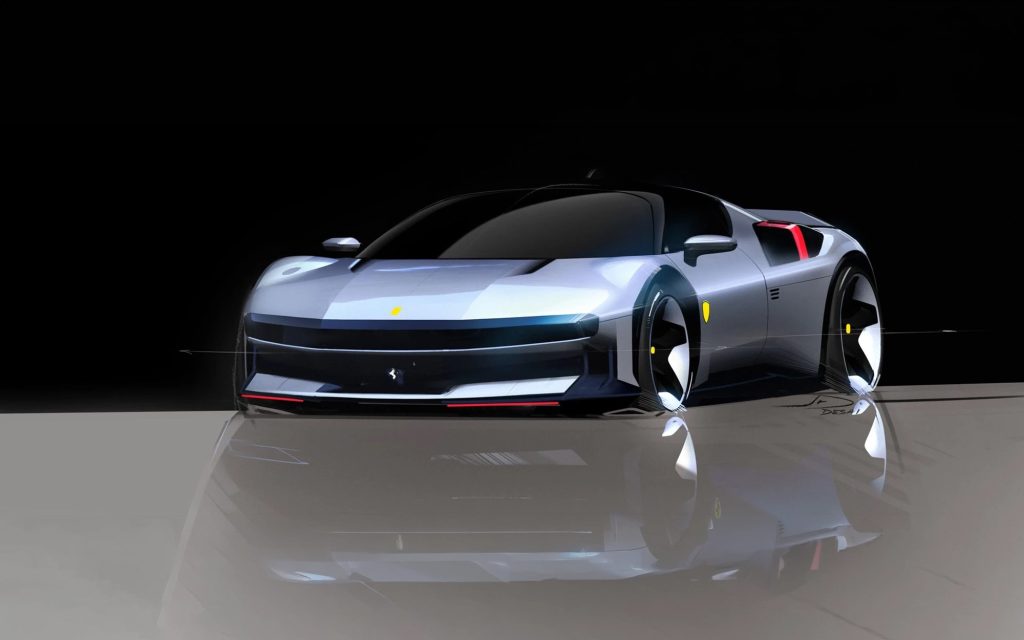
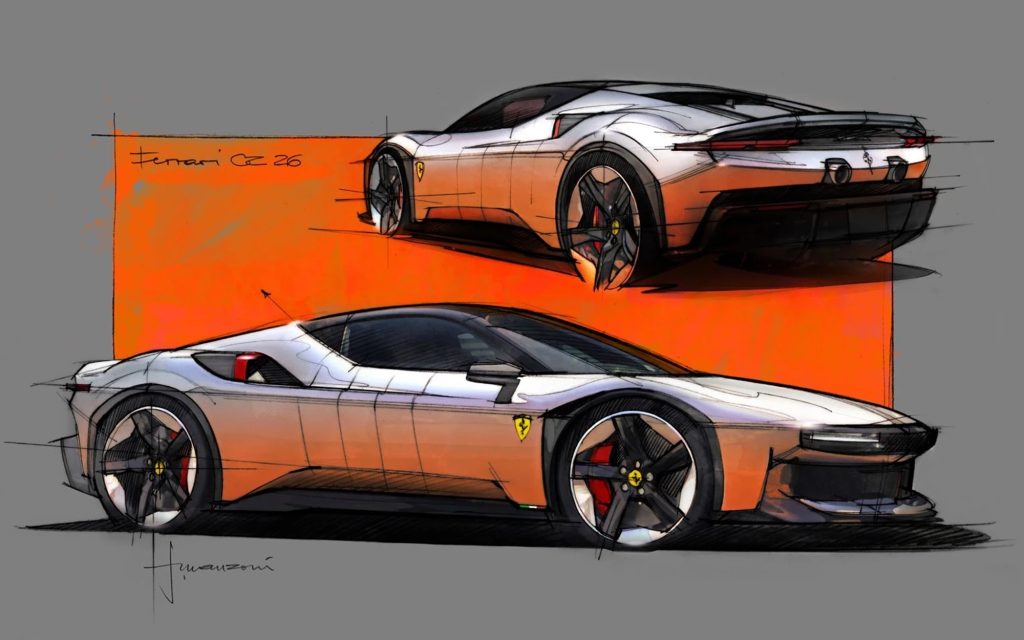
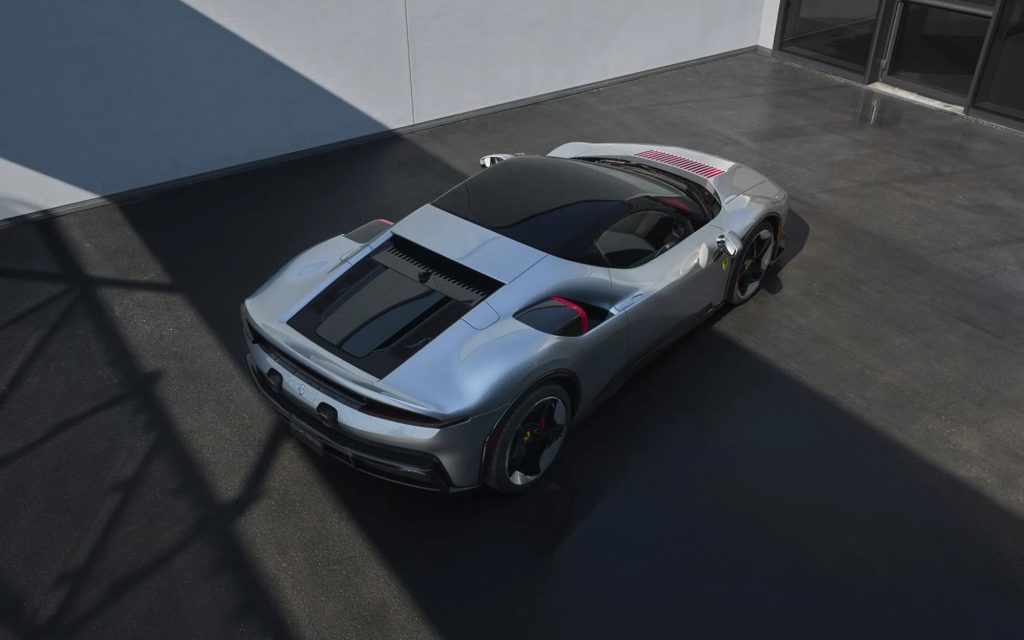
Designed by the Ferrari Design Studio under Flavio Manzoni, the CZ26 takes a more geometric approach than the SF90. Ferrari describes the design as a contemporary interpretation of the high-performance berlinetta, with influences drawn from Italian industrial design of the 1970s.
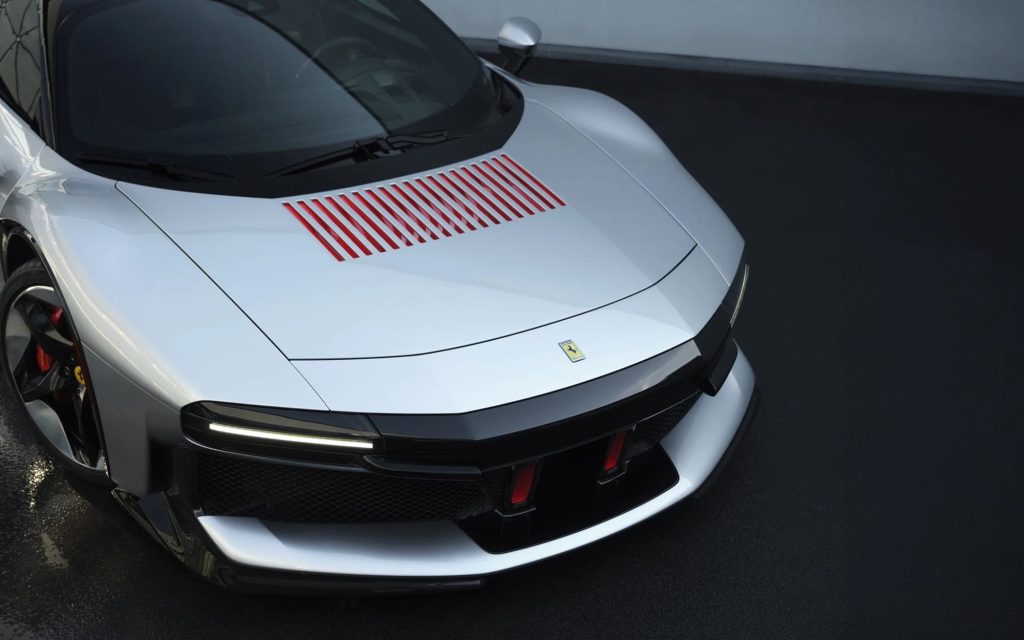
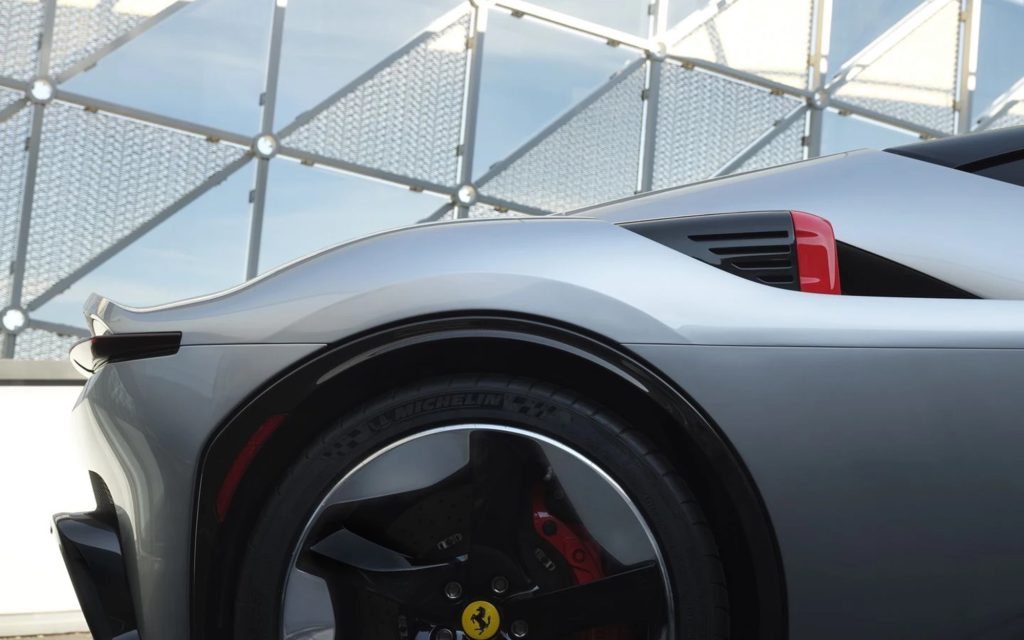
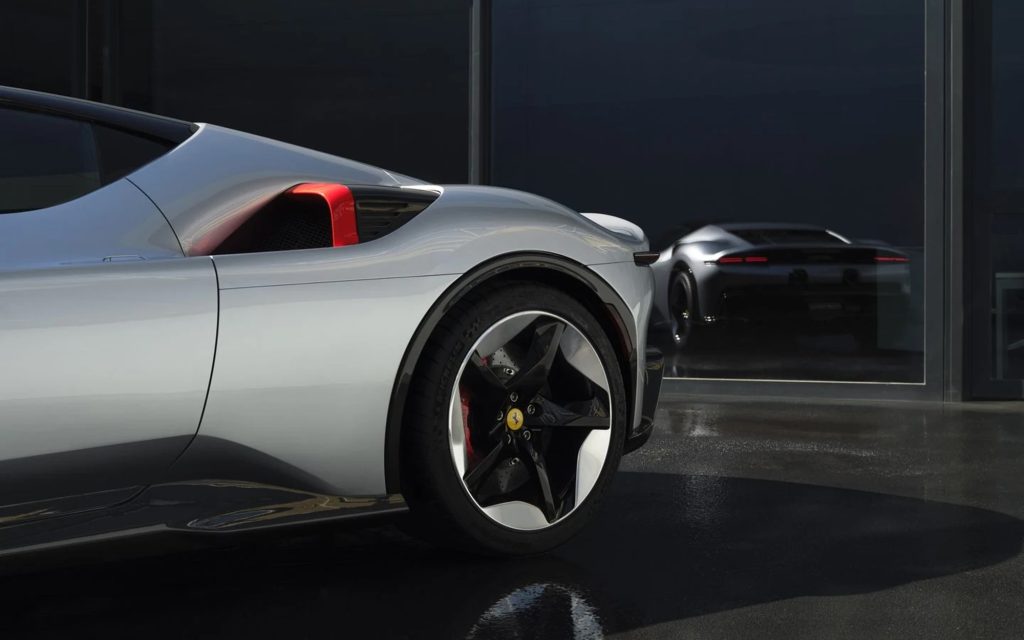
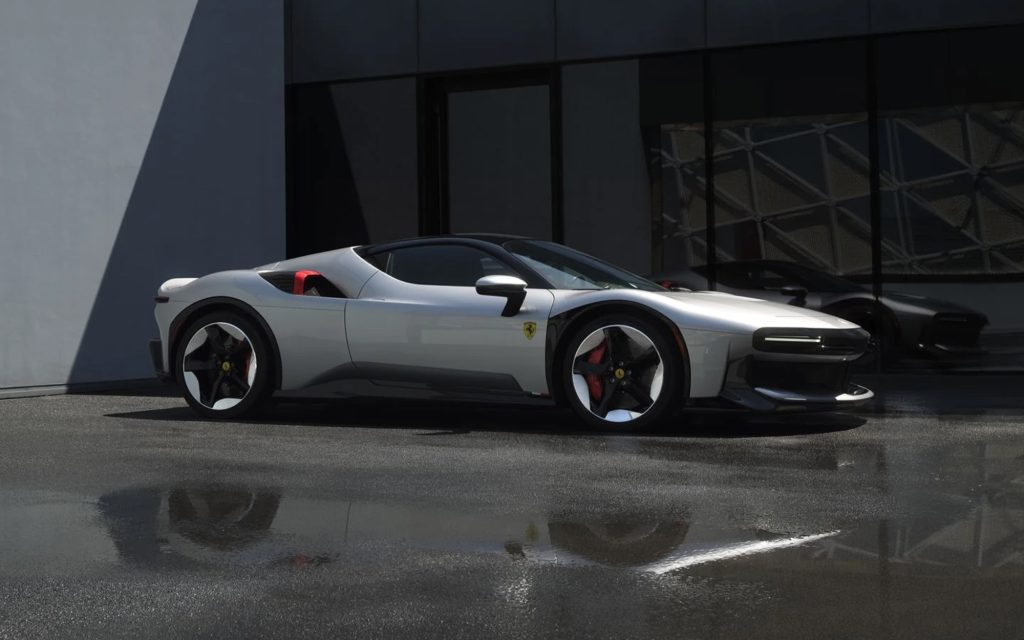
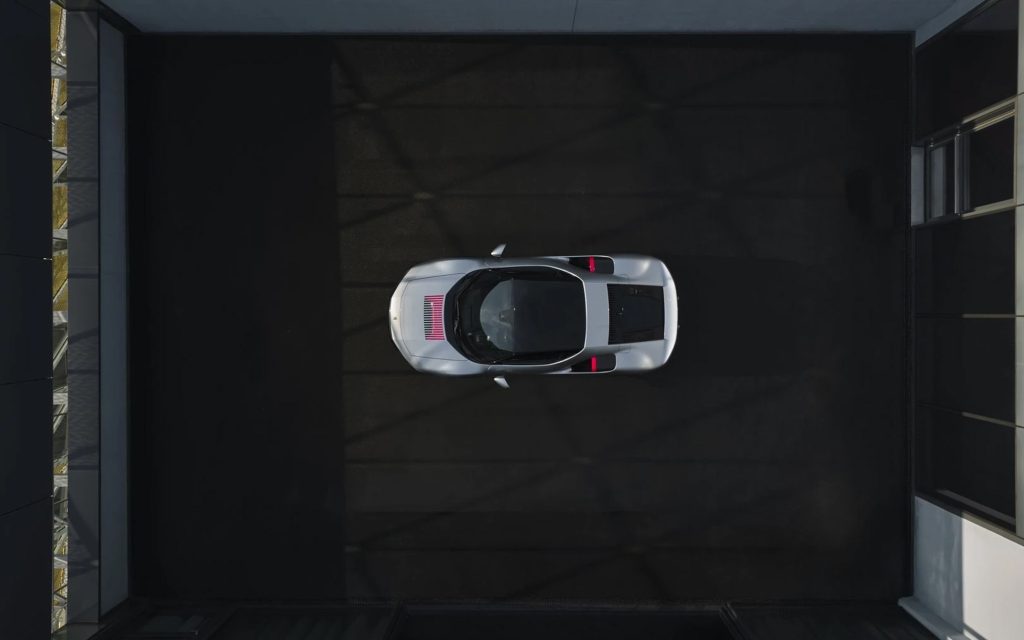
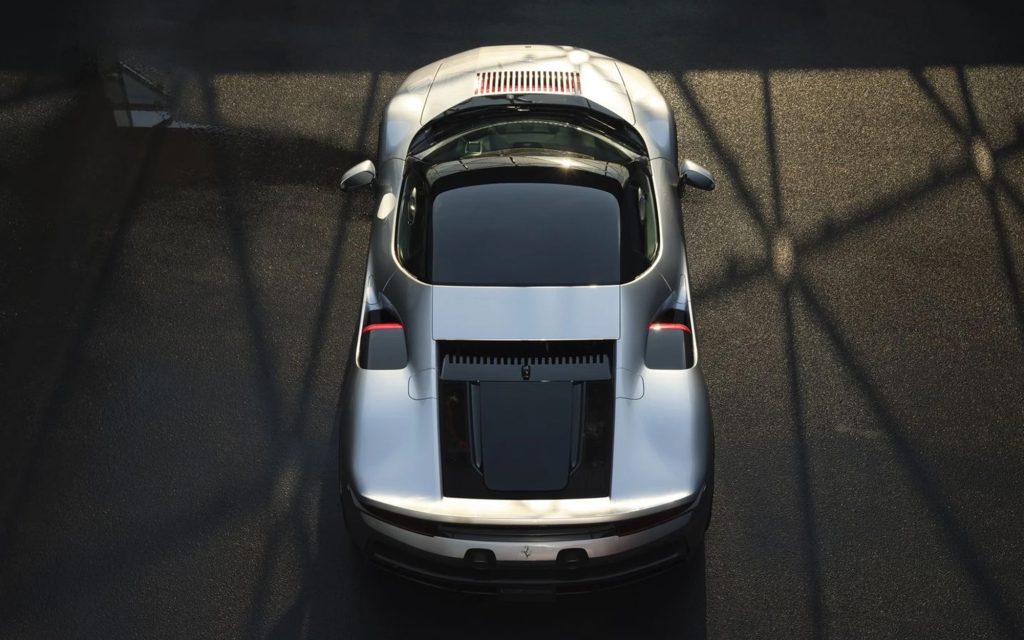
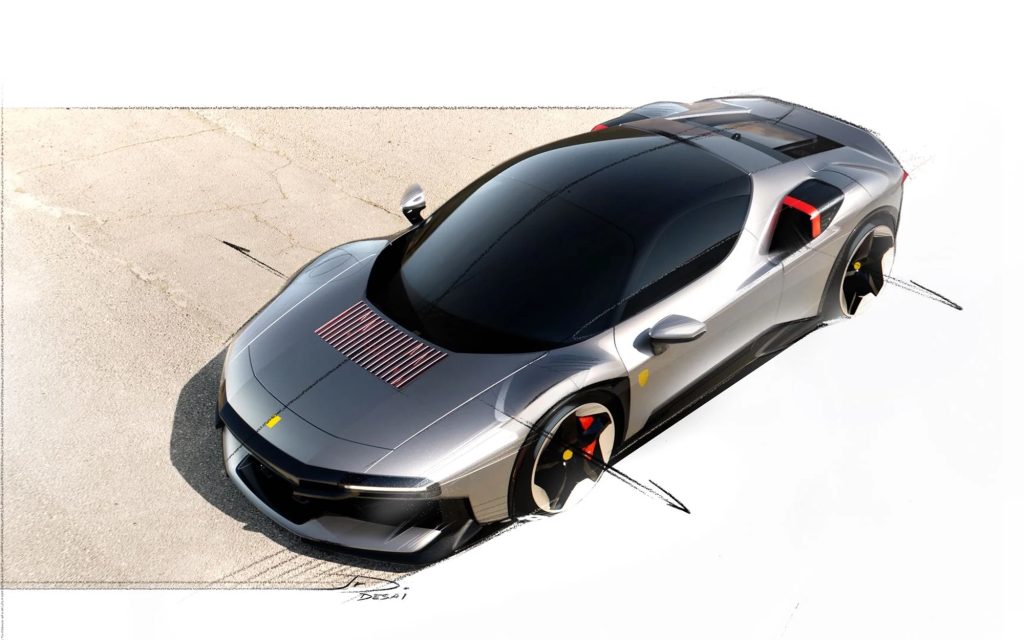
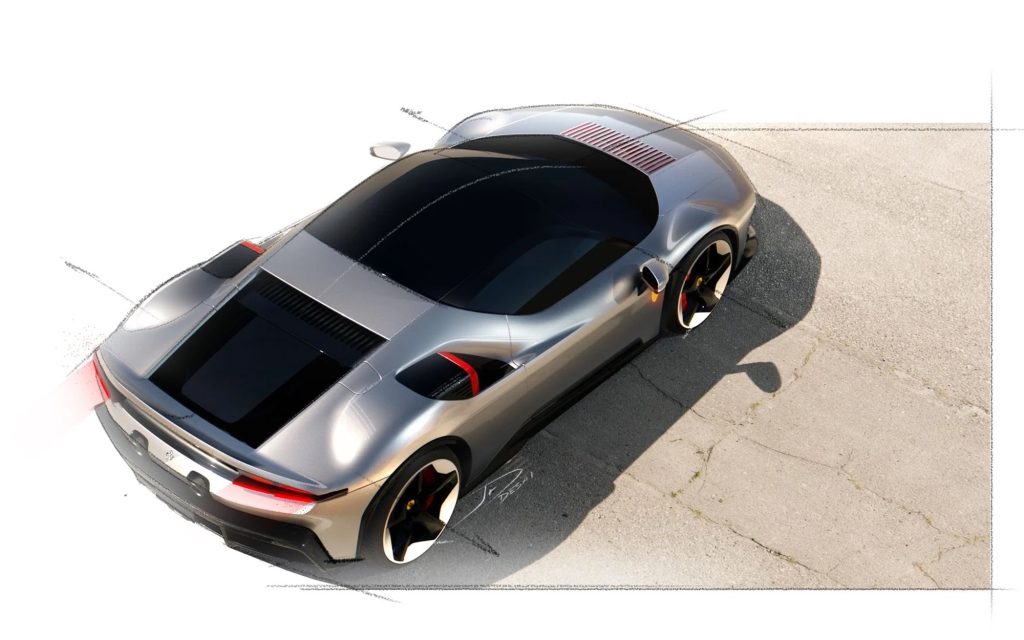
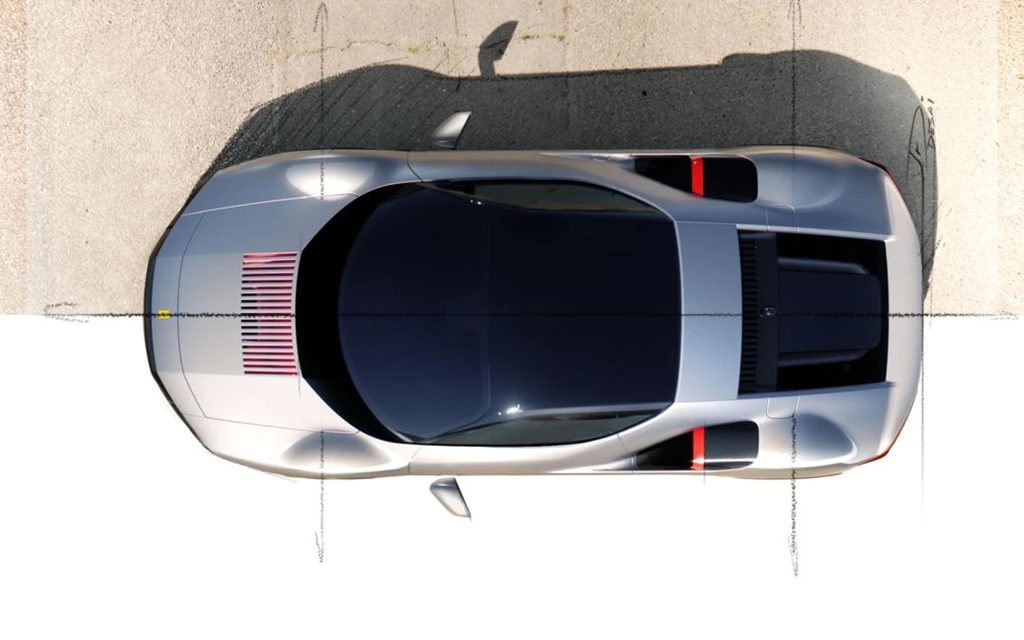
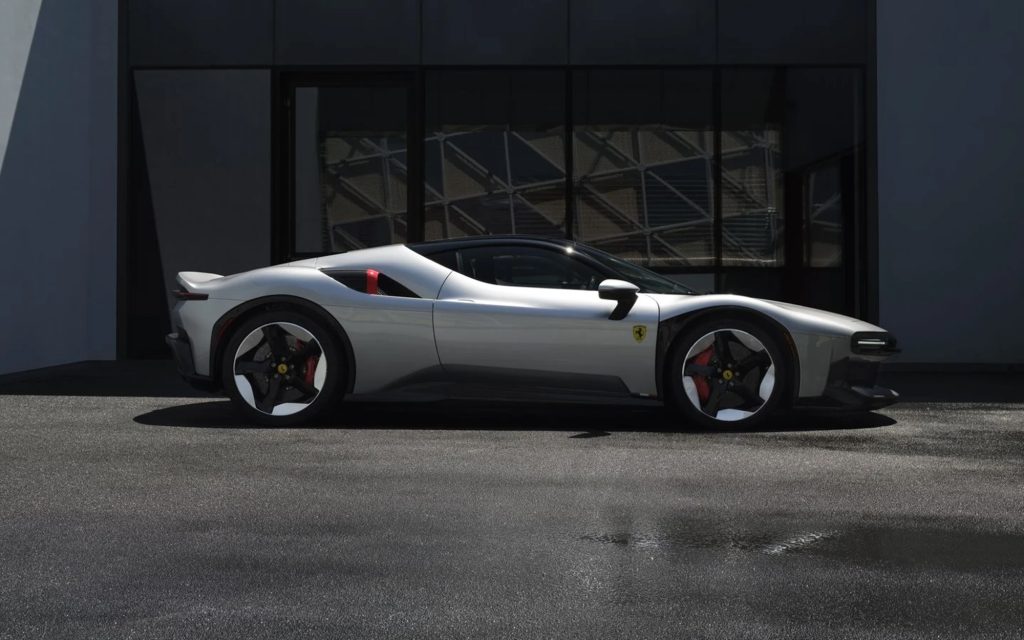
The basic proportions are defined by a low central cabin surrounded by pronounced wheel arches and a strong horizontal theme running from front to rear. Black roof and pillar treatments visually separate the cockpit from the body, while the rear terminates in a clean, truncated tail.
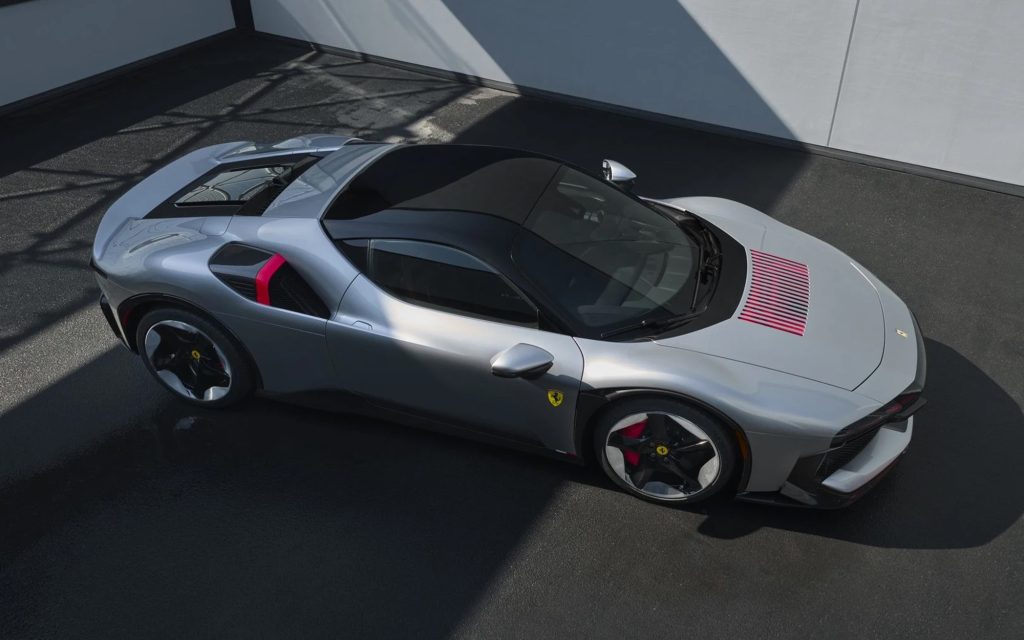
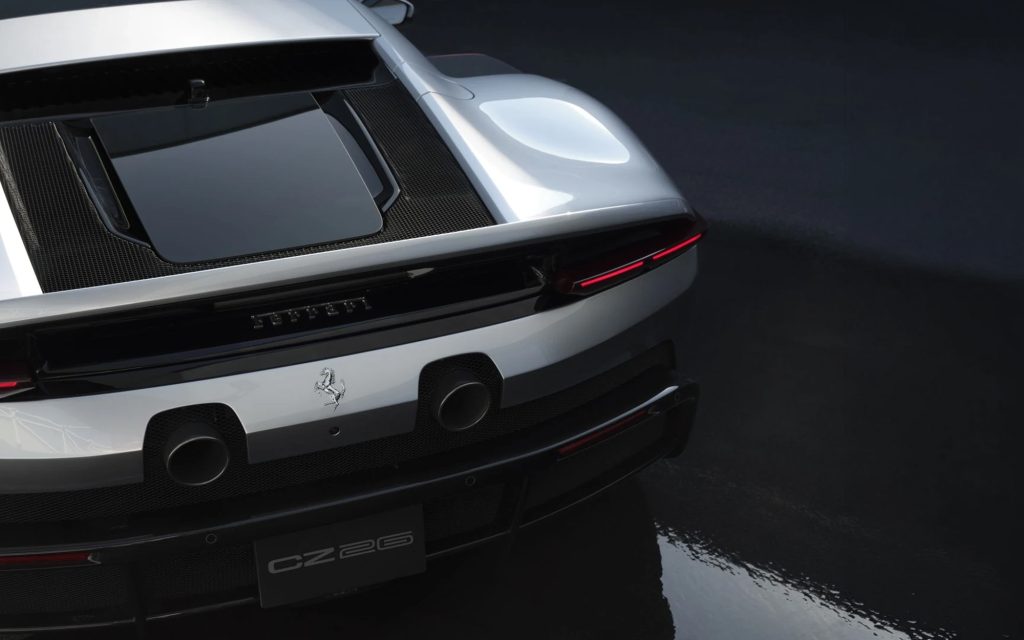
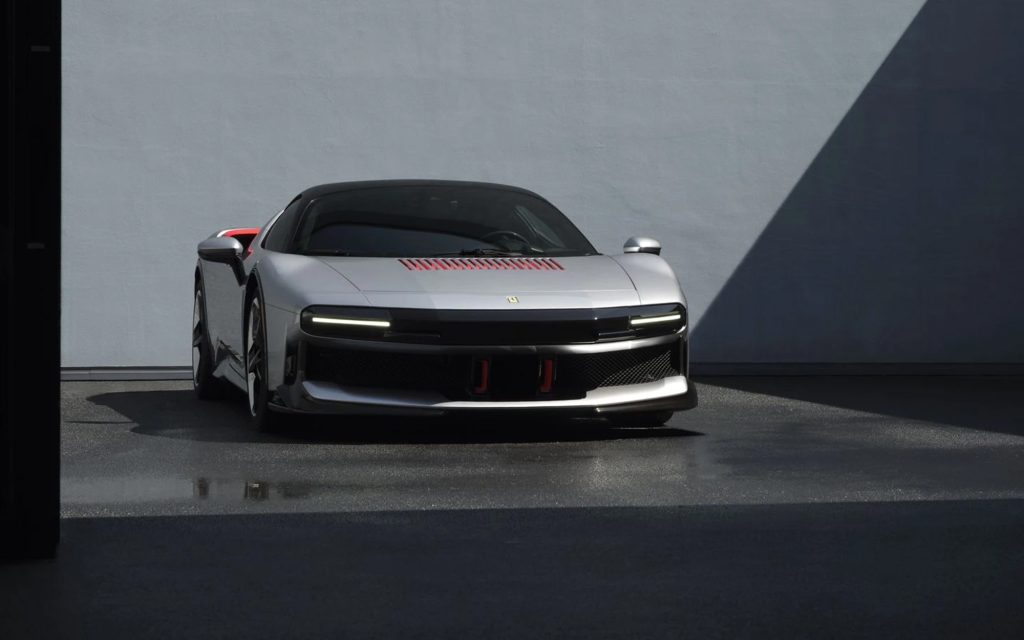
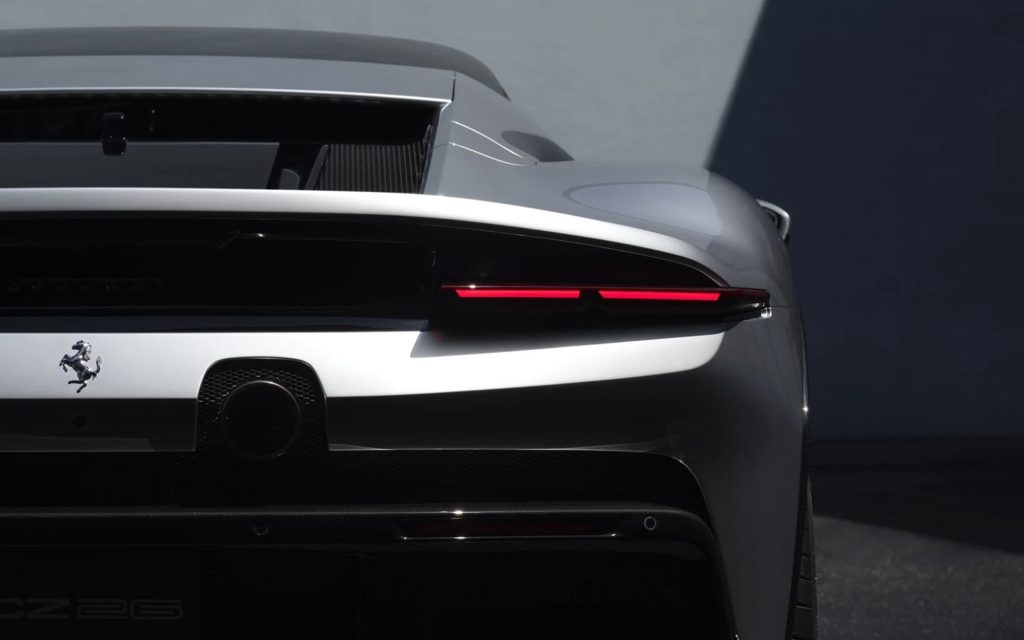
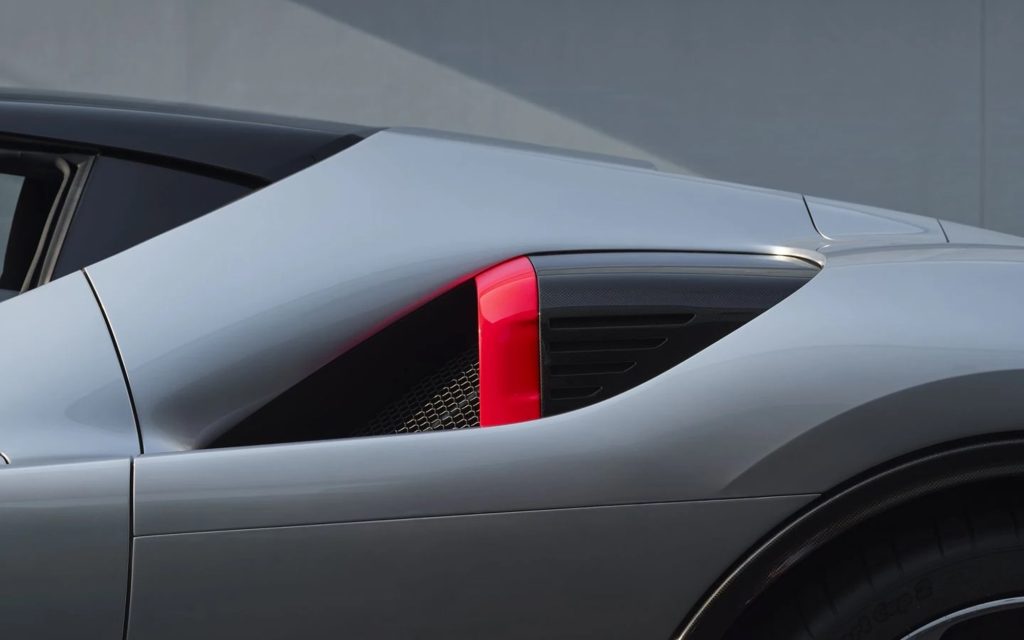
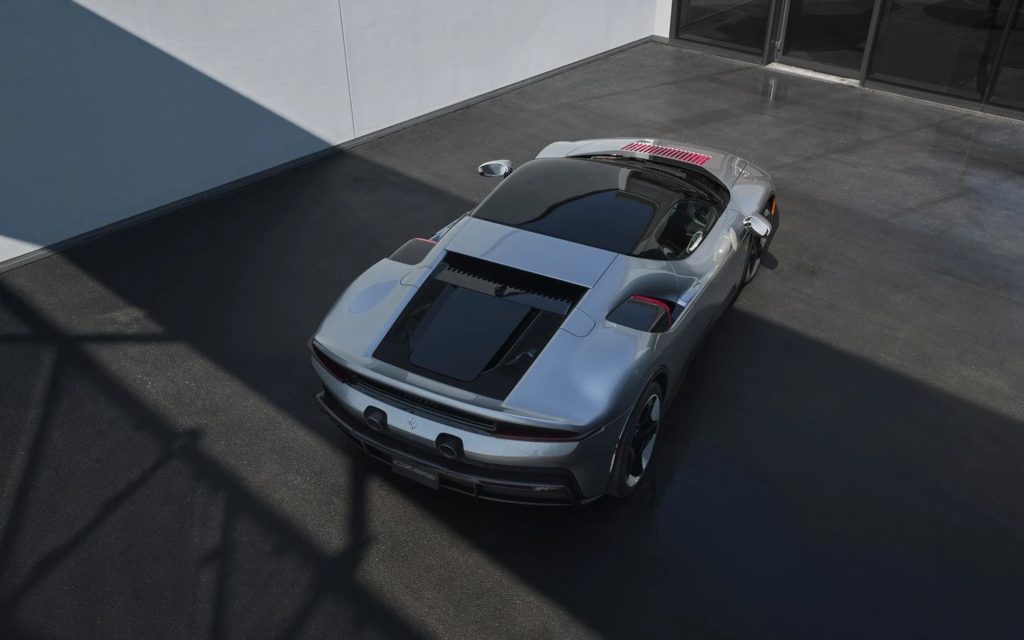
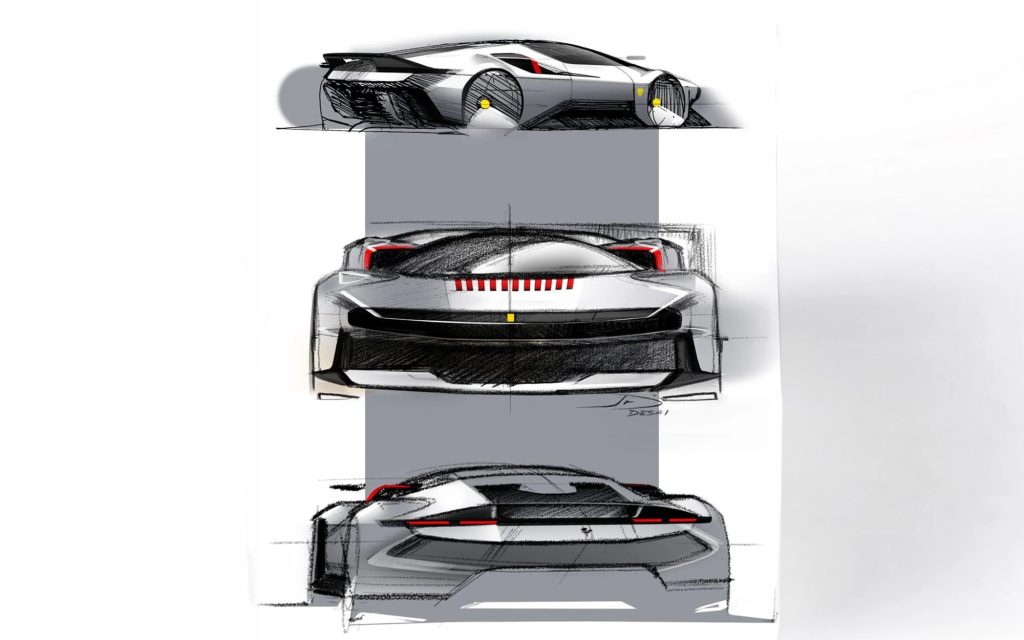
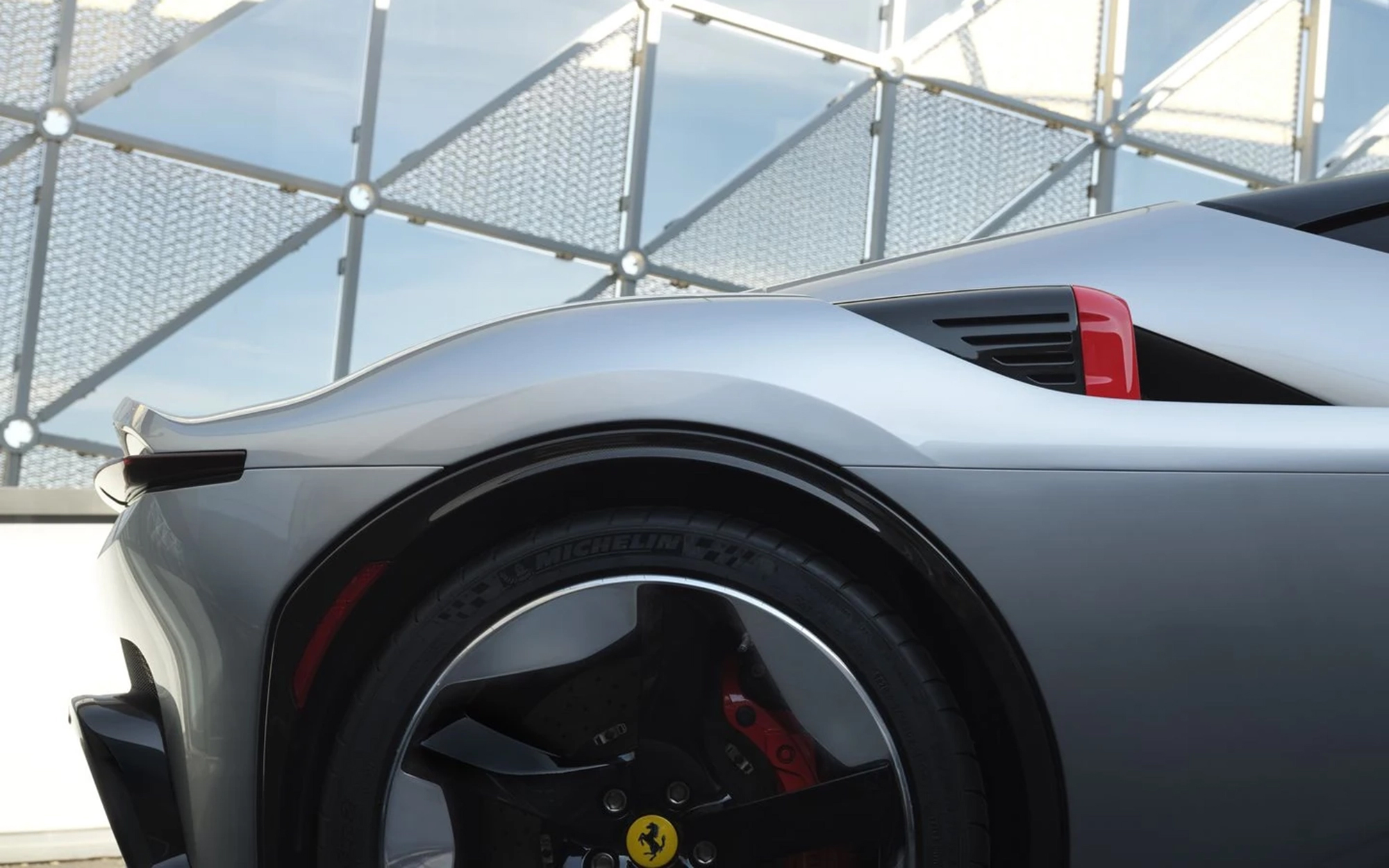
At the front, a full-width grille incorporates ultra-slim concealed lighting, brake cooling intakes, sensors and other functional components. A vertical leading edge gives the nose a more upright appearance than the SF90, while the rear uses cantilevered taillights, a large upper spoiler and a wide diffuser.
Much of the CZ26’s visual character comes from the integration of its aerodynamic systems into the bodywork.
Ferrari redesigned the front cooling system, repositioning the central radiator pack and adding bypass ducts to improve cooling and increase front-axle downforce. The underbody and vortex generators are also unique, while air curtains at the outer edges of the front bumper manage turbulence around the front wheels.
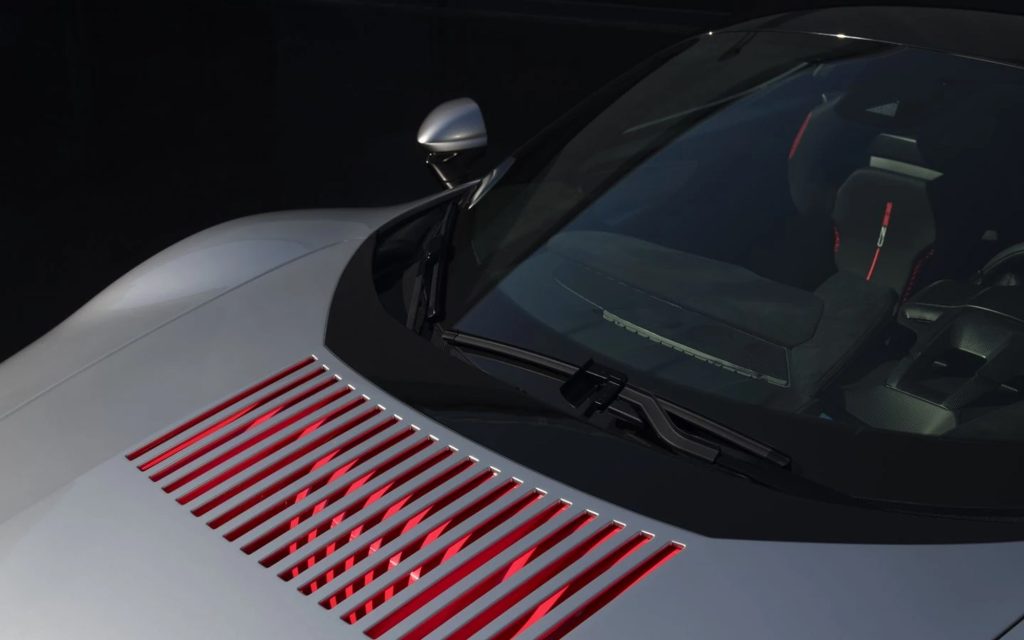
At the rear, the spoiler and dedicated diffuser increase downforce while maintaining aerodynamic efficiency. A redesigned engine cover incorporates additional ventilation for thermal management.
The CZ26 is finished in Argento Veloce, an exclusive silver developed to produce a liquid-like appearance across the body surfaces. Rosso Lampante accents identify several functional elements, while pigmented carbon fiber provides additional contrast.
Ferrari also designed a unique set of wheels for the car, combining gloss black paint with shot-peened surfaces. Natural-finish titanium exhaust outlets complete the exterior specification.
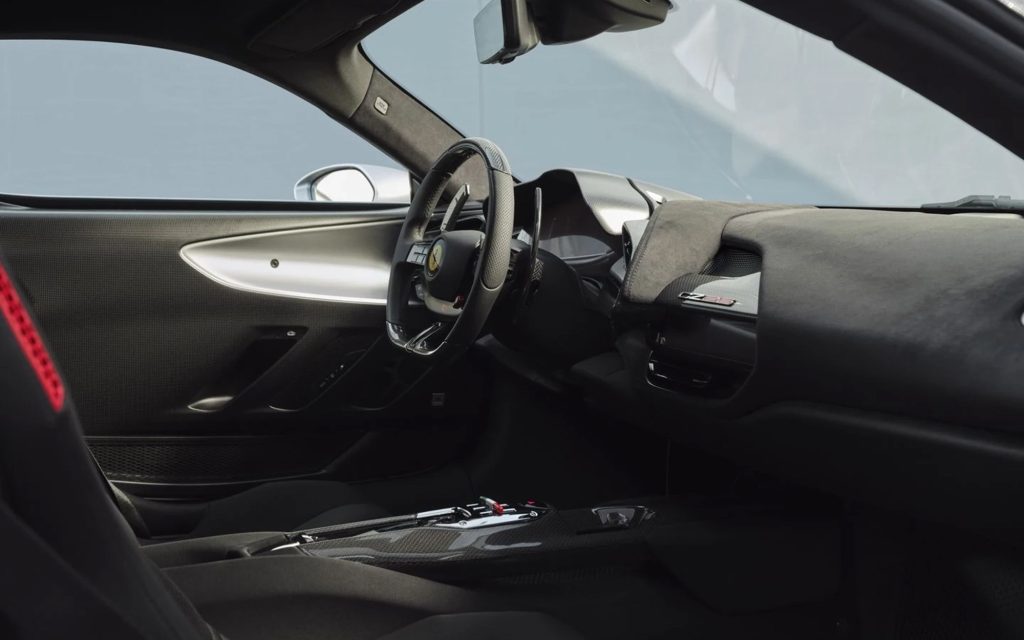
The same technical theme continues inside.
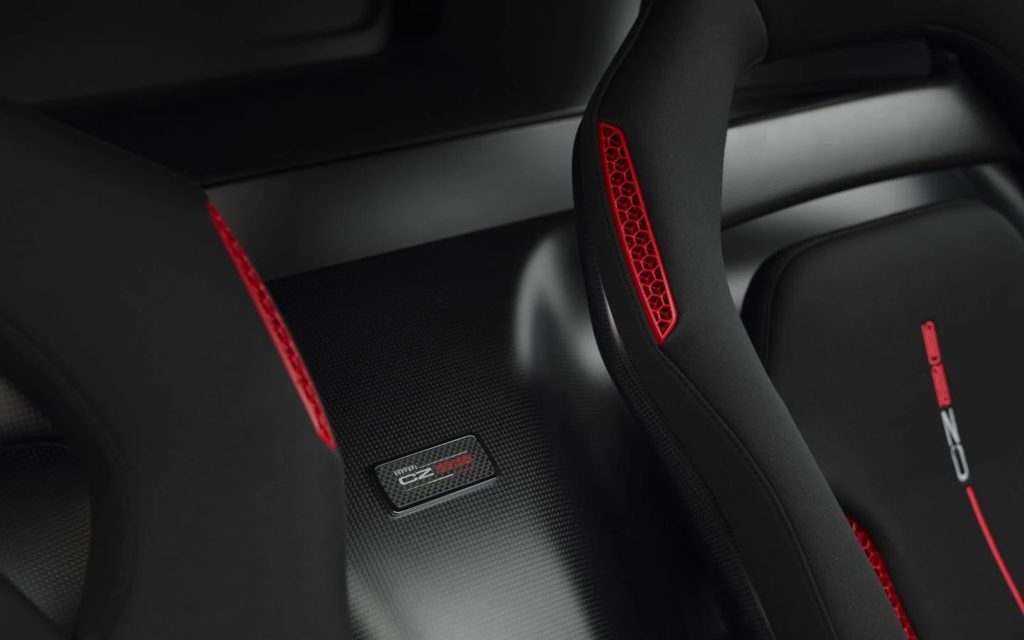
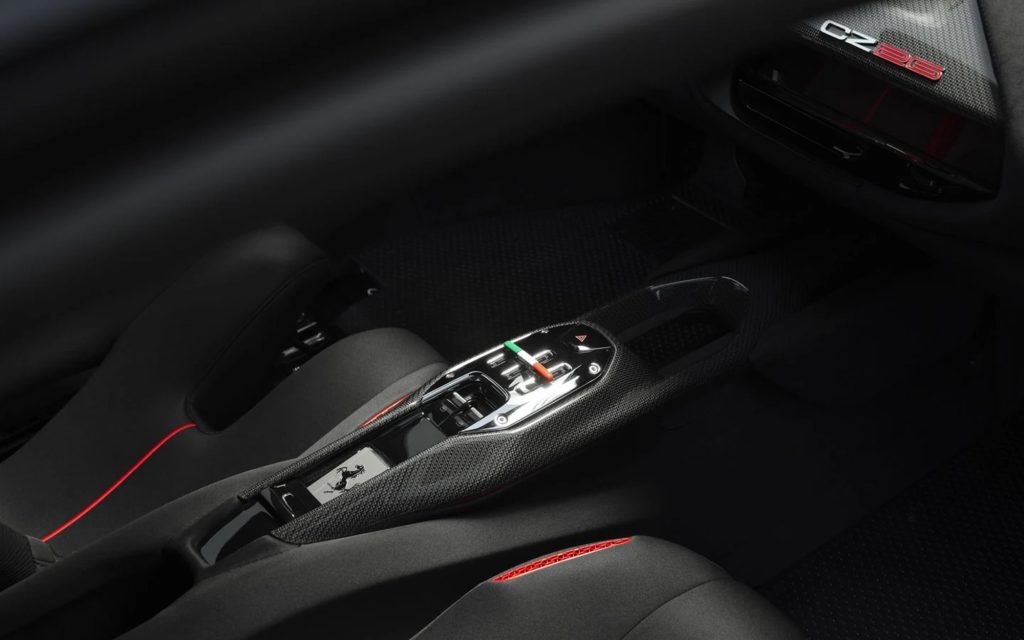
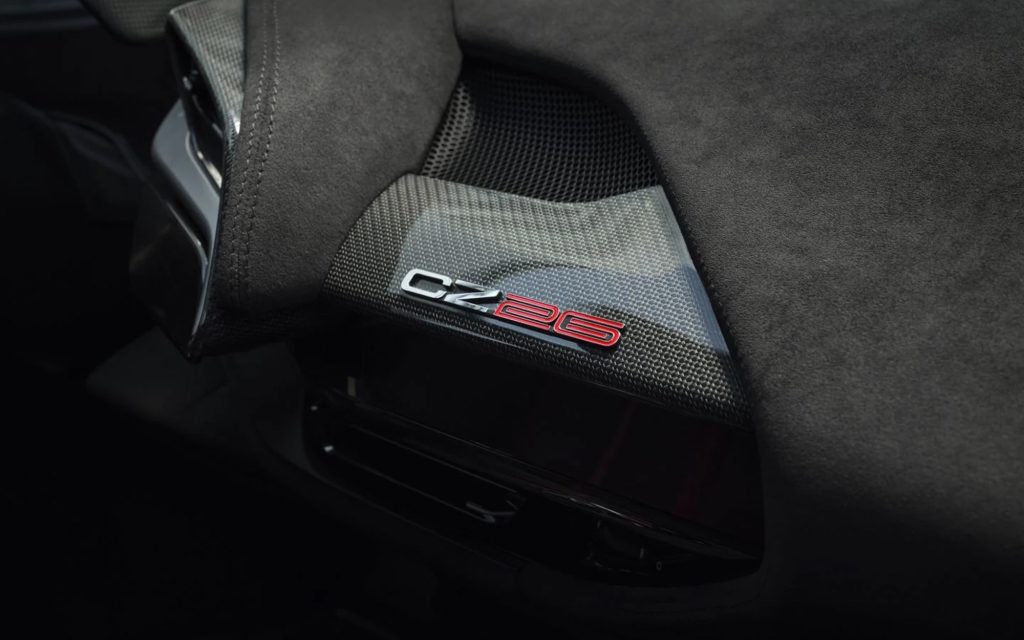
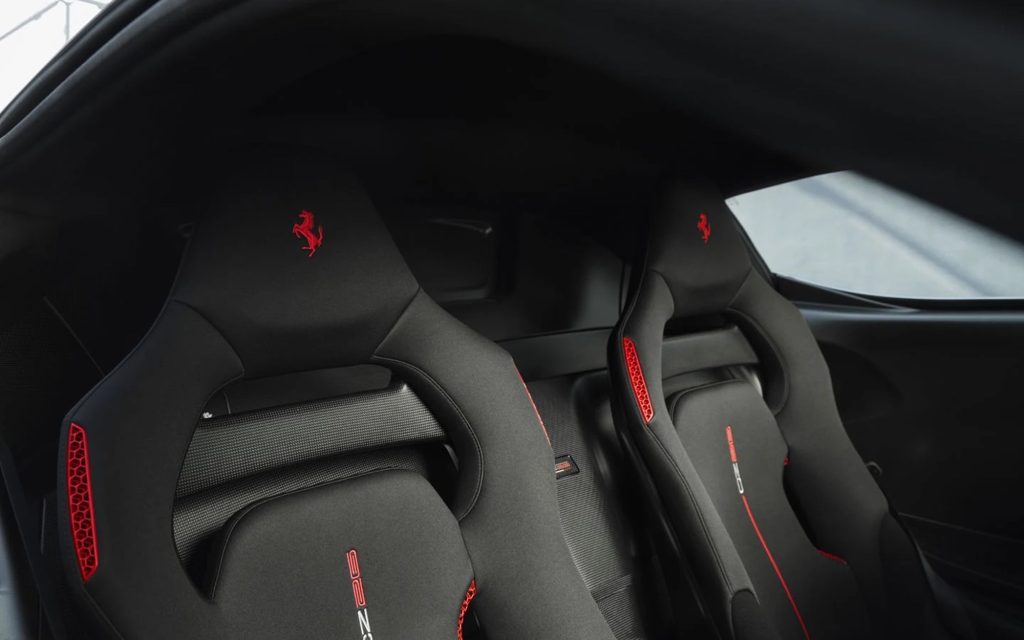
A bespoke black fabric covers much of the cabin, while the seats incorporate additively manufactured inserts developed specifically for the CZ26. Rosso Lampante accents carry the exterior color into the interior, accompanied by embroidered CZ26 identification.
Ferrari has combined matte technical fabrics and satin carbon fiber with a special gloss carbon material containing metallic filaments woven directly into its structure. Argento Veloce body-color elements also appear on the door panels and upper dashboard.
Mechanically, the CZ26 retains the SF90 Stradale’s plug-in hybrid powertrain.
Its 4.0-liter twin-turbocharged V8 works with three electric motors, with the combustion engine producing 797 cv and the electric motors contributing up to 162 kW. Power is delivered through Ferrari’s eight-speed dual-clutch transmission and electric all-wheel-drive system.
Performance remains firmly in SF90 territory. Ferrari quotes 0-100 km/h in 2.5 seconds, 0-200 km/h in 6.7 seconds and a maximum speed of 328 km/h, or approximately 204 mph. The 7.9-kWh battery provides up to 25 km, or about 15.5 miles, of electric driving.
The CZ26 measures 4,762 mm long, 2,005 mm wide and just 1,189 mm high, with a 45:55 front-to-rear weight distribution.
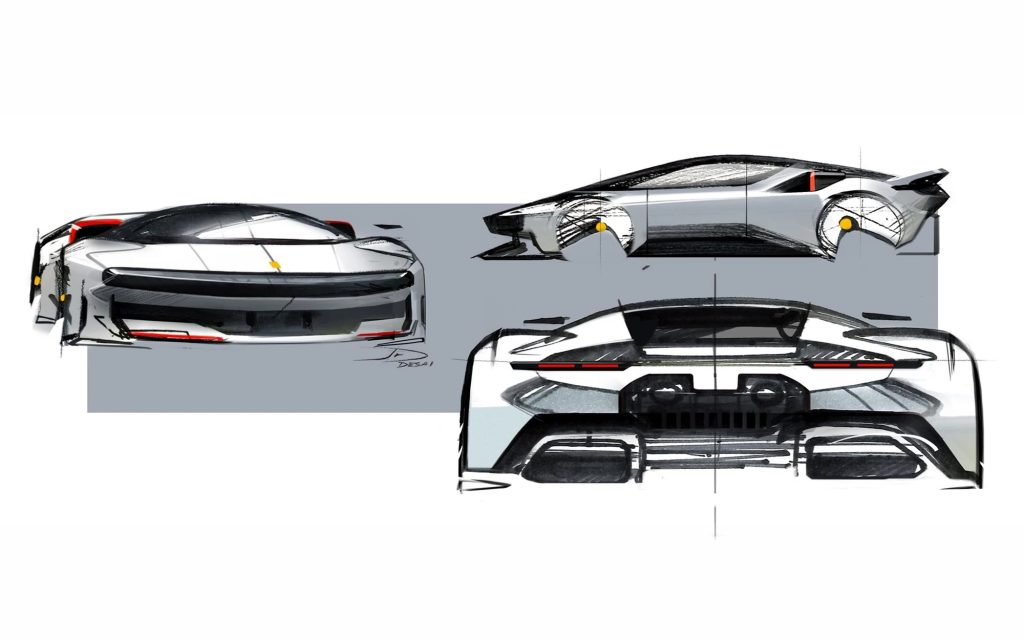
Like other Ferrari Special Projects commissions, the CZ26 was developed directly with its owner. Ferrari says these one-off projects typically require around two years, beginning with the client’s initial concept and progressing through design development, physical models and engineering before construction.
The CZ26 remains fundamentally an SF90 Stradale underneath, but almost everything visible has been reconsidered. Rather than modifying an existing Ferrari design, the Special Projects team has used the SF90’s architecture as the basis for a separate design identity — one that exists on a single car.