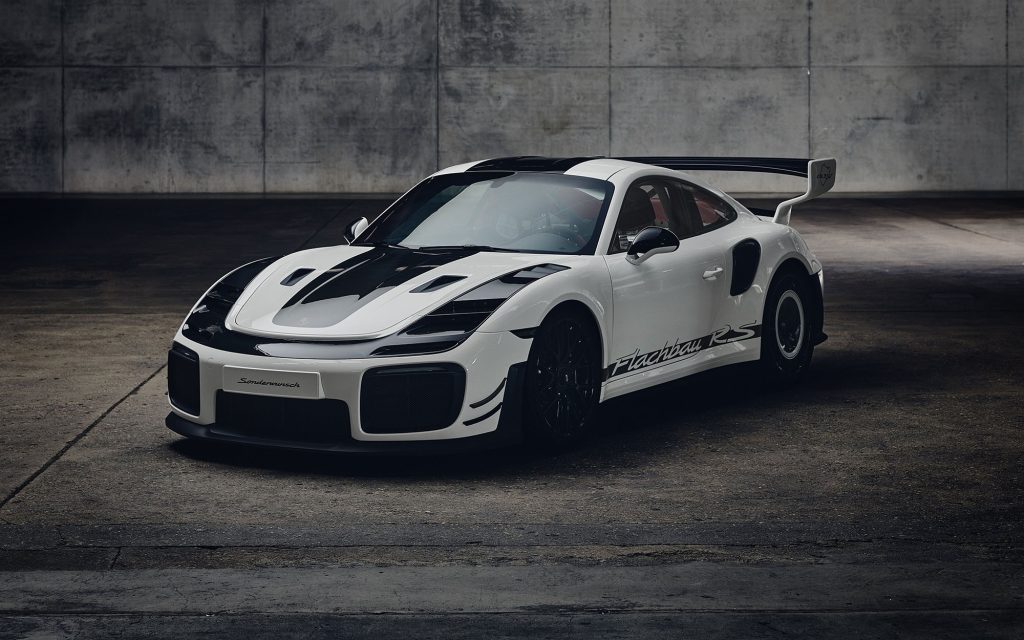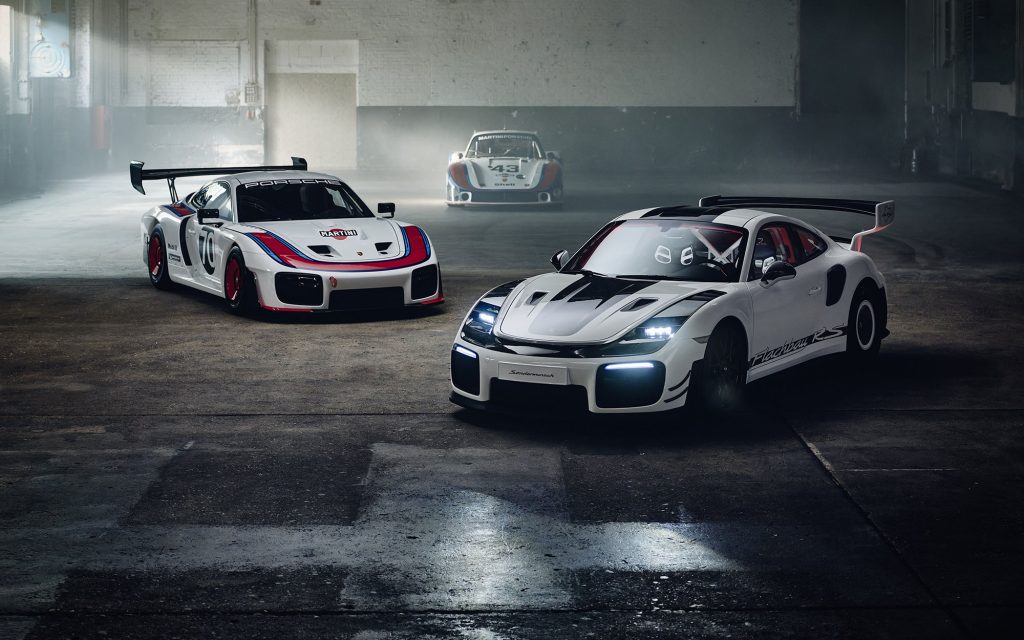

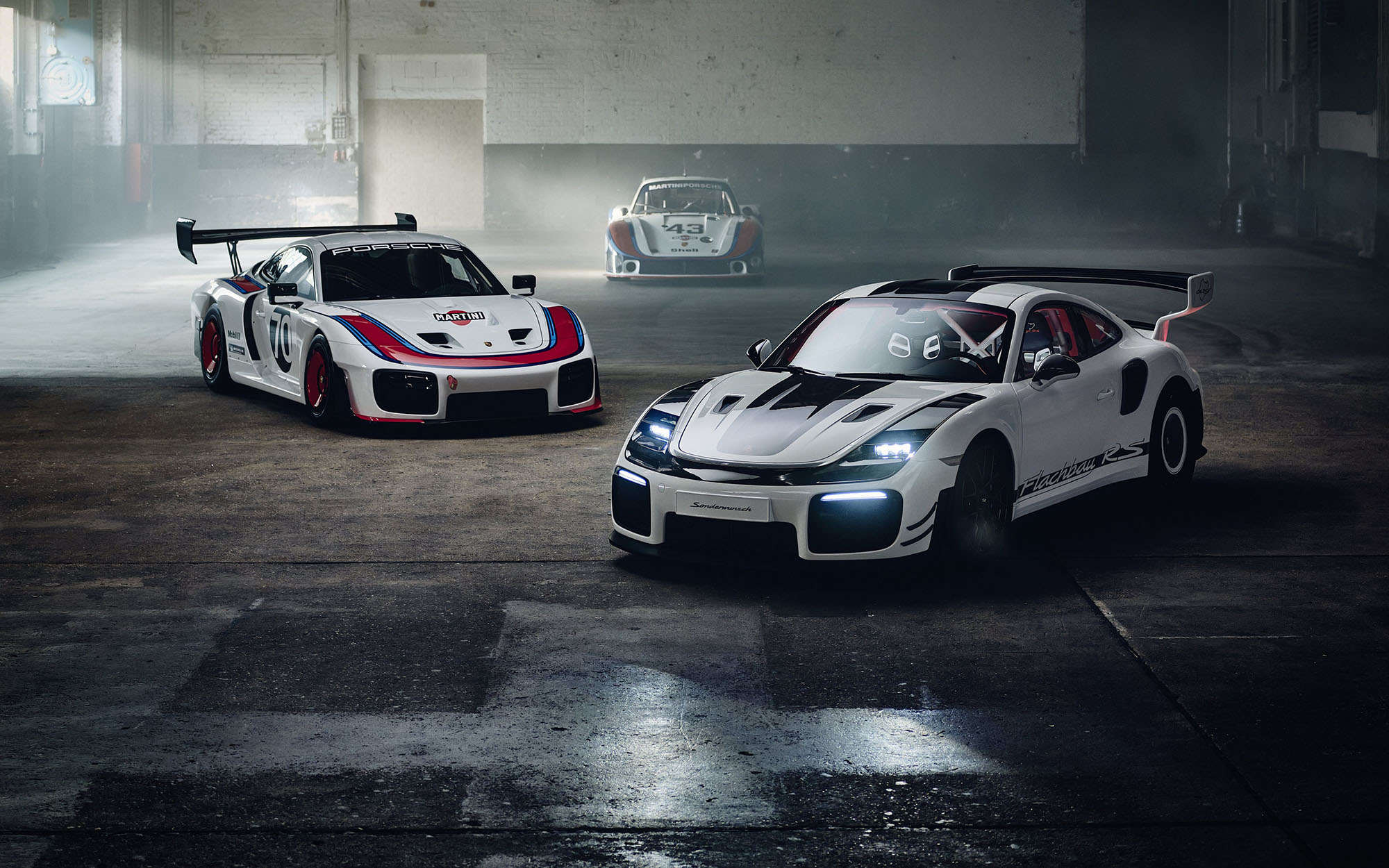

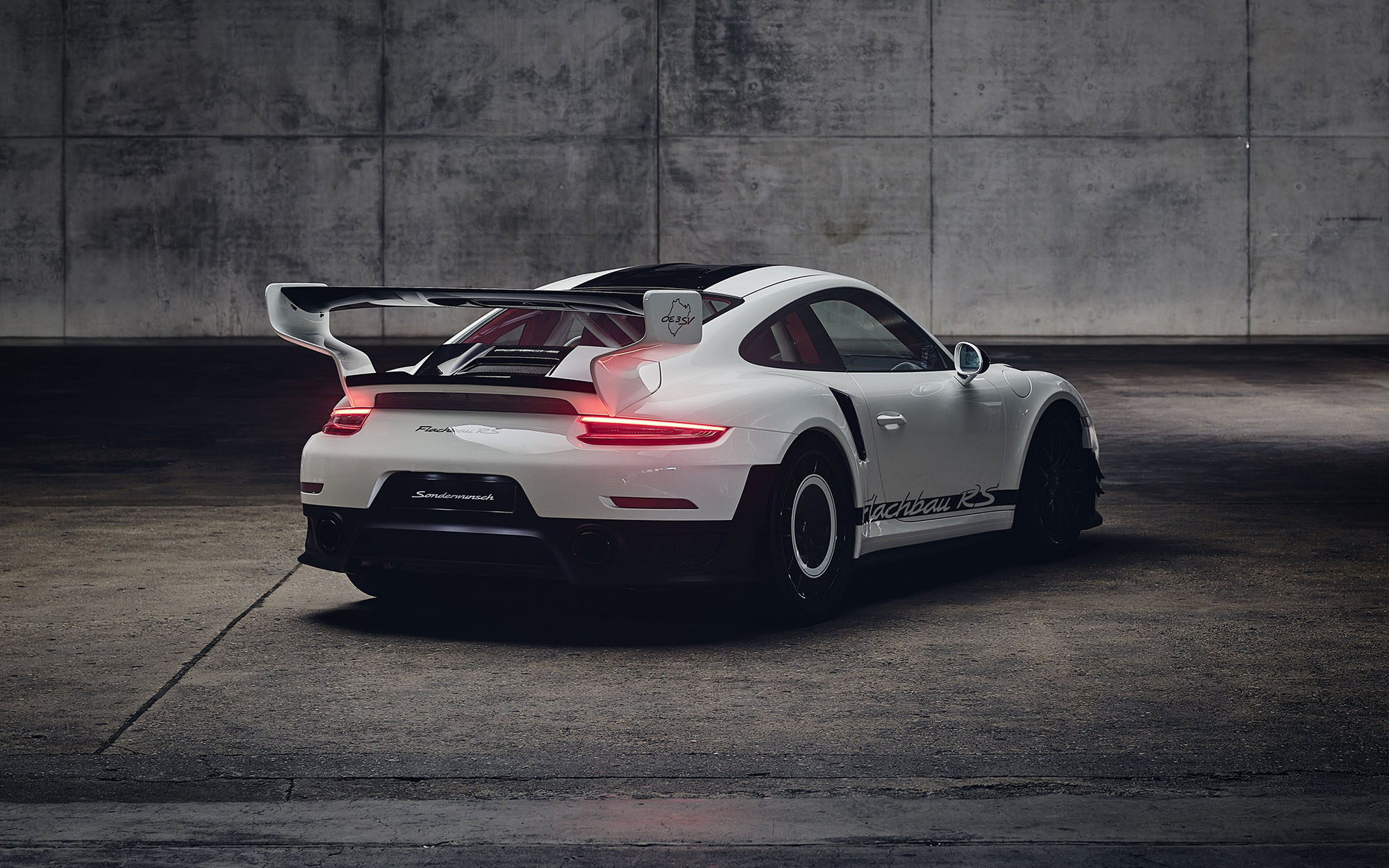
Porsche has revealed an extraordinary one-off 911 GT2 RS that takes the modern interpretation of the Flachbau considerably further. Created through Porsche Sonderwunsch in collaboration with Style Porsche, Porsche Motorsport and Manthey, the car reworks a virtually new 2018 911 GT2 RS with Weissach Package into a road-legal homage to the Porsche 935/78 “Moby Dick.”
Dubbed the Flachbau RS, the project took nearly three years to complete and will make its public debut during Monterey Car Week. More than a cosmetic exercise, Porsche subjected the car to a development program approaching that of a production model, including wind-tunnel work, crash and airbag simulations, structural testing and 50 laps of the Nürburgring Nordschleife. Three additional test vehicles were constructed specifically for validation.
The mechanical package of the GT2 RS remains unchanged. Instead, much of the work centered on aerodynamics, body design and reducing weight from a car already engineered extensively around those objectives.
A Modern Flachbau
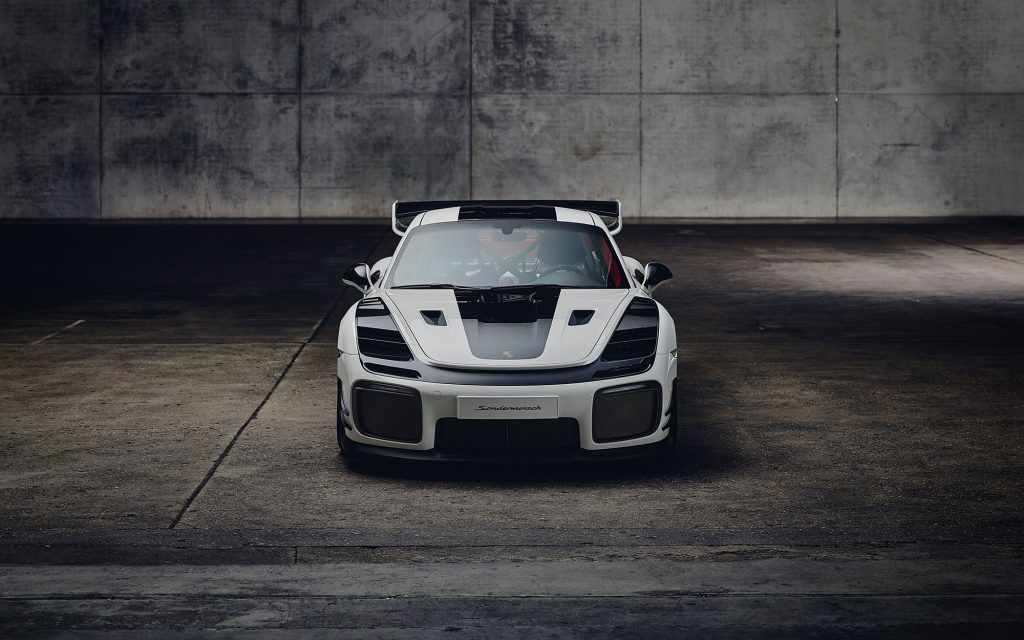
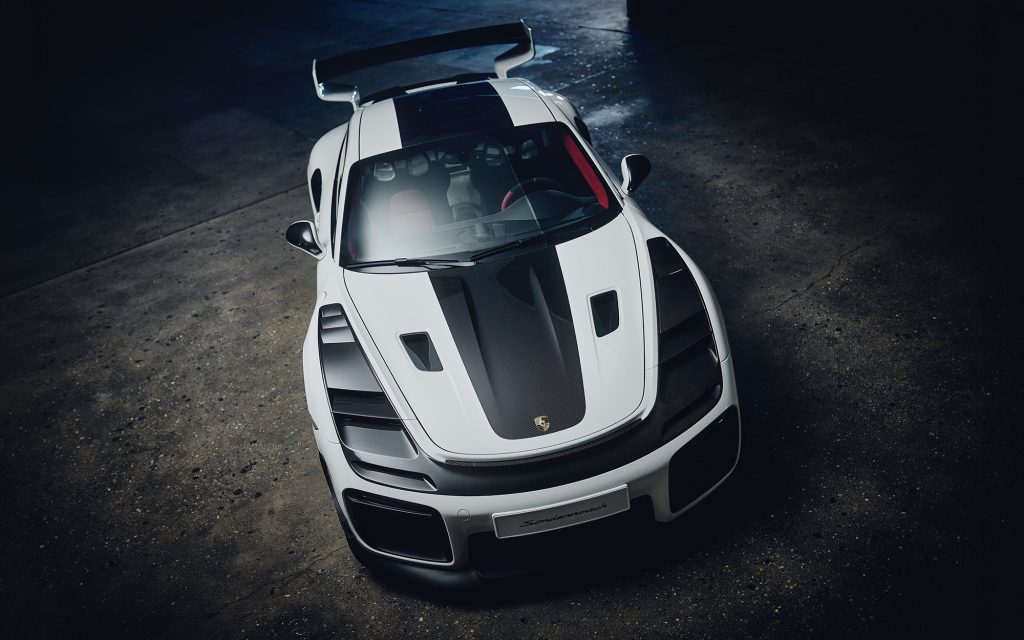
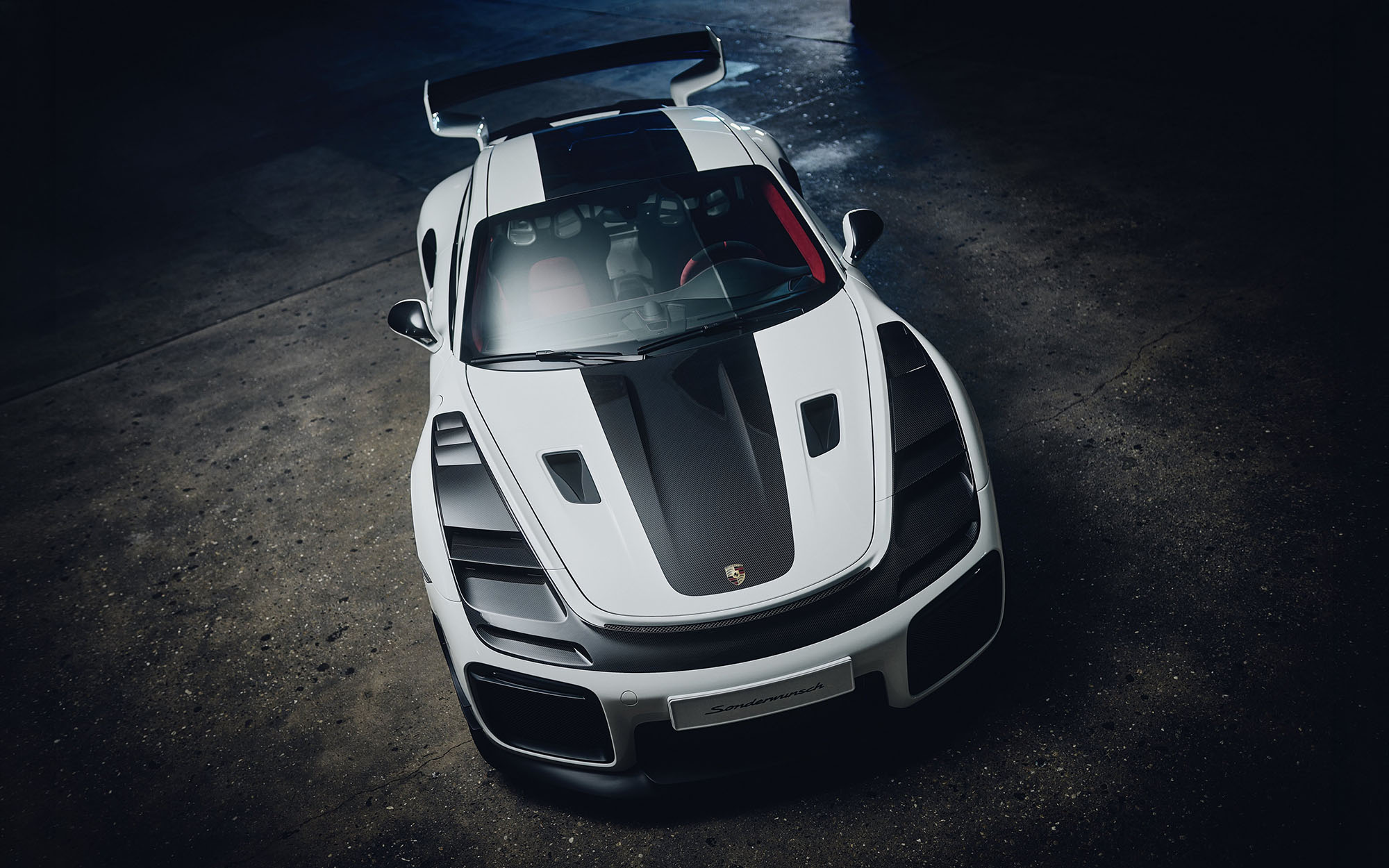
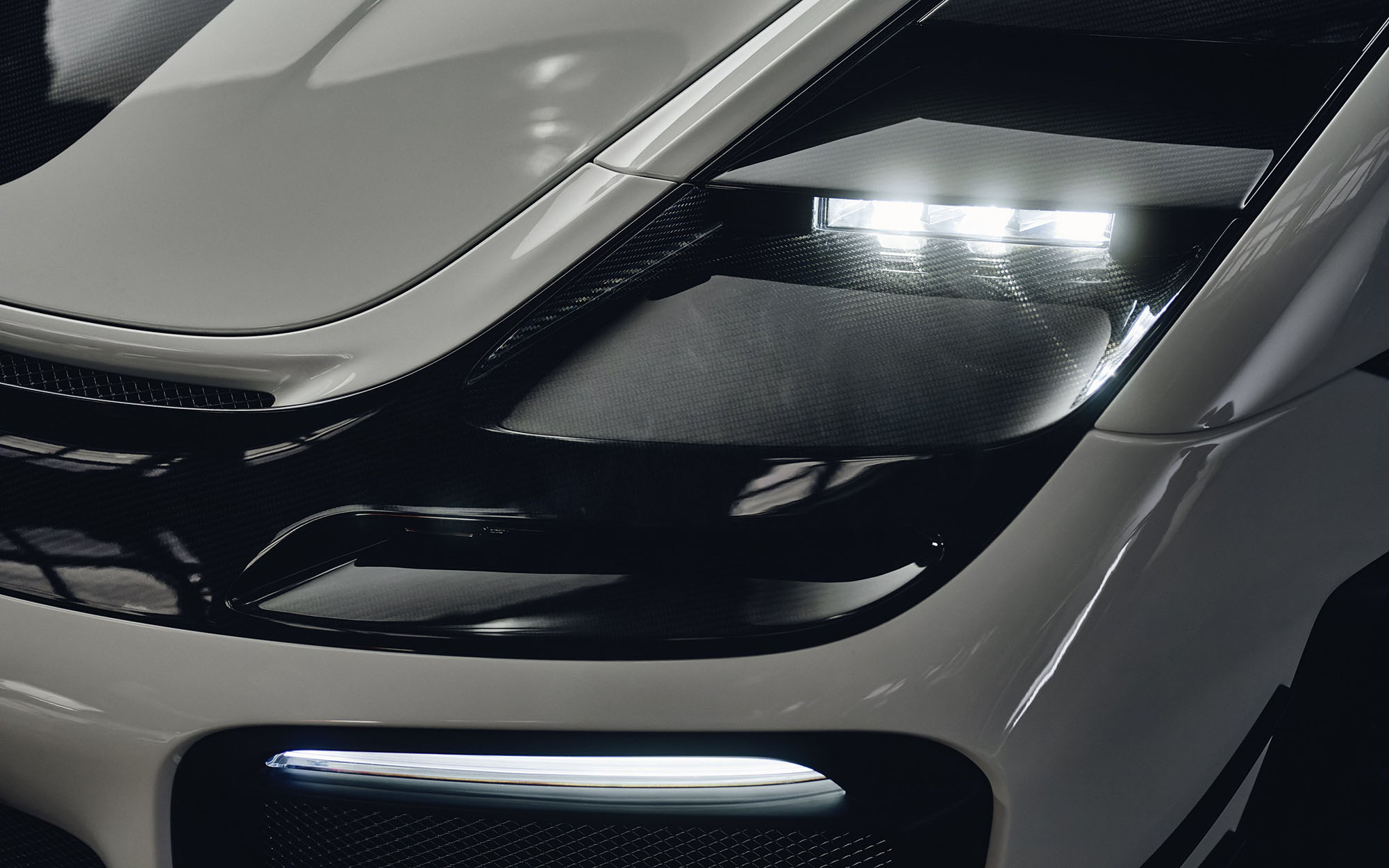
The most obvious transformation is at the front. Conventional 911 headlights and fenders have disappeared, replaced by considerably flatter wheel arches incorporating pressure-relieving louvers. The change was substantial enough that Porsche also had to redesign the fuel filler and its underlying mechanism as well as the front bumper.
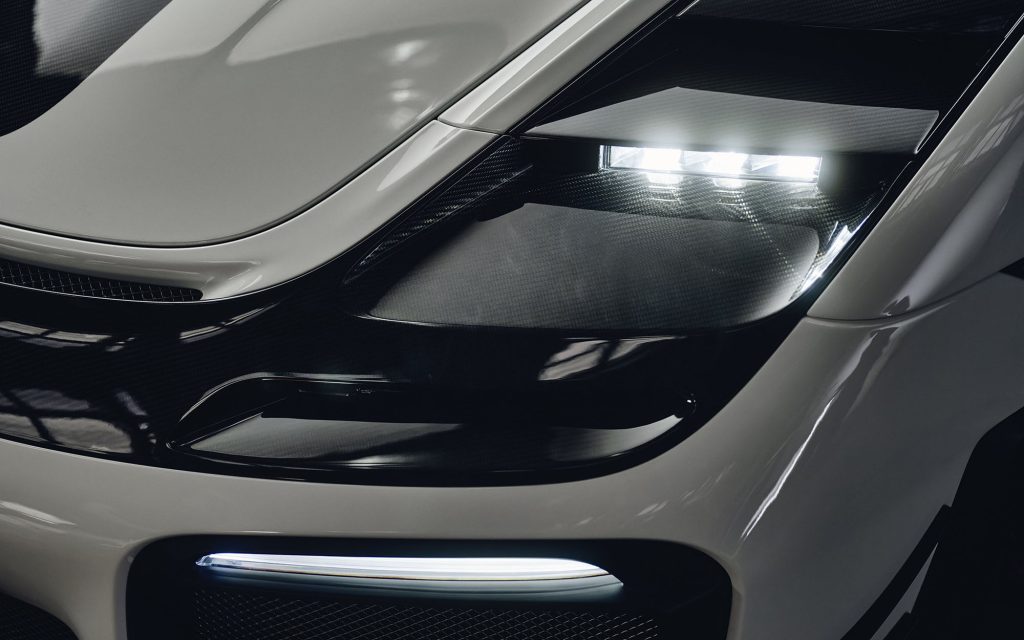
In place of the familiar round headlights are three exceptionally thin LED elements arranged vertically for high beam, low beam and daytime running lights. The result has a clear relationship to Porsche’s competition-derived Flachbau tradition without simply recreating a 1980s Slant Nose.
That was intentional. The design was handled by retired Porsche designer Grant Larson, who also created Porsche’s modern 935 unveiled at Rennsport Reunion VI in 2018.
The historical reference becomes more obvious in the color and graphics. Grand Prix White was matched specifically for the project using a historic 911 from Porsche’s collection as a reference. Matte black and exposed carbon provide contrast, while a U-shaped carbon graphic across the nose references the Martini-liveried 935/78 that earned the “Moby Dick” nickname.
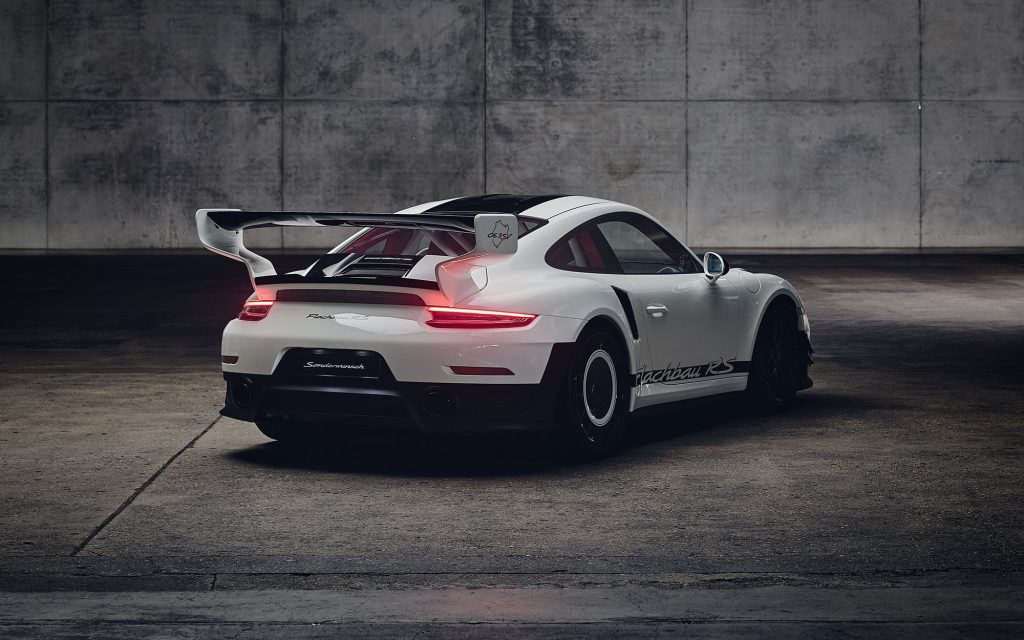
The rear wheels gain Grand Prix White carbon-fiber aero discs, while the brake calipers are finished in black.
Manthey Aerodynamics, Reworked
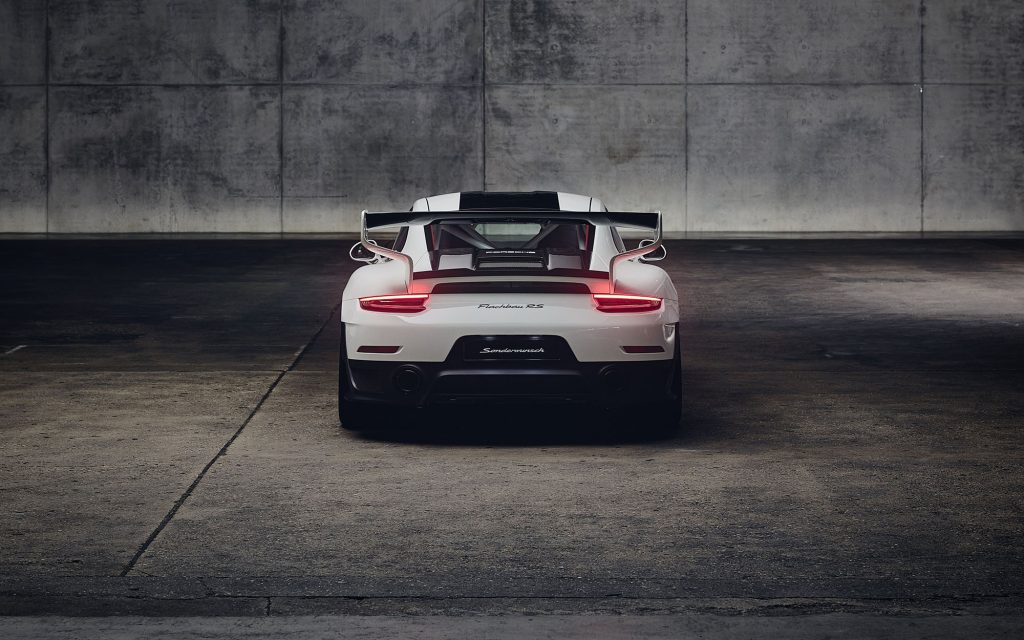
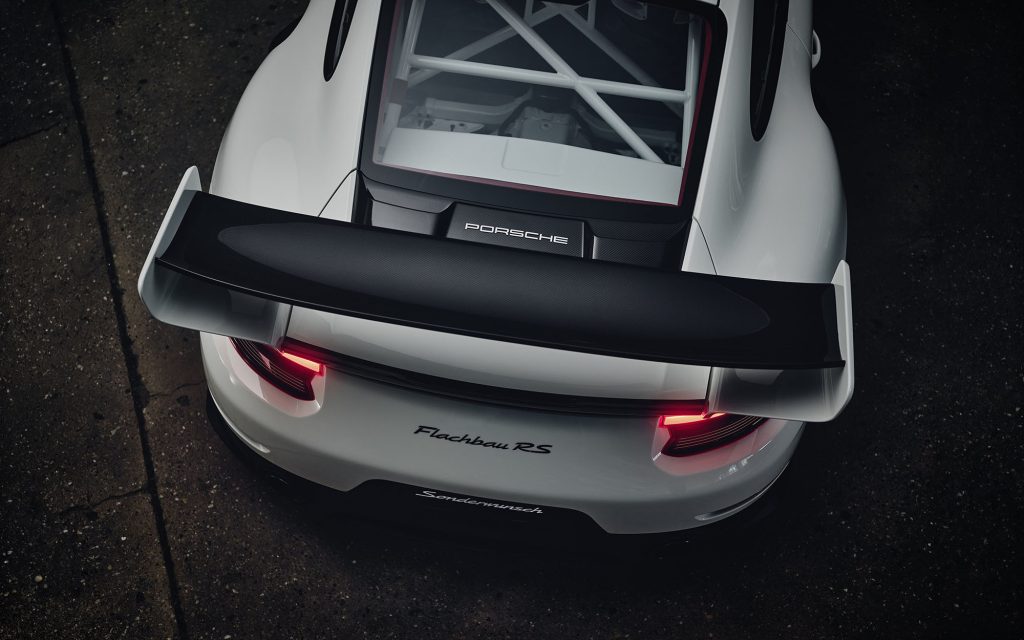
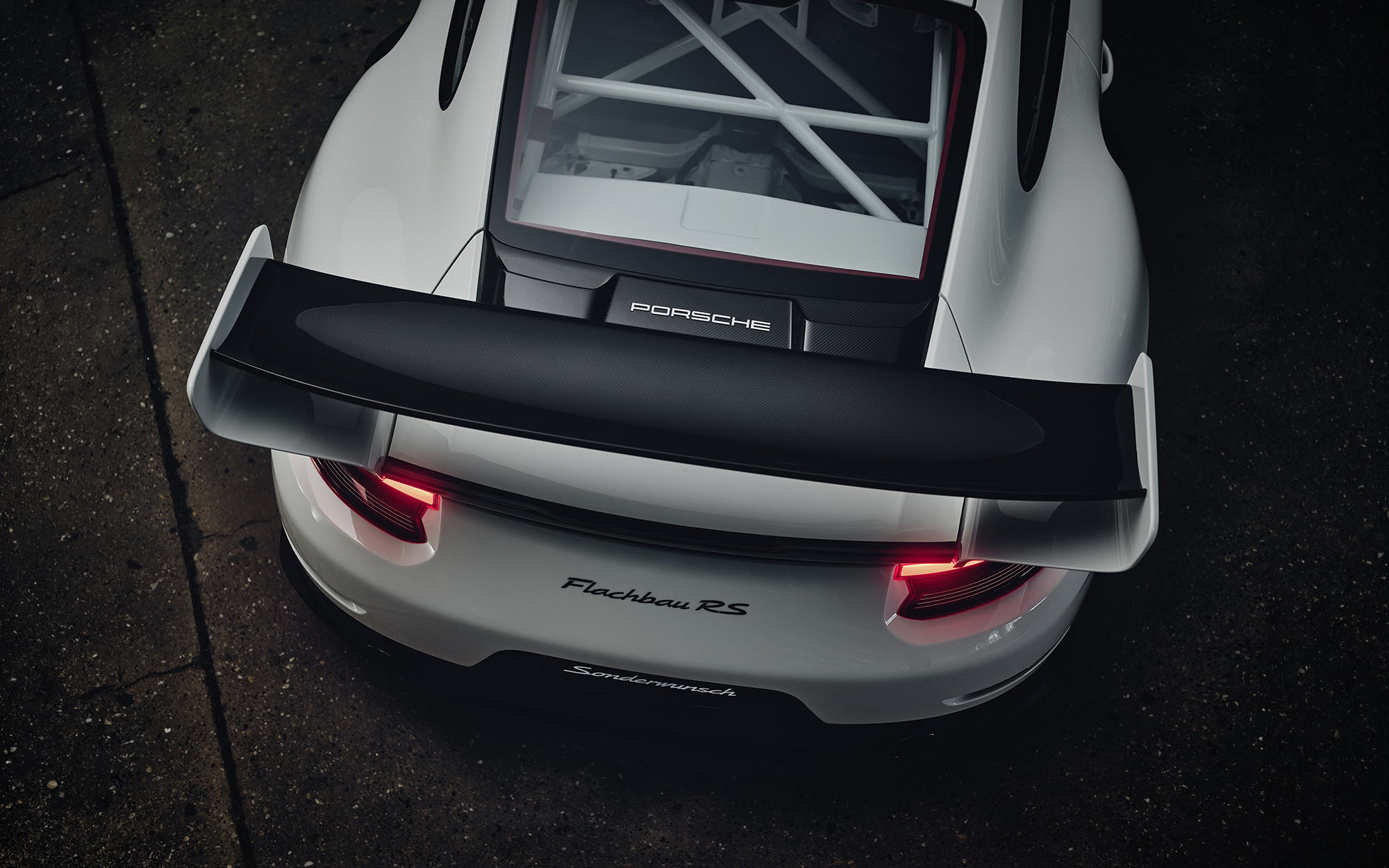
Manthey’s influence extends beyond the small front canards. The car incorporates the underbody and rear diffuser architecture of the GT2 RS Manthey Kit, paired with a new front splitter and a particularly elaborate rear wing.
Inspired by the wing fitted to the Type 992 Porsche 911 GT3 R rennsport, the new element sits nearly two inches higher and is supported by distinctive S-shaped mounts. It can be manually set to three positions depending on the desired aerodynamic balance.
Porsche says rear-axle downforce increases by two or three percent compared with a GT2 RS equipped with the Manthey Kit, depending on the corresponding wing setting. In its High Downforce configuration, Porsche quotes approximately 1,221 pounds of rear downforce at roughly 211 mph.
Both the adjustment mechanism and its position markings have been patented.
Nearly 70 Pounds Lighter
While the engine was left alone, the owner requested an extensive weight-reduction program.
The GT2 RS with Weissach Package was hardly an obvious starting point for removing unnecessary mass, but Porsche nevertheless managed to strip nearly 70 pounds from the car.
Much of that work is visible inside.
The forward portion of the cabin retains its original combination of red Alcantara, black leather and exposed carbon, but behind the seats the Flachbau RS becomes considerably more race car than road car.
Porsche removed the PCM infotainment system and replaced it with a leather-covered storage compartment. The entire audio system disappeared along with much of the sound insulation, carpeting and luggage-compartment trim. Portions of the structure are now exposed and painted Grand Prix White, while even the wiring harness was reworked to eliminate unnecessary wires.
The carbon bucket seats receive “Flachbau RS” embroidery accompanied by an outline of the Nürburgring Nordschleife. A gold-colored Sonderwunsch plaque on the passenger side identifies the car as “Werksunikat 2026 – Flachbau RS,” literally a 2026 factory one-off.
Developed Like a Production Porsche
Perhaps the most remarkable part of the project is the engineering effort Porsche invested in making a single car.
Before producing the new components, engineers carried out digital crash and airbag simulations, structural analysis of the new rear wing and CFD aerodynamic development. The wing itself underwent vibration and static-load testing before Porsche moved to full-scale vehicle validation.
Three test cars were then used for lighting and wind-tunnel development, road testing at Mendig, Nordschleife running and endurance work at Weissach. Porsche says the program simulated rear-wing loads equivalent to approximately 150,000 kilometers, or 93,200 miles, of customer use.
The effort allowed Porsche to homologate the finished car for road use in Europe, as requested by its owner.
There’s also a certain symmetry to the project. Porsche’s original factory Flachbau program grew from customer demand during the 1980s, ultimately producing 948 examples between 1982 and 1989. Those cars translated the competition appearance of the 935 into a road-going 911 Turbo.
Nearly four decades later, Sonderwunsch has effectively followed the same formula at its most extreme: one customer’s request, Porsche Motorsport engineering and the unmistakable silhouette of the 935, distilled into a single road-legal 911.