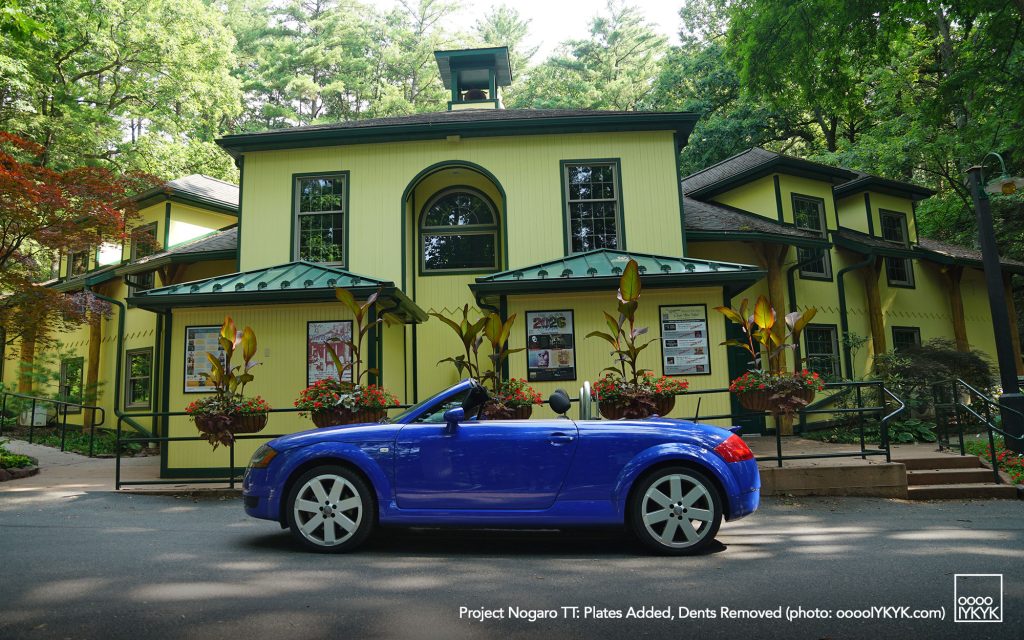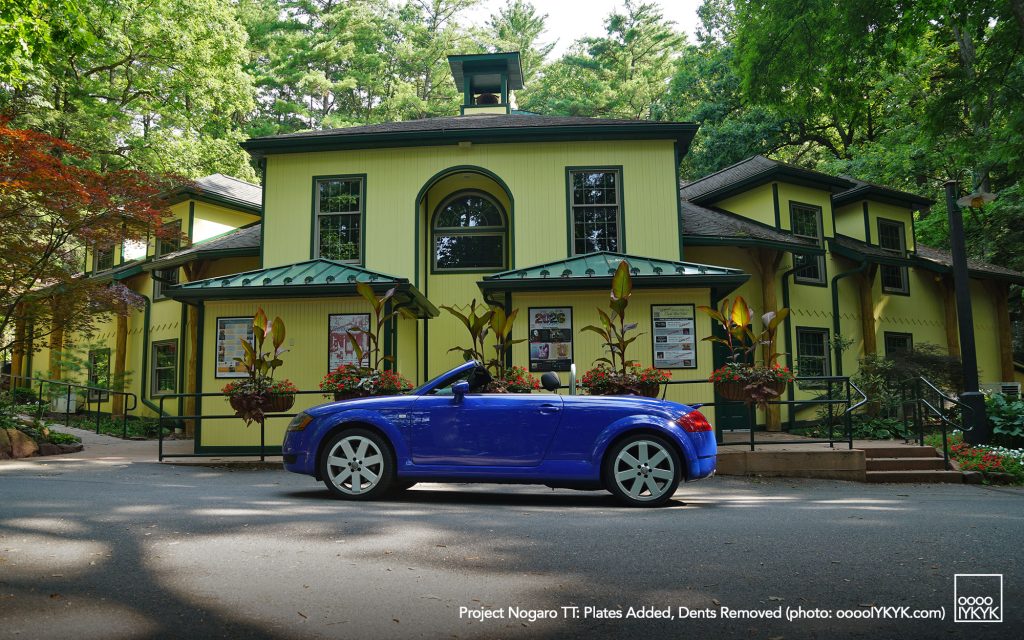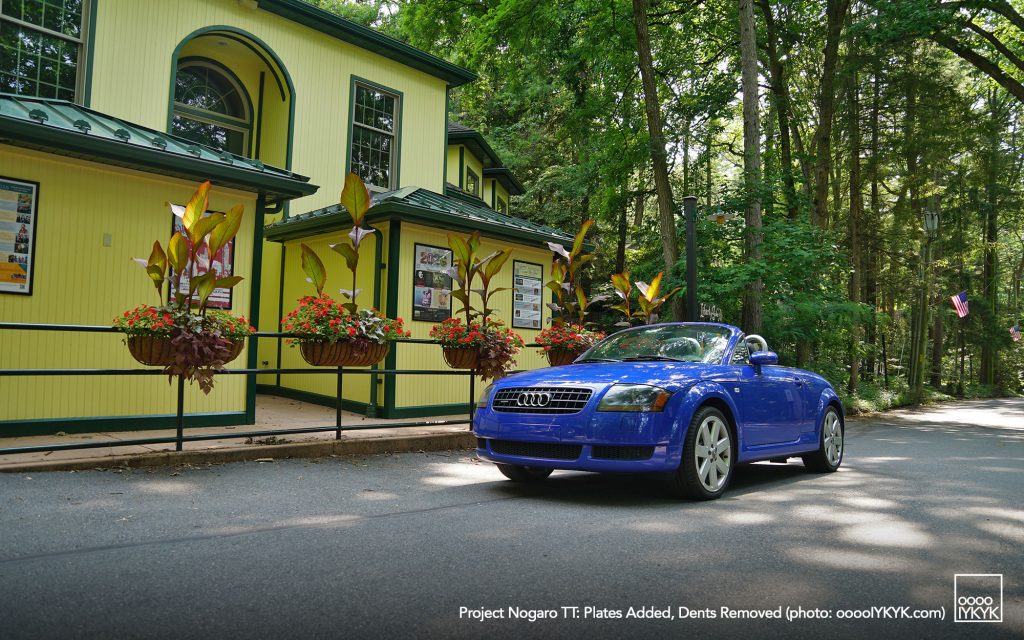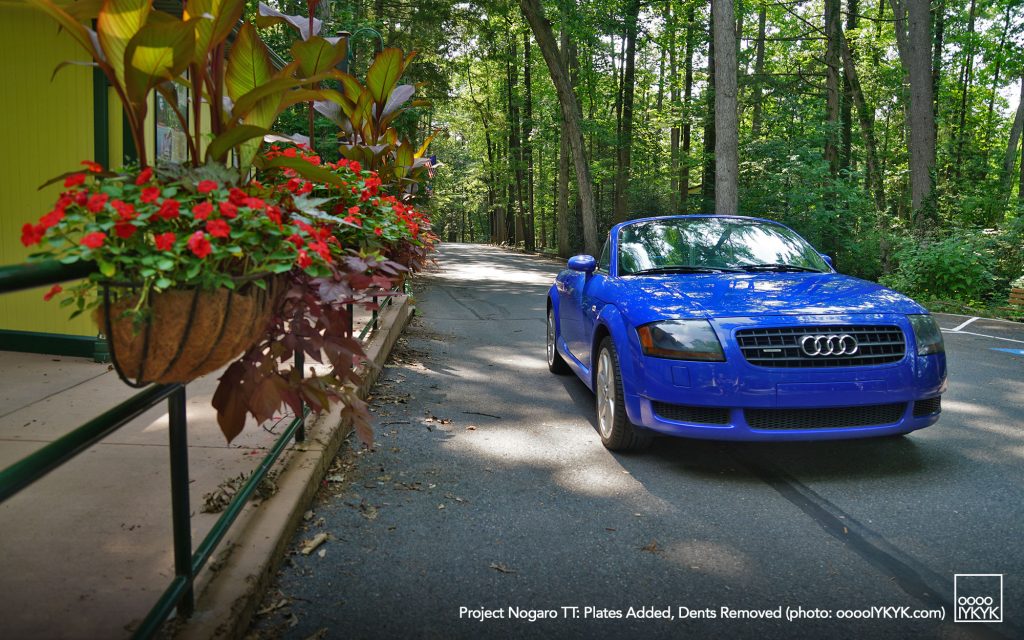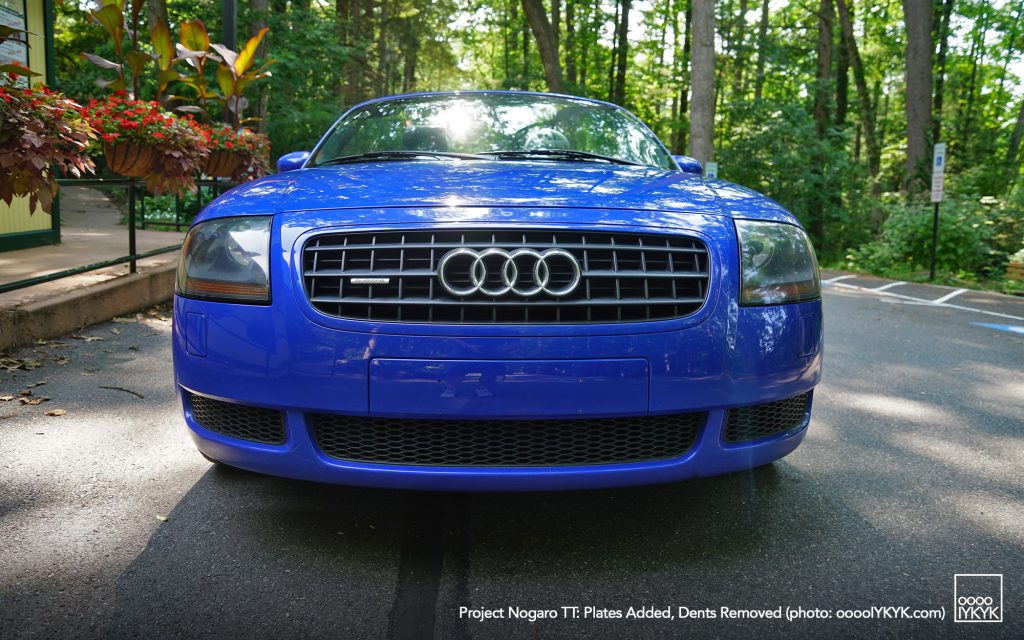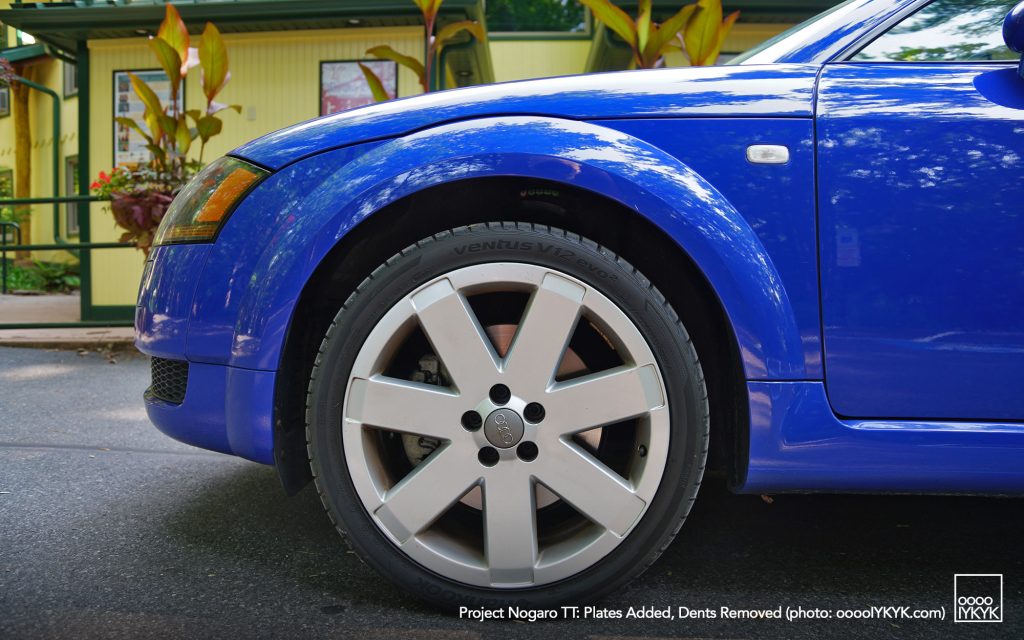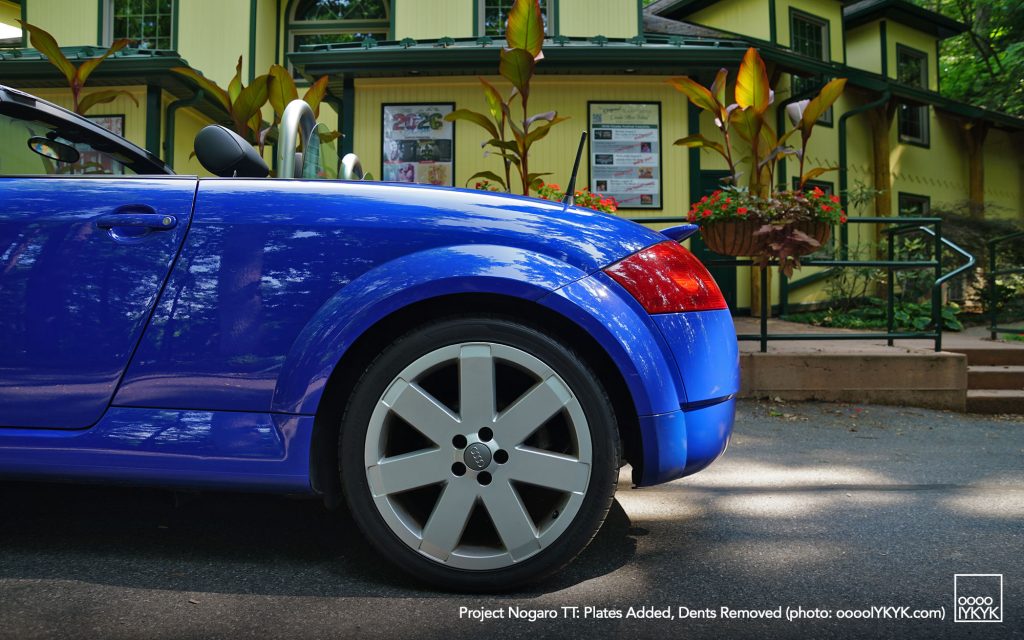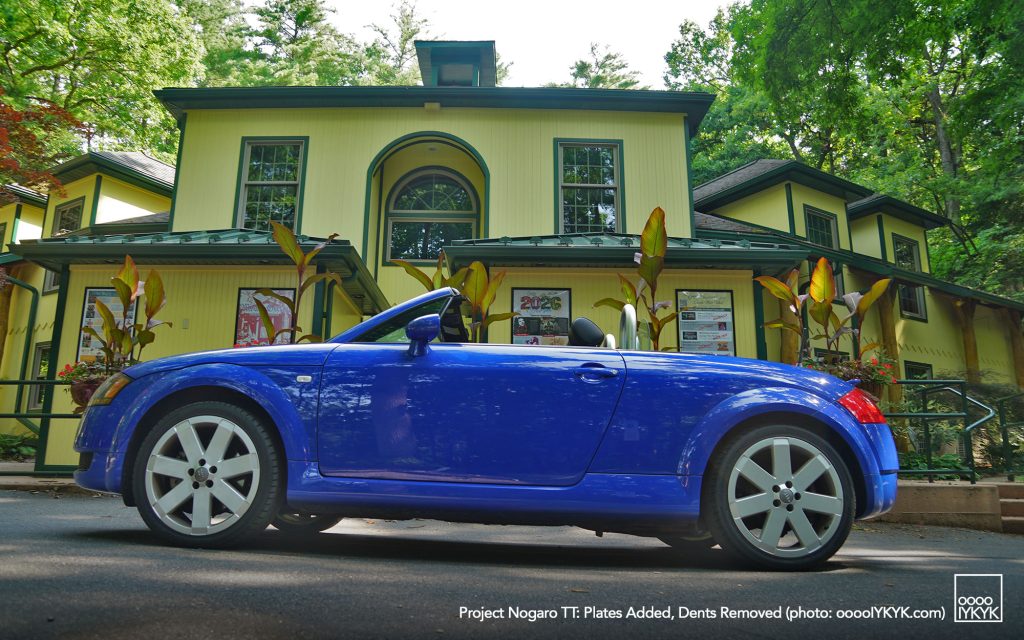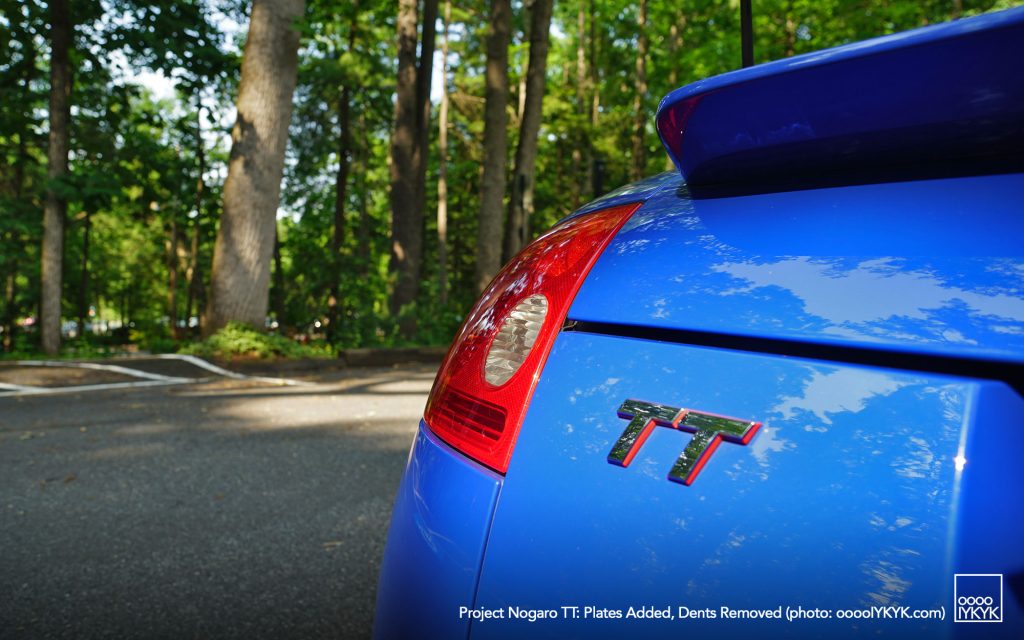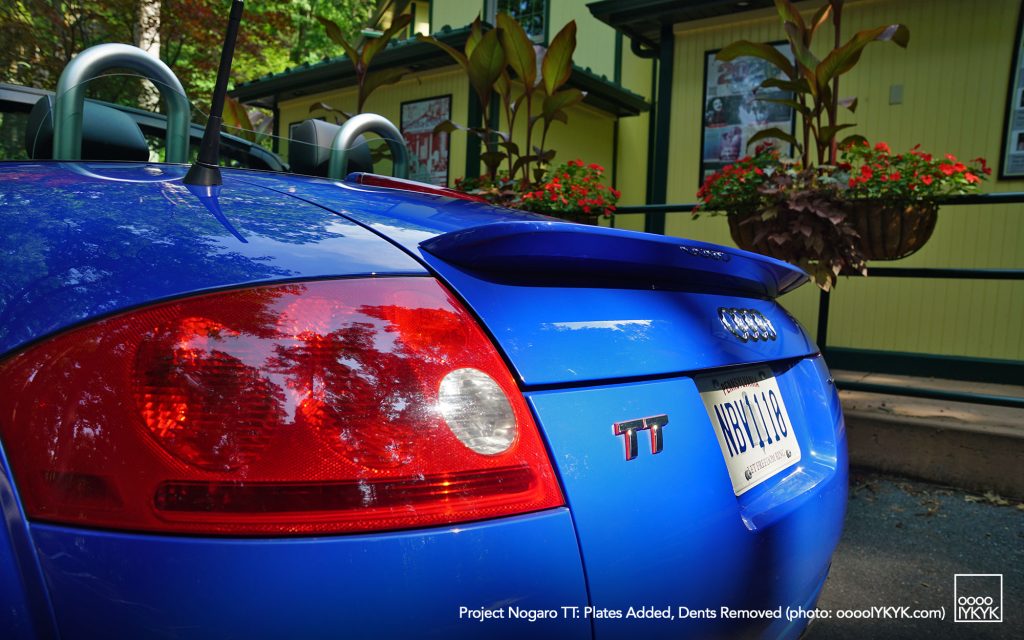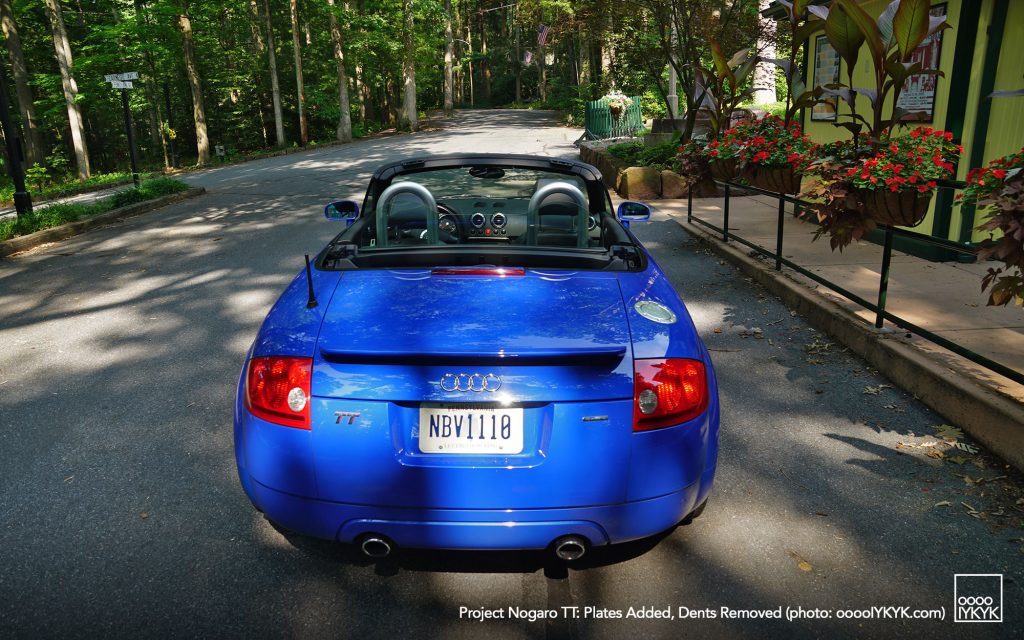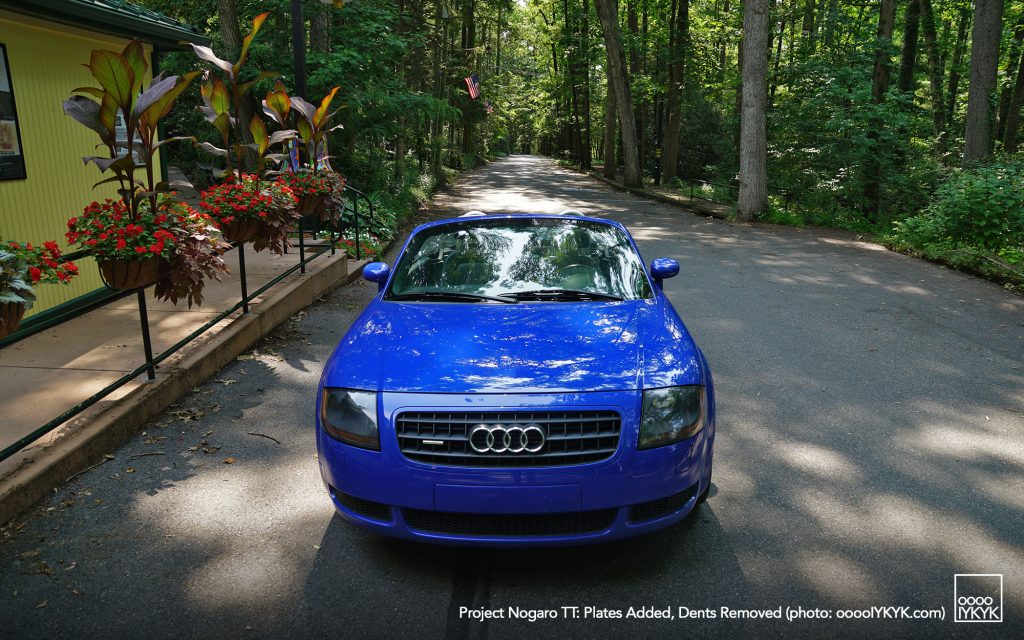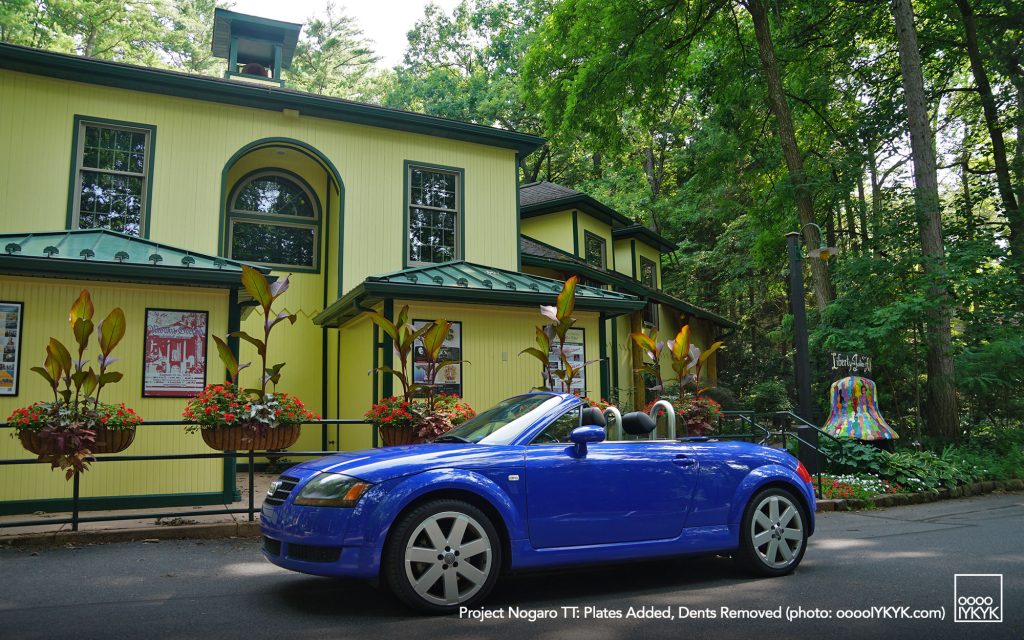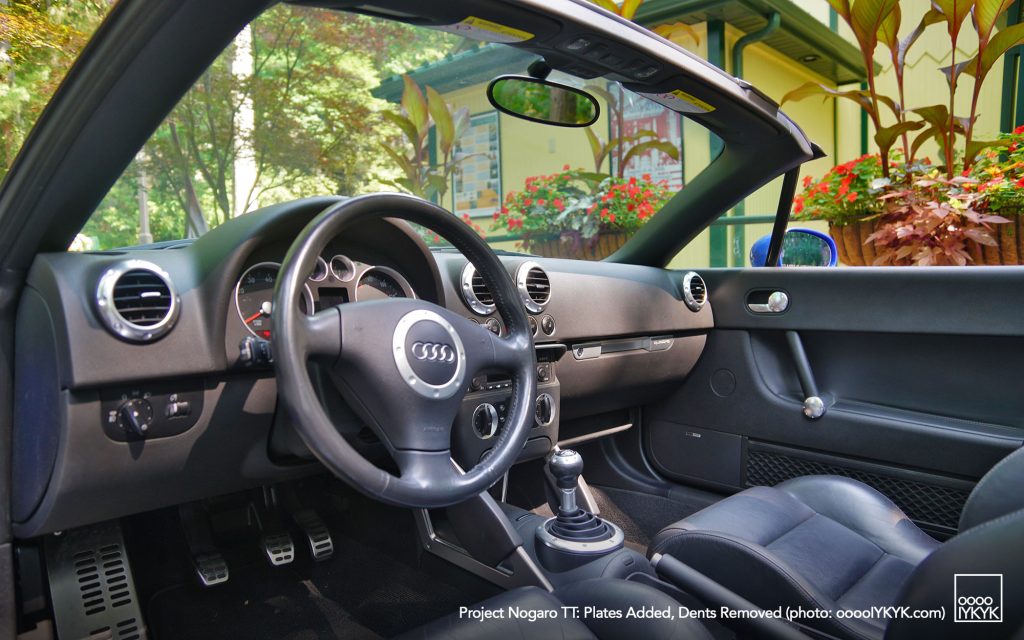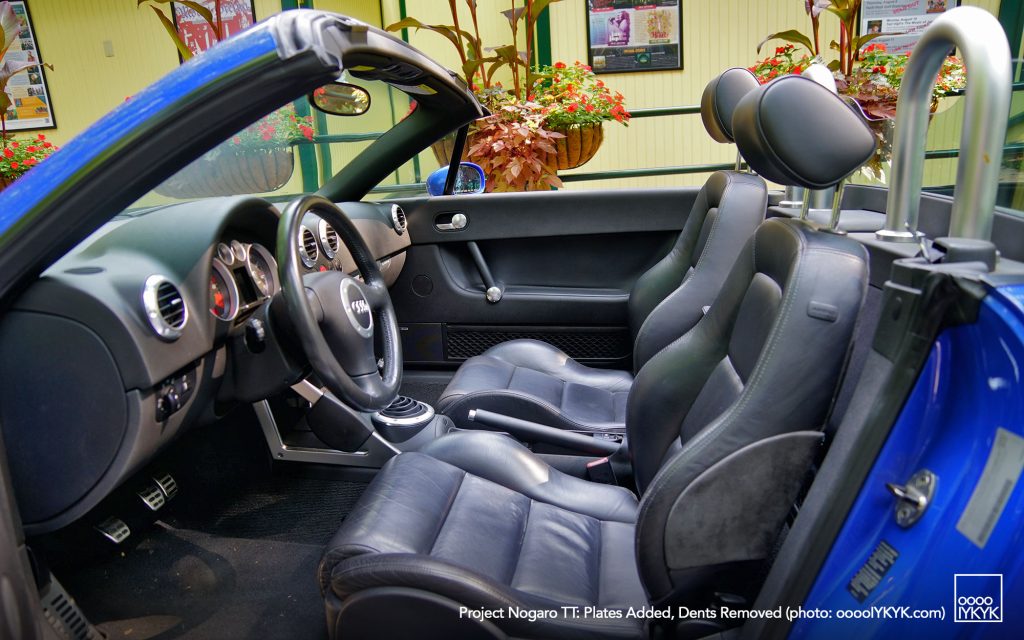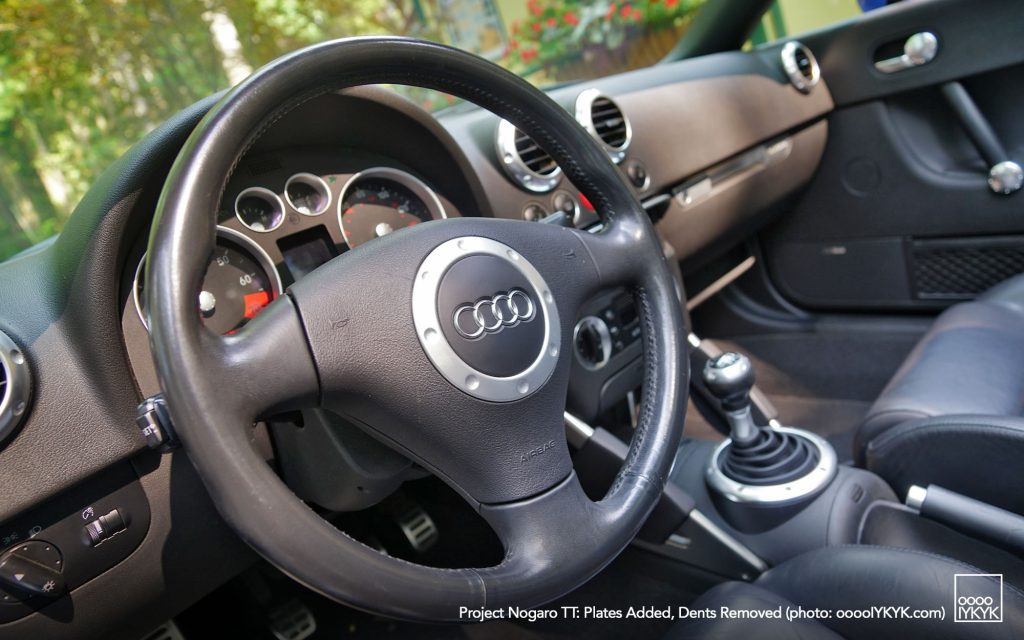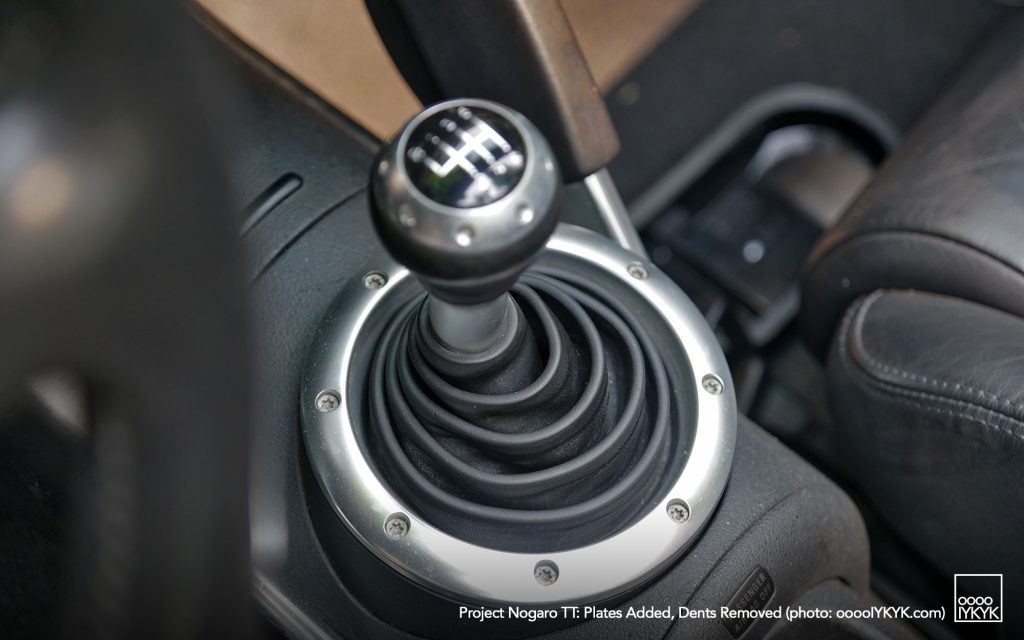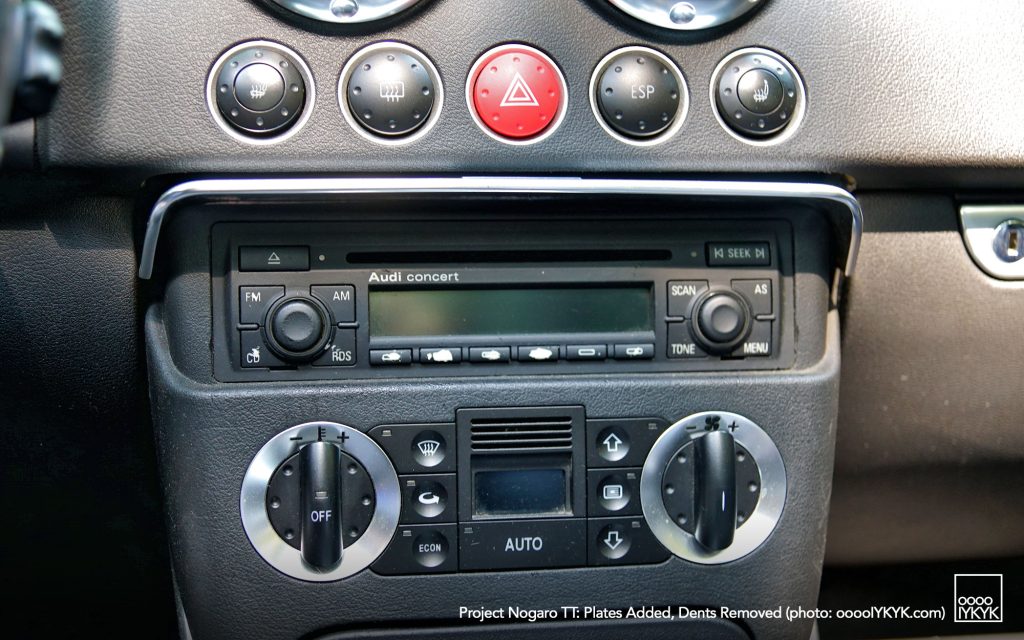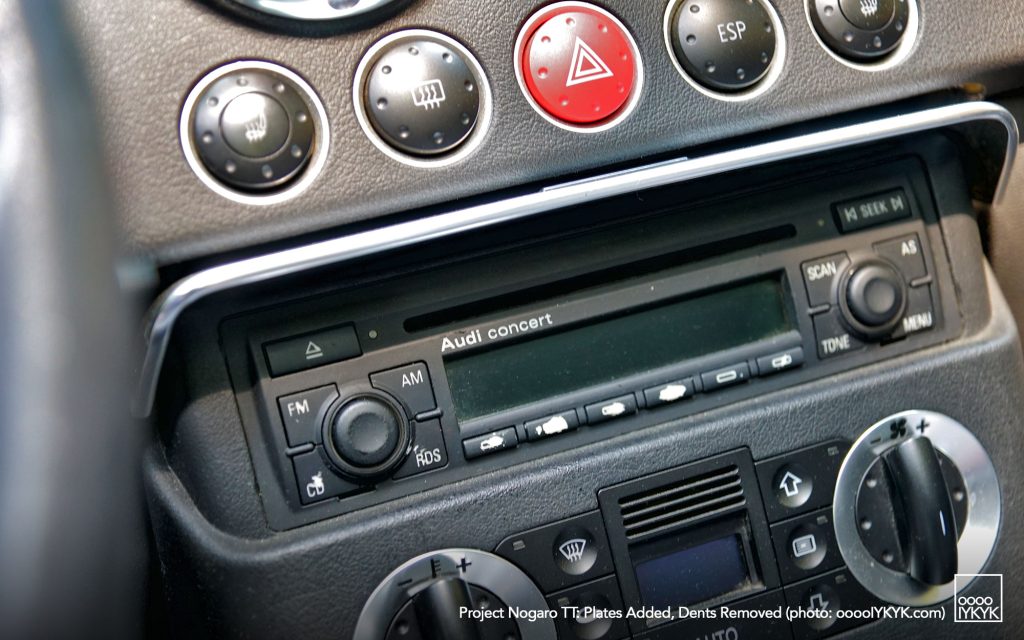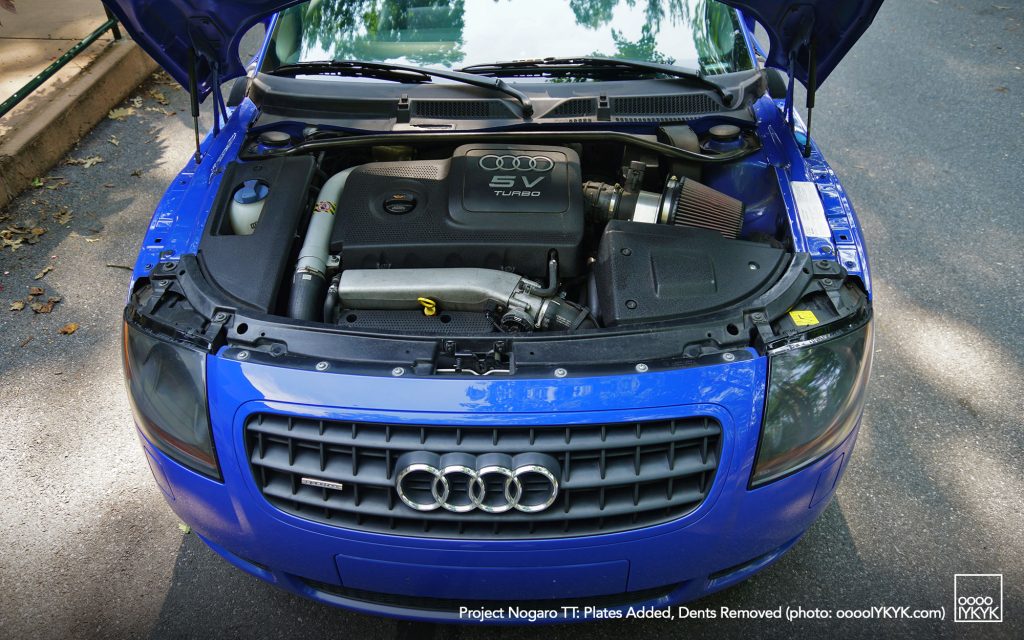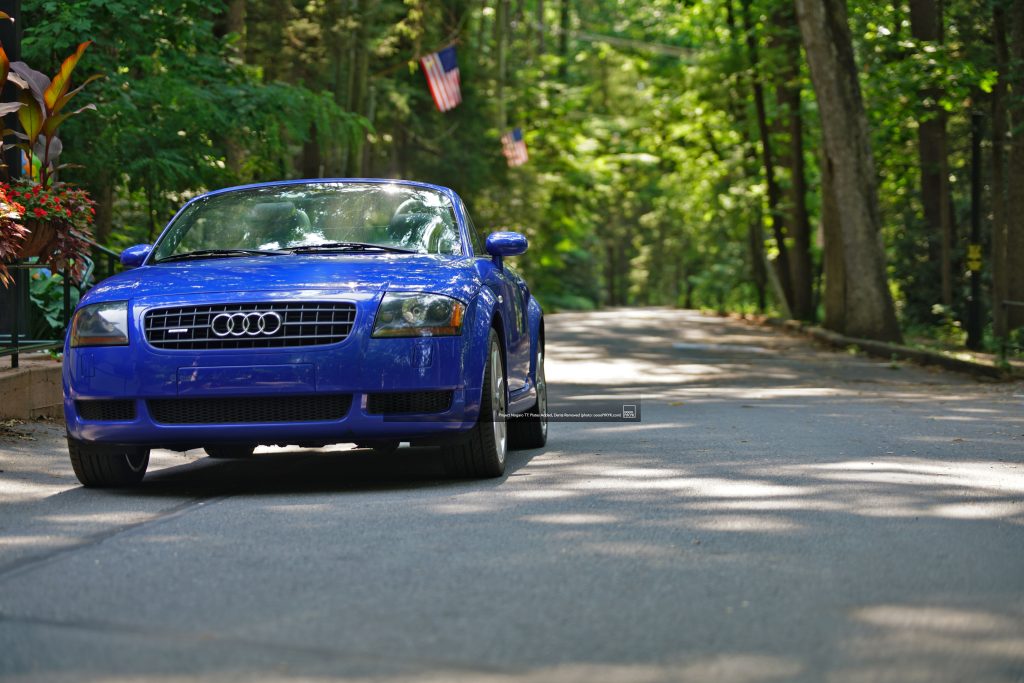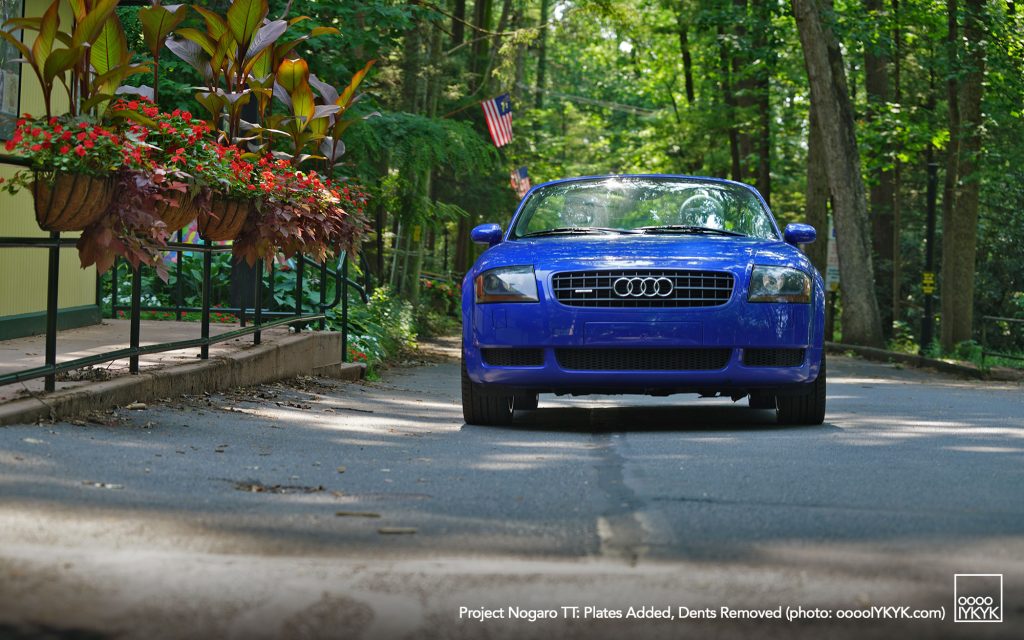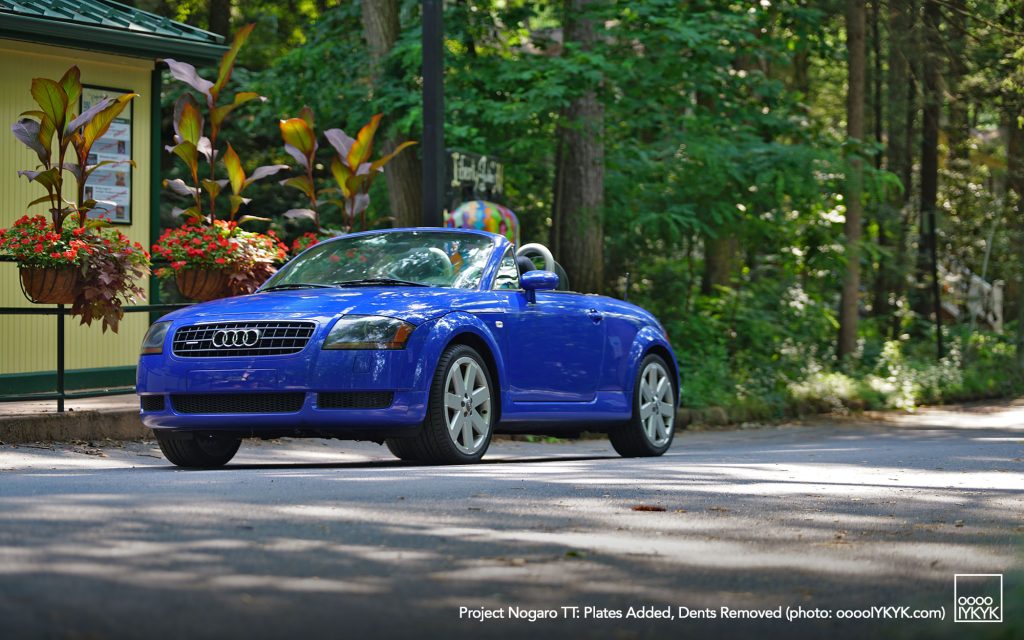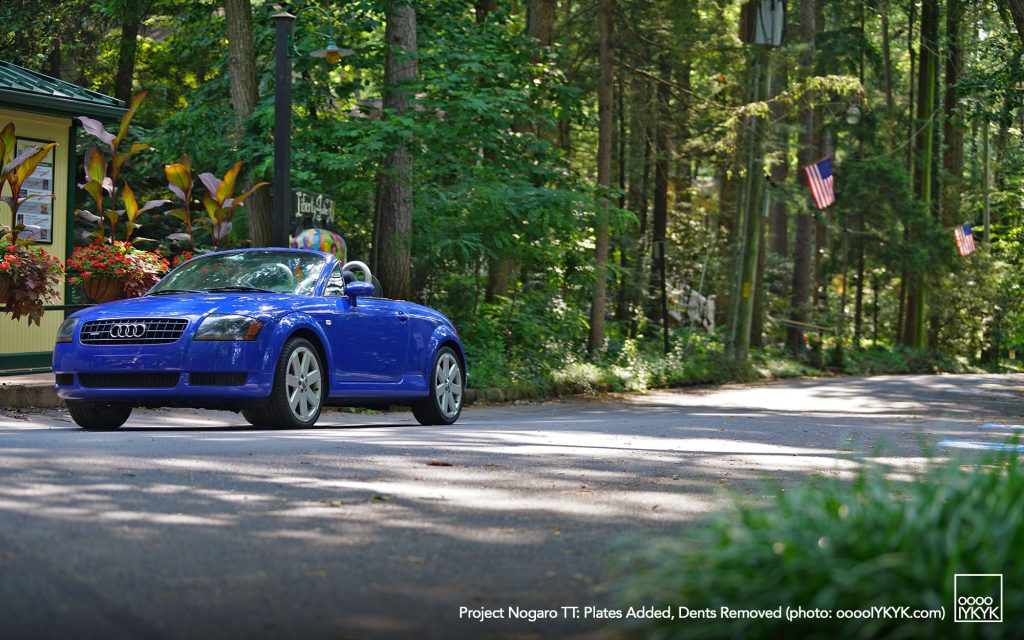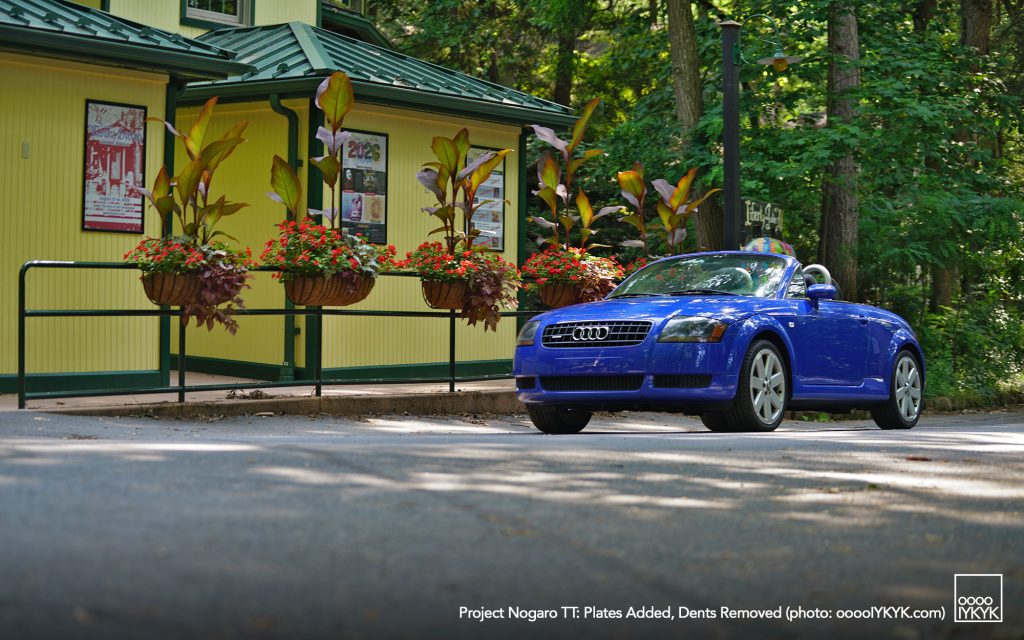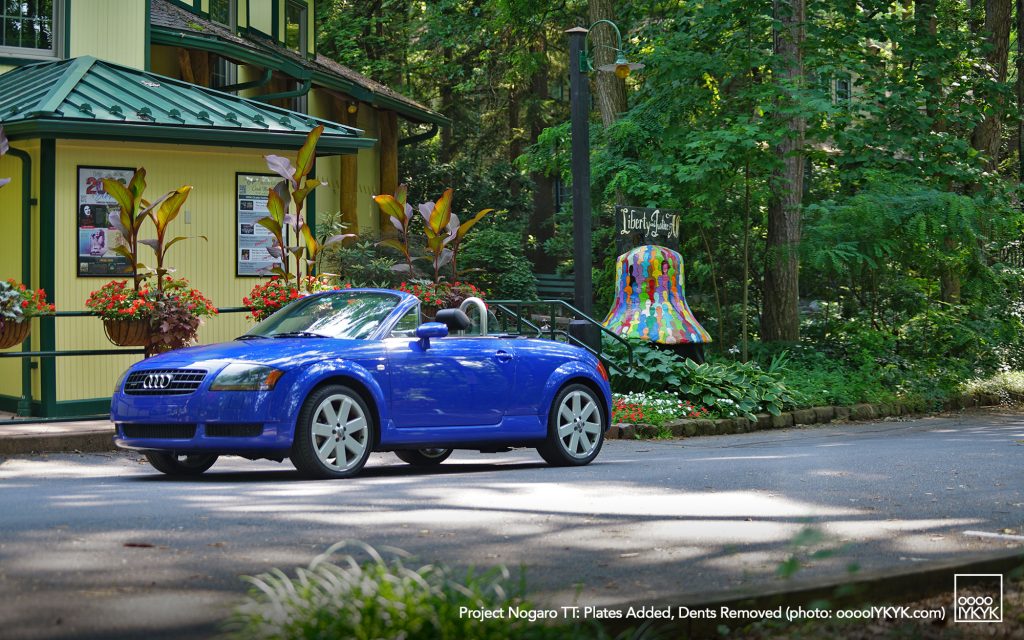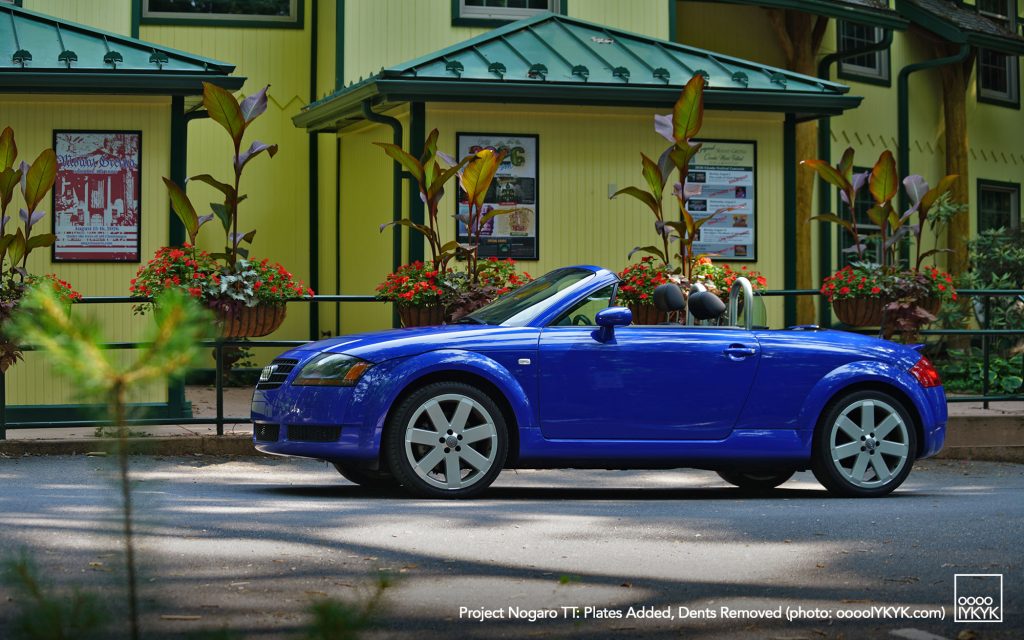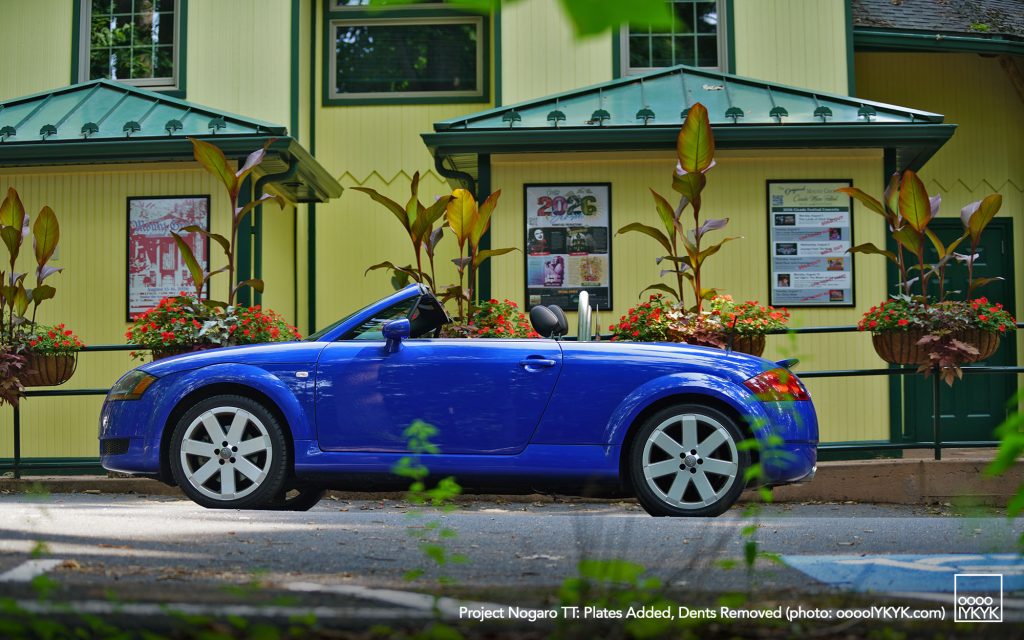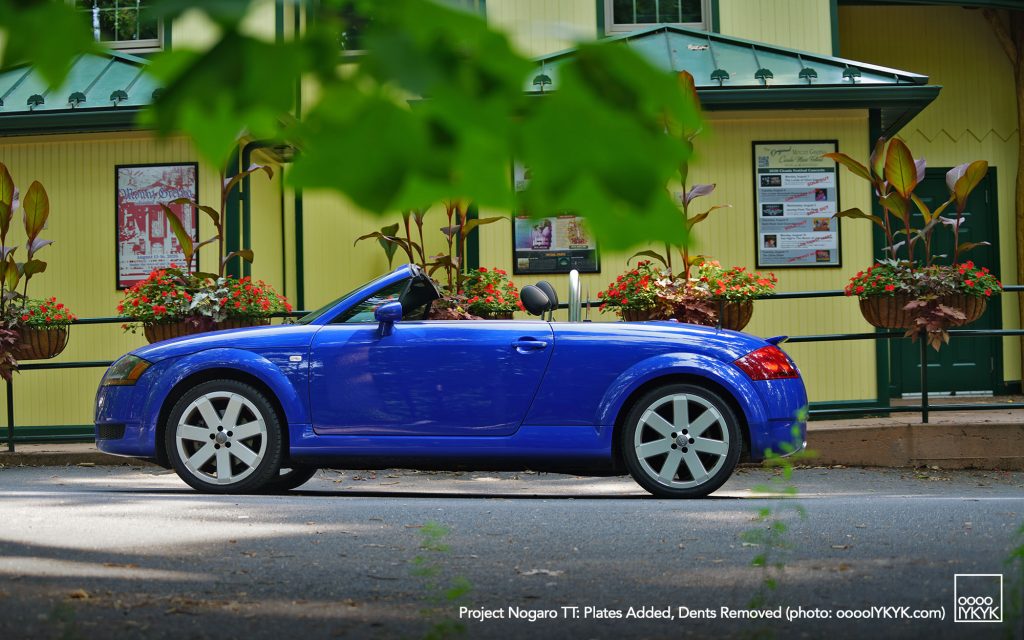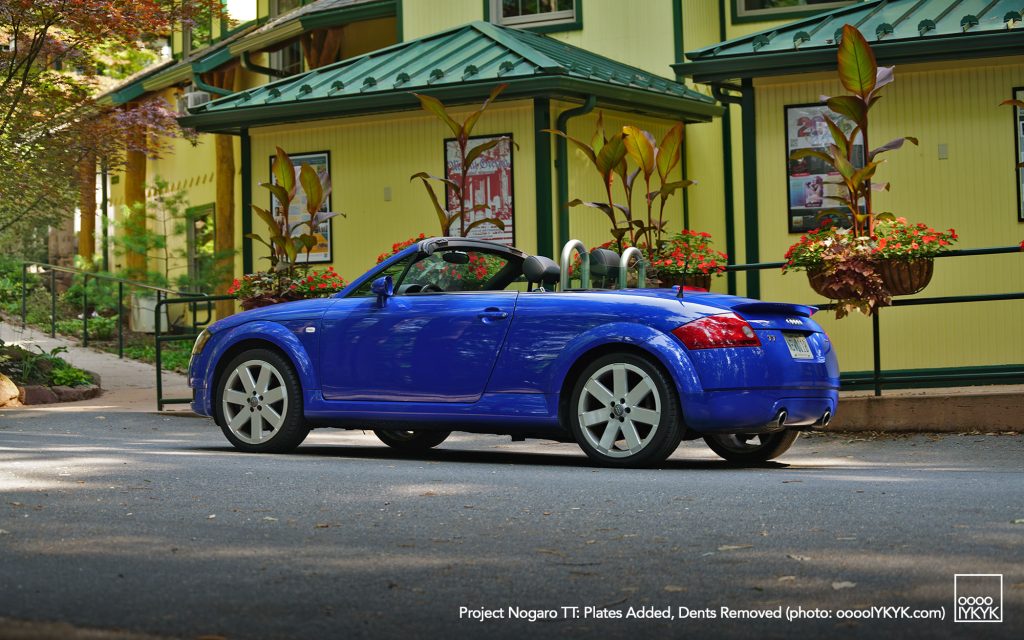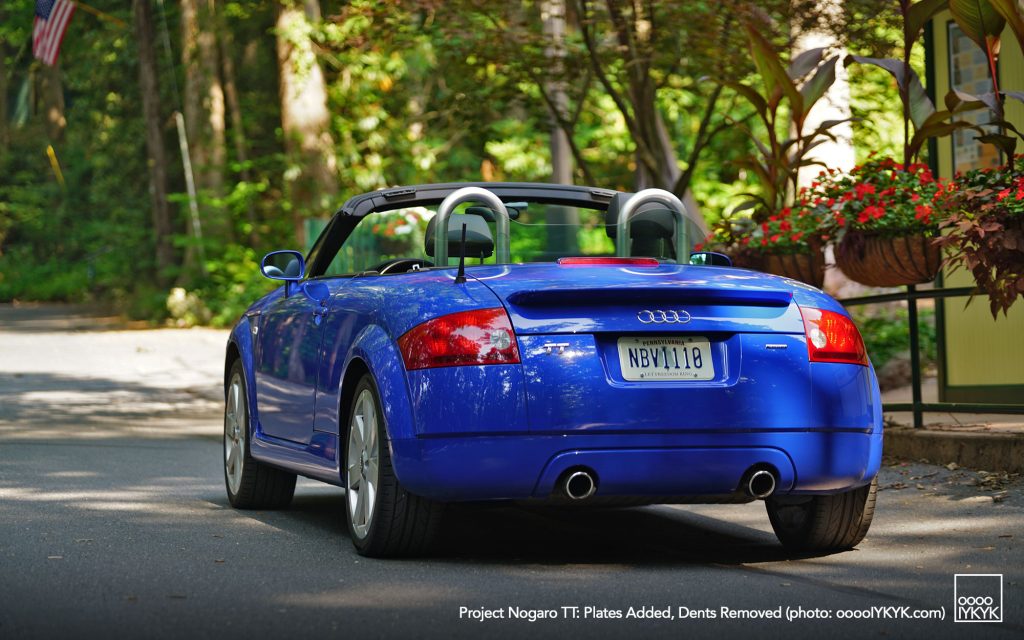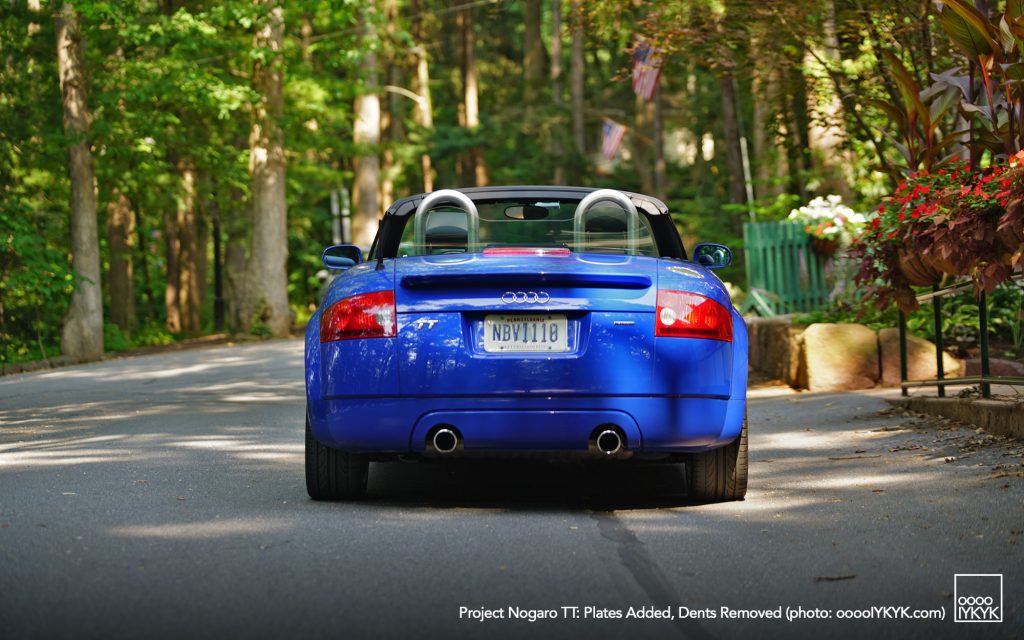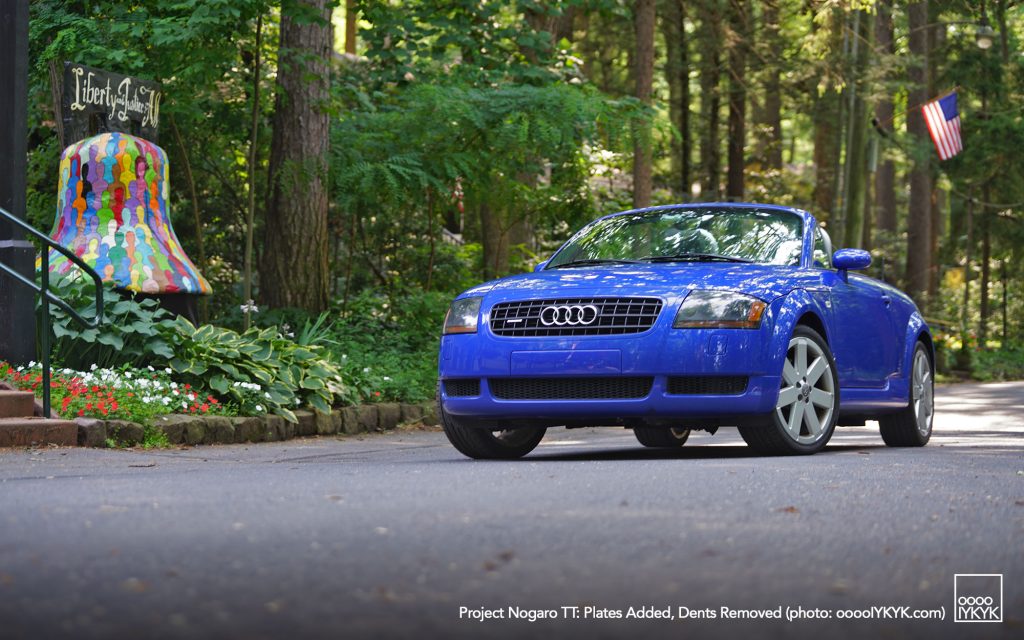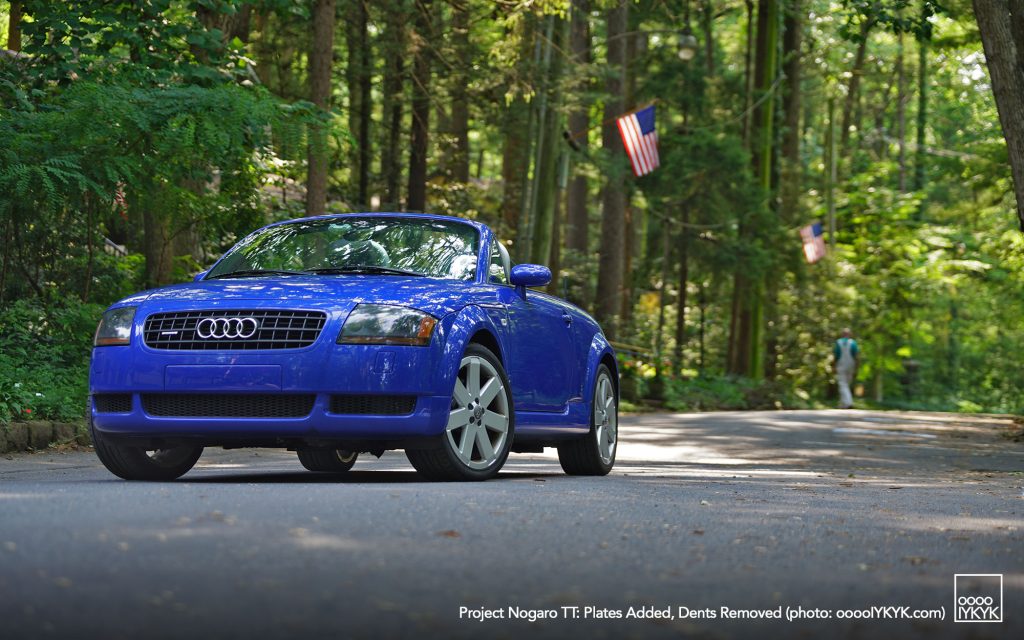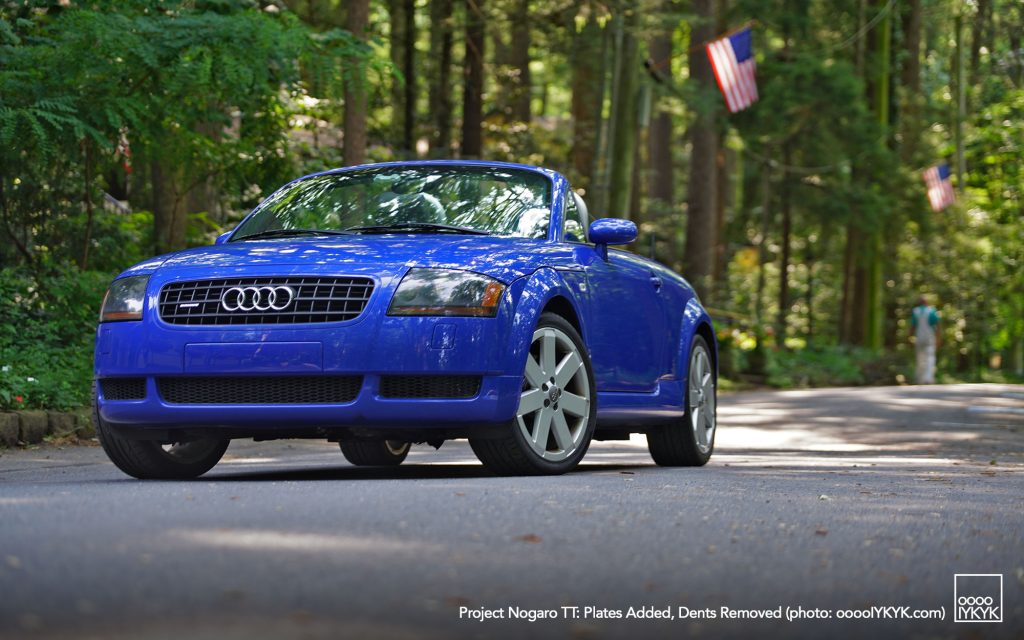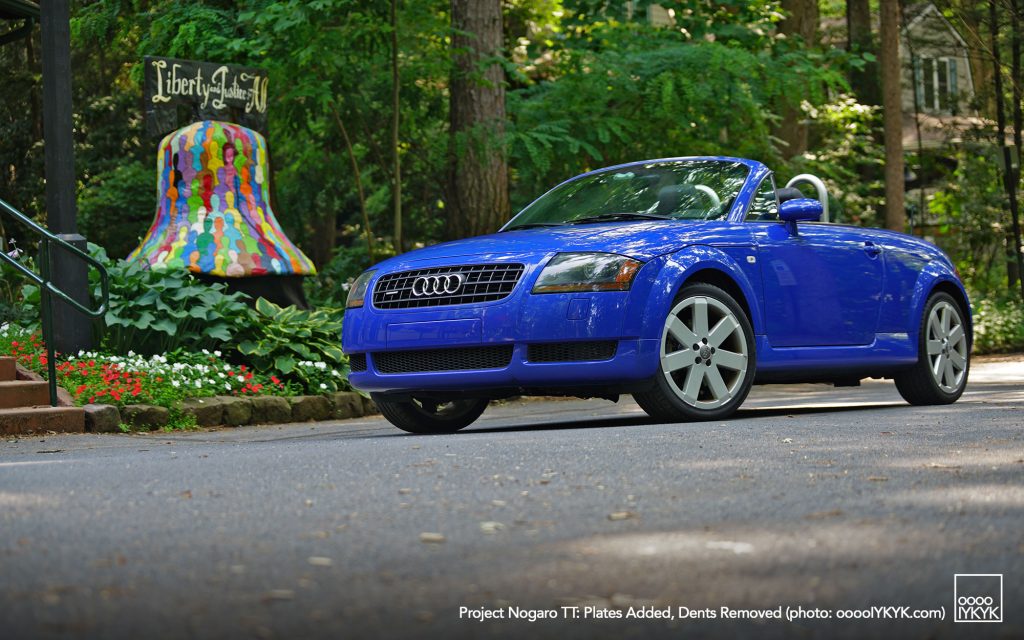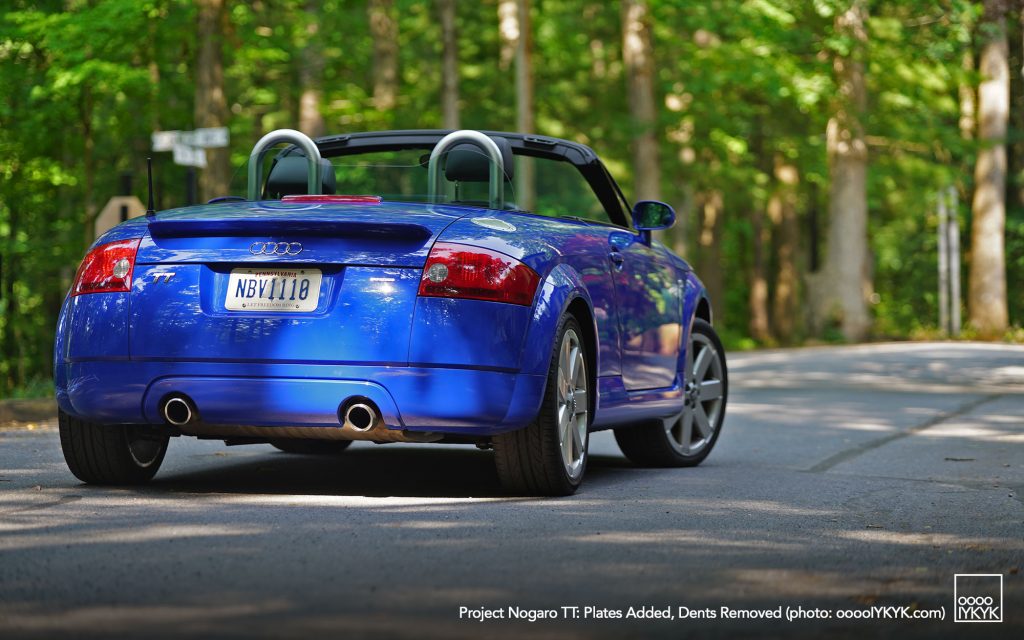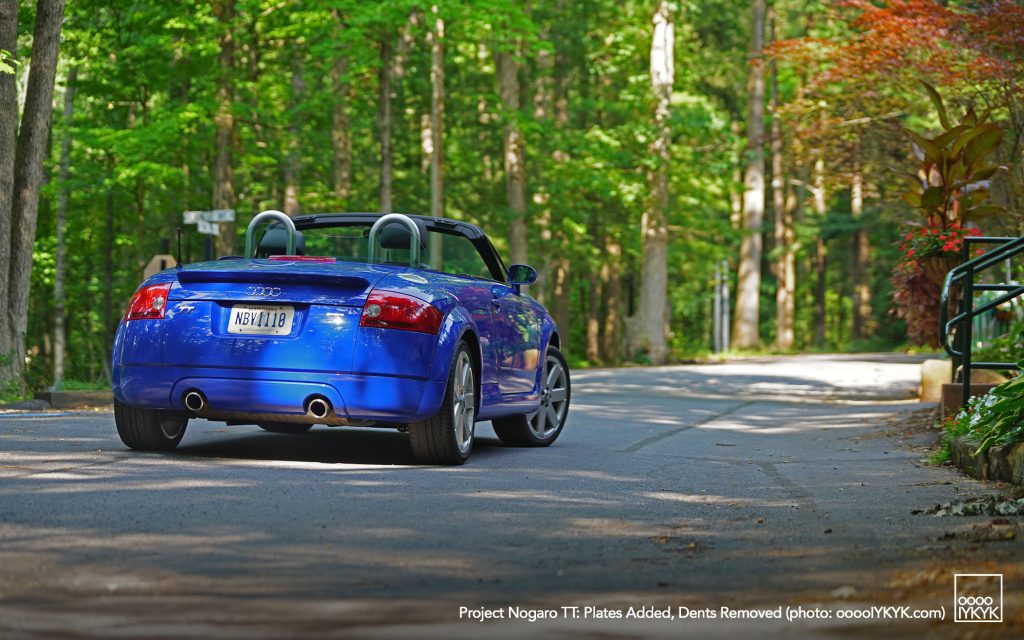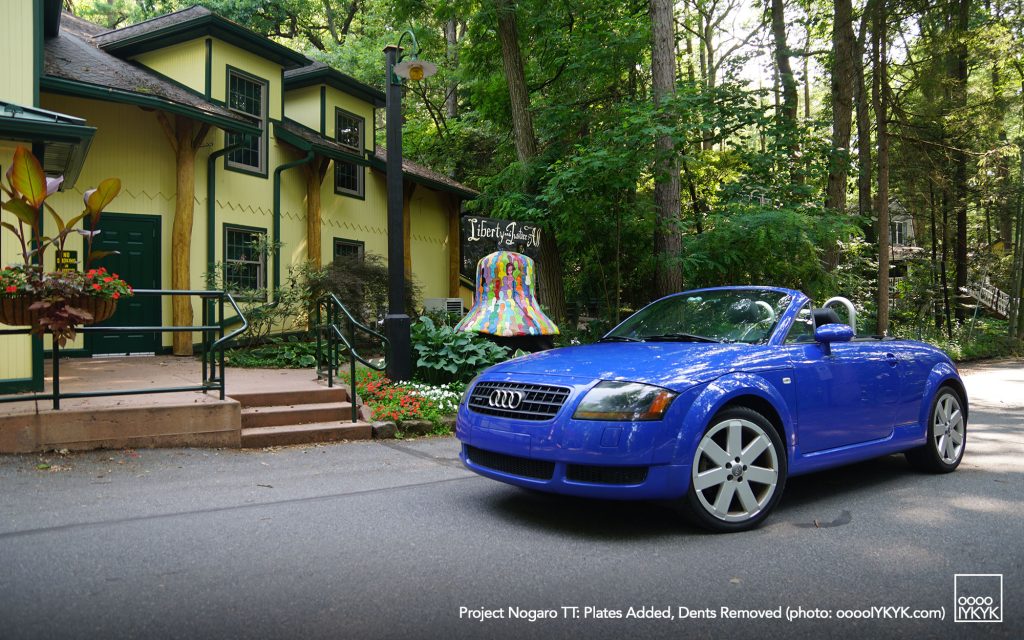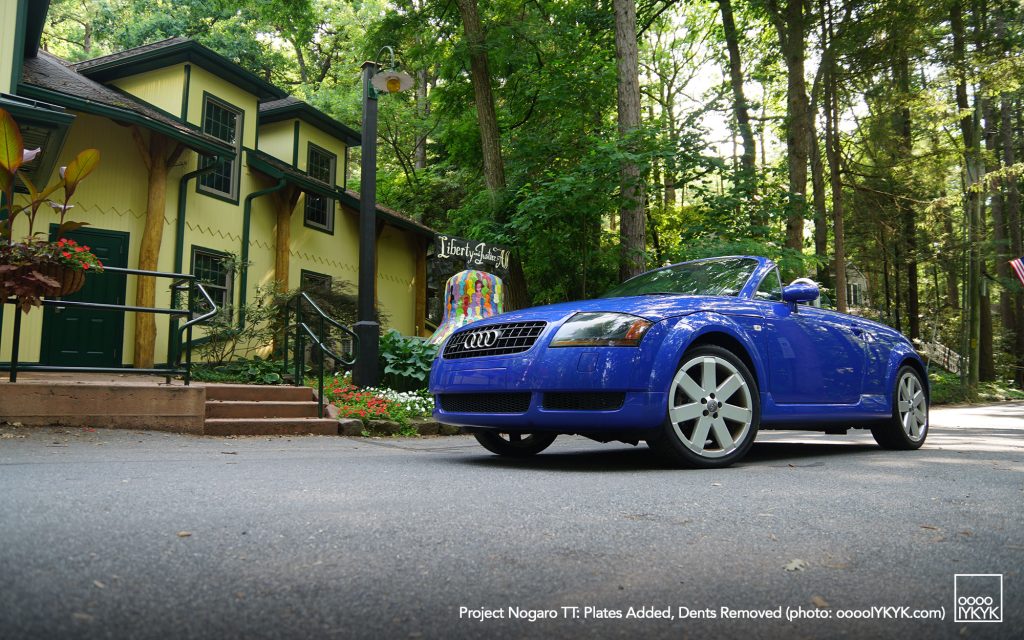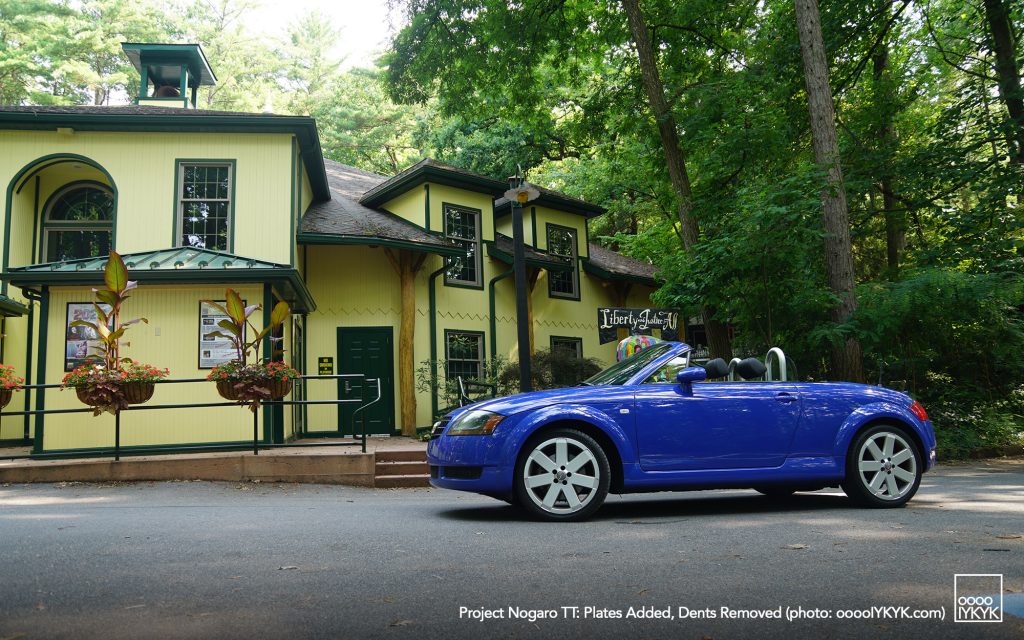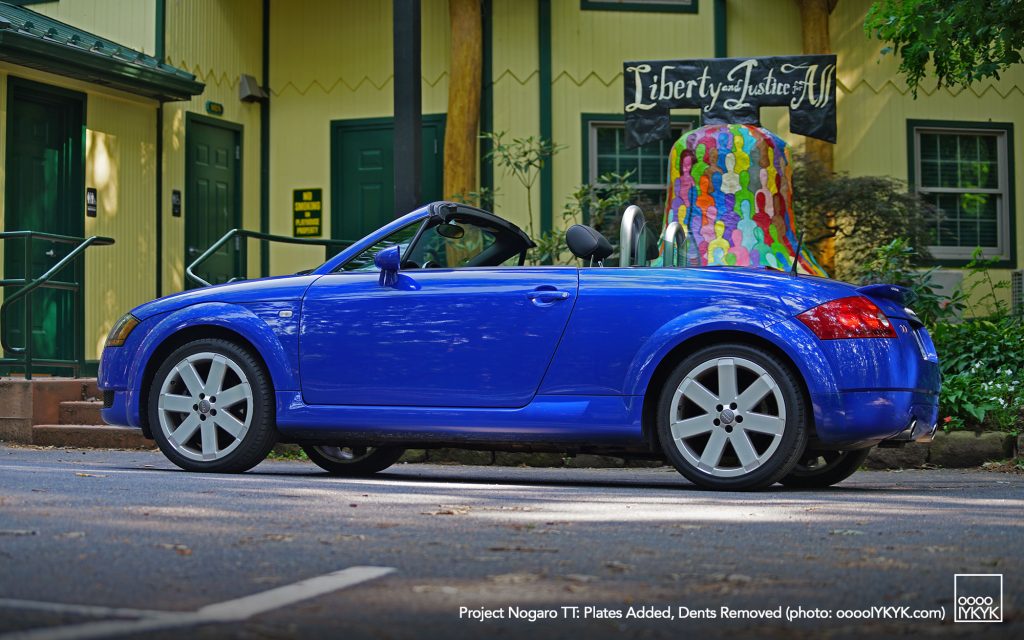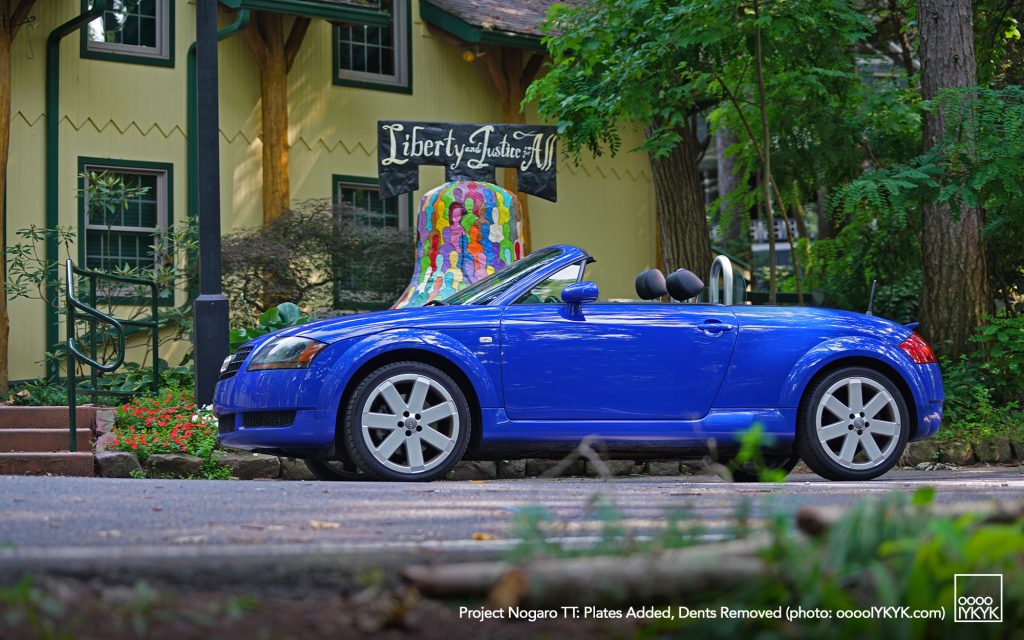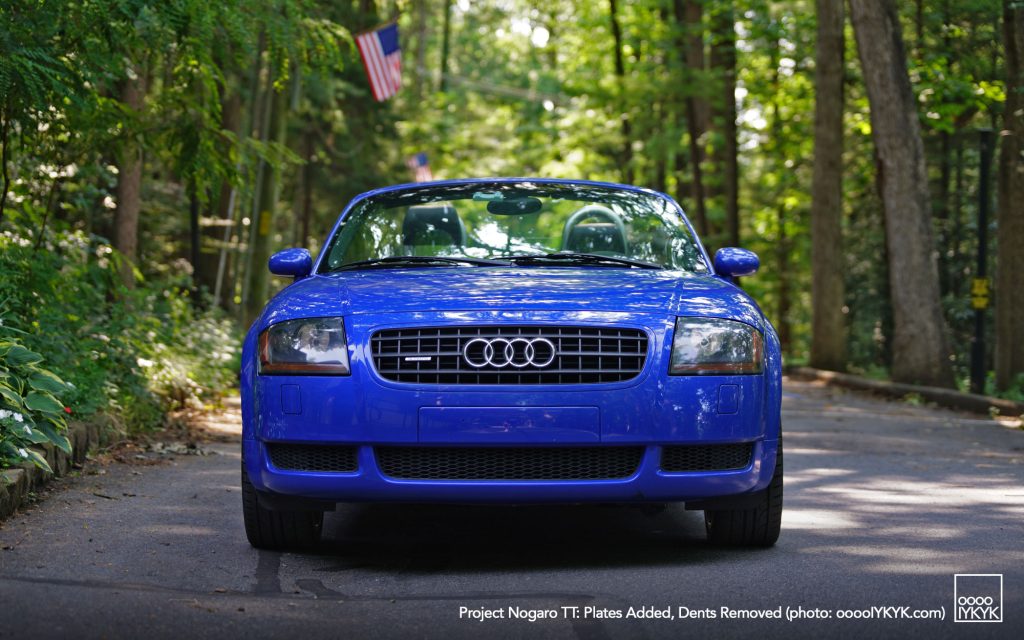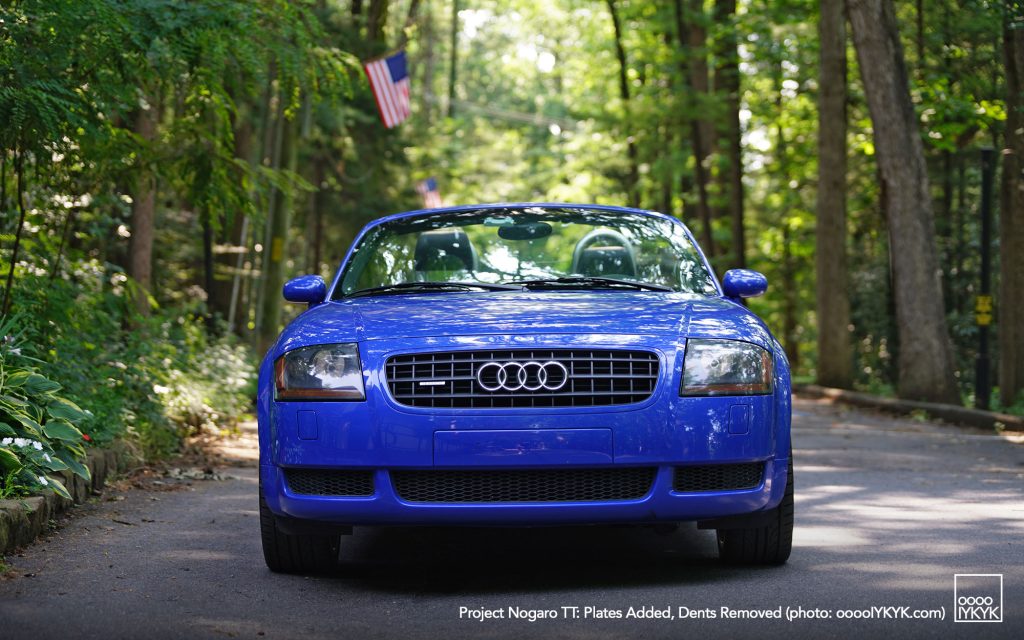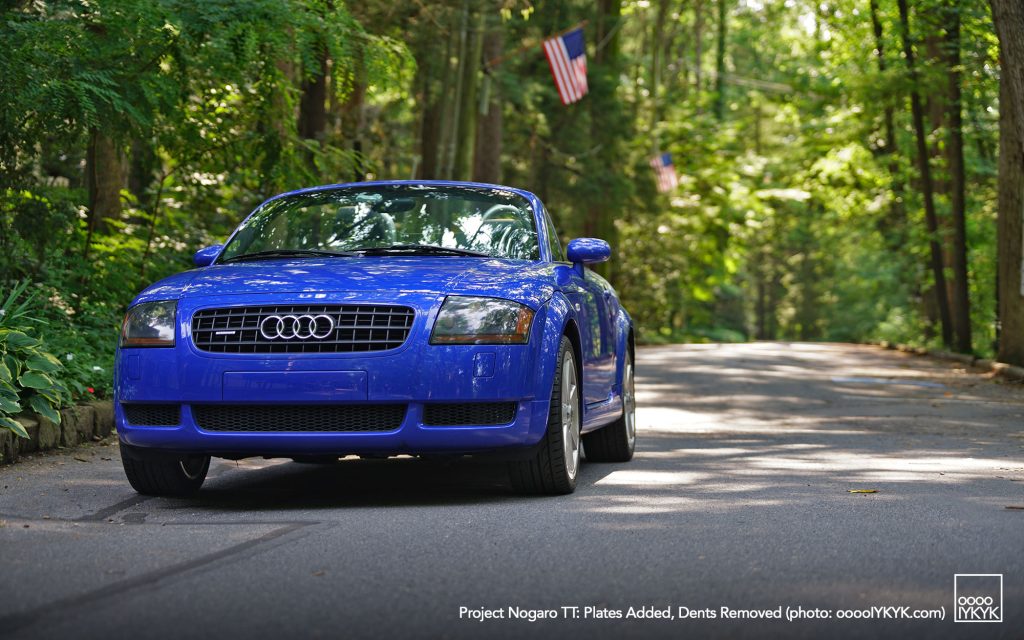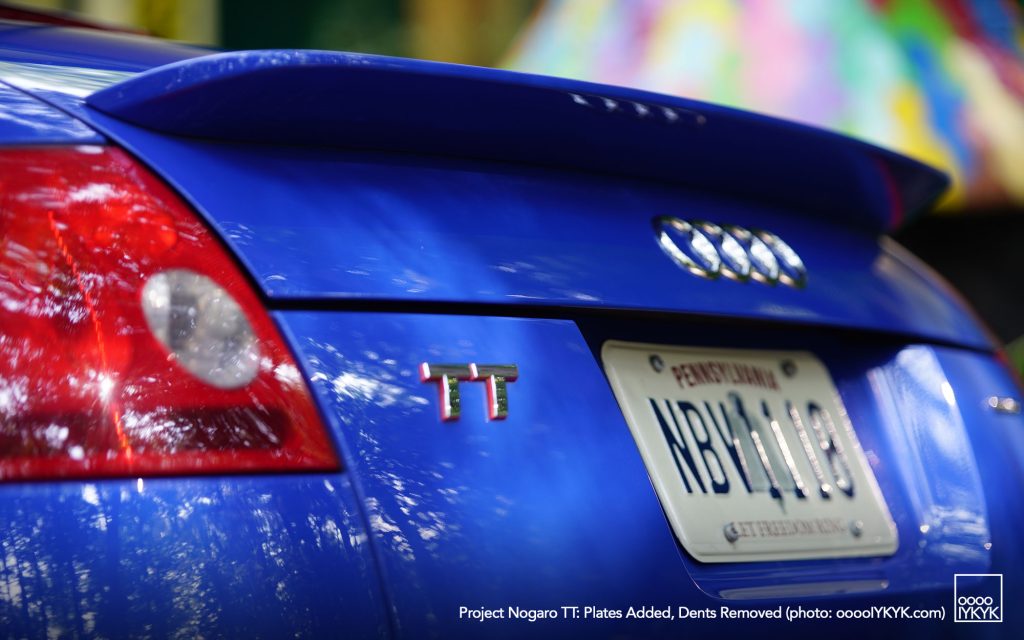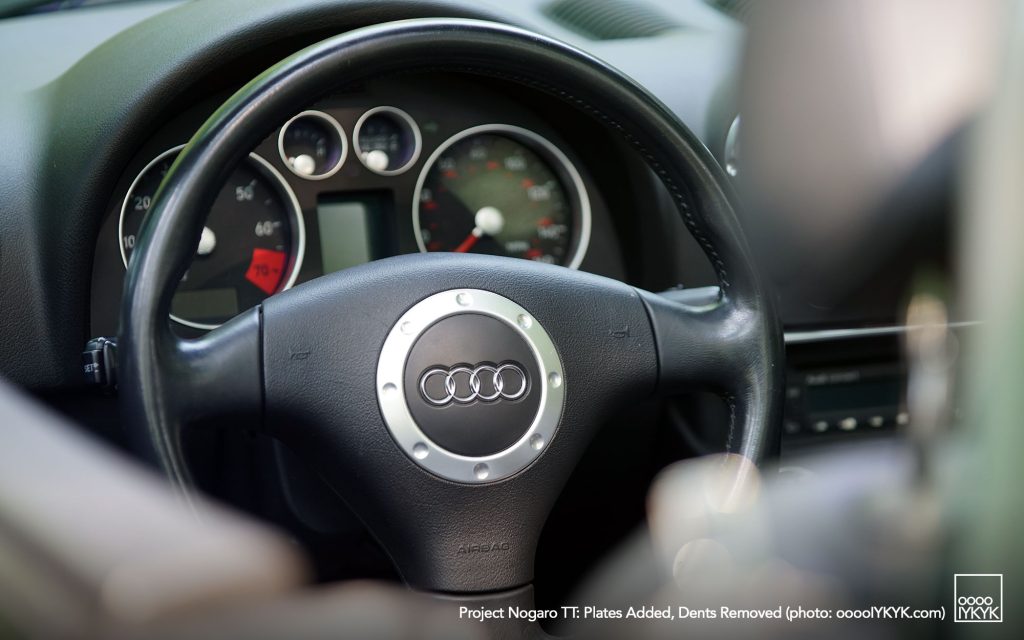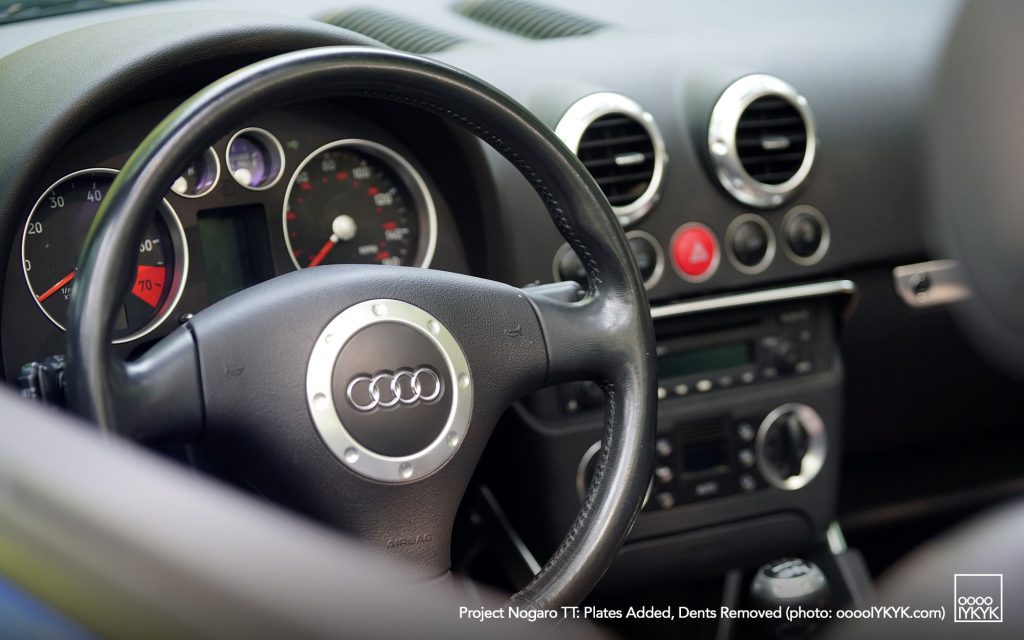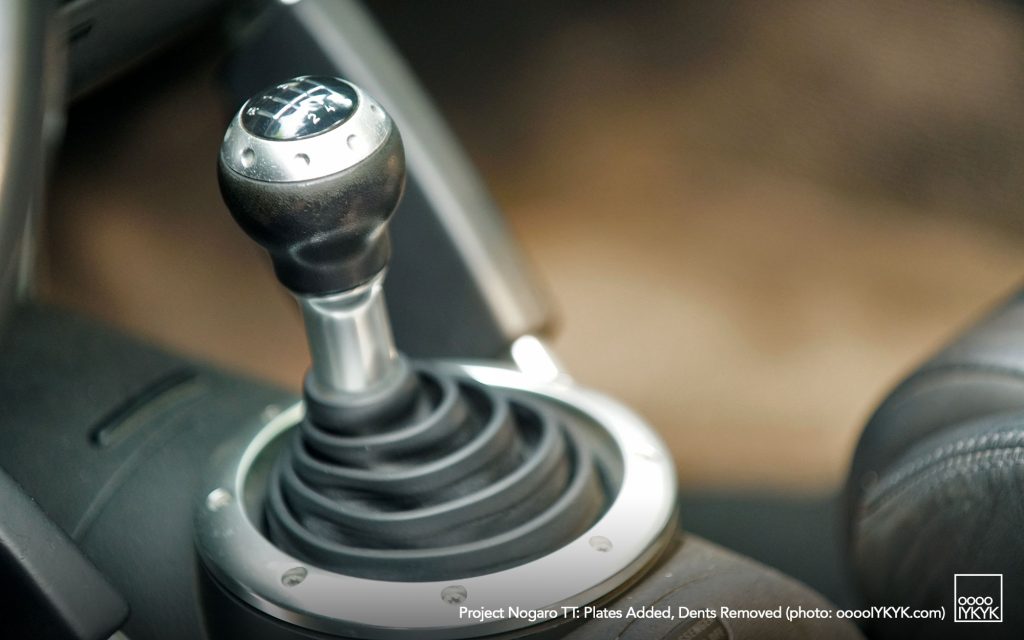

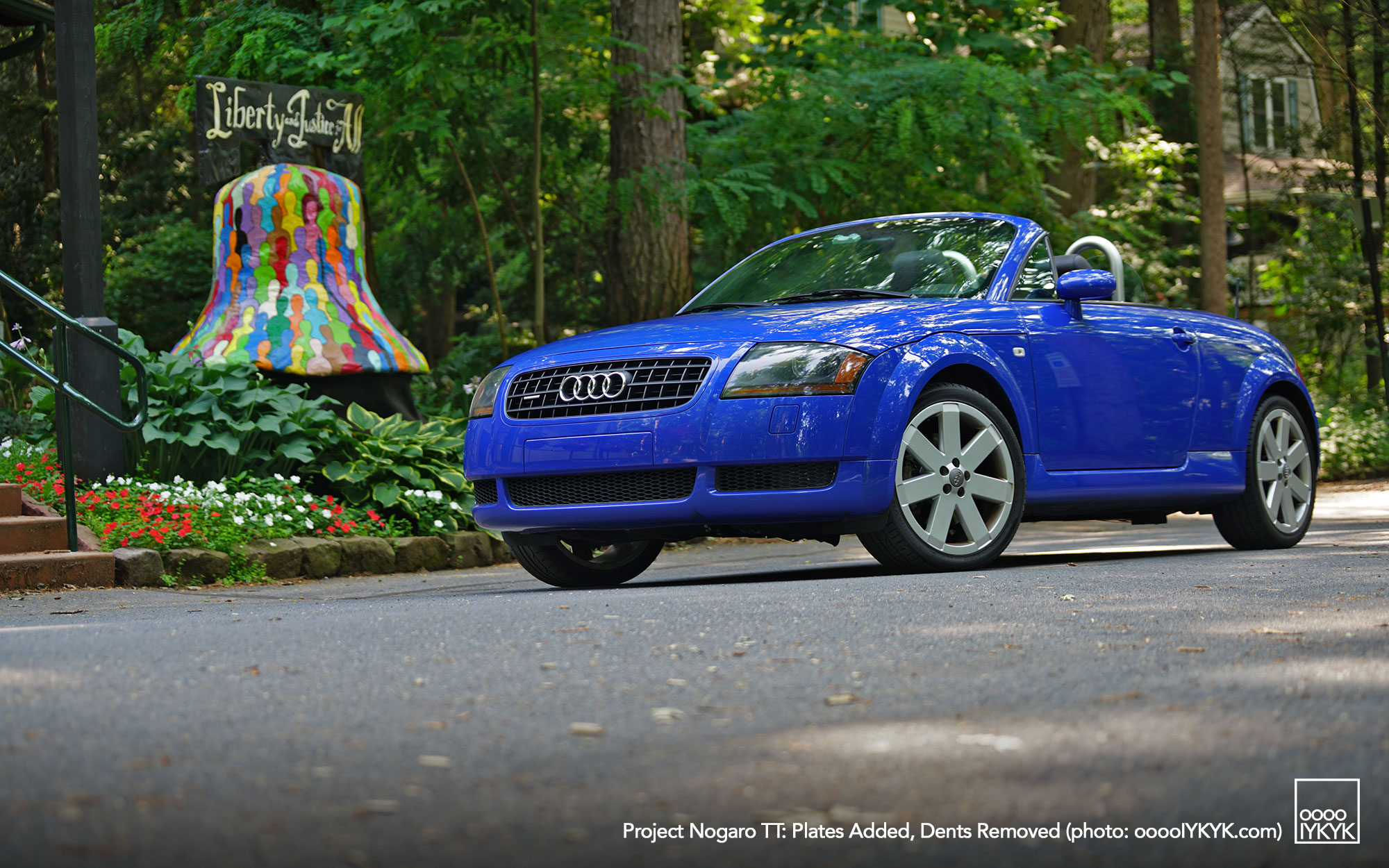

With our new-to-us 2003 Audi exclusive Nogaro Blue TT Roadster home from Ohio, the next step was establishing exactly what we’d bought and what it would need.
Editor’s Note: This story is part of the Project Audi exclusive TT Series. Follow the full series HERE.
When we found the car, we’d only encountered one other Nogaro Blue first-generation TT for sale in the United States. That example was a VR6 Coupé that surfaced several years ago in somewhat worn survivor condition. We passed at the time. Our Roadster wasn’t the Coupé we’d ideally have chosen, but it had several things working in its favor: Audi exclusive paint, largely stock specification, good overall condition and a location close enough to make acquisition a simple road trip.
We’ve since spotted another TT Roadster on Facebook Marketplace that appeared to be Nogaro Blue (featured HERE). Without an VIN, we couldn’t confirm that car as Audi exclusive, but the color appeared convincing in photographs. It wasn’t as well preserved as ours, though its existence suggests our Nogaro Blue may not be one of one for this market.
That doesn’t diminish the appeal of this particular example. With more than 80,000 miles, it’s a genuine survivor rather than a time capsule, but importantly it hasn’t been heavily modified or allowed to deteriorate. The goal now is to preserve what’s good, correct what isn’t and establish a solid baseline before deciding how far to take the car.
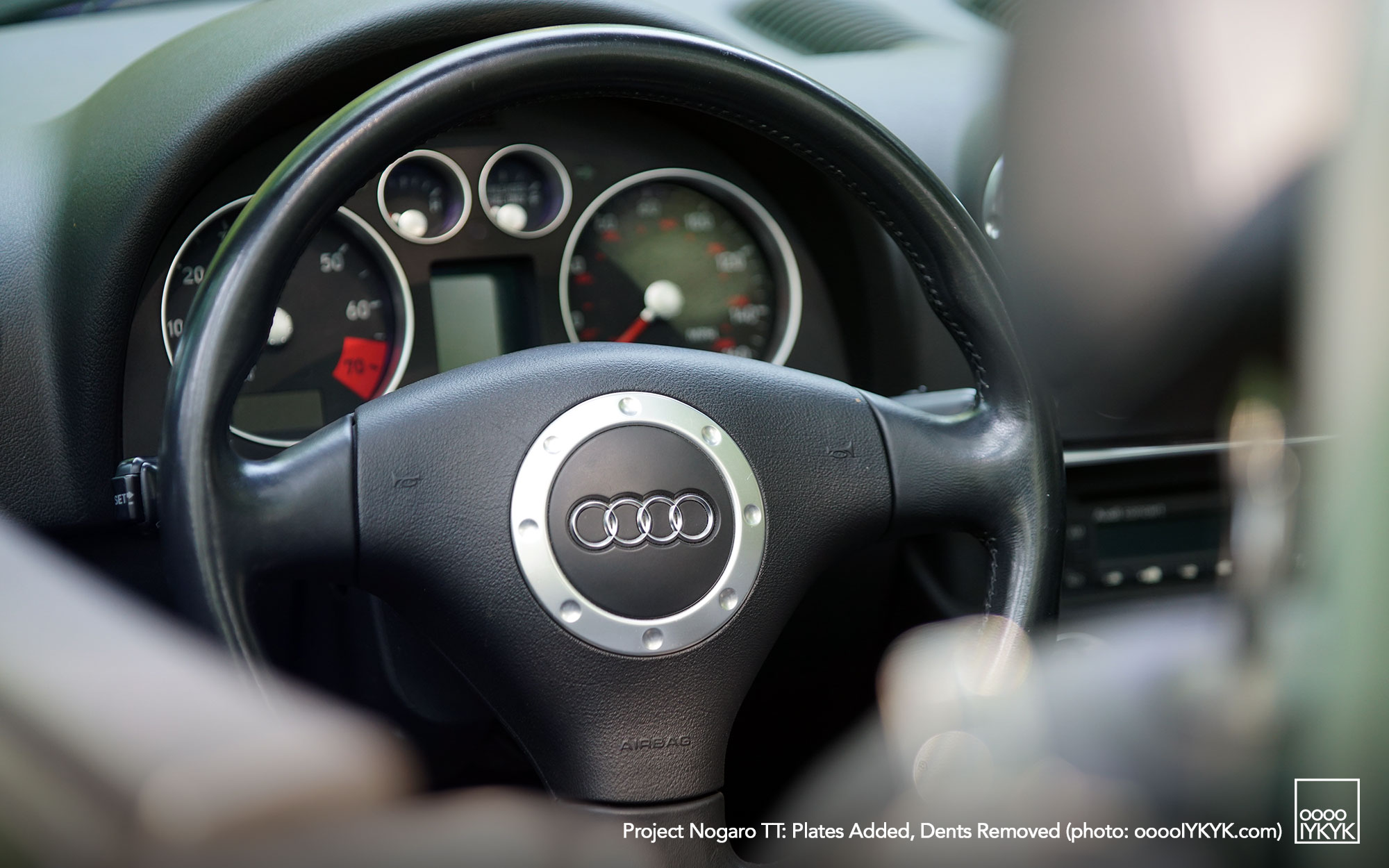
Beginning With the Body
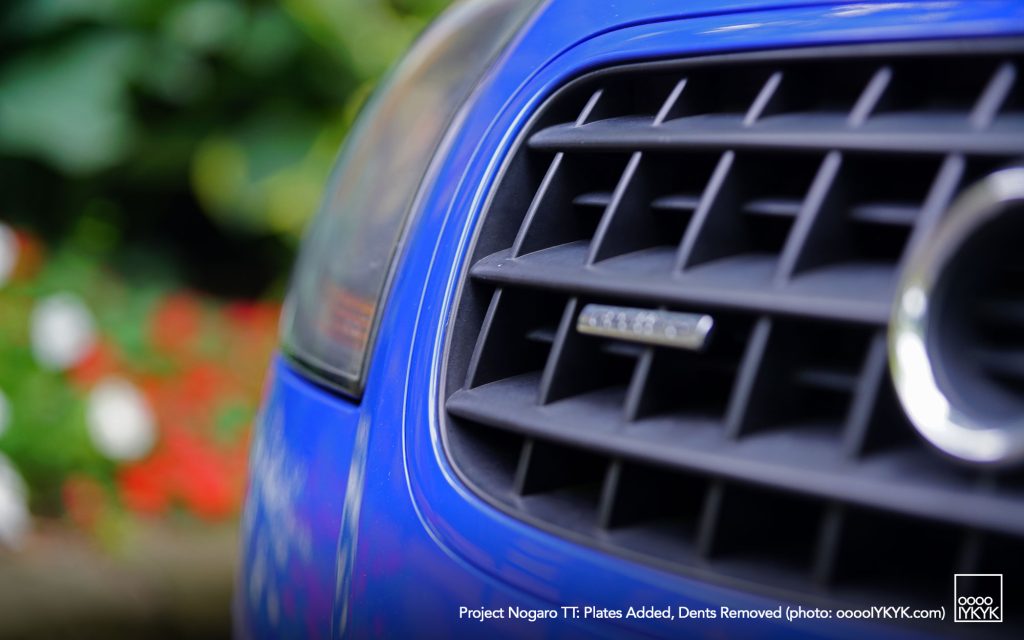
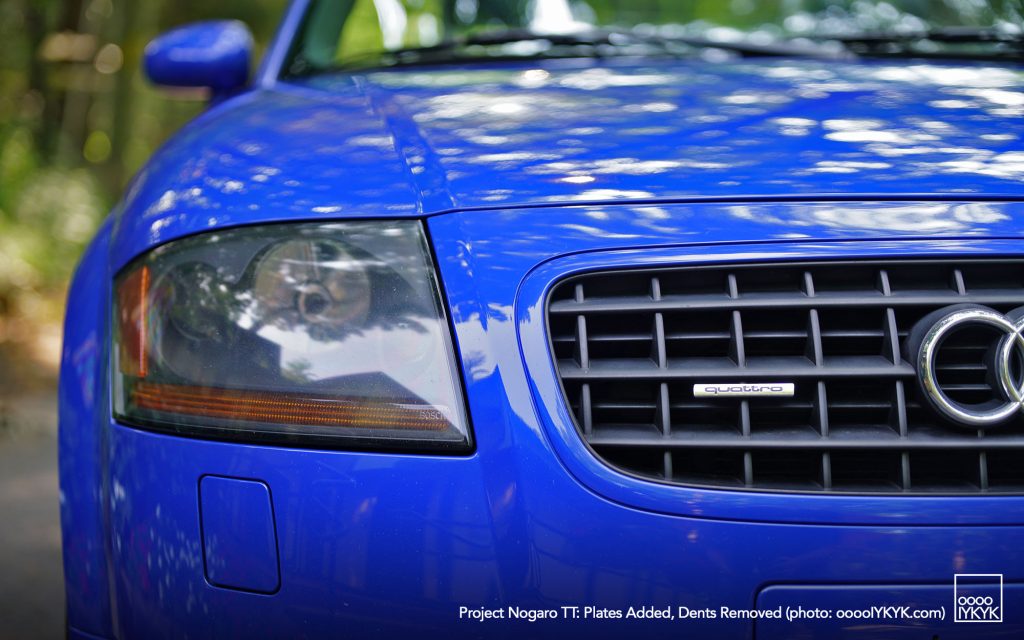
Nogaro Blue is ultimately what makes this TT interesting, so the paint and bodywork were the logical place to begin.
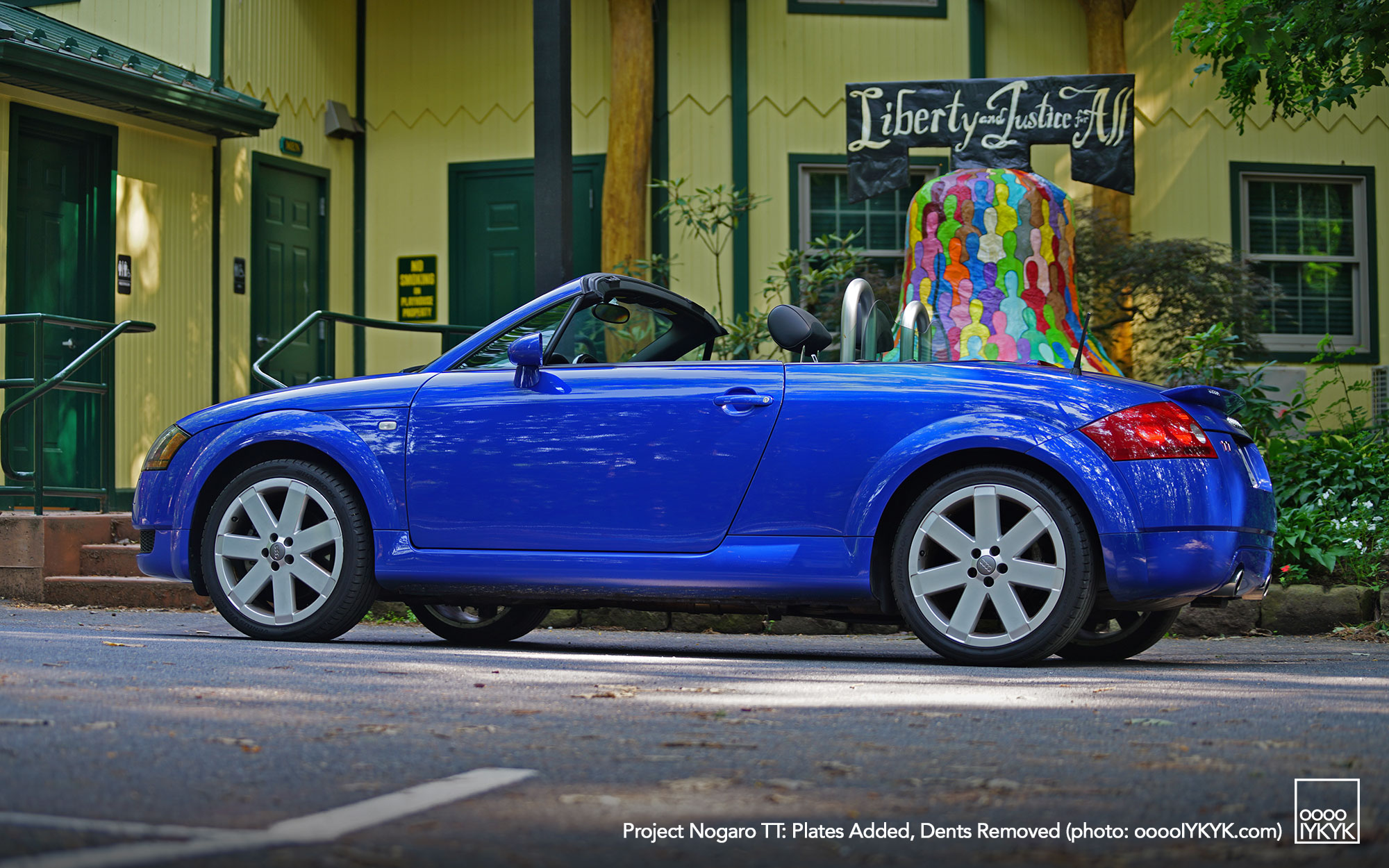
More than two decades of use had left a collection of small dents along the sides of the car, along with several scratches and other minor imperfections. None was particularly serious, but together they distracted from an otherwise remarkably presentable car.
We took the TT to Manheim Imports, a Pennsylvania dealer specializing in premium and enthusiast vehicles whose reconditioning work we’ve seen firsthand. The objective wasn’t restoration or paintwork. Instead, we wanted to remove the dents and minimize the scratches while retaining as much of the car’s existing finish as possible.
Paintless dent repair took care of the dings, while attention to the scratches reduced most to the point that they’re difficult to notice without looking for them. The result isn’t a concours restoration, nor was that the intention. It simply presents like a particularly well-kept 23-year-old car, which is exactly what we wanted.
Establishing the Mechanical Baseline
Cosmetics addressed, the next priority was Pennsylvania State Inspection and a closer look at the mechanical condition.
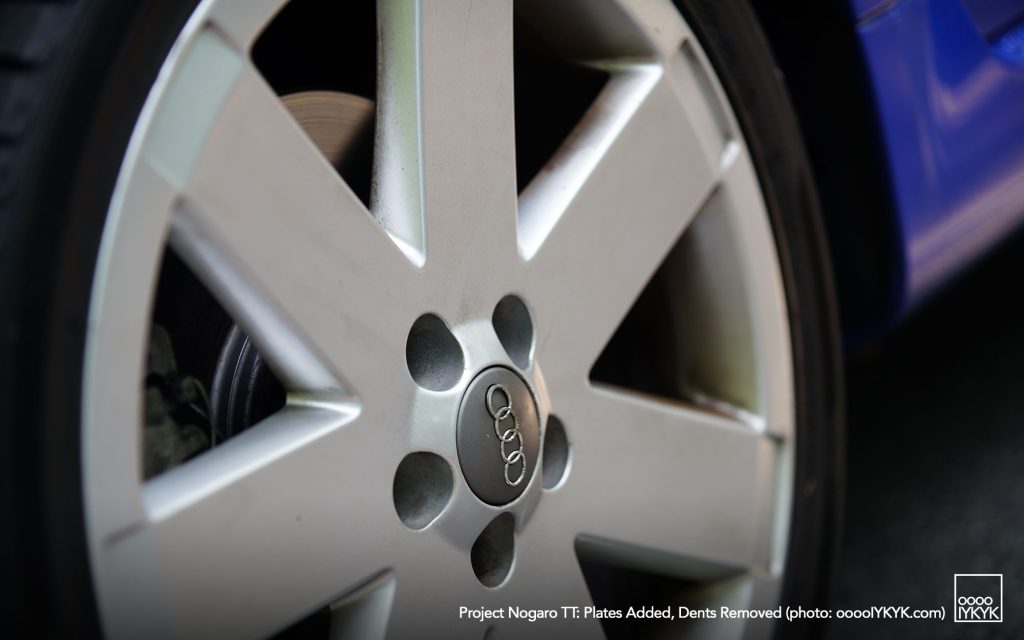
One problem became immediately apparent. The tires date from 2017 and had not only aged beyond the point where we’d be comfortable using them, but had begun to split. They weren’t going to pass inspection and, more importantly, weren’t something we wanted to continue driving on.
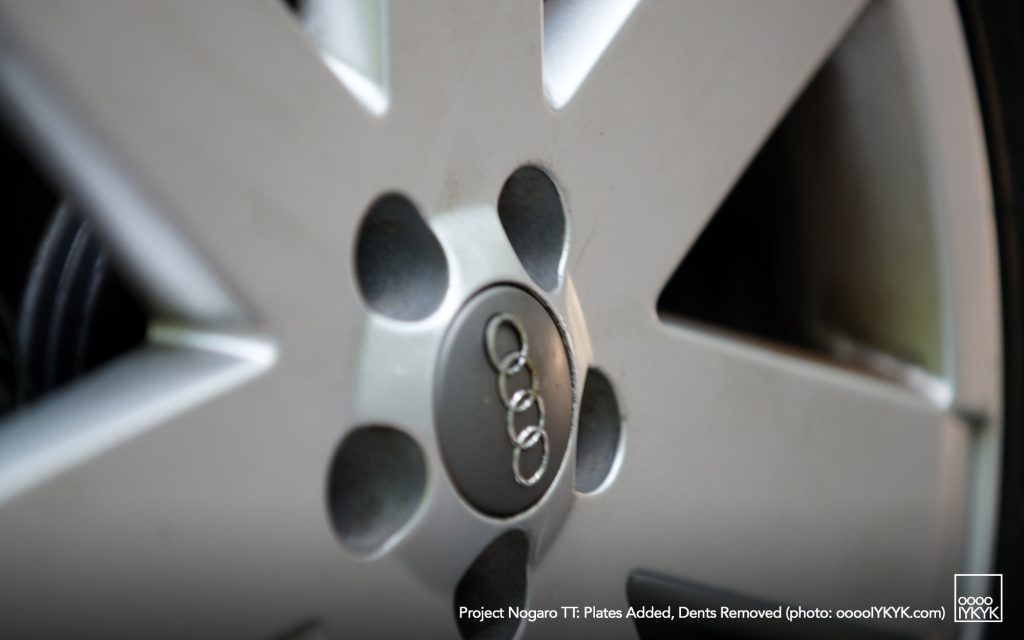
That discovery moved wheels and tires directly to the top of the list. Rather than simply replacing the existing rubber, we’ve decided to use the opportunity to make the first carefully considered change to the car.
Inspection also uncovered several smaller items that need attention, while the service history leaves some preventative maintenance we’d prefer to address sooner rather than later. With an 82,000-mile, 23-year-old car, none of that is particularly surprising.
The more interesting question is how far to go beyond simply putting everything right.
The rarity of the Audi exclusive specification argues strongly for preservation, but preservation doesn’t necessarily require leaving every component exactly as it sits today. Our intention remains what we’ve come to think of as “OEM Maxxing”: using period-correct Audi components and discreet upgrades to create a better version of the TT without compromising what makes this particular example worth preserving.
The first step is simply getting the baseline right. Wheels and tires are next.