
Rolls-Royce Phantom Arabesque Debuts with World’s First Laser-Engraved Bonnet

In a marque built on surface perfection, altering the bonnet of a Rolls-Royce Phantom is no small decision.
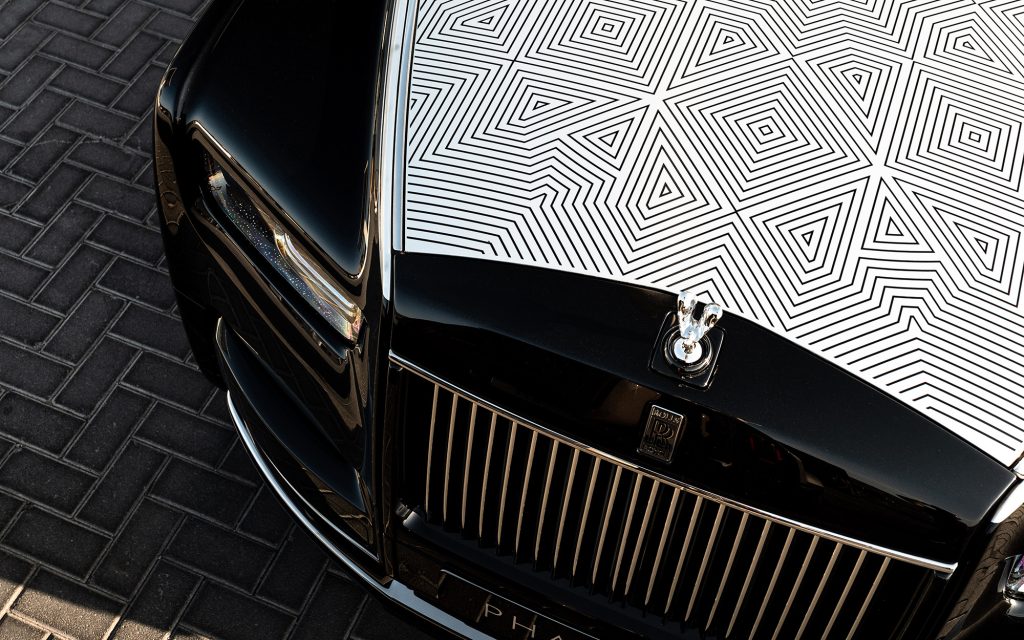
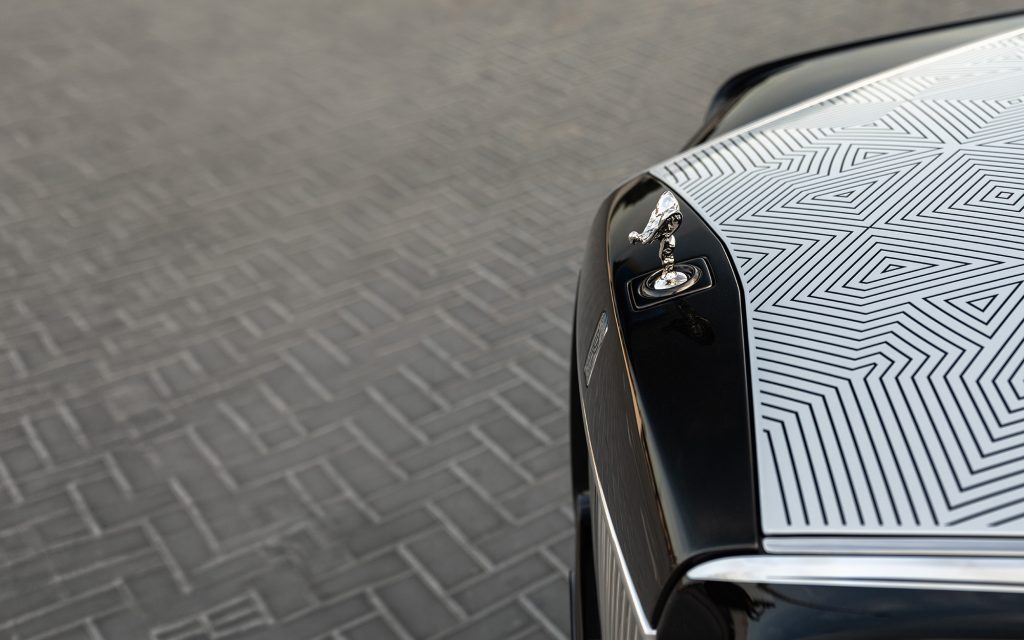
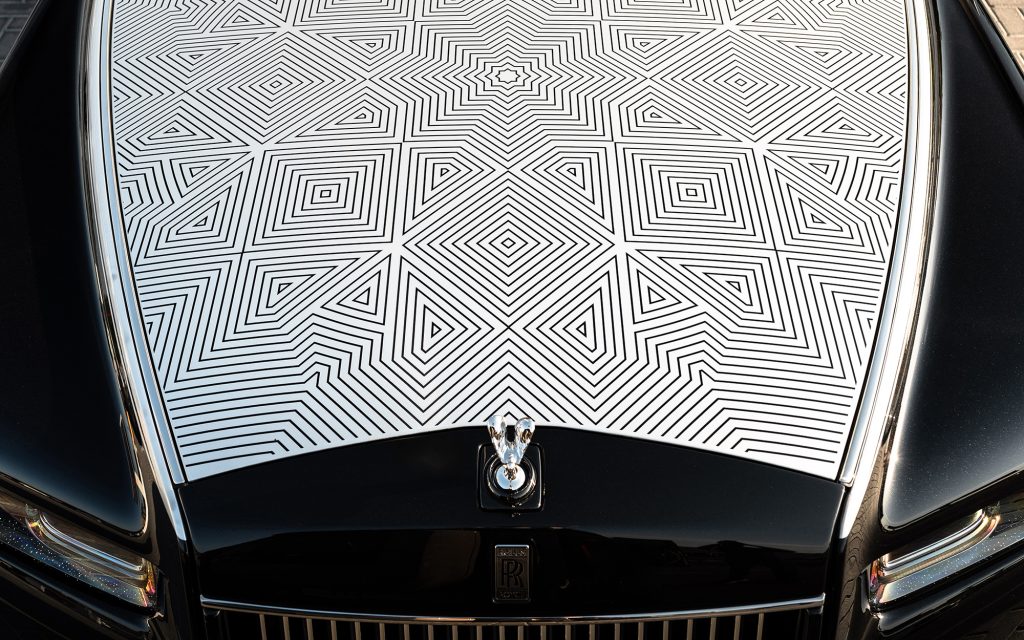
With Phantom Arabesque, Rolls-Royce Motor Cars has done exactly that — introducing the world’s first fully laser-engraved Rolls-Royce bonnet. The technique, five years in development and now patented, debuts on a one-of-one Phantom Extended commission curated by the brand’s Private Office Dubai.
The result is not decorative flourish for its own sake. It is a study in architectural heritage translated into contemporary craft.
Architectural Inspiration Rooted in the Middle East
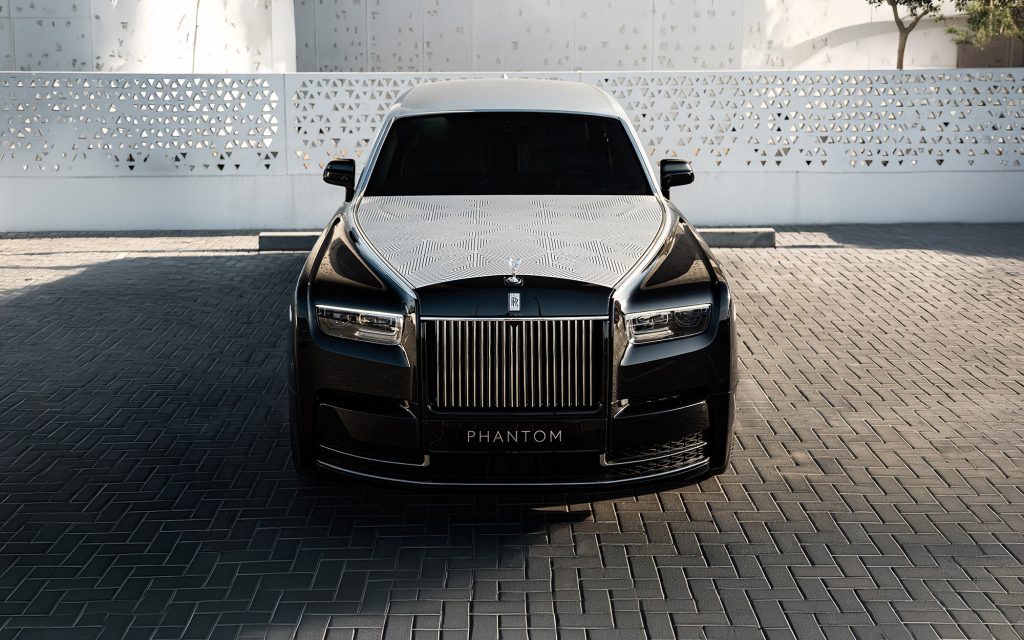
Phantom Arabesque draws directly from mashrabiya latticework, a defining element of traditional Arabian architecture. These intricately carved wooden screens are designed to create privacy while allowing airflow and filtered light — functional geometry that has shaped houses, palaces and courtyards across the Middle East for centuries.
Here, that language is reinterpreted across multiple surfaces of the motor car. The geometric mashrabiya motif appears not only on the bonnet, but within the Gallery marquetry, as embroidered headrest details and as illuminated accents throughout the cabin.
The commission was conceived through Rolls-Royce Private Office Dubai, one of five invitation-only hubs globally, reinforcing the region’s importance within the brand’s Bespoke ecosystem.
Laser Engraving as a New Craft Form
The bonnet is the technical centerpiece.
To achieve the effect, artisans first apply a darker base color, seal it beneath layers of clear coat, then finish the surface in a lighter top tone. The mashrabiya pattern is then engraved into the uppermost layer to a depth of just 145 to 190 microns, revealing the darker shade beneath.
The process draws inspiration from the Italian sgraffito technique, where upper layers are carefully removed to expose contrasting tones below. But translating that idea to an automotive finish demanded five years of calibration by Rolls-Royce’s Exterior Surface Centre.
Each engraved section is hand-sanded to create a sculptural, three-dimensional surface that interacts with light. Variations in laser intensity and velocity introduce subtle tonal shifts across the bonnet. Crucially, the pattern is embedded within the paint itself rather than applied as an overlay, ensuring durability and a seamless finish.
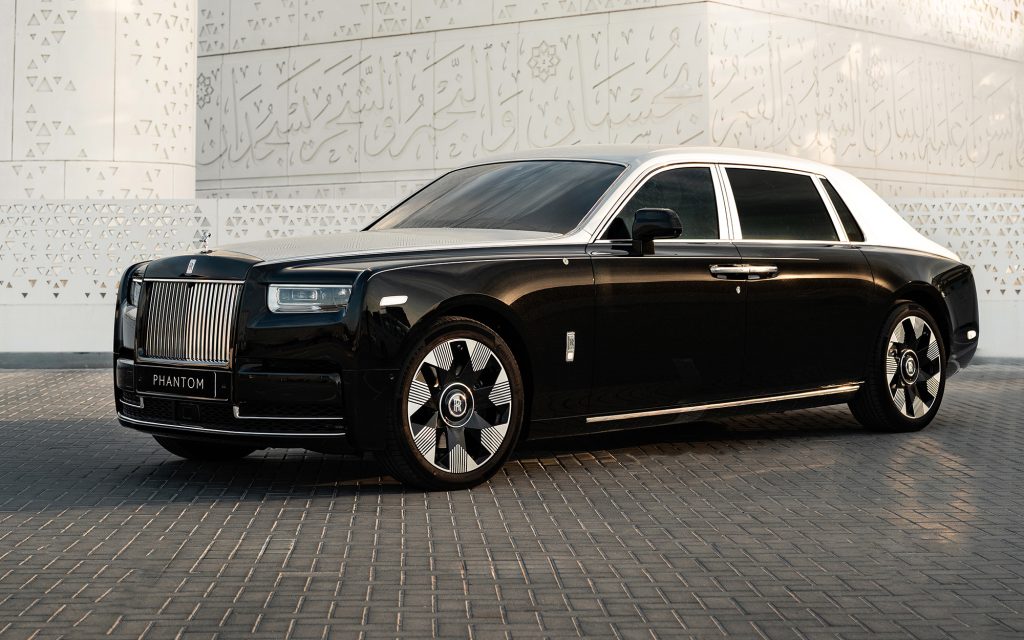
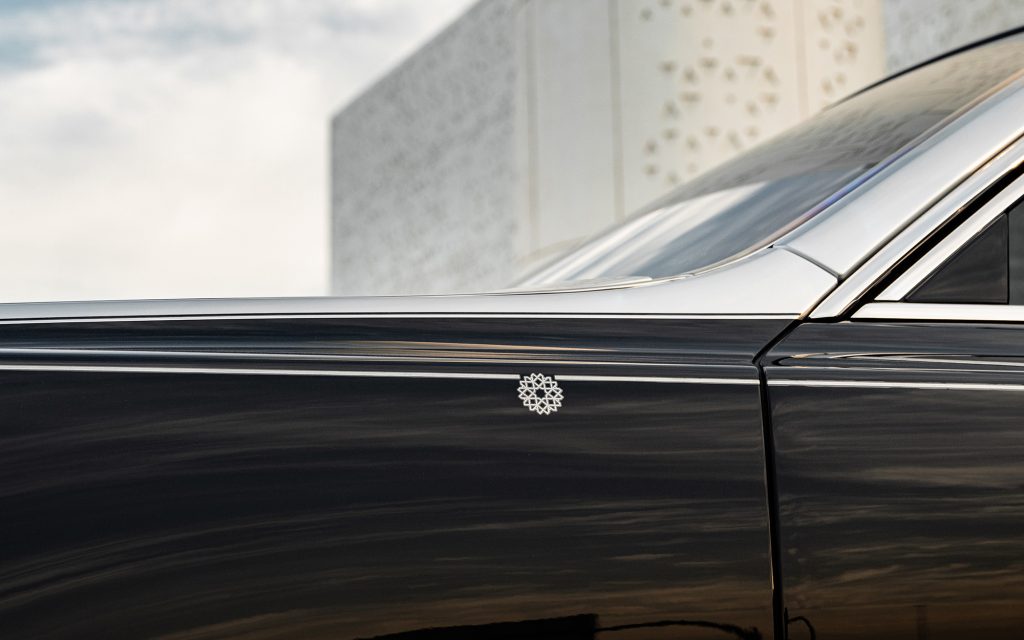
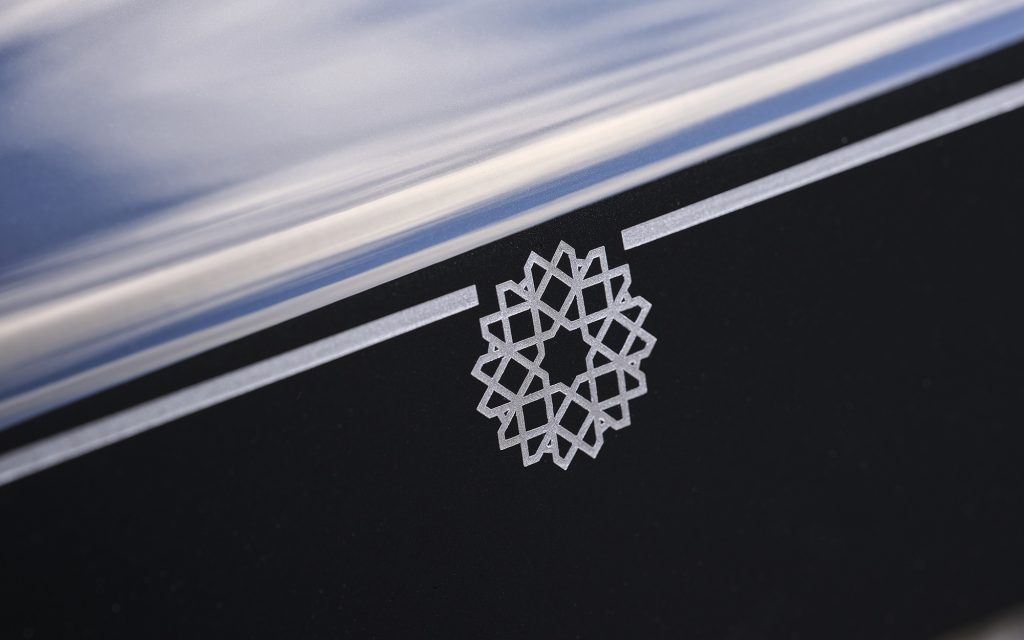
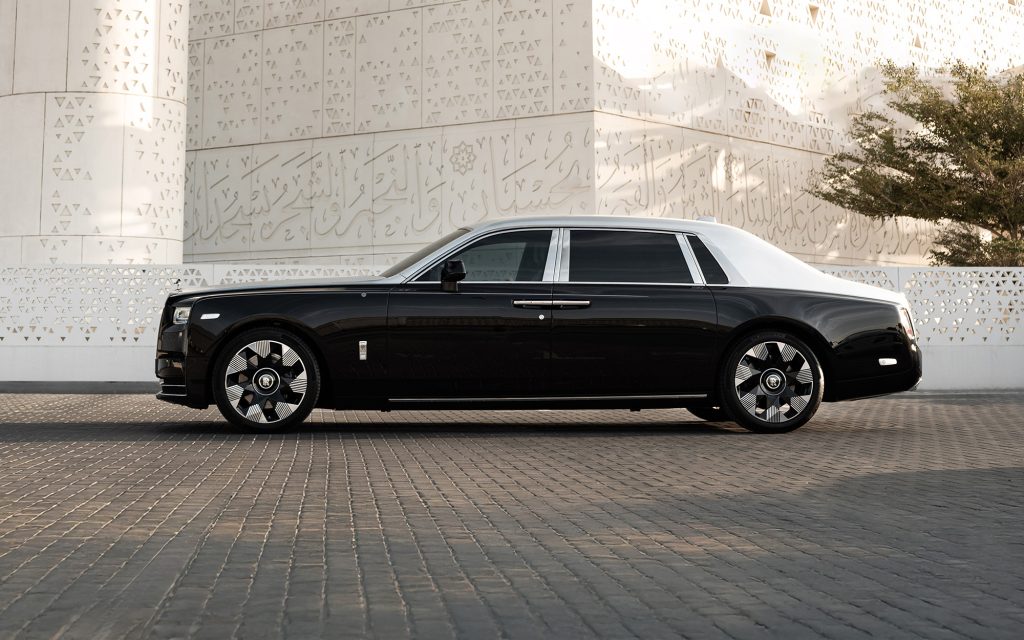
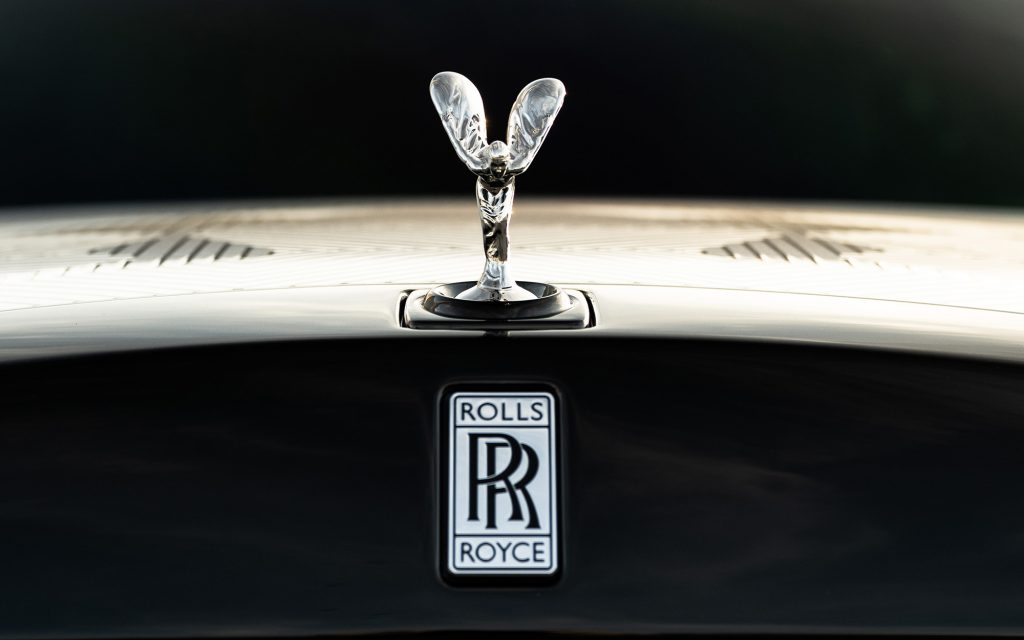
Phantom Arabesque is finished in a two-tone Bespoke scheme: Diamond Black for the body and Silver for the upper surfaces. A single hand-painted coachline in matching Silver is elevated with a mashrabiya motif. The illuminated Pantheon grille, Dark Chrome surround and uplit Spirit of Ecstasy complete the exterior composition, along with 22-inch part-polished wheels.
Interior: Cool Restraint, Geometric Precision
Inside, the design language shifts from sculptural to serene.
The Gallery, which spans the width of the fascia, houses an intricate marquetry artwork crafted from Blackwood and Black Bolivar wood. Its geometric pattern mirrors the bonnet engraving, creating continuity between exterior and interior.
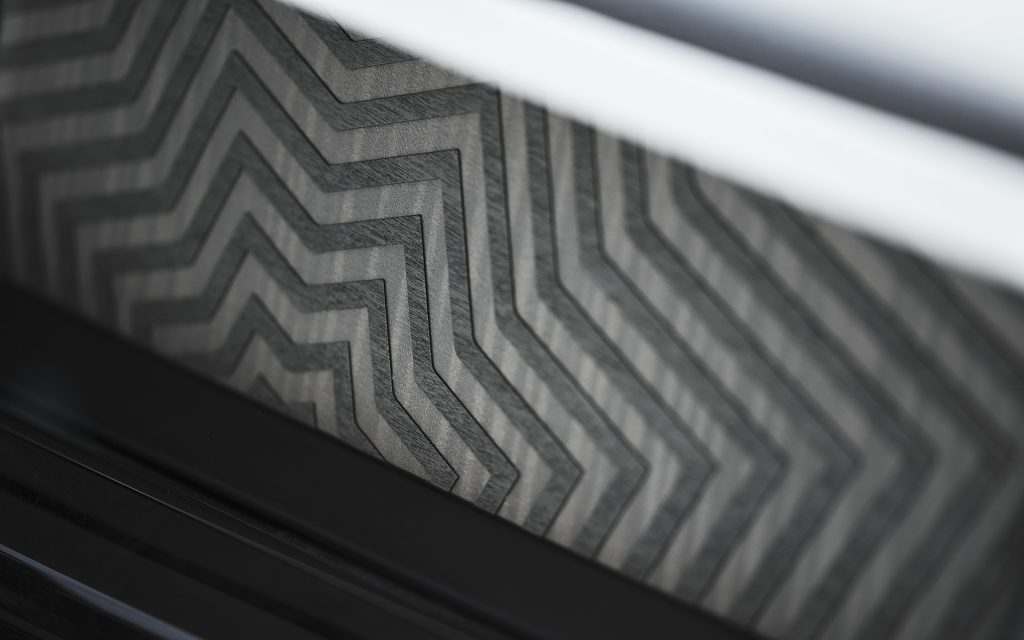
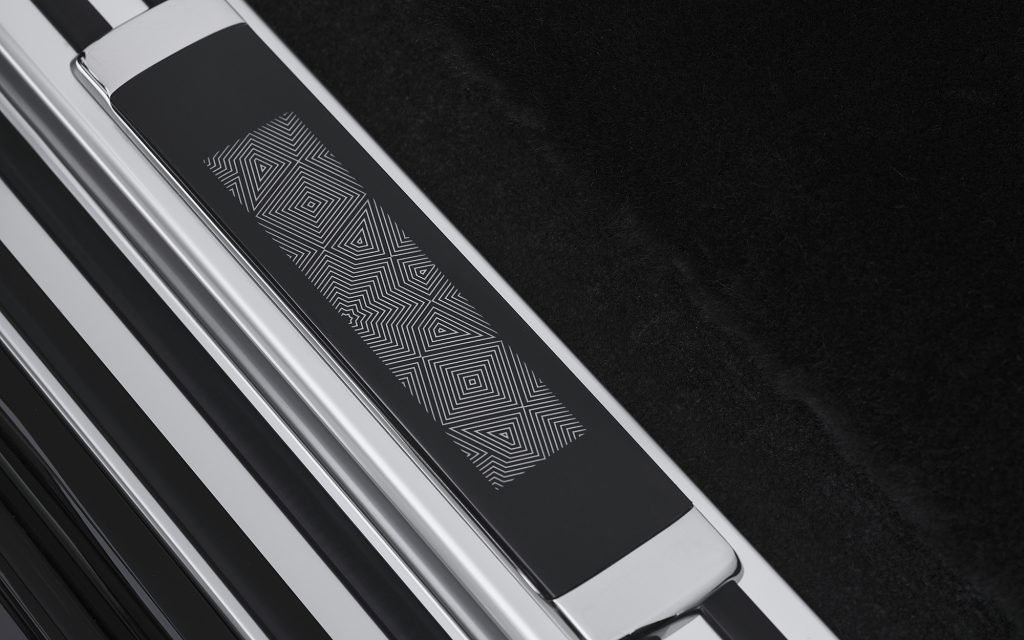
The cabin is finished in Selby Grey and Black leather with Black piping and carpets. Mashrabiya motifs are embroidered into the front and rear headrests. Starlight Doors trimmed with Selby Grey piping and Black contrast stitching extend the atmosphere of quiet drama. Illuminated treadplates echo a cross-section of the bonnet engraving, reinforcing the theme at every point of entry.
A Landmark Commission
Phantom Arabesque has been delivered to its Middle Eastern commissioning client, joining a private collection. More broadly, it serves as the first public expression of Rolls-Royce’s new laser-engraving capability — a technique likely to open new creative avenues for future Bespoke commissions.
For Tailored Driver readers, Phantom Arabesque represents more than a one-off. It demonstrates how Rolls-Royce continues to reinterpret regional design languages through contemporary engineering, extending craft beyond material selection into the very surface of the motor car.
In a segment where luxury is often defined by excess, Phantom Arabesque instead pursues precision — embedding centuries-old architectural geometry into paint measured in microns.

Responses