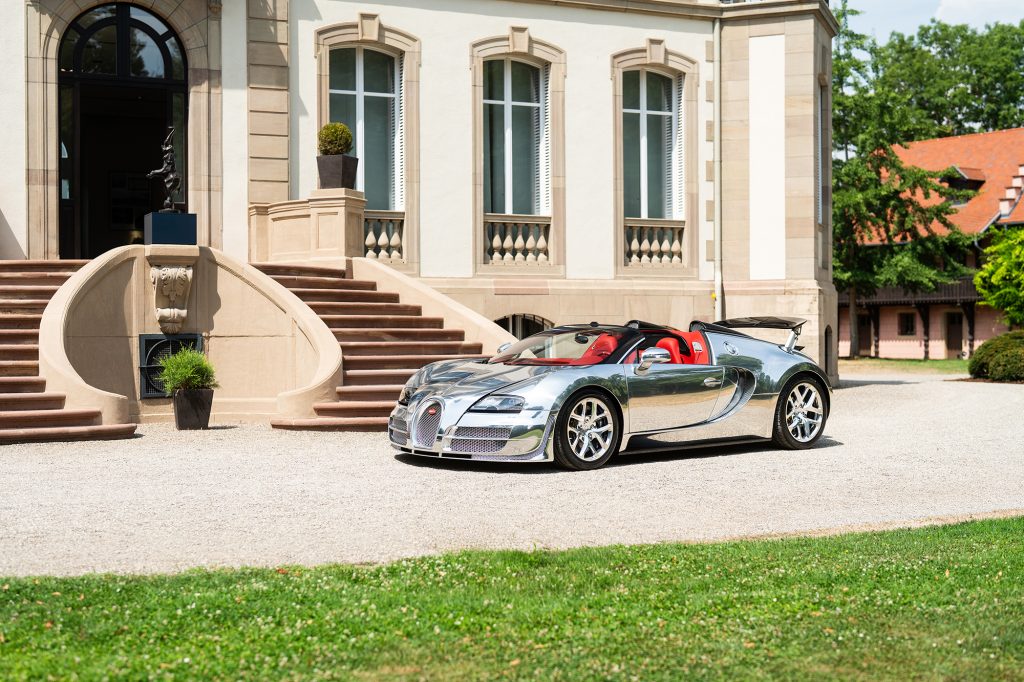



A one-off Bugatti Veyron Grand Sport Vitesse with exposed polished-aluminum bodywork has returned to Molsheim for certification and refurbishment through La Maison Pur Sang. Identified by Bugatti as chassis 8.100, the roadster underwent work that included removing later personalization elements to recover its original specification before joining a new owner’s collection.
The project illustrates a different aspect of factory tailoring: preserving an existing commission after years of ownership and subsequent changes. For a car whose identity depends so heavily on its materials and finish, documenting and recovering the original configuration becomes part of maintaining its provenance.
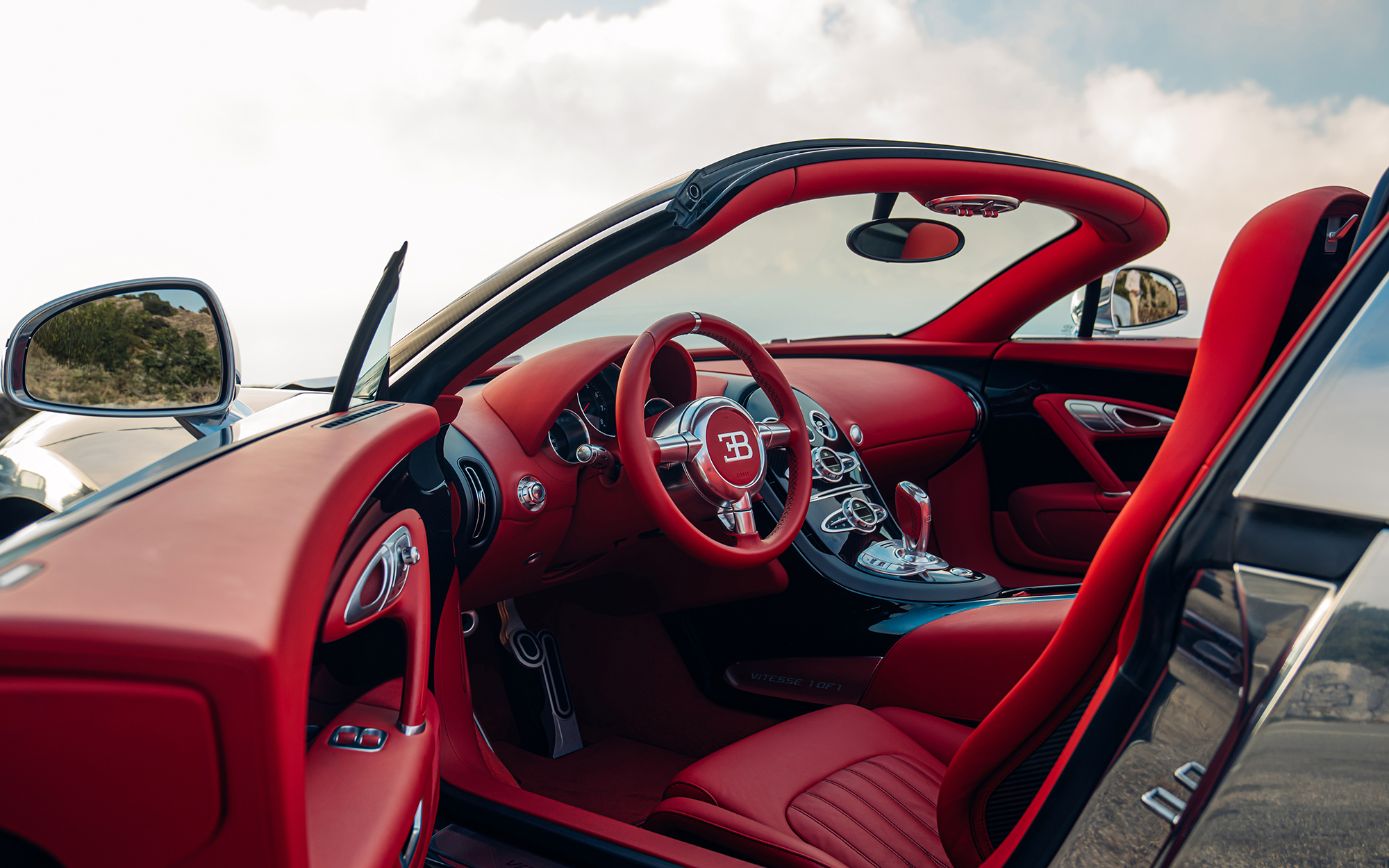
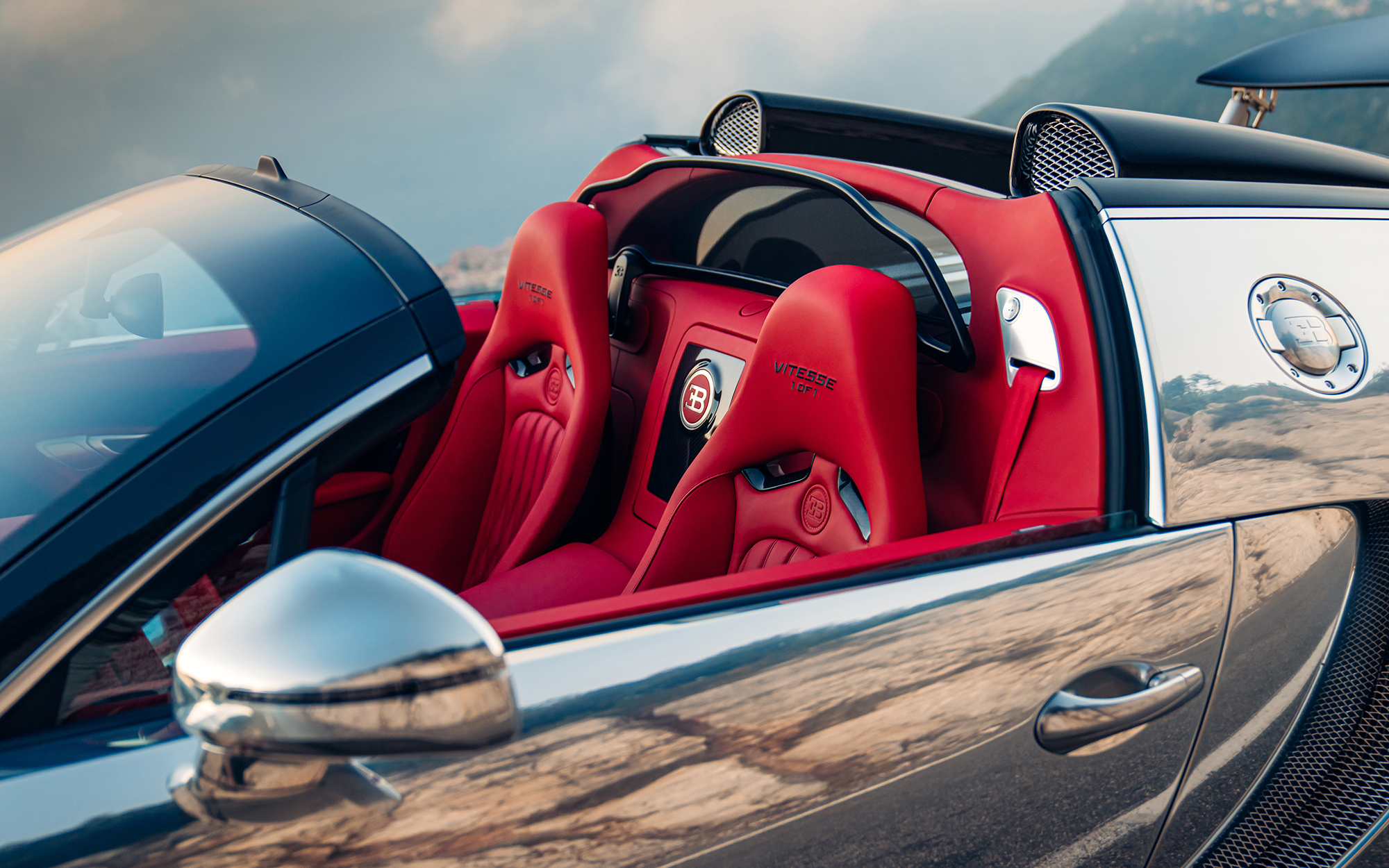
Polished Aluminum and Carmine Red
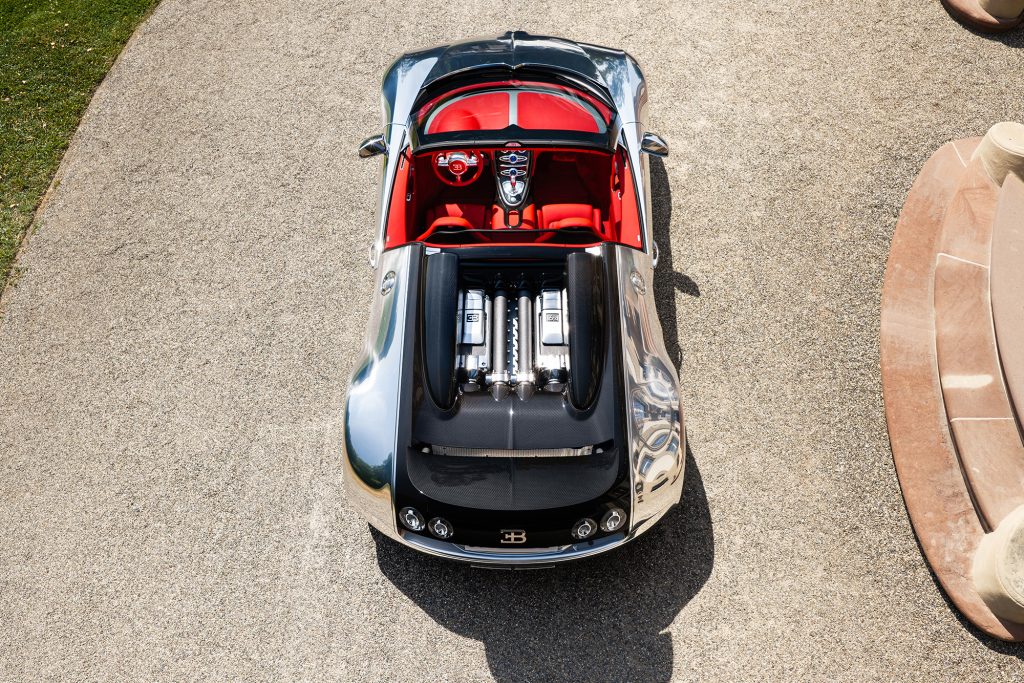
The Vitesse was originally commissioned by a customer with an interest in rare and highly individualized cars. Its defining feature is the exposed polished aluminum, which makes the material itself the exterior finish. Bugatti says the undertaking required aluminum blocks weighing up to 20 tons to be delivered to Molsheim, although the announcement does not explain the complete fabrication process.
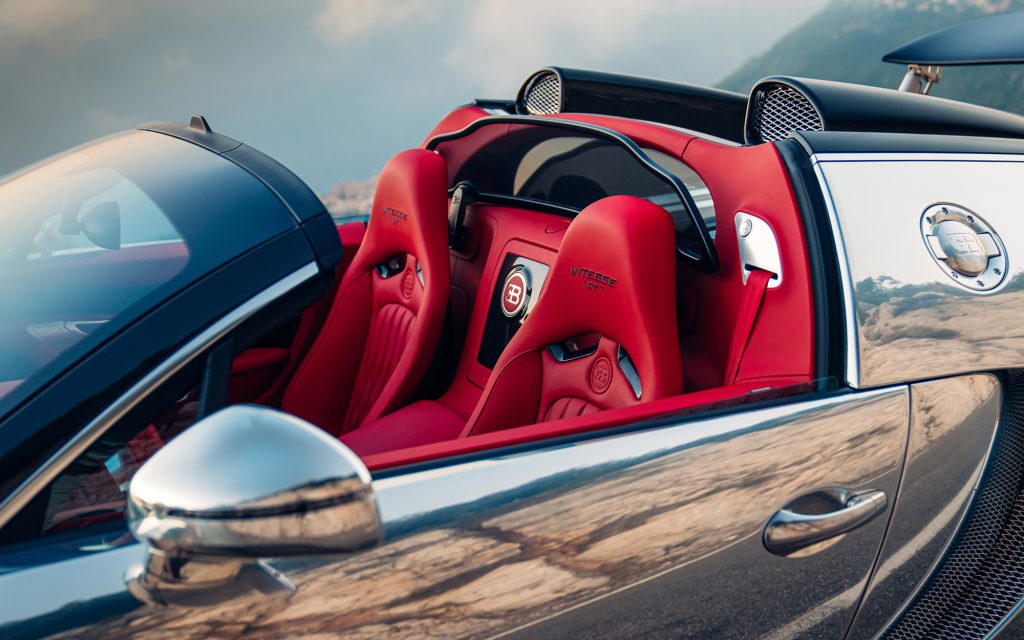
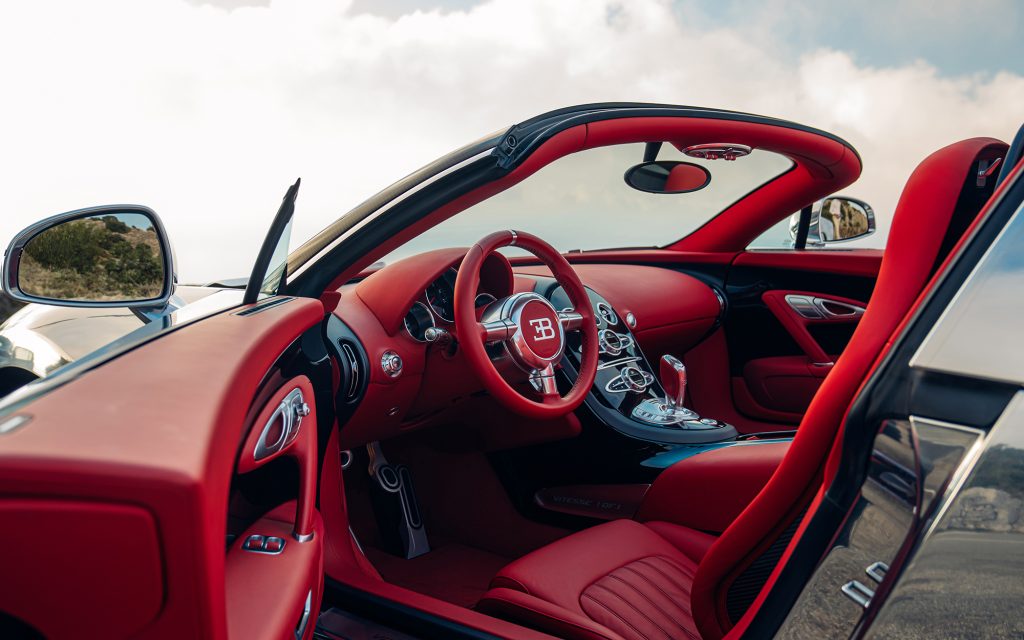
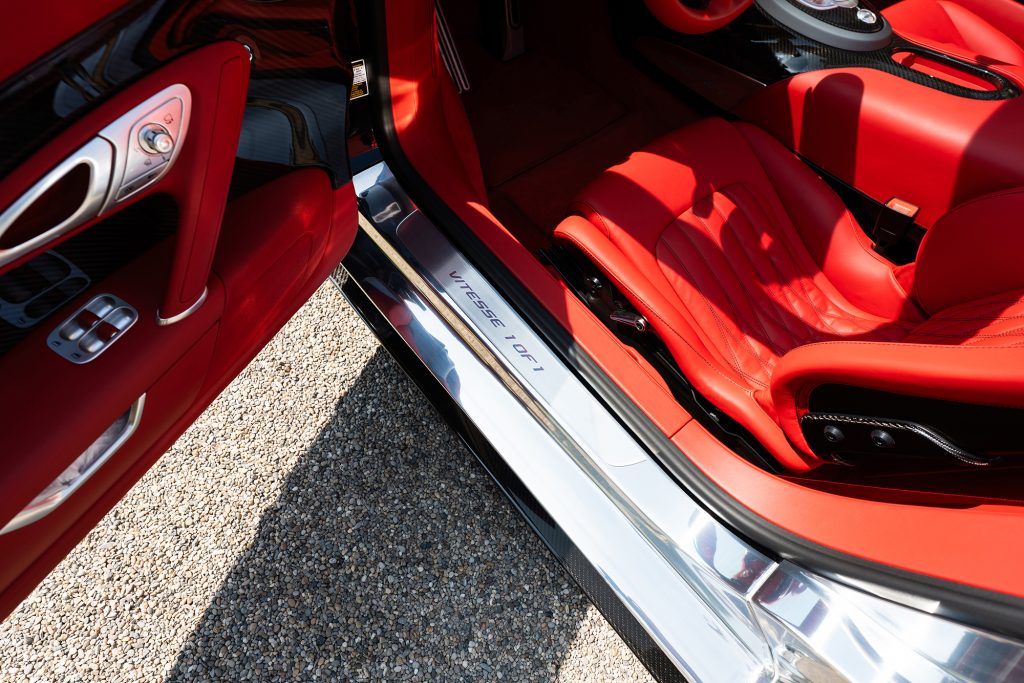
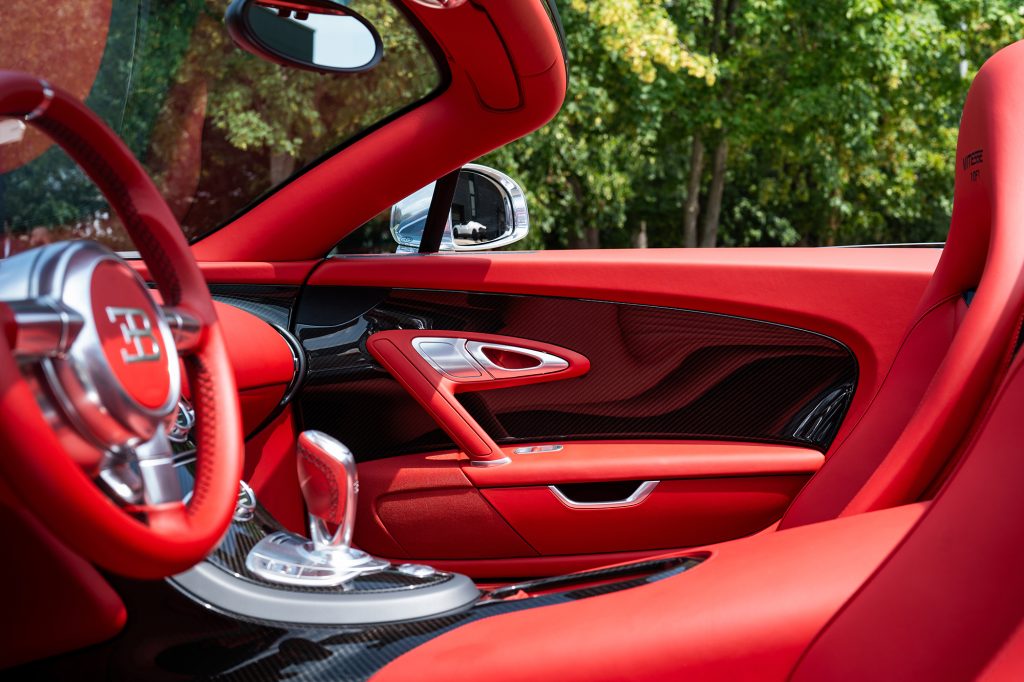
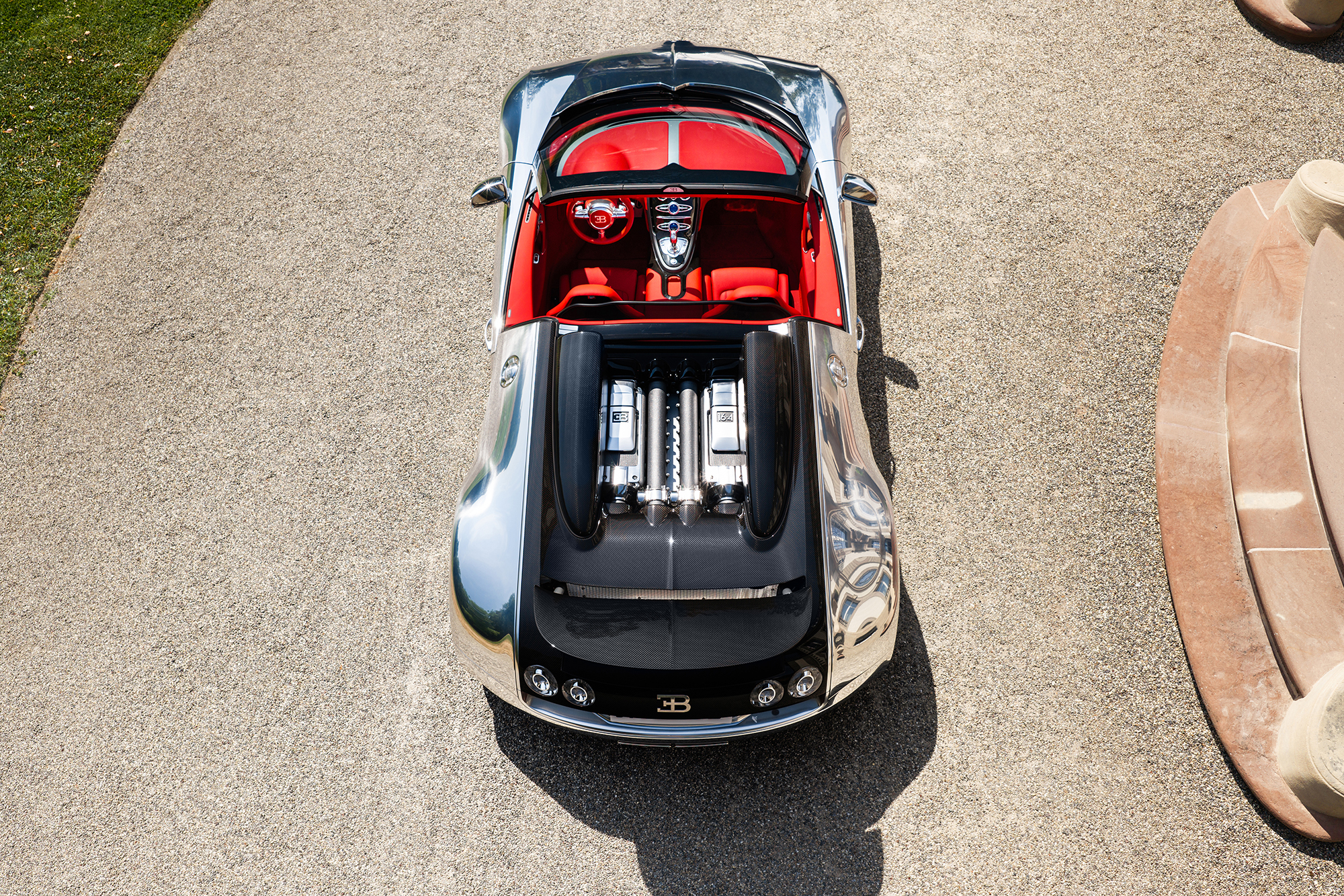
The reflective bodywork is paired with a Carmine Red leather interior, alongside exposed carbon fiber and polished-aluminum details. The contrast gives the cabin a distinct role in the specification, introducing a rich color against the largely monochromatic exterior.
According to Bugatti, the design team conducted extensive studies of proportion, surface and light before the car entered the Molsheim Atelier. Its construction was also documented throughout, creating a record that could support subsequent research into its original configuration.
Beneath the individual body treatment sits the Grand Sport Vitesse’s 8.0-liter quad-turbocharged W16. Output is 1,200 PS and 1,500 Nm, equivalent to approximately 1,184 hp and 1,106 lb-ft of torque.
Returning to the Original Commission
More than a decade after its creation, chassis 8.100 returned to Bugatti for a comprehensive certification process, refurbishment and reconfiguration. The work included removing personalization added later in the car’s life, allowing the original design to reemerge.
Bugatti has not identified those later additions or provided an itemized account of the refurbishment. It also has not disclosed the original completion date, the cost of the recent work or the identities of either owner.
Those omissions leave some of the car’s history private, but the stated objective is clear: the latest intervention sought to preserve the character of the initial commission rather than introduce another specification.
La Maison Pur Sang’s Role
La Maison Pur Sang combines Bugatti’s heritage, certification and restoration services with assistance for collectors researching or acquiring cars. Its remit covers historic and modern Bugattis, including provenance research, authentication and work to return a vehicle to its intended specification. The program can also accommodate modernization according to an owner’s wishes.
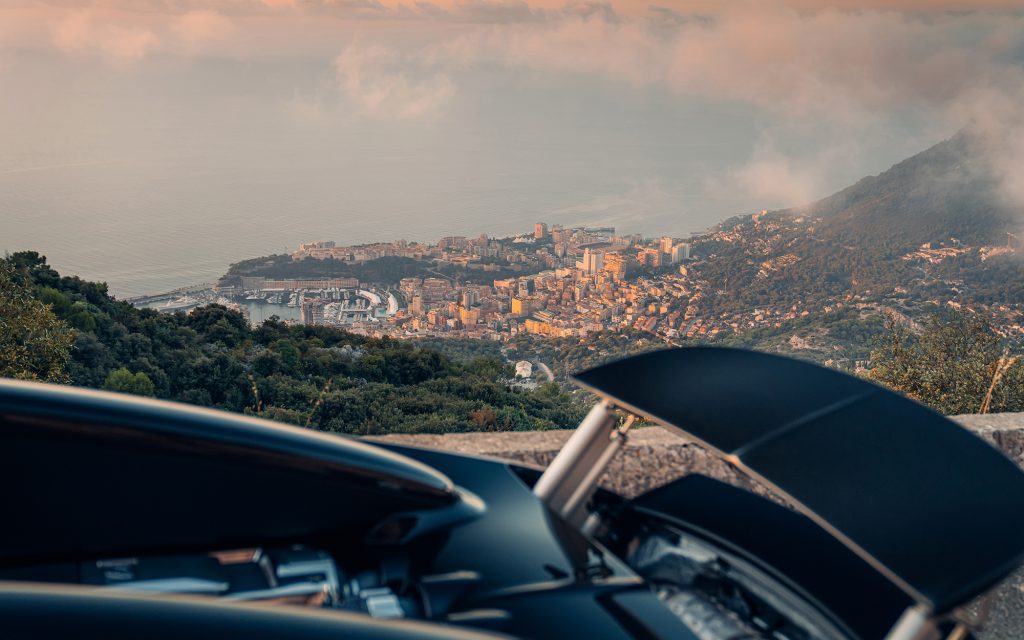
For this Vitesse, certification and refurbishment accompanied a change of ownership. Bugatti says the car now resides on the French Riviera and credits Mechatronik with collaborating on the photography and delivery.
Chassis 8.100 demonstrates why factory records matter for highly personalized cars. An unusual finish may be immediately recognizable, but the documentation behind it establishes which details belong to the original commission and which arrived later. Here, that record helped guide a return to the polished-aluminum and Carmine Red combination that defined the car when it first left Molsheim.