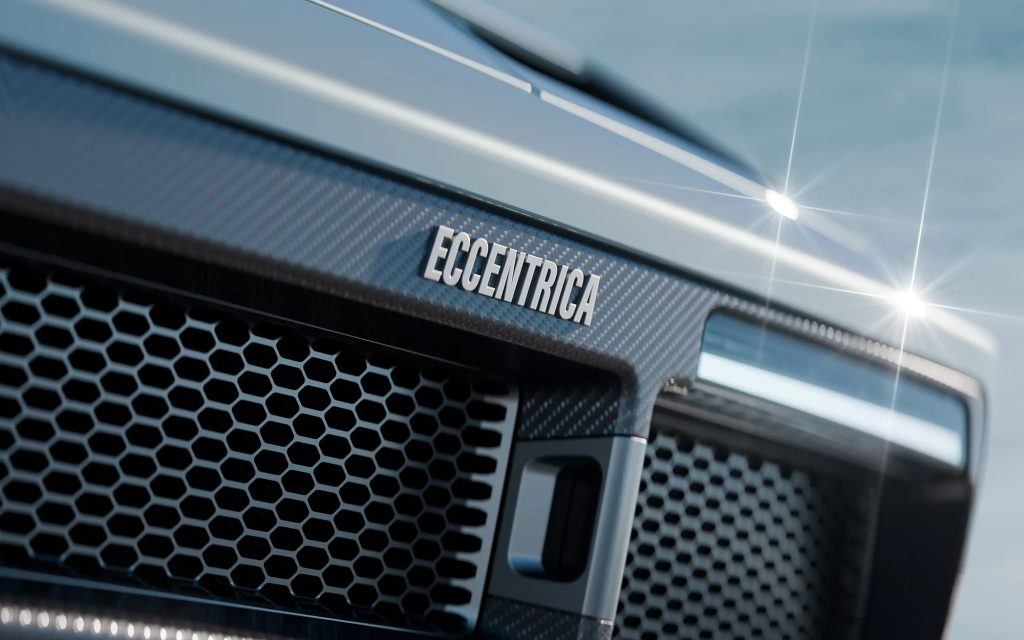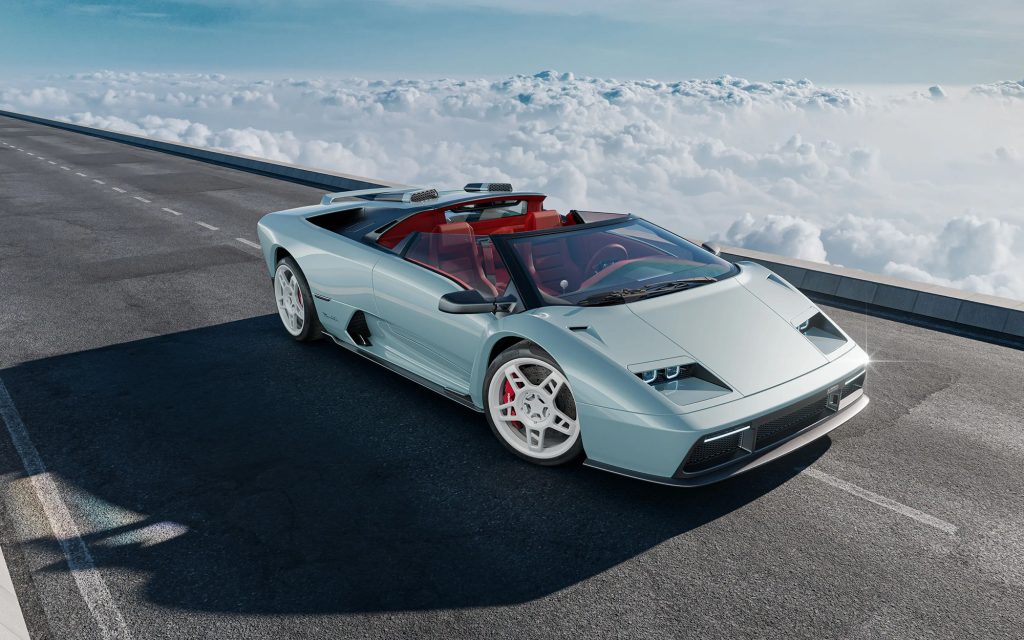

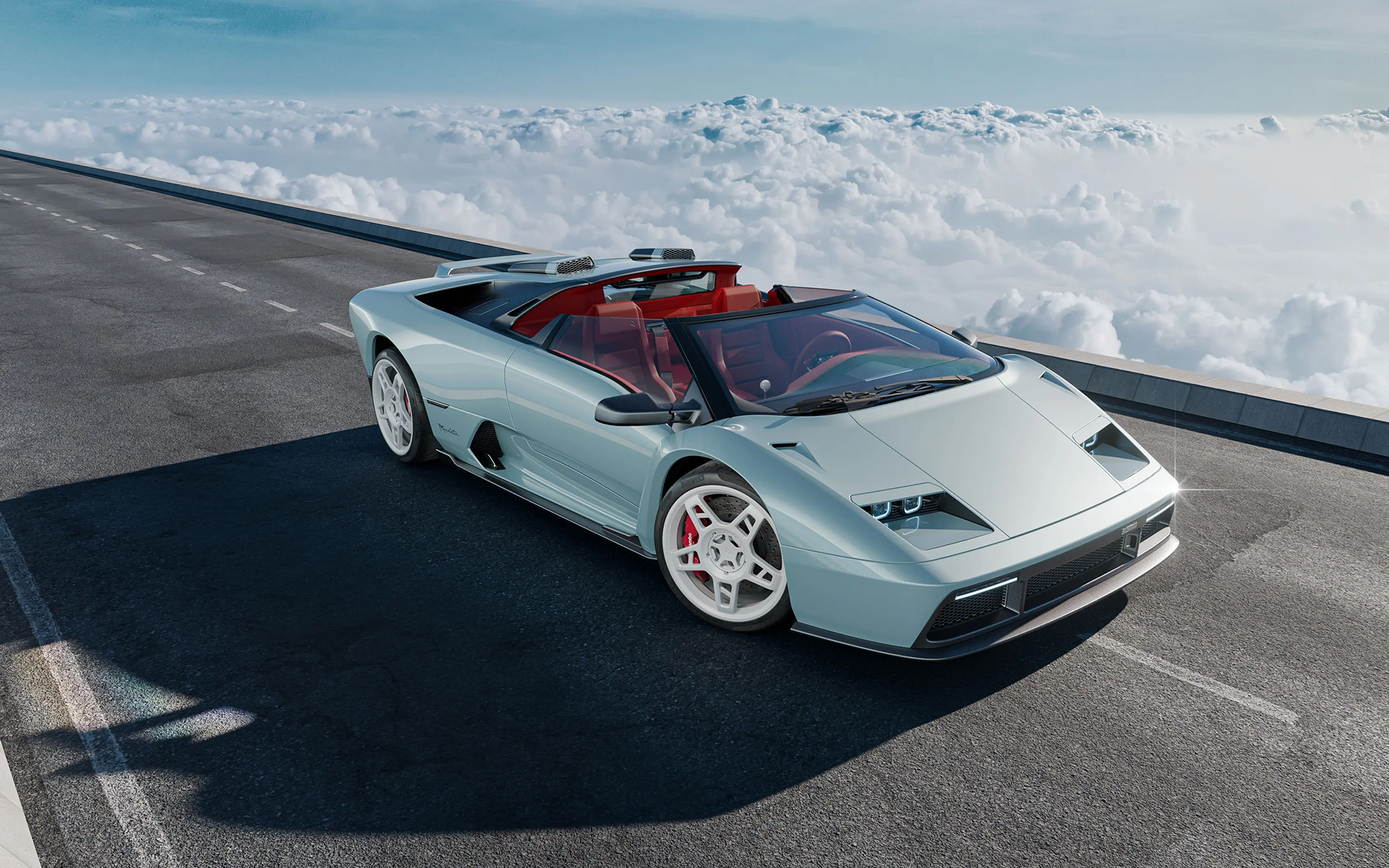

Eccentrica has revealed the second model in its growing Lamborghini Diablo program, introducing an open-air V12 Roadster based on the first-series Diablo and limited to just 19 examples.
The Roadster follows the Eccentrica V12 coupe, applying the Italian company’s comprehensive remastering approach to a roofless interpretation of Lamborghini’s 1990s supercar. Like the coupe, this isn’t simply a restored Diablo with modernized components. Eccentrica says more than 3,500 bespoke parts go into each car as virtually every system is reconsidered.
Company founder Emanuel Colombini, an entrepreneur and Lamborghini collector, describes the Roadster as a more elemental version of the original Eccentrica.
“The Eccentrica V12 was our opening statement. The Roadster is the next chapter; more exposed, more immediate, more demanding. No roof. No filter. Nothing between you and the machine,” Colombini said.
5.7-LITER V12, SIX-SPEED GATED MANUAL
The starting point remains the Diablo’s naturally aspirated 5.7-liter V12, though Eccentrica has re-engineered the engine with revised engine management, improved thermal management and optimized airflow.
Output is now 550 hp at 7,000 rpm with 600 Nm, or 443 lb-ft, of torque at 6,500 rpm. Eccentrica claims a top speed of 208 mph.
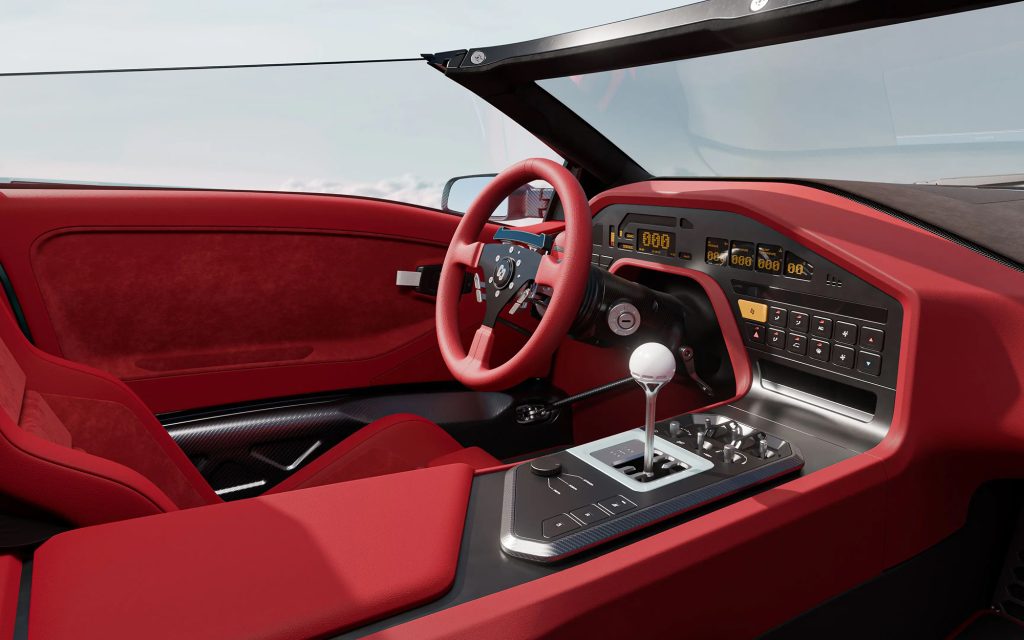
More important to the Roadster’s purpose is what hasn’t been engineered out. The V12 remains naturally aspirated, steering is hydraulic and power reaches the wheels through a six-speed gated manual gearbox.
Three driving modes allow the car’s behavior to be adjusted for different situations, while the underlying chassis has been substantially reworked to handle both the increased performance and removal of the roof.
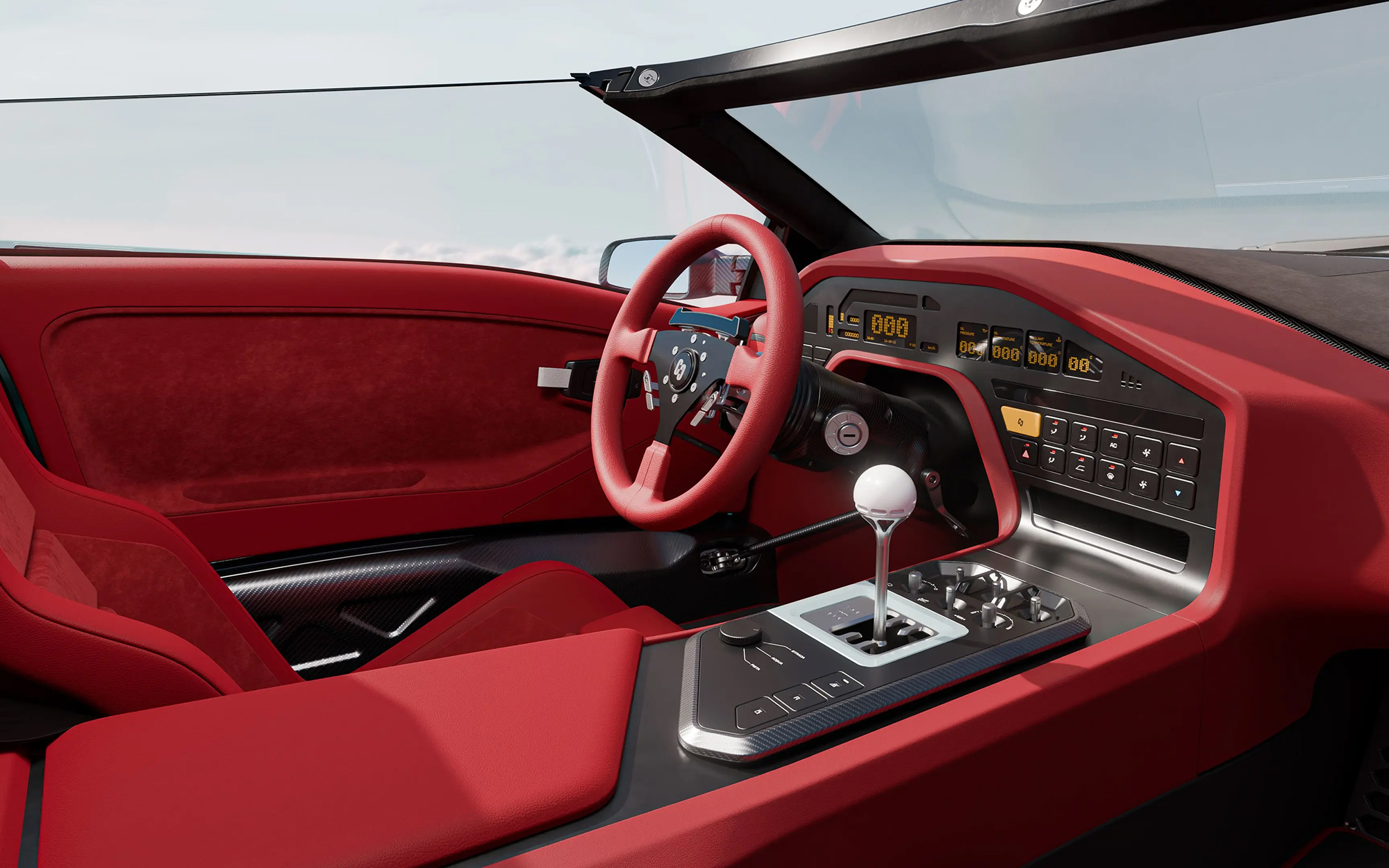
A DIABLO RE-ENGINEERED AS A ROADSTER
Development is led by a team that includes Maurizio Reggiani, Lamborghini’s former Chief Technical Officer whose career included development of the Murciélago, Gallardo, Aventador and Huracán.
Eccentrica has reconstructed the Roadster’s body using steel and carbon fiber while widening its track and subtly recalibrating the proportions. Structural carbon fiber reinforcement has been incorporated into the original platform, accompanied by revised suspension geometry and a bespoke semi-active damper system.
Removing the roof also required dedicated aerodynamic development. Rather than simply cutting the top from the existing V12 design, Eccentrica studied airflow around the open cockpit to manage turbulence and preserve the car’s high-speed behavior.
Modern Brembo brakes complete a package intended to sharpen the Diablo without isolating its driver from it.
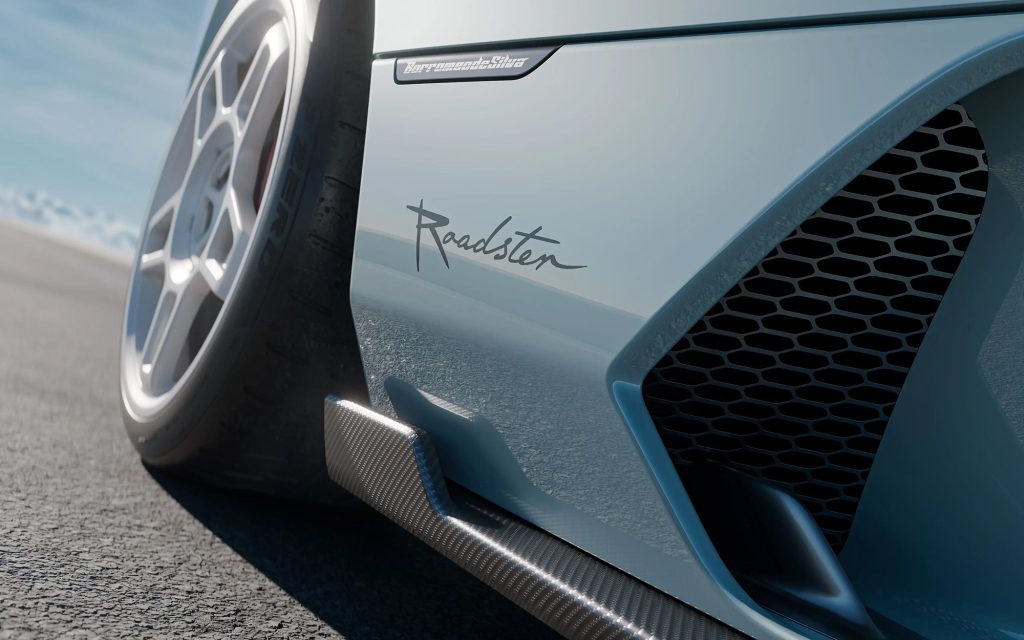
The exterior design was again developed with Milan-based Borromeo De Silva. As with the coupe, the approach retains the basic identity and proportions of the early Diablo while cleaning up its surfaces, lighting, aerodynamics and detailing rather than attempting to transform it into something unrecognizable.
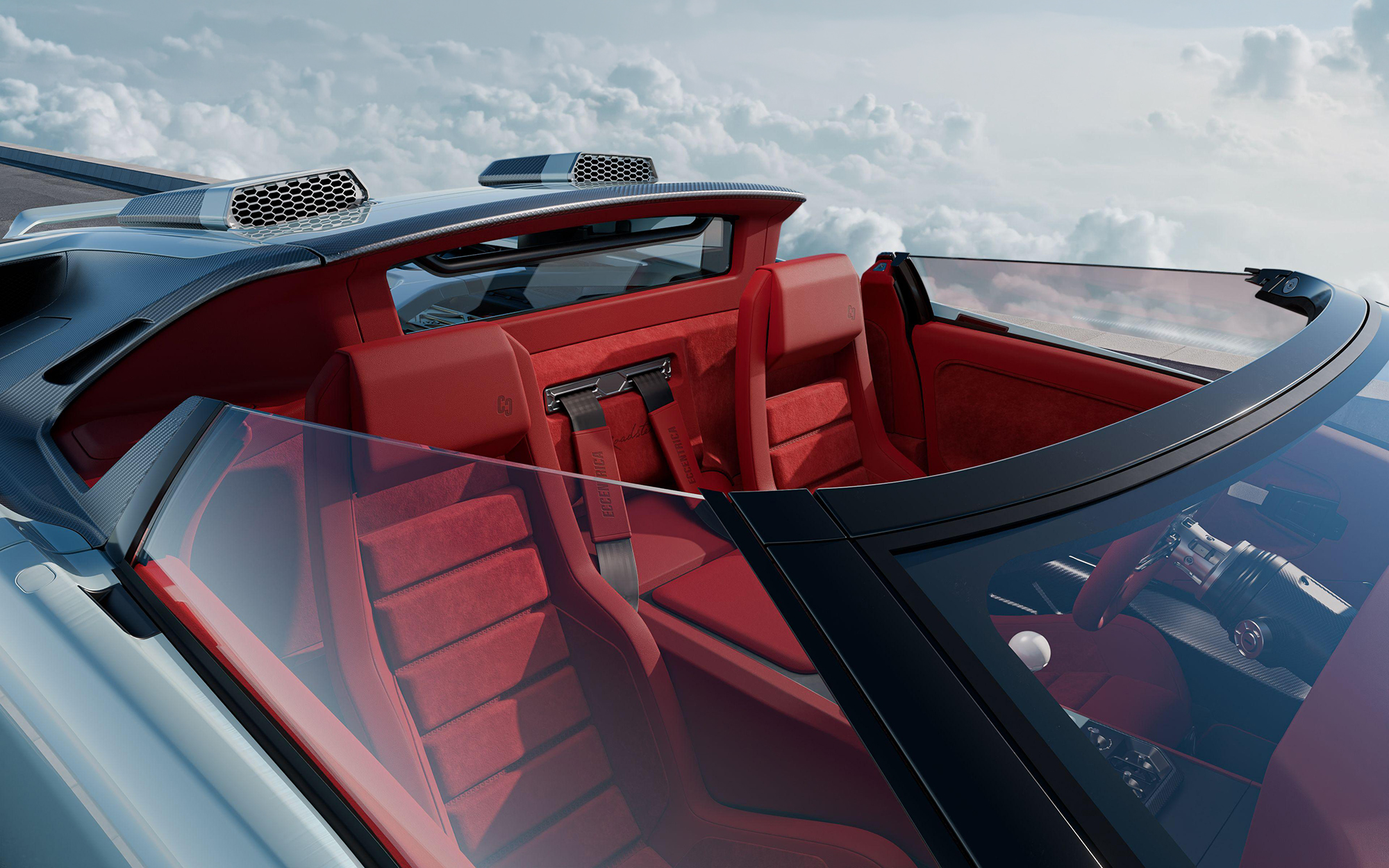
NINETEEN ROADSTERS
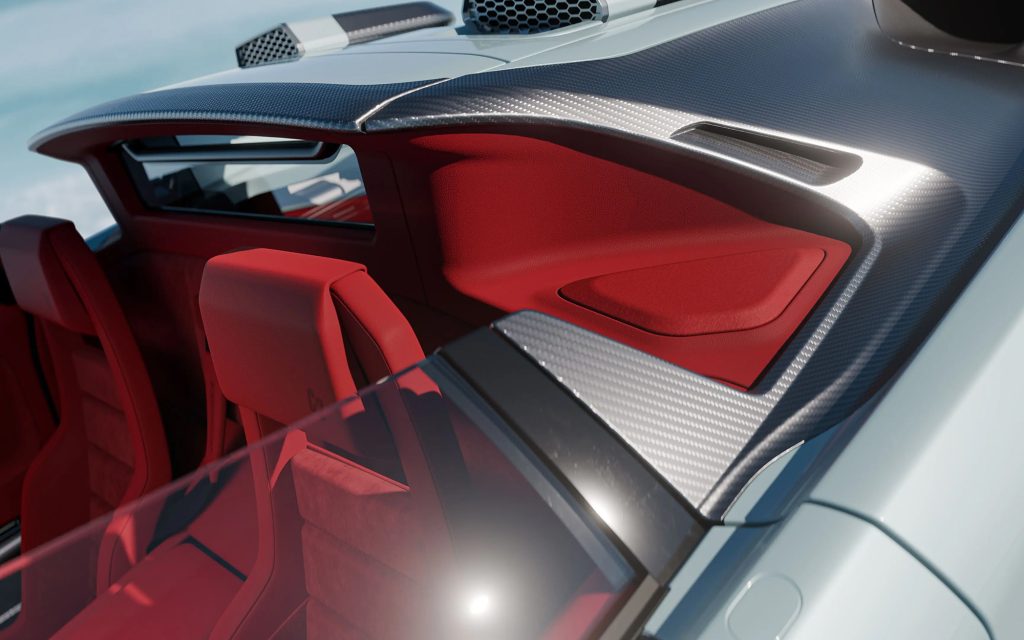
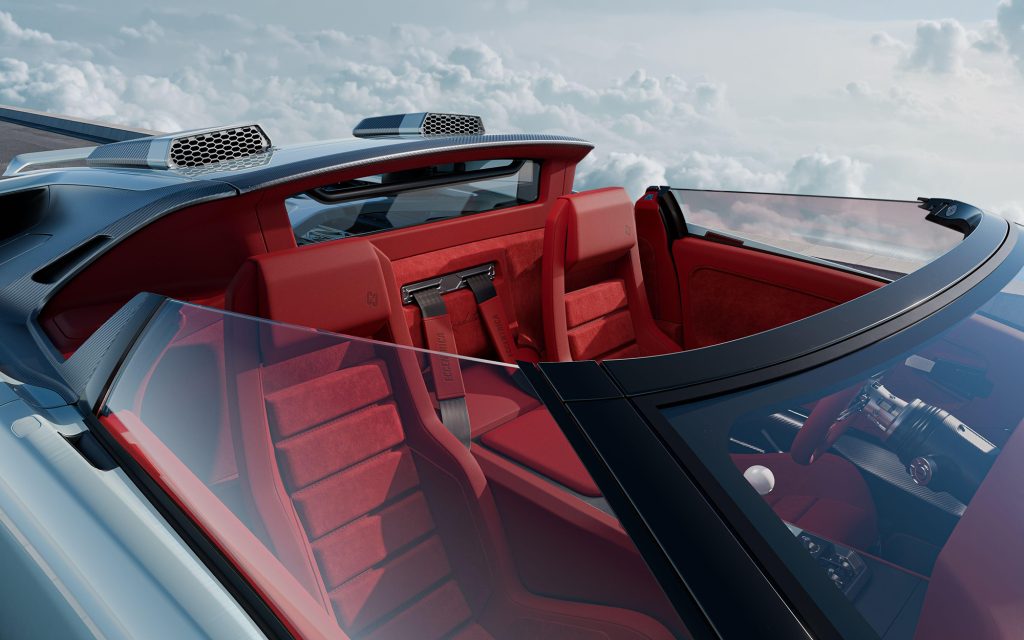
Inside, Eccentrica combines Connolly leather and Alcantara with anodized components and exposed carbon fiber. Each Roadster will be individually configured with its owner through a bespoke tailoring process, making the small production run effectively a series of one-off specifications.
Only 19 examples are planned.
It’s also an interesting choice of starting point. Lamborghini itself didn’t introduce the production Diablo Roadster until later in the model’s life. Eccentrica is instead using the cleaner first-series Diablo as its foundation, effectively imagining an open version of the earliest car through the lens of modern engineering.
That makes the V12 Roadster less a recreation of Lamborghini’s eventual Diablo Roadster and more an alternate interpretation of what the original Diablo might have become.
The Eccentrica V12 Roadster made its public debut August 14 at The Quail, A Motorsports Gathering during Monterey Car Week.
For a company whose first car was already an exercise in removing decades of compromise from the Diablo without removing its character, losing the roof makes the formula considerably more exposed — in every sense.