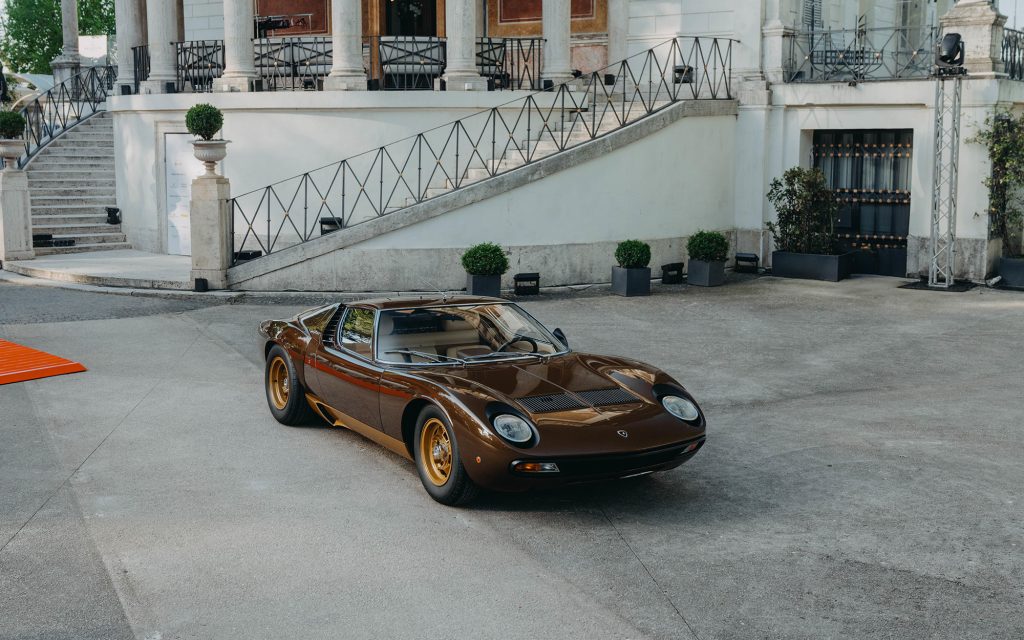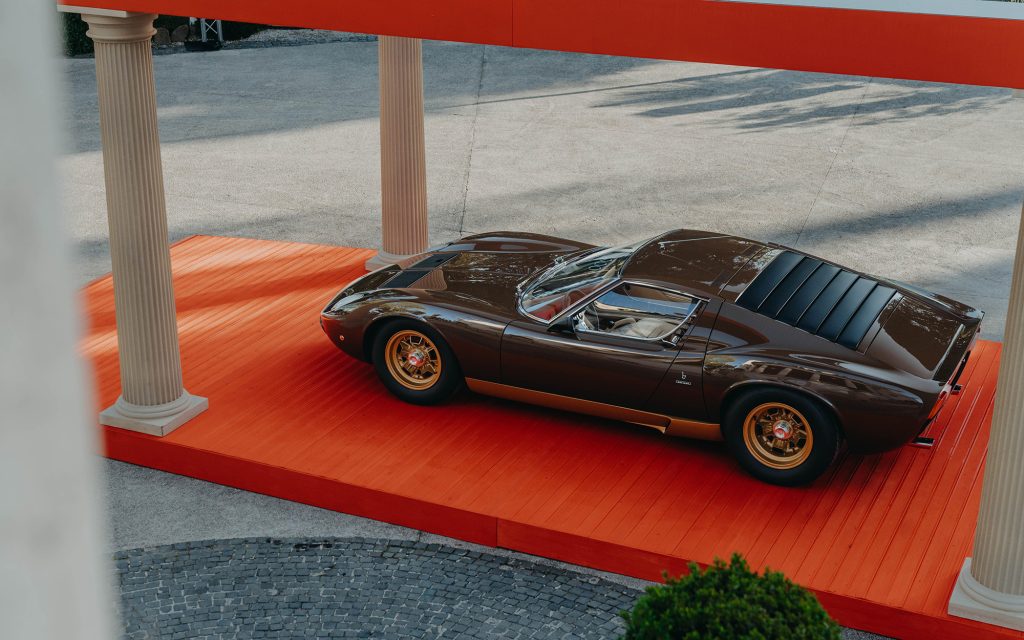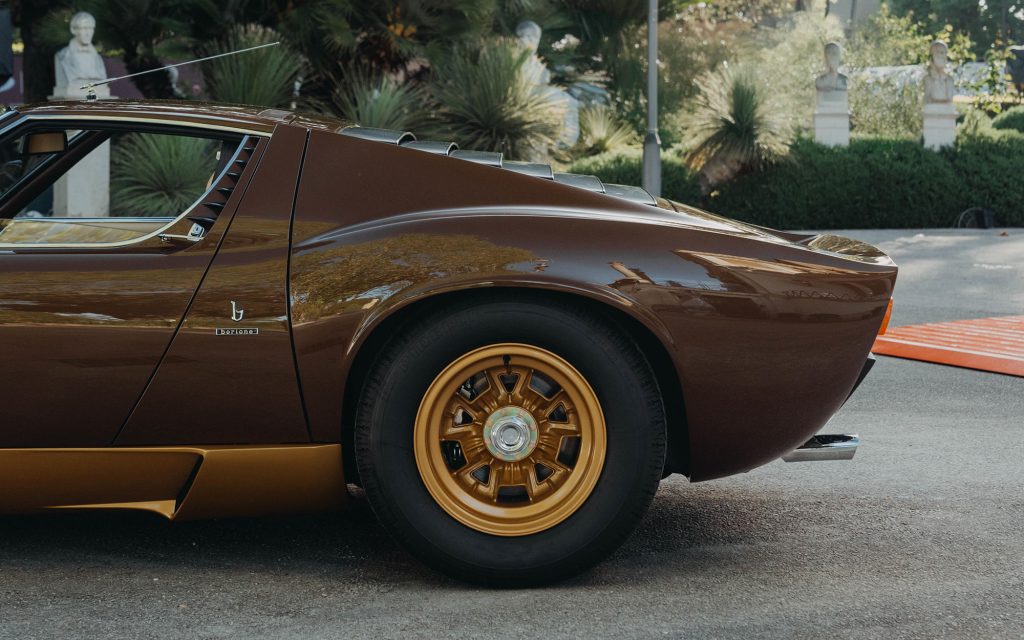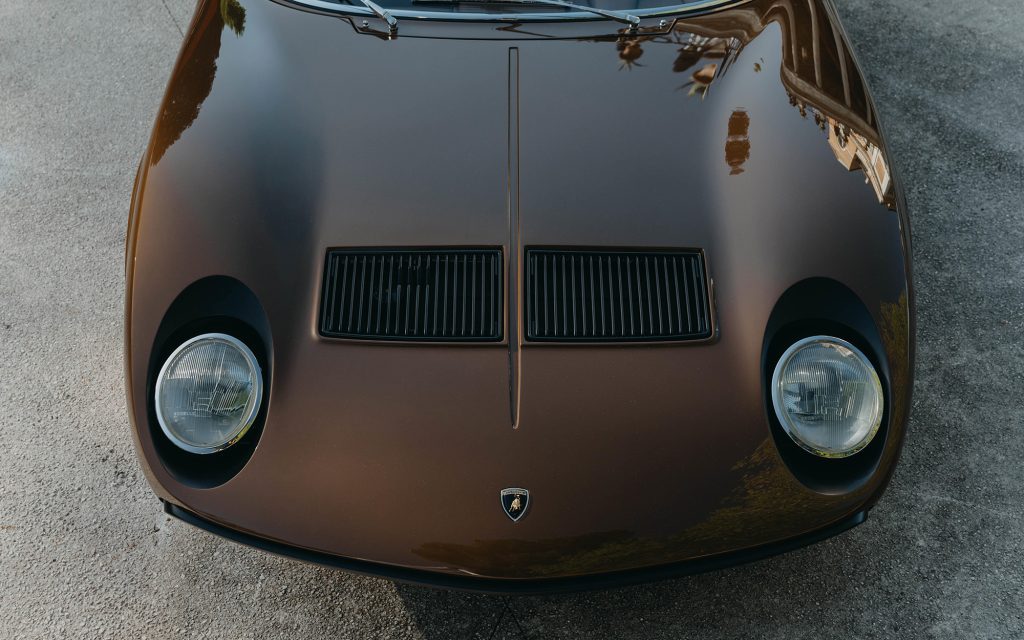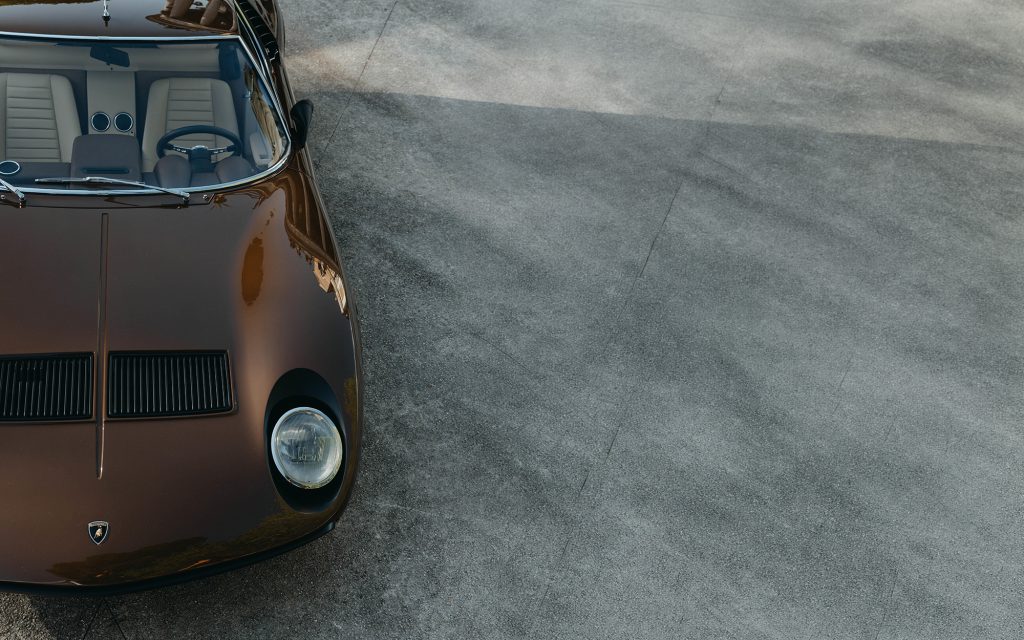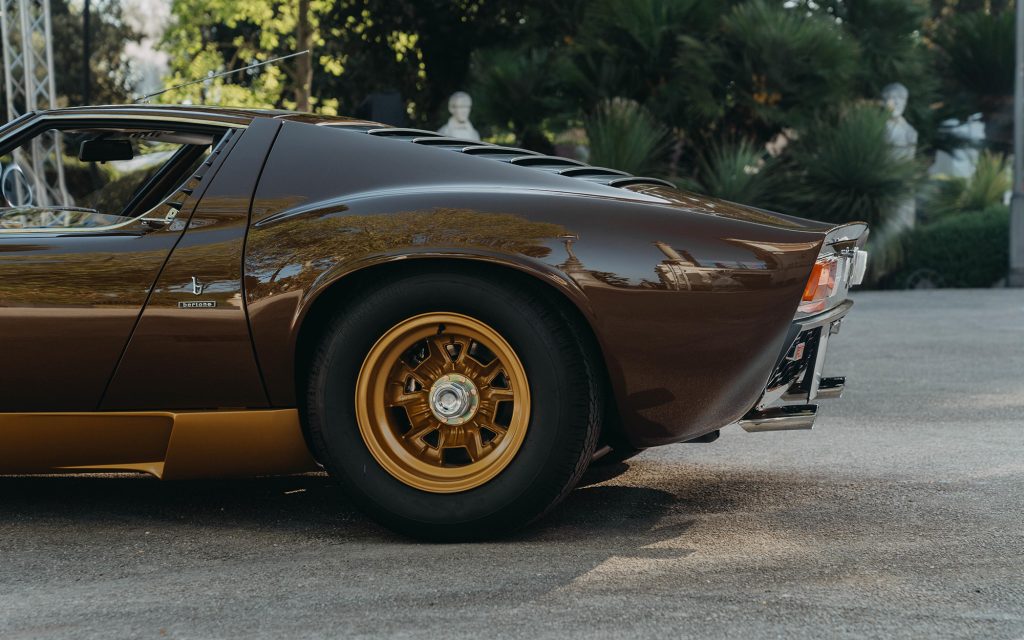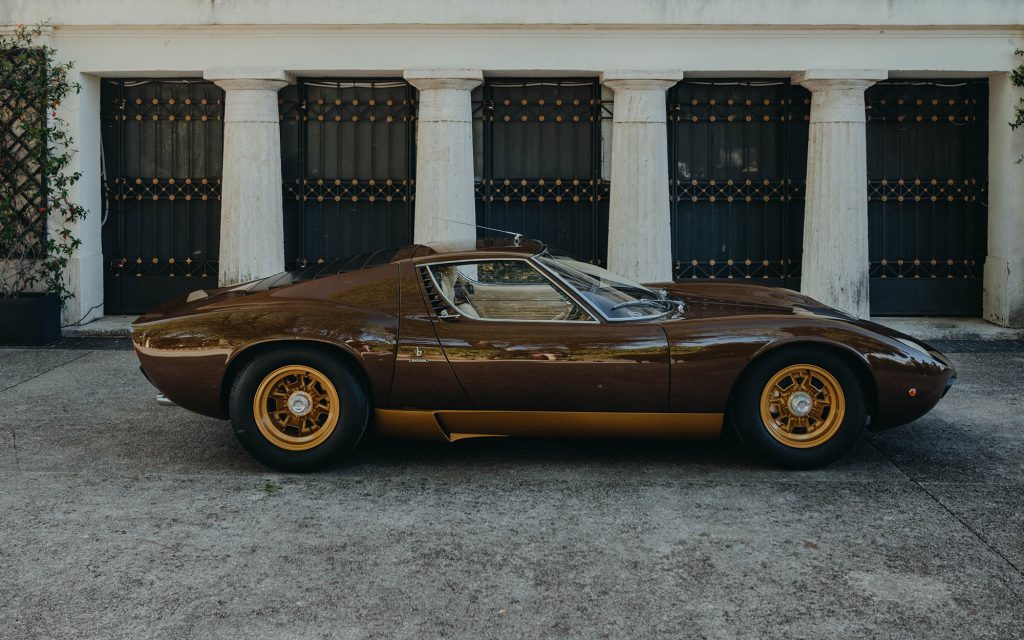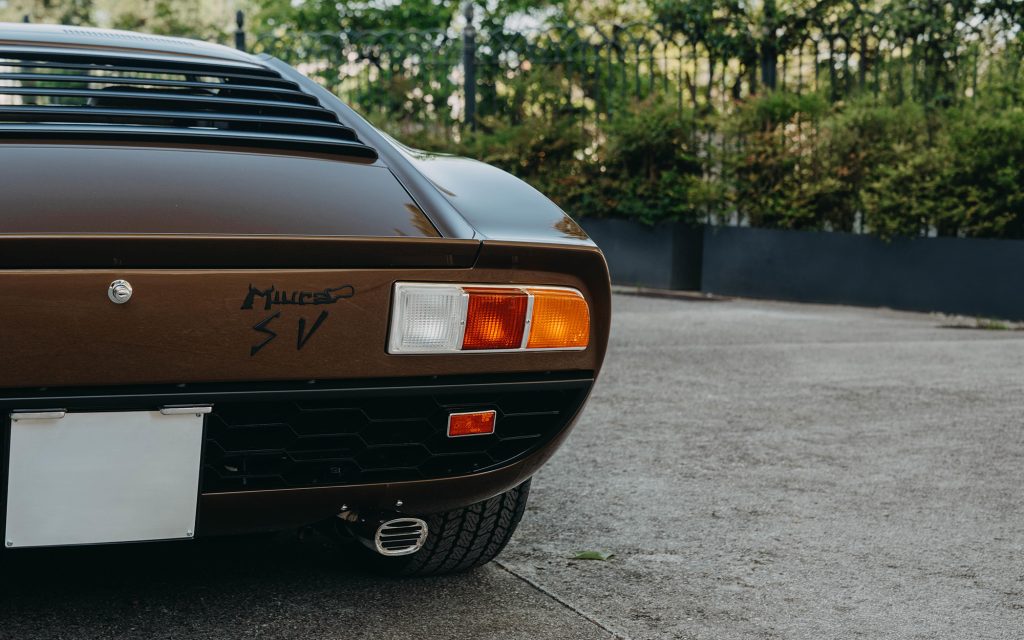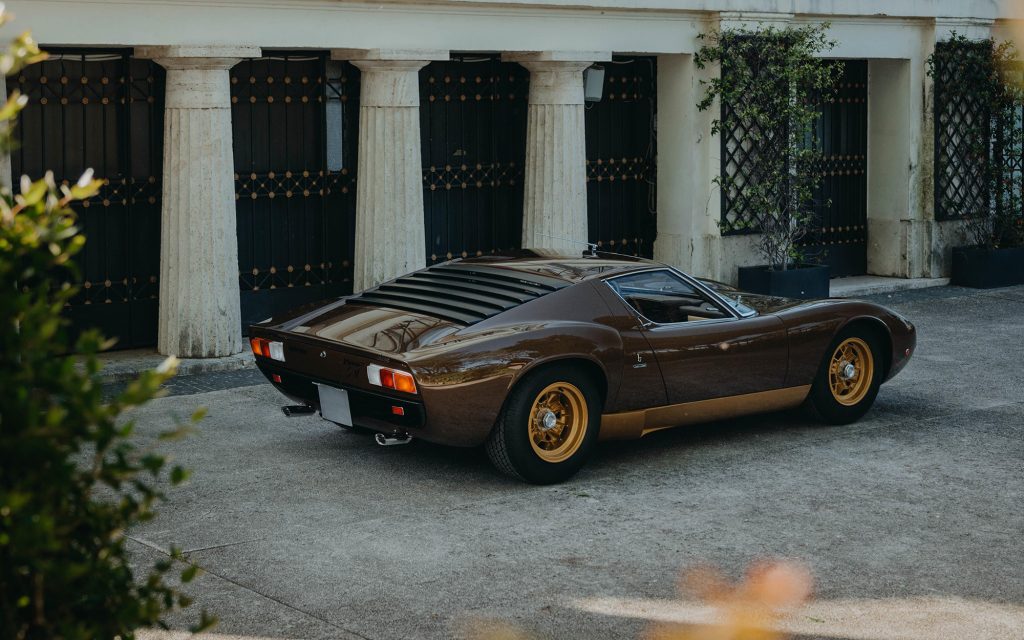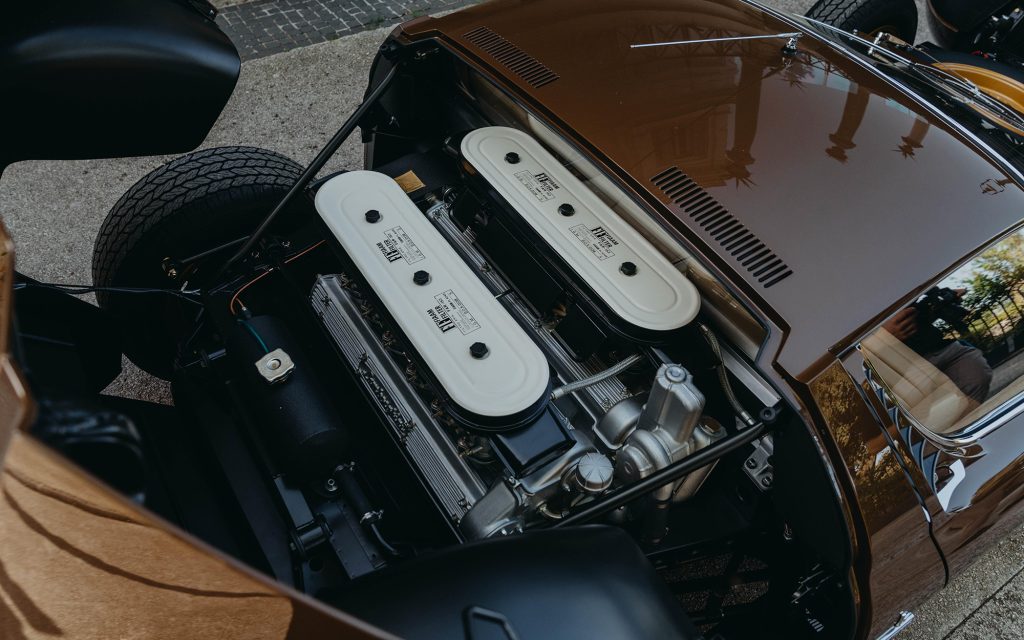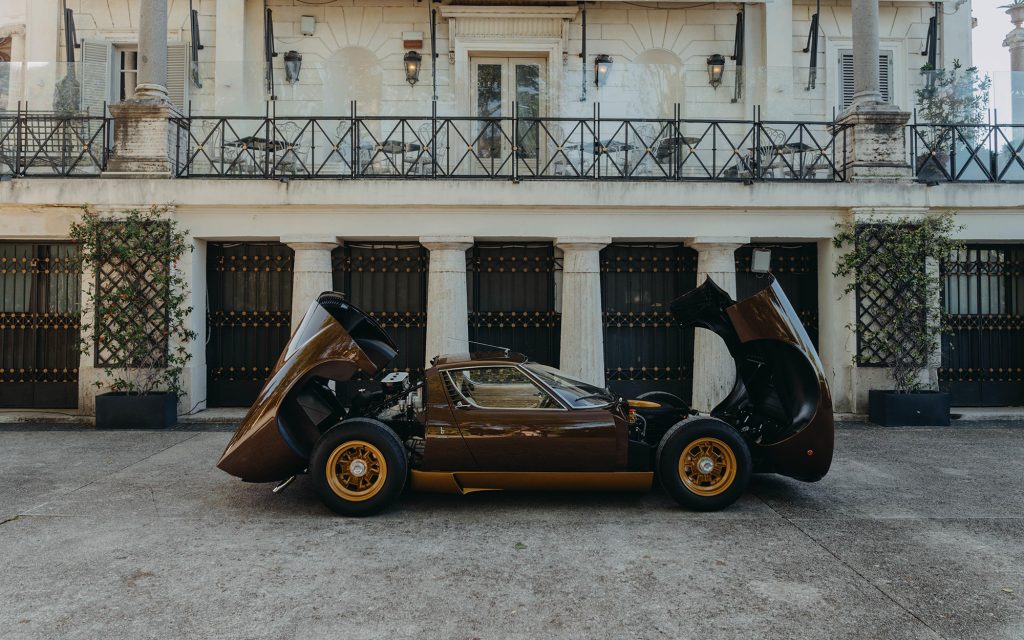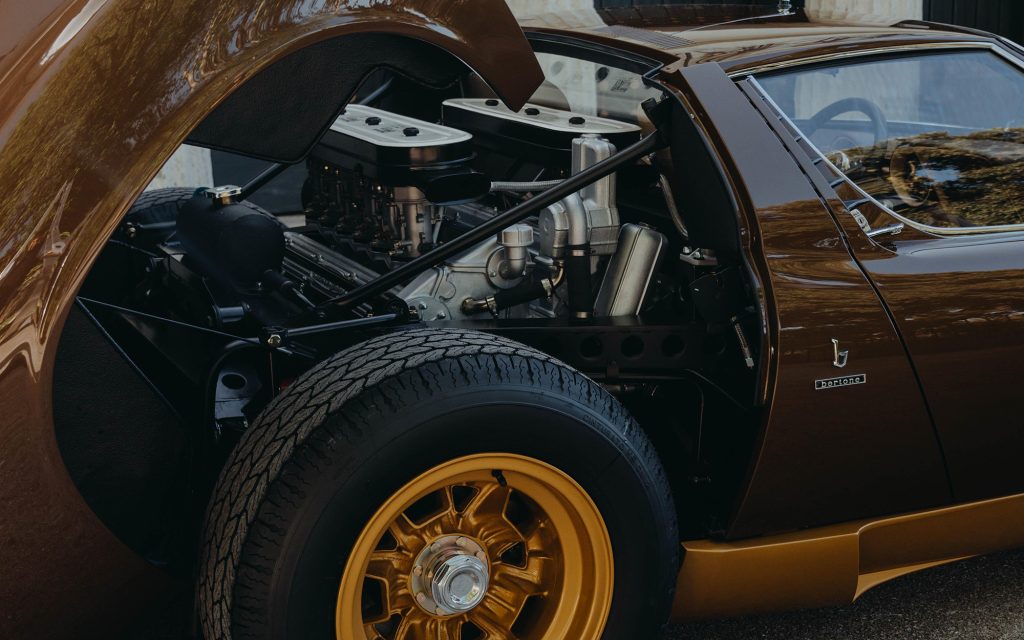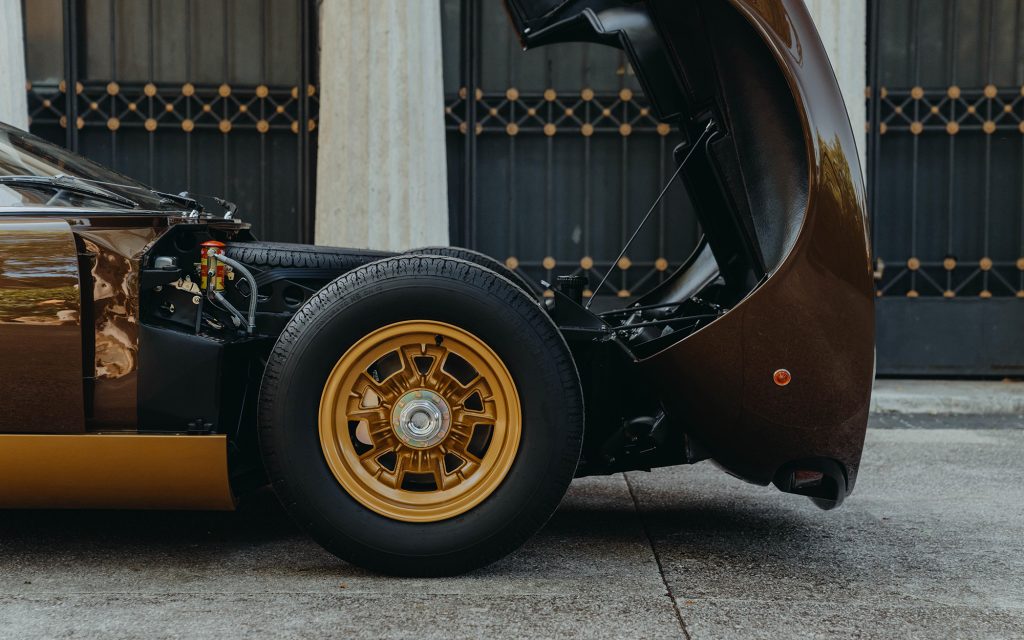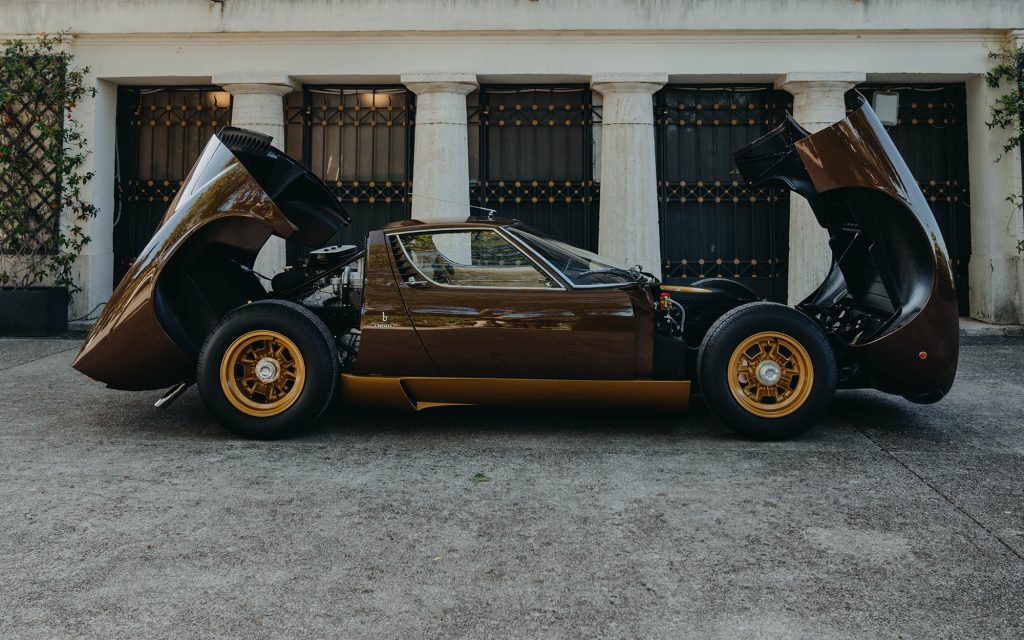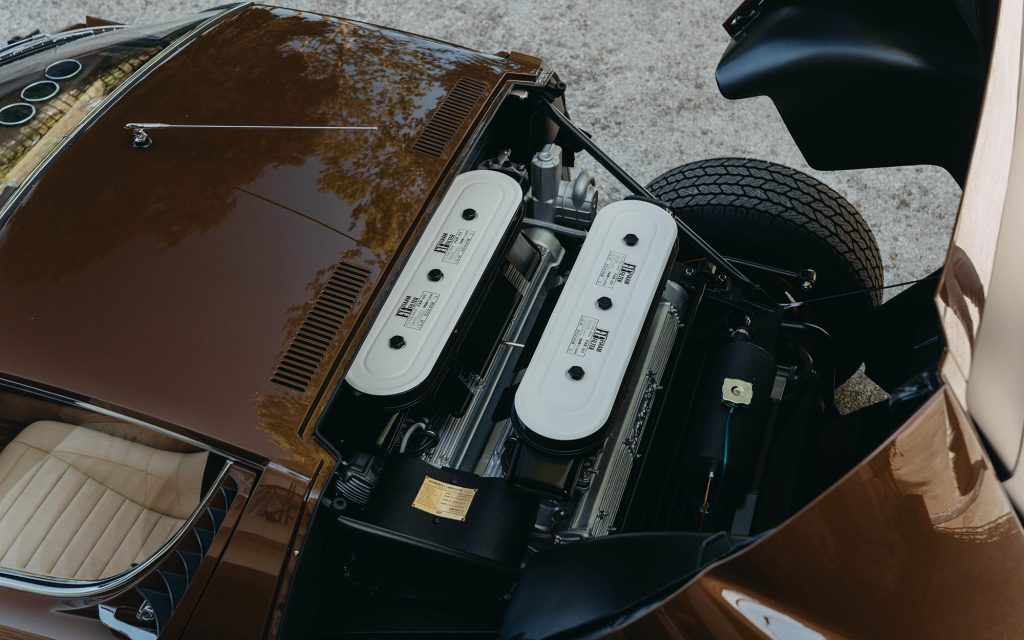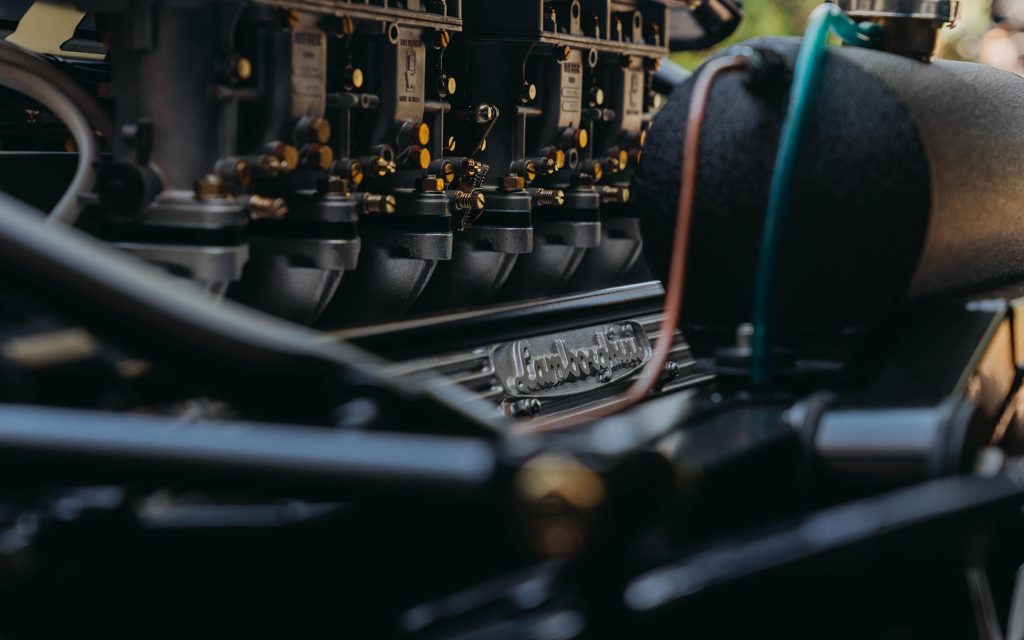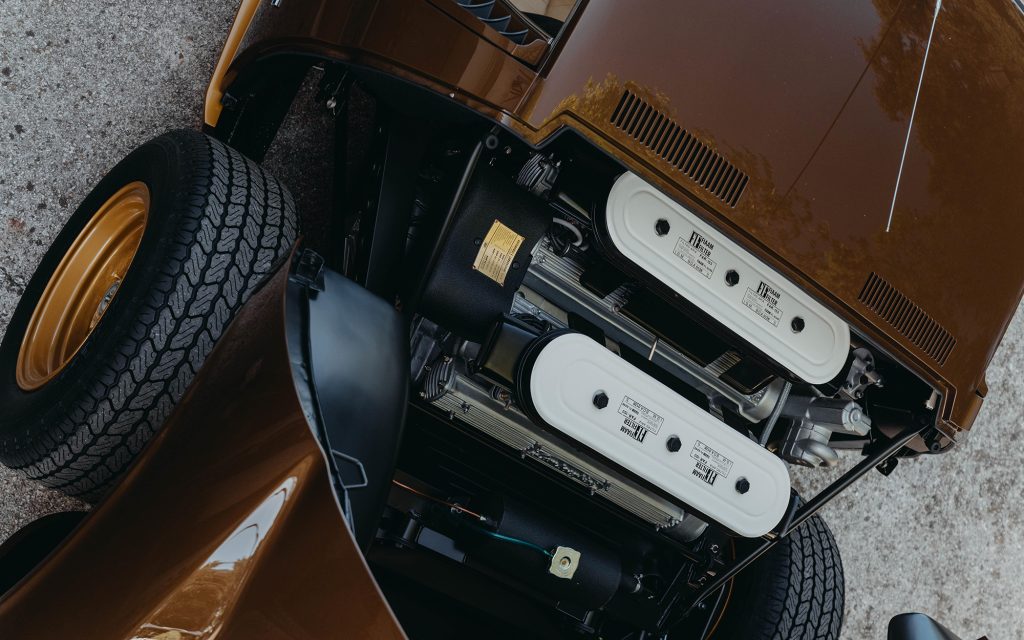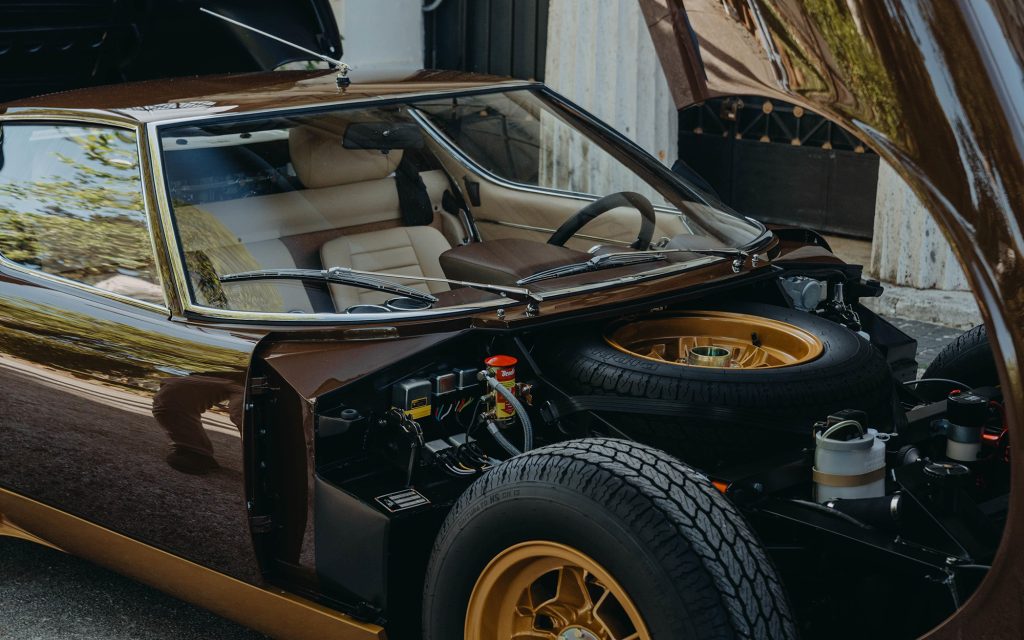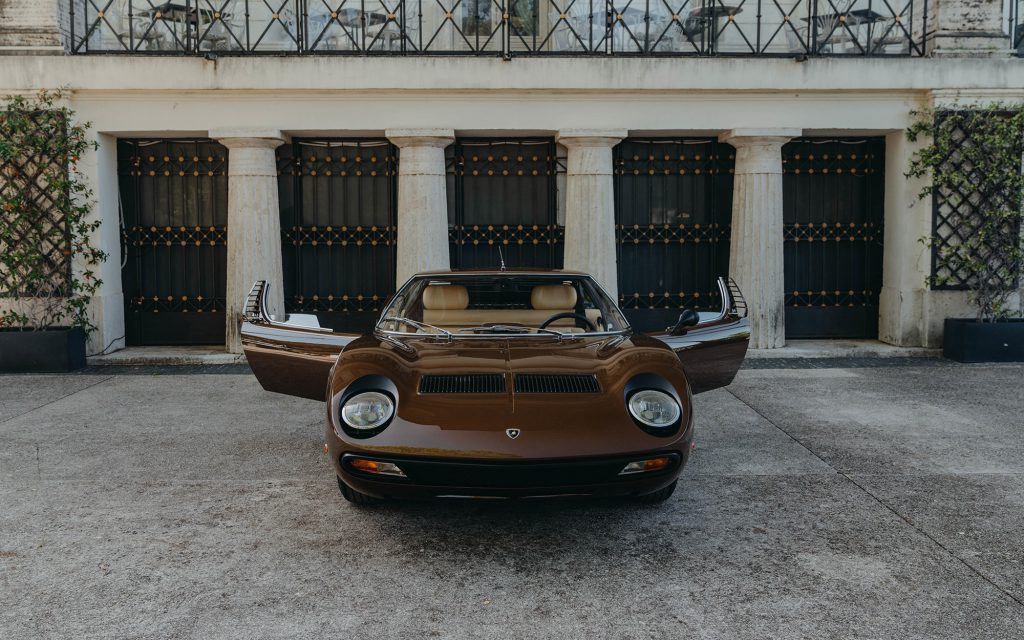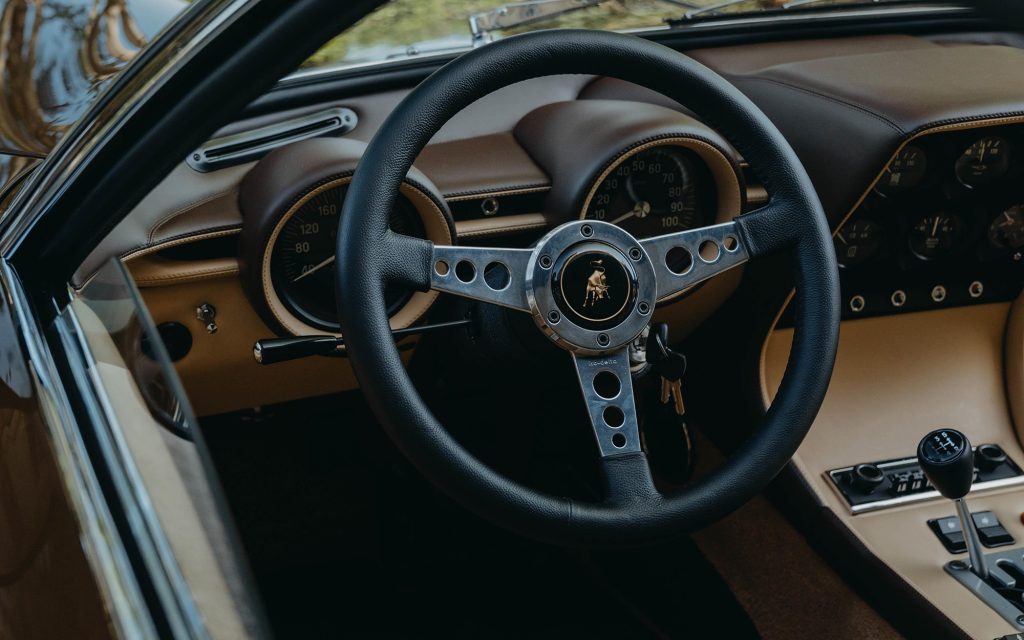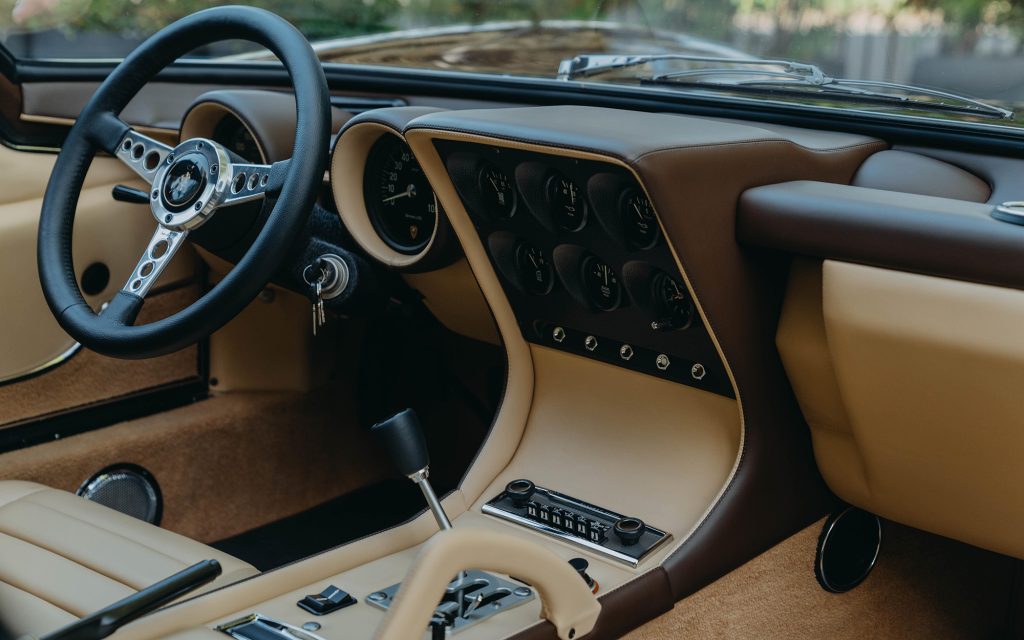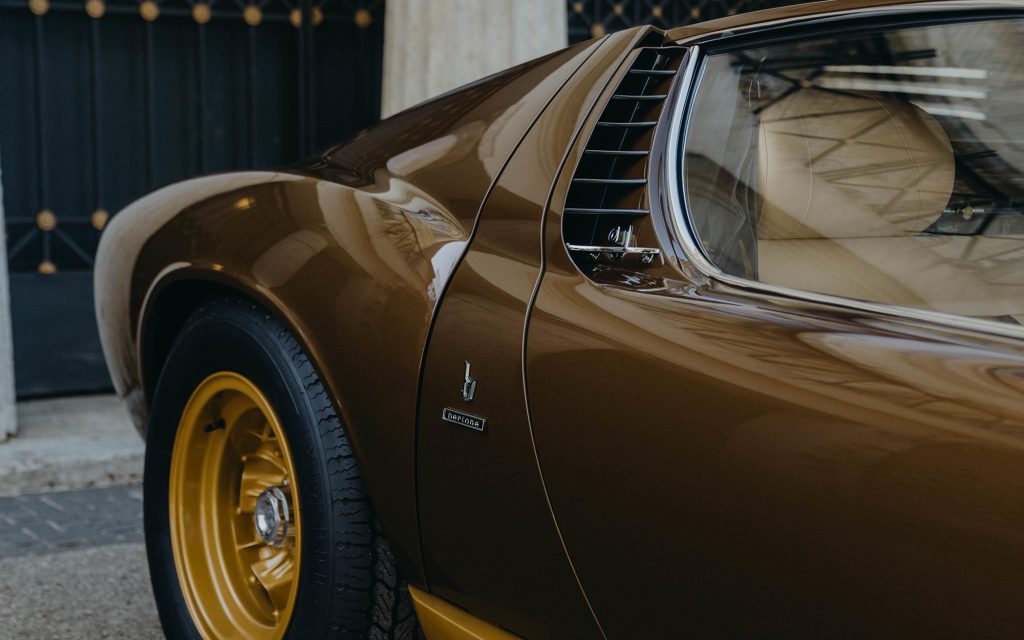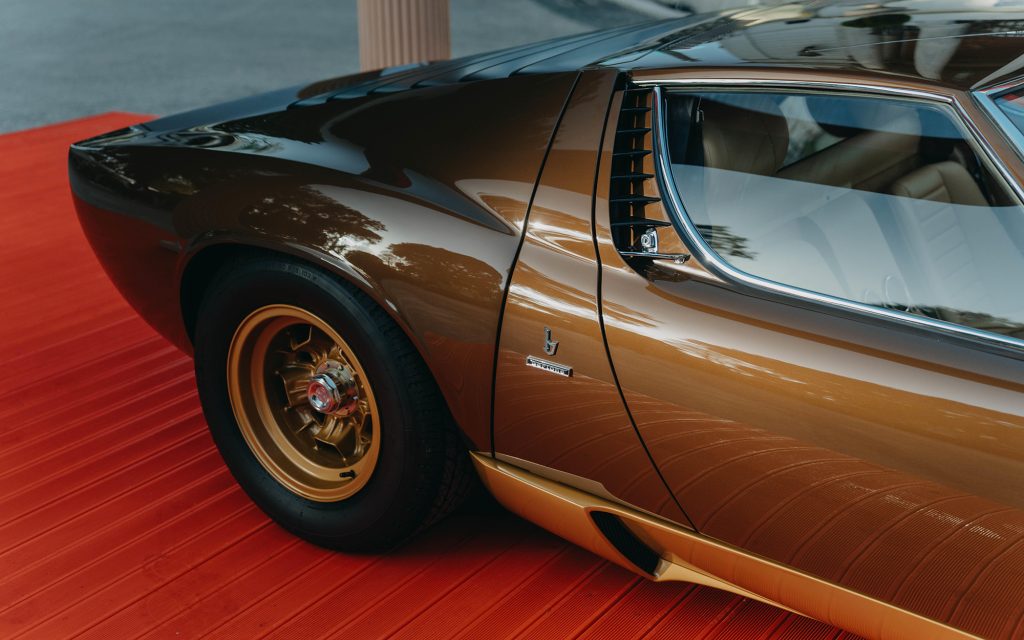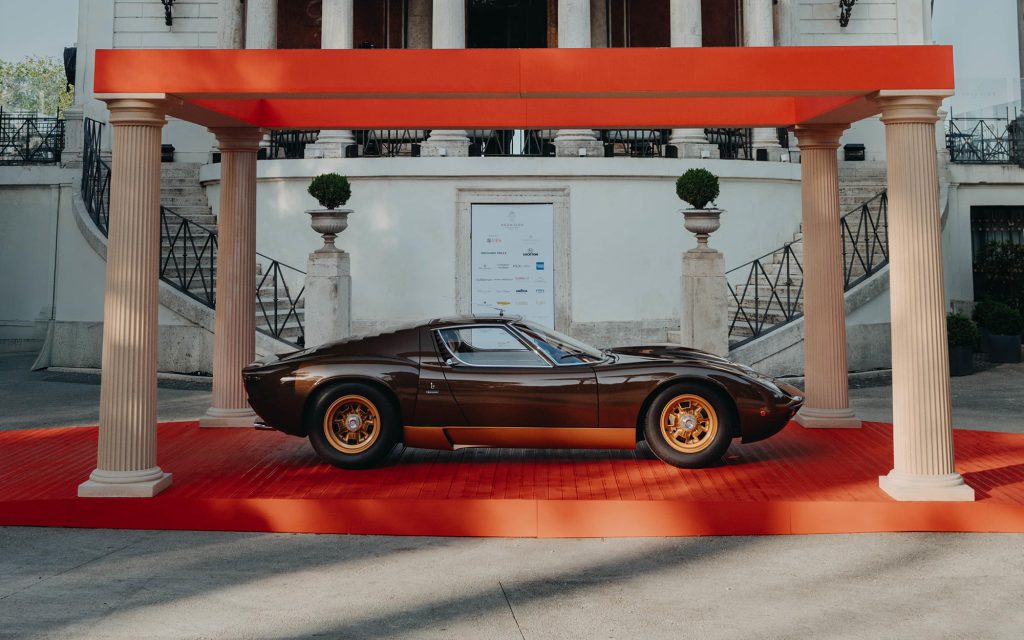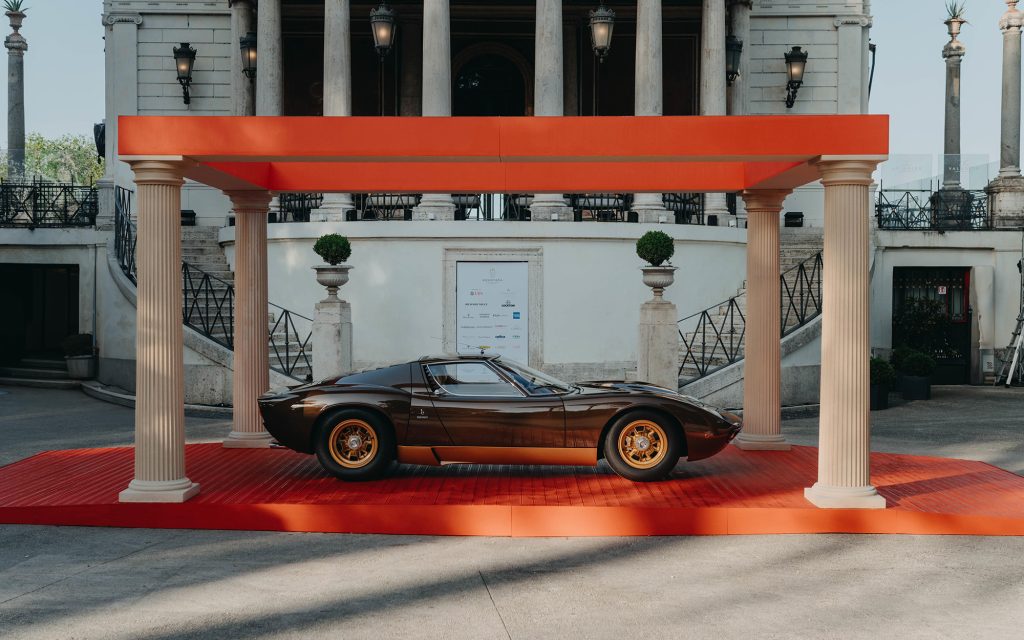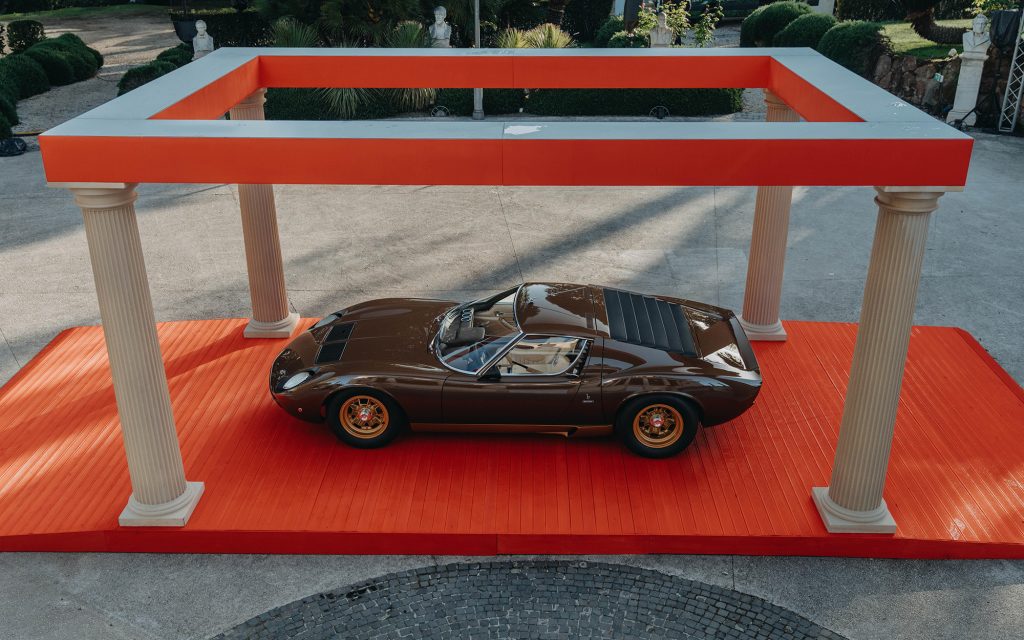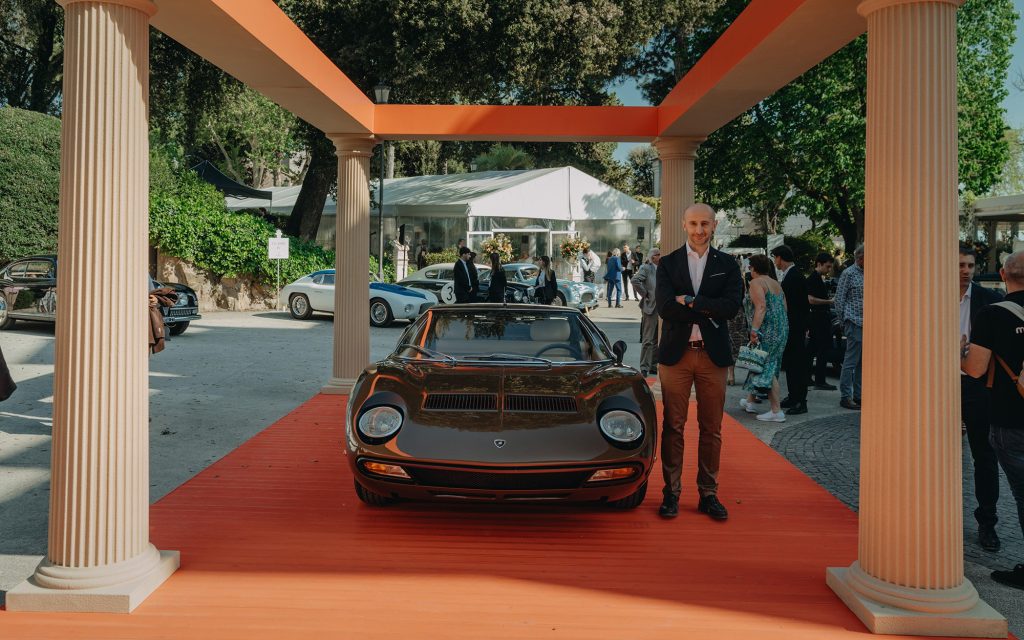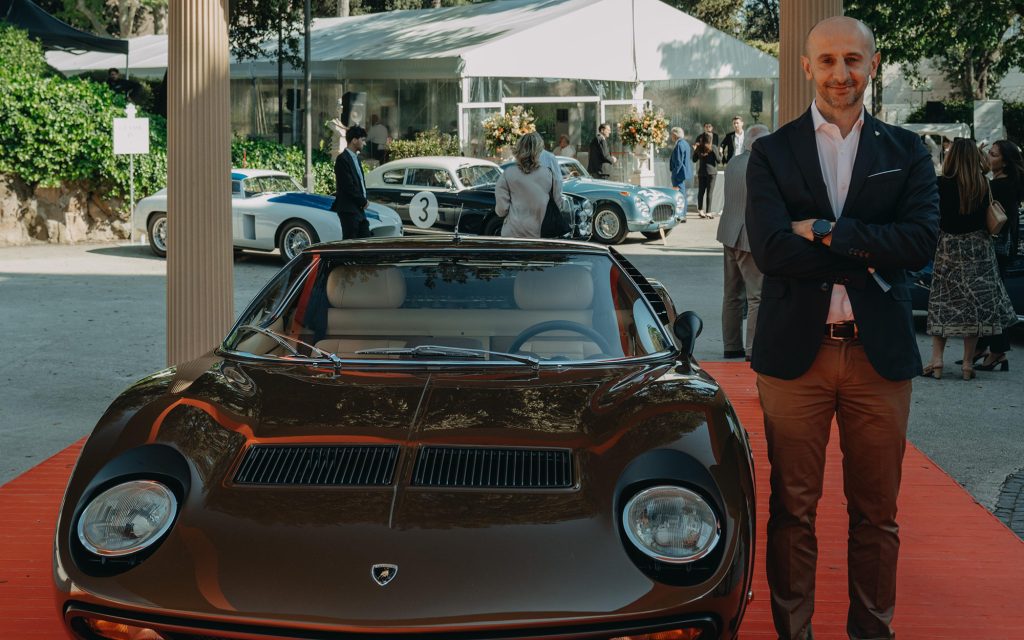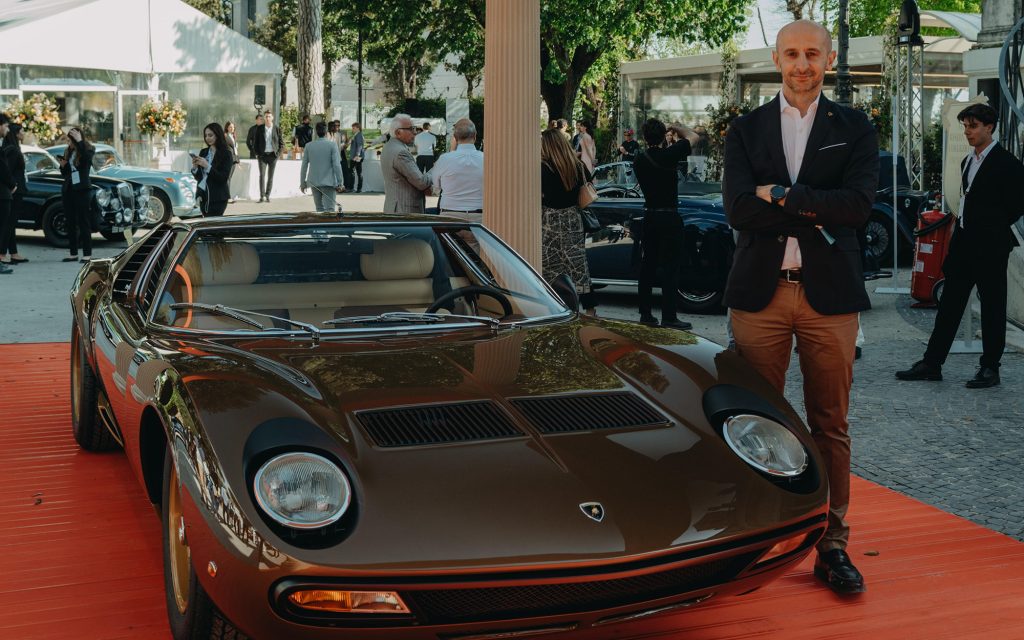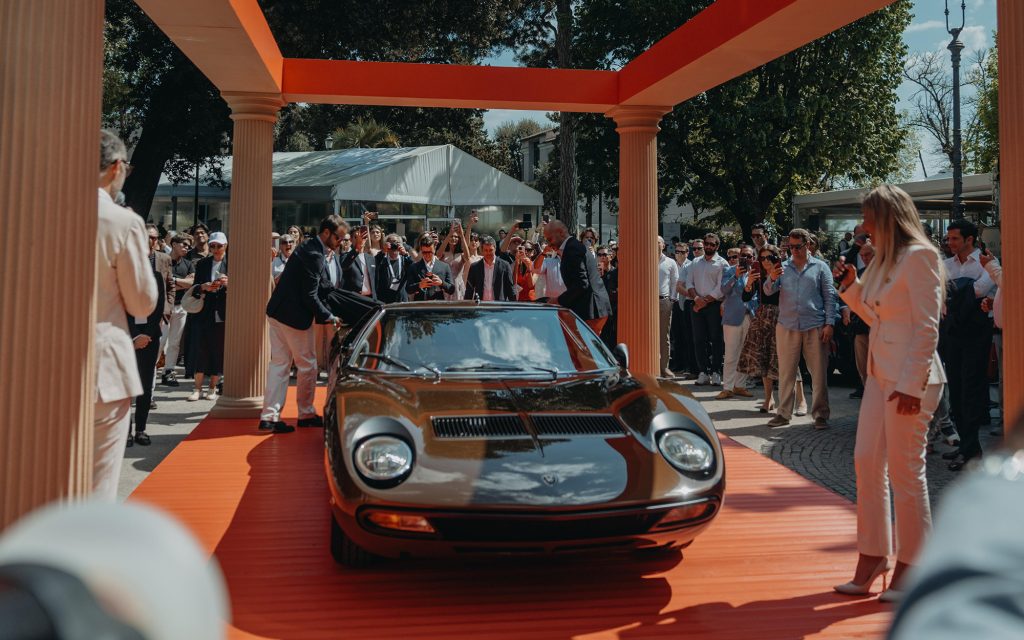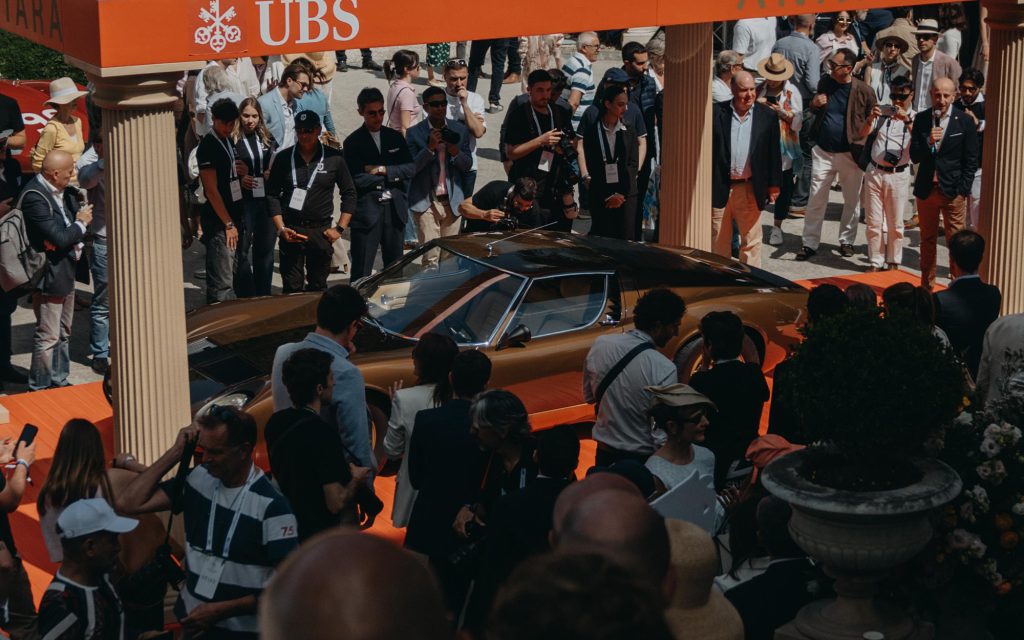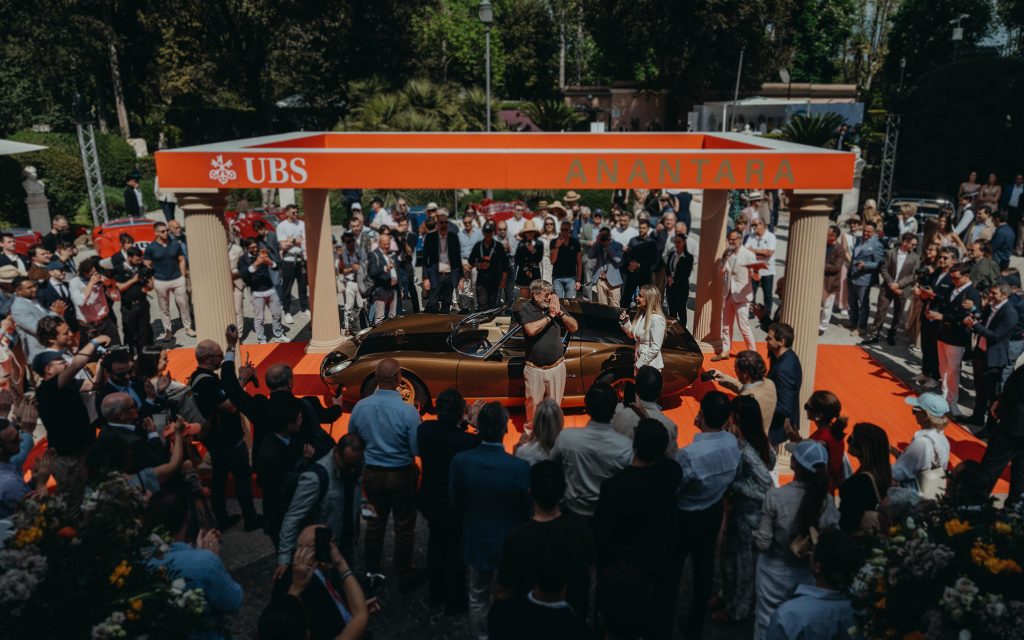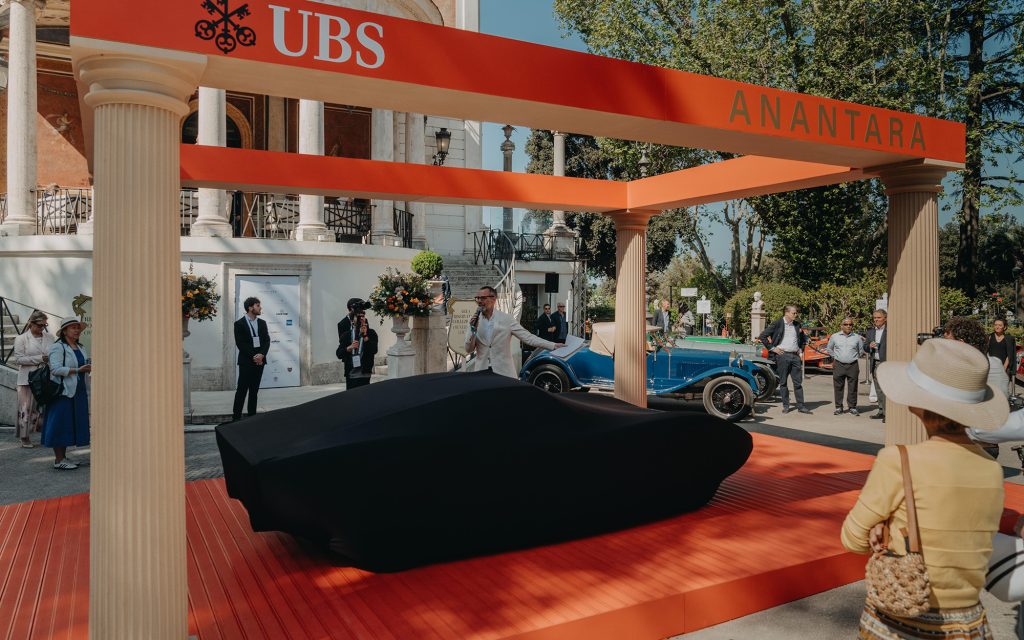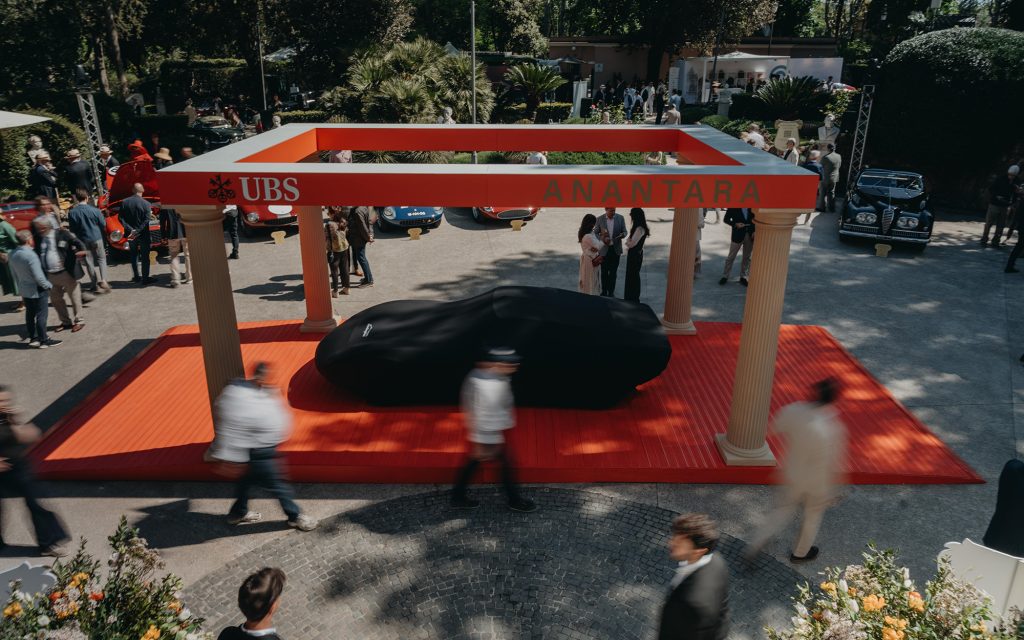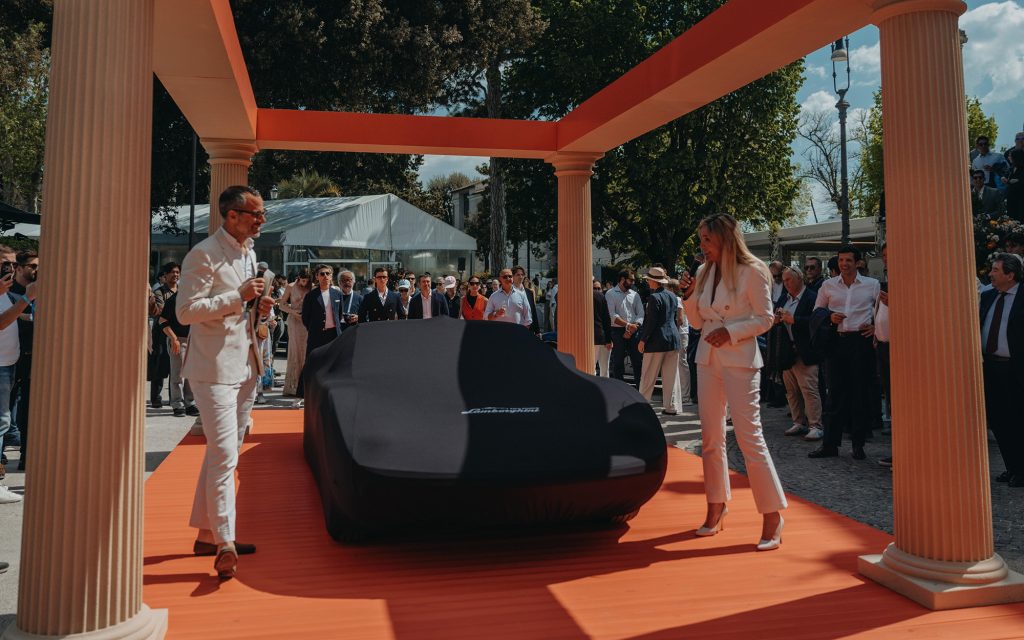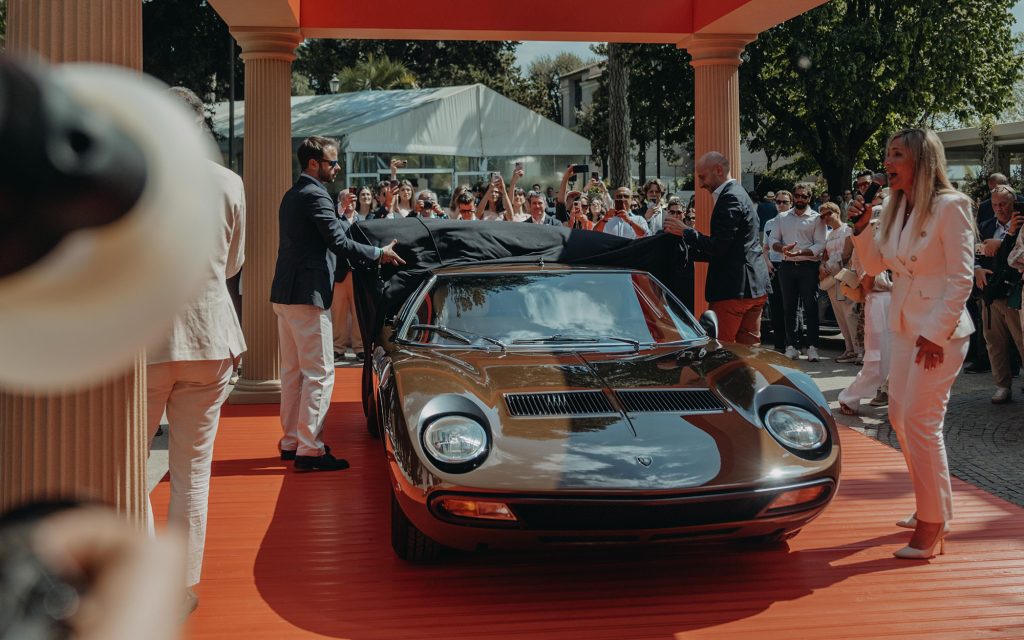


Completed by Lamborghini Polo Storico, the project centered on returning a 1972 Miura SV to its exact factory configuration after arriving in Sant’Agata Bolognese in late 2023 with non-original elements. Over the course of three years, the team conducted extensive archival research, working from original production documentation to verify specifications before addressing every visible and mechanical detail.
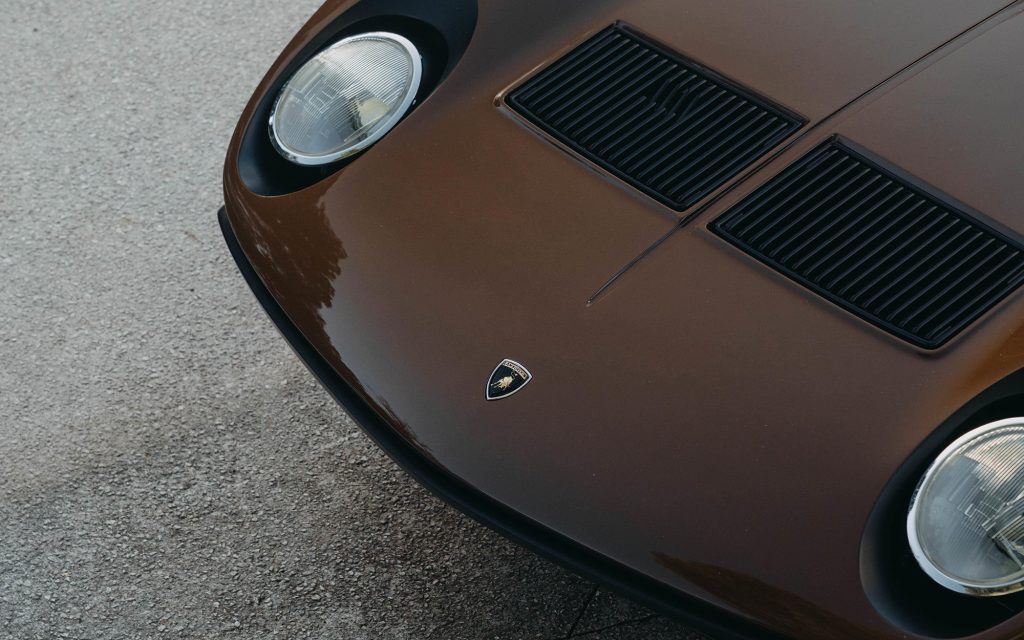
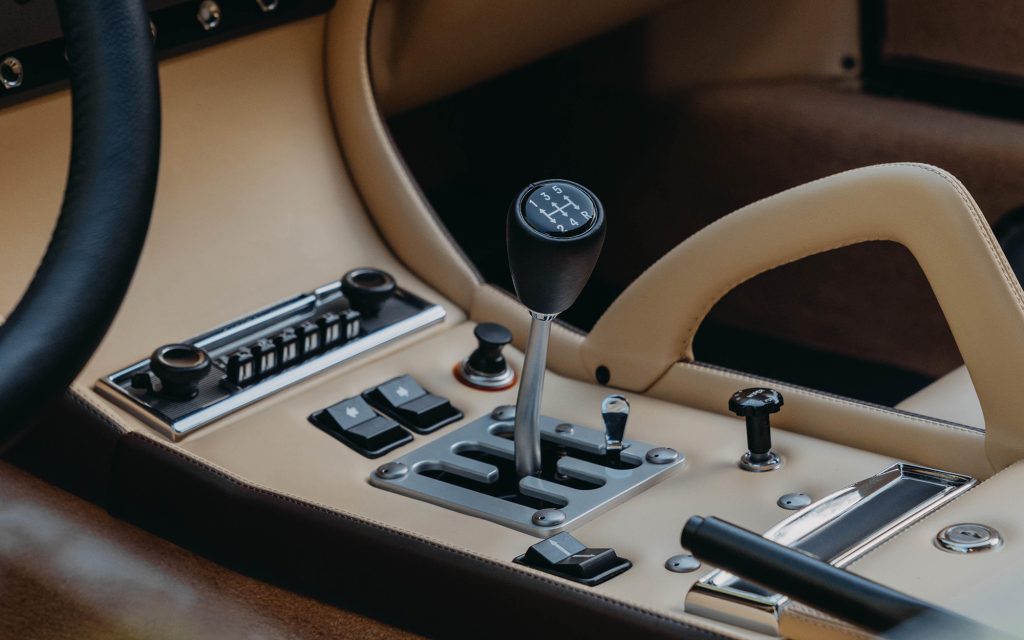
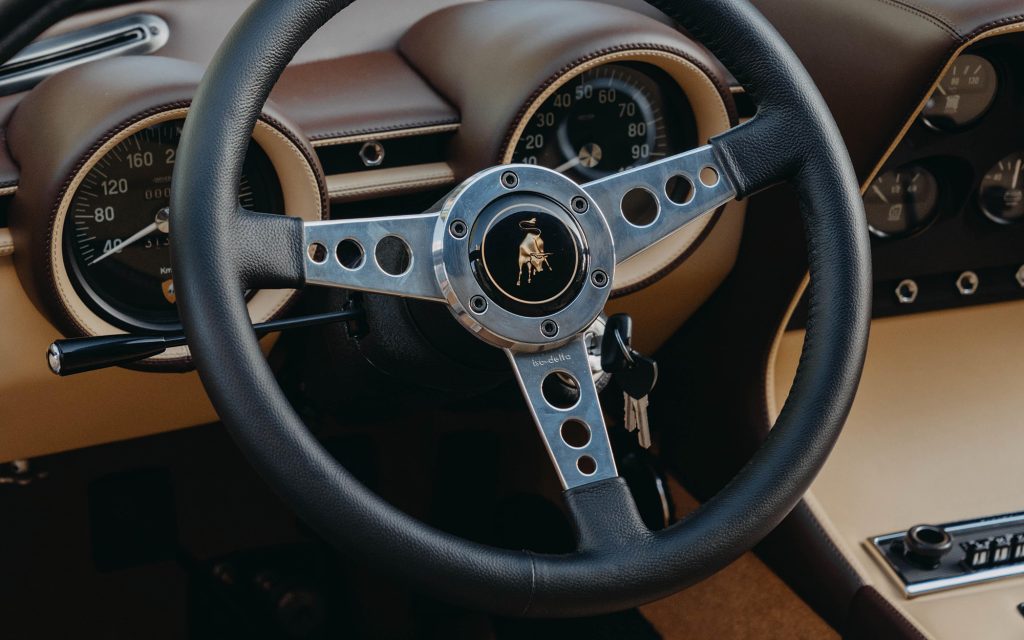
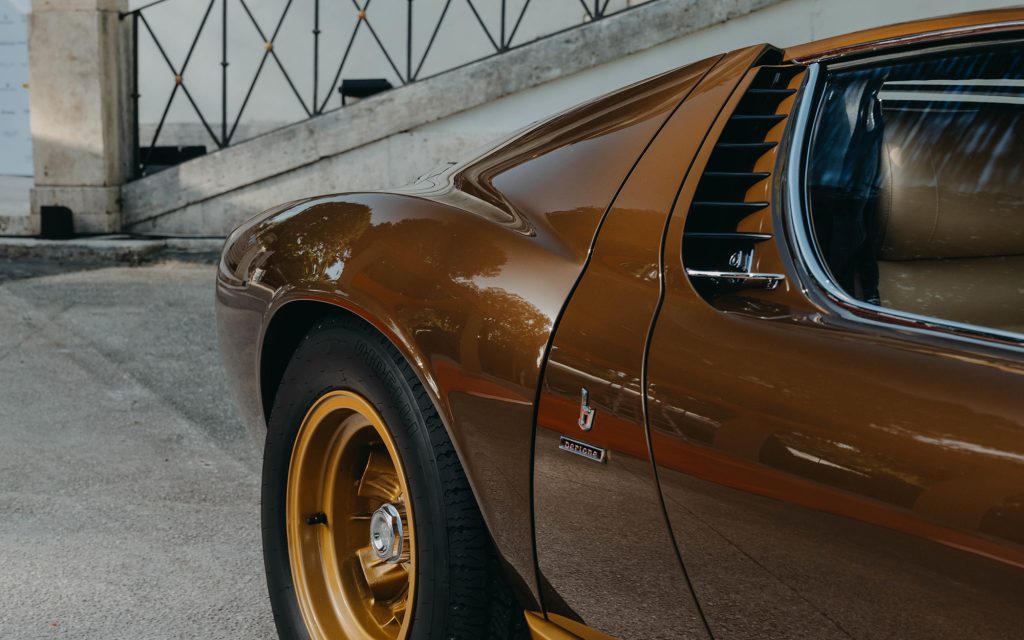
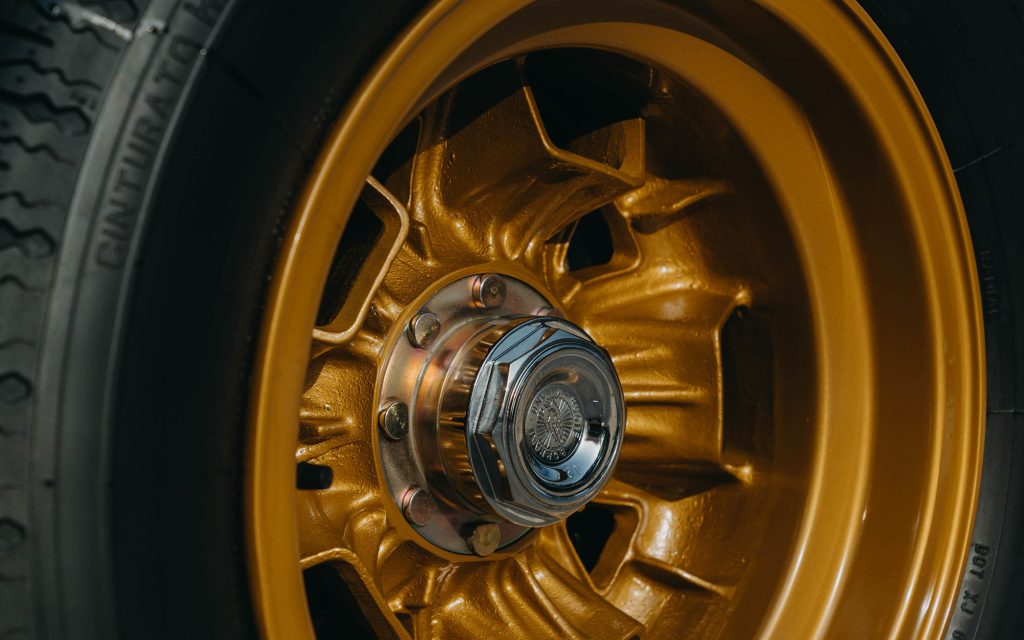
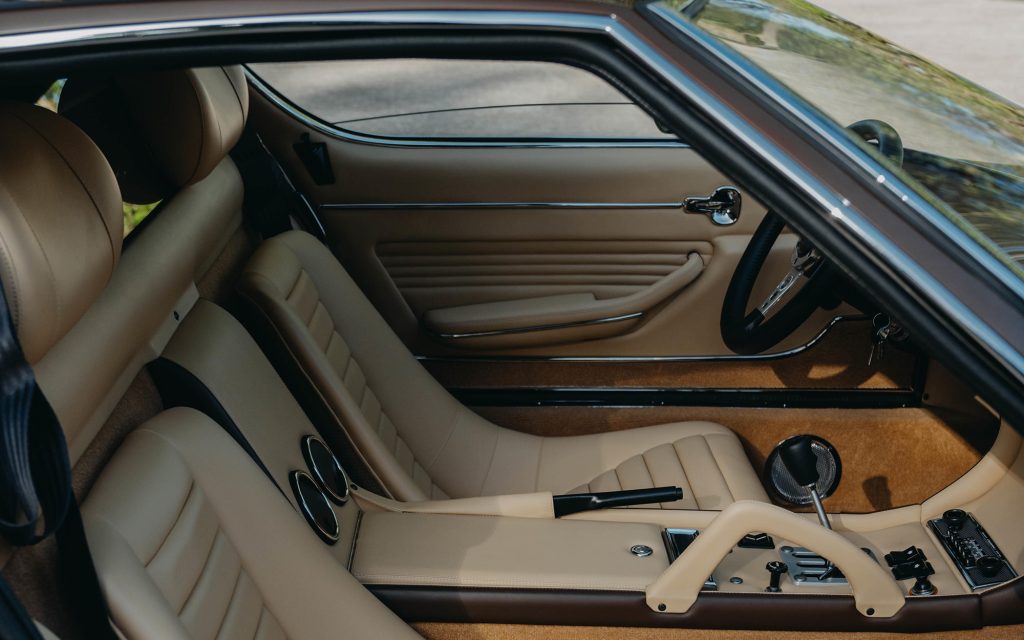
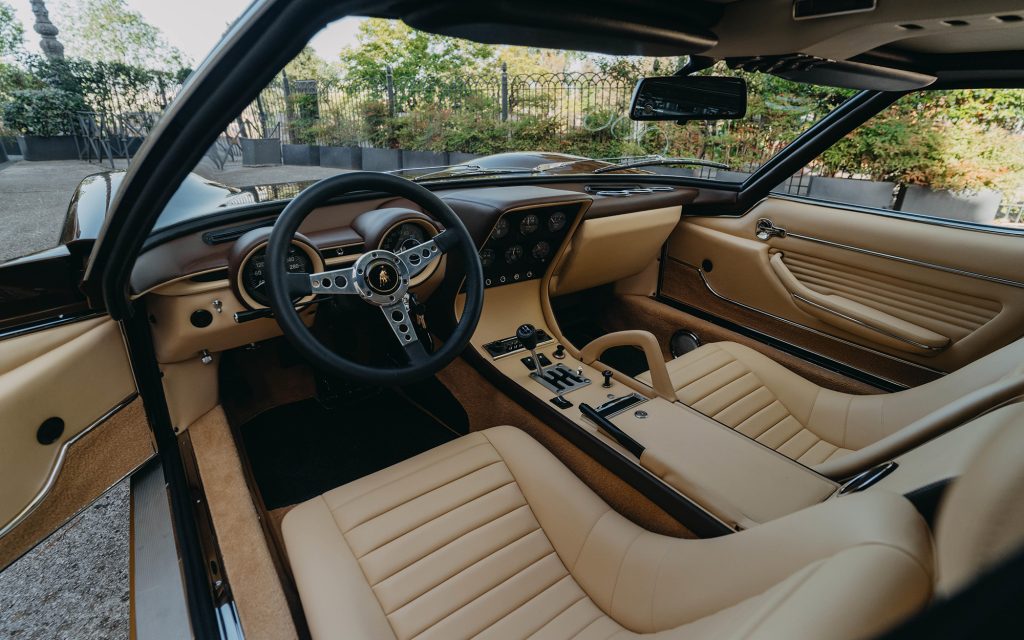
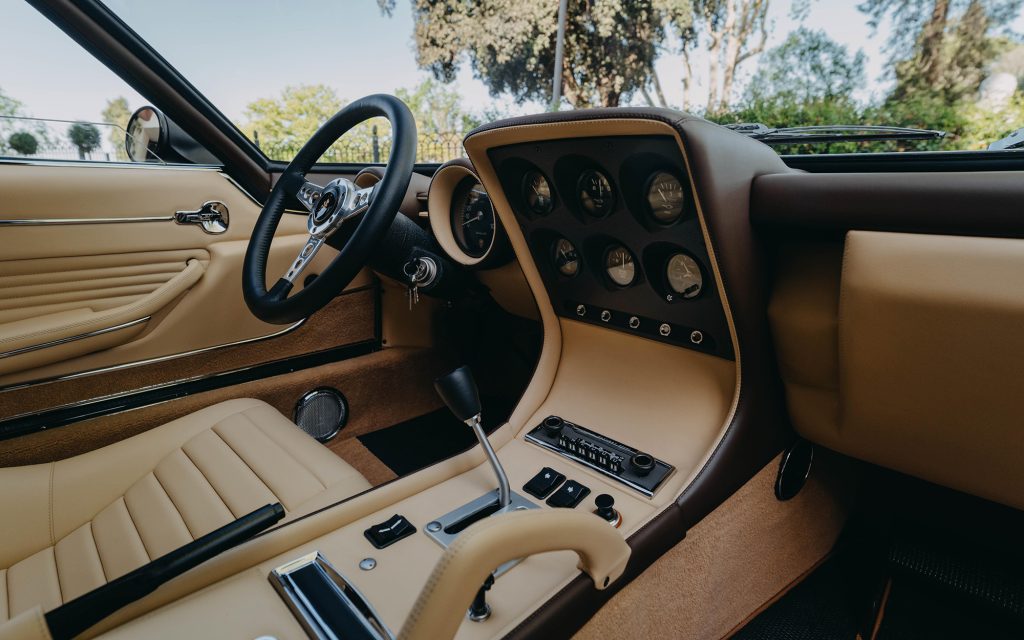
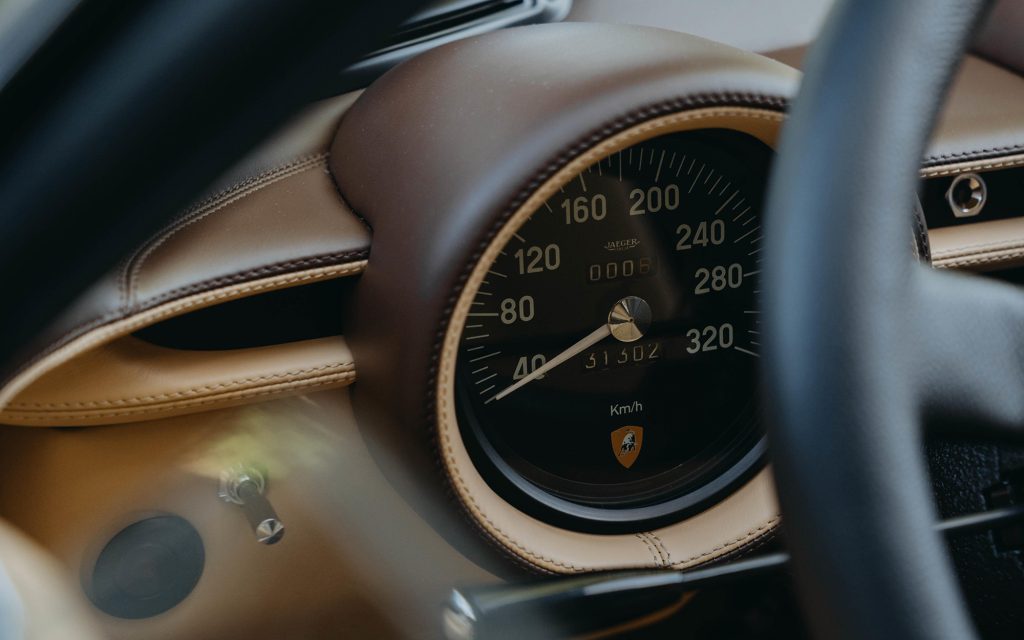
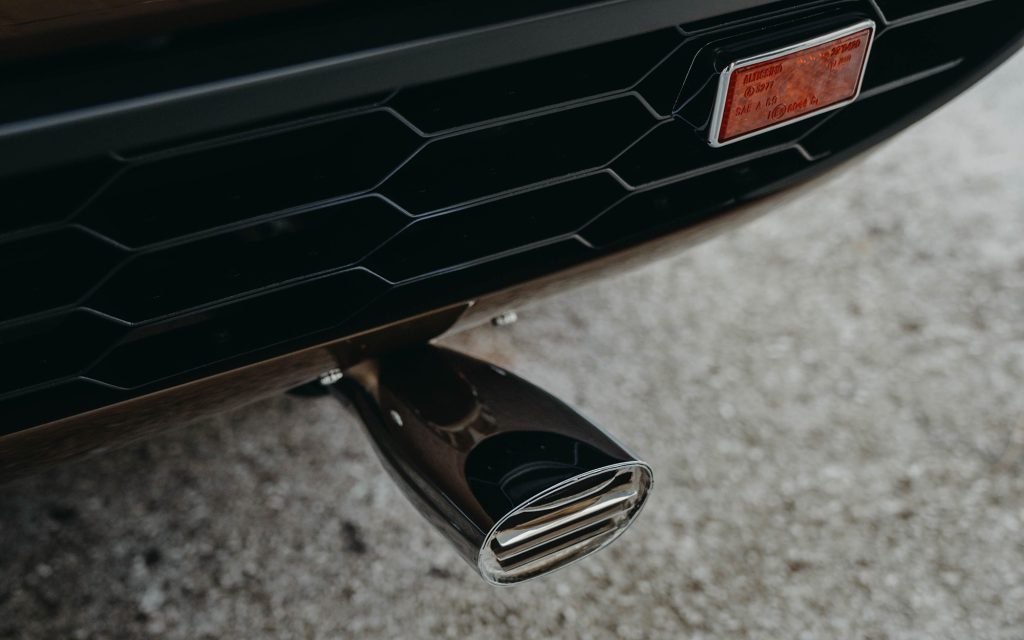
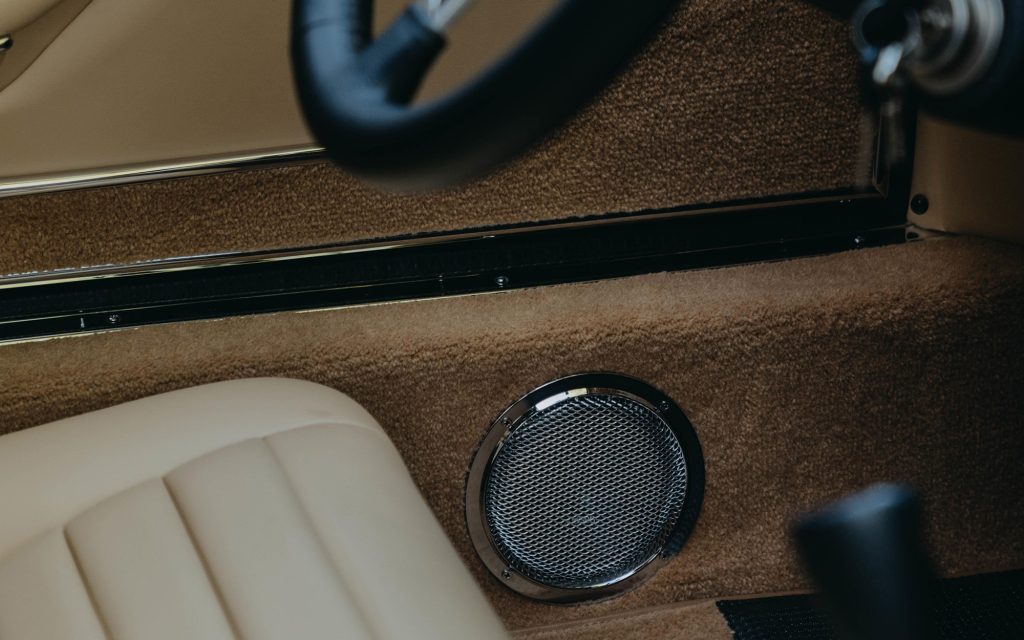
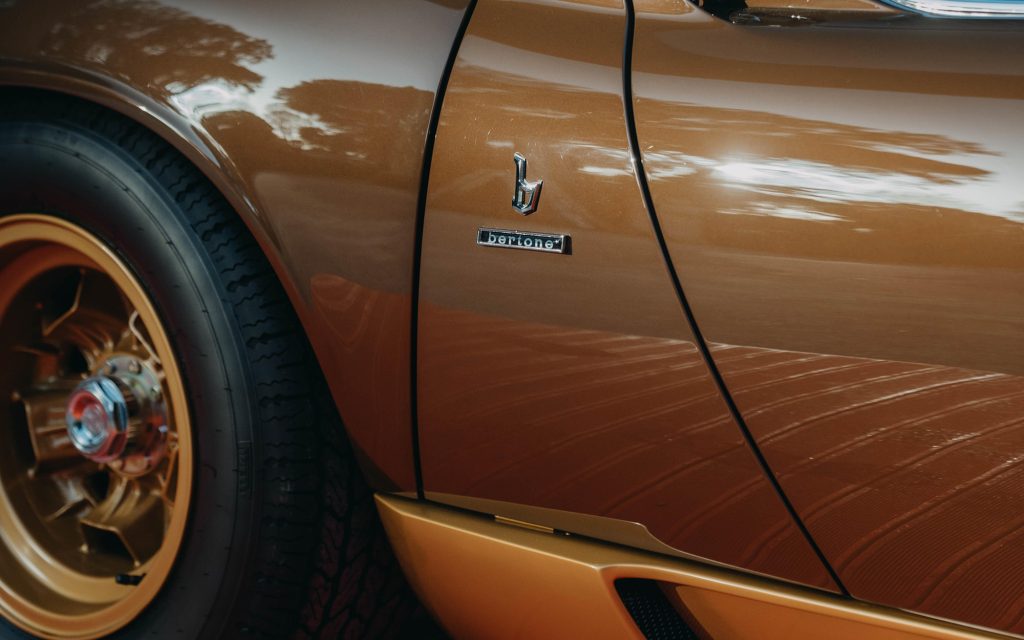
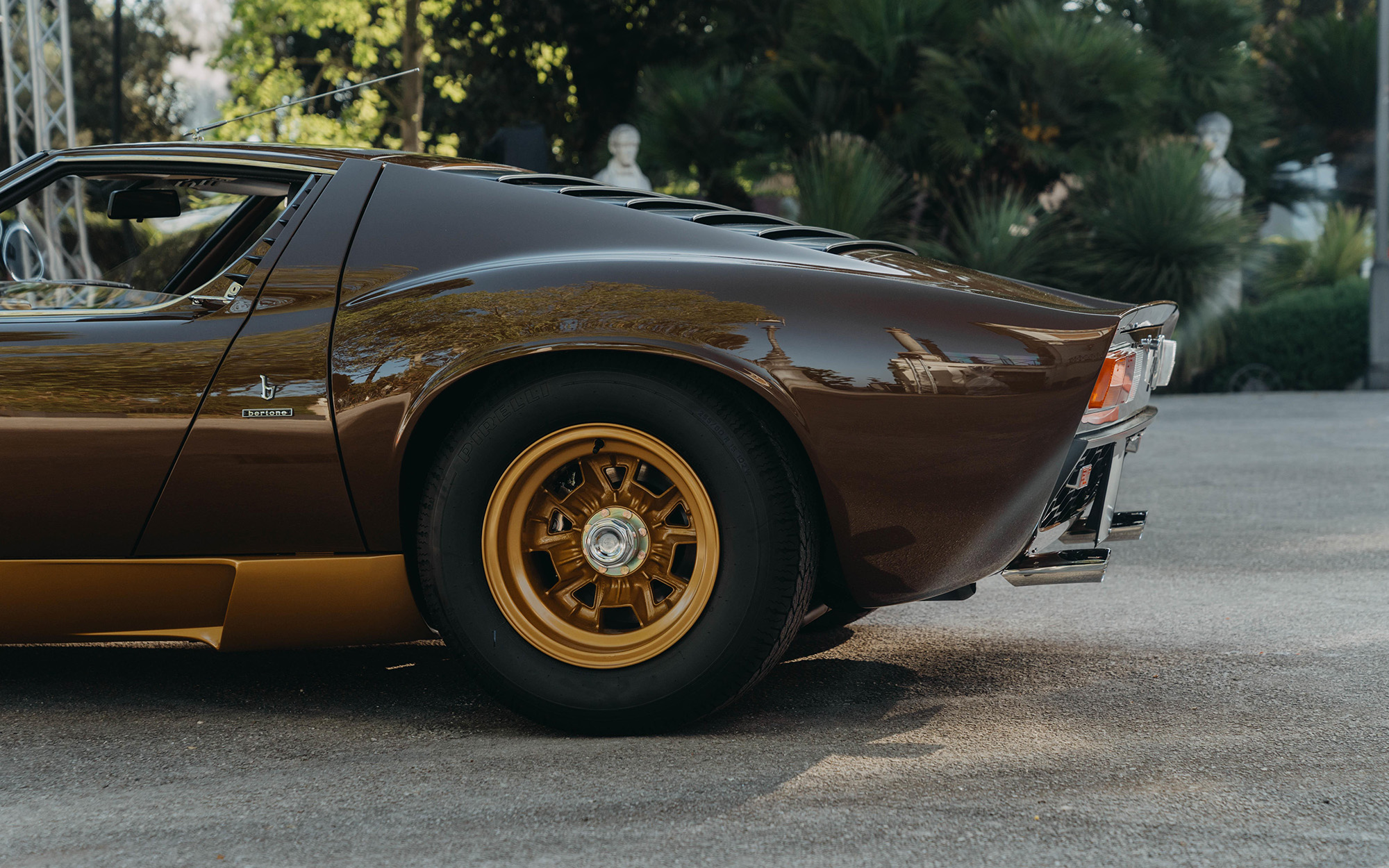
The work extended far beyond cosmetic correction. Exterior elements such as the front fender grilles, handle fins, and rear louvers were all returned to period-correct form, while signature touches like the octagonal center-lock hubs and “Bob Wallace”-style exhaust tips were reinstated. Inside, the cabin was reconfigured to reflect its original layout, including reinstated hazard lighting, a period-correct steering wheel, and the proper handbrake setup. Paintwork required its own research phase, ultimately restoring the car in “Luci del Bosco” brown over a “Senape” interior—an era-specific combination that evolved across Lamborghini models and required careful historical validation.
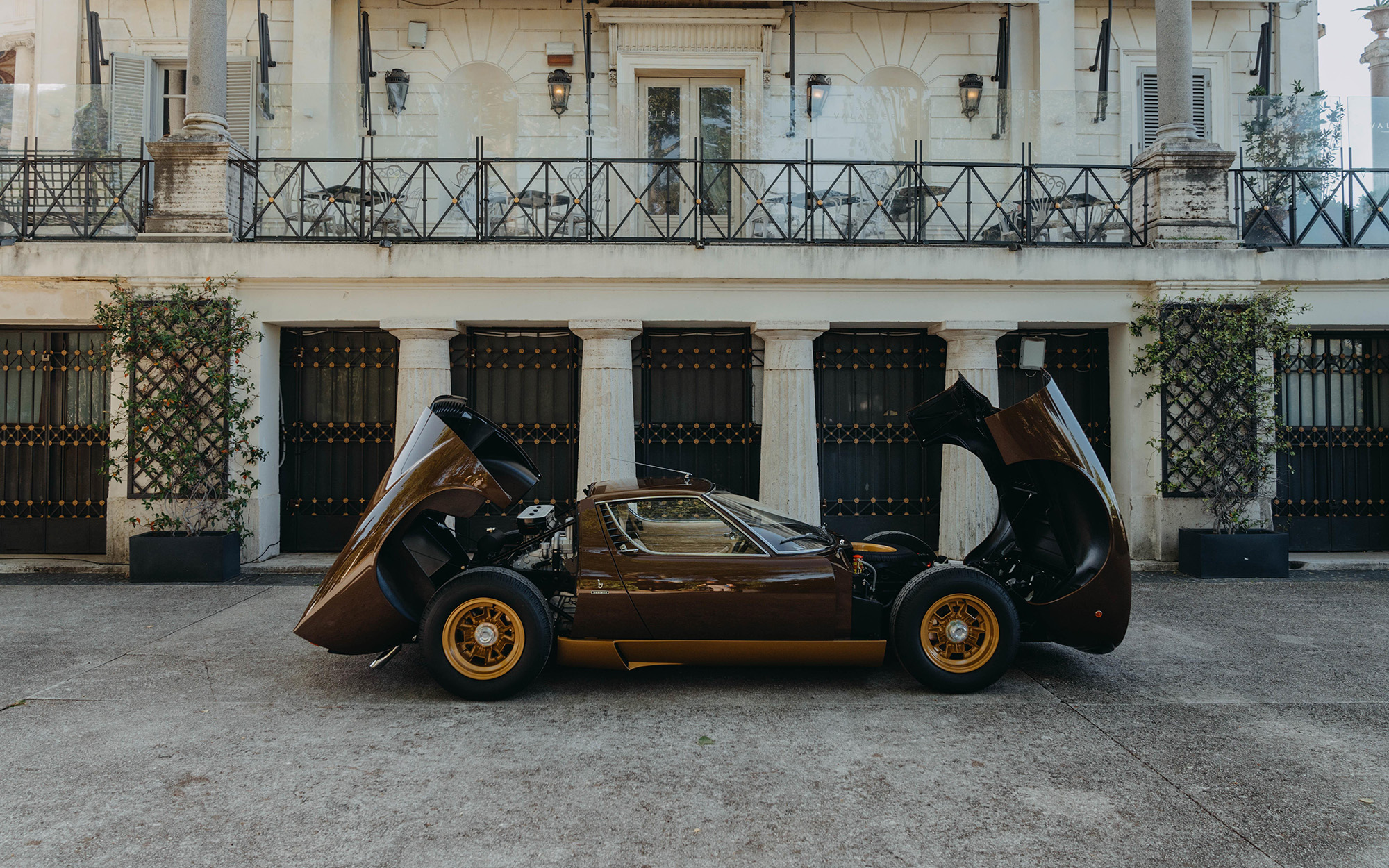
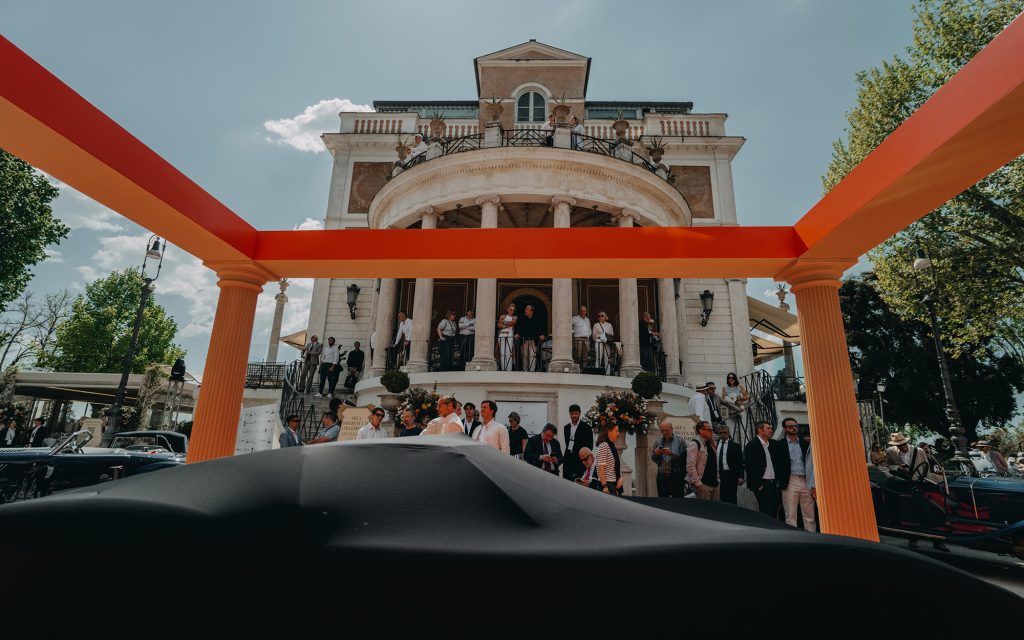
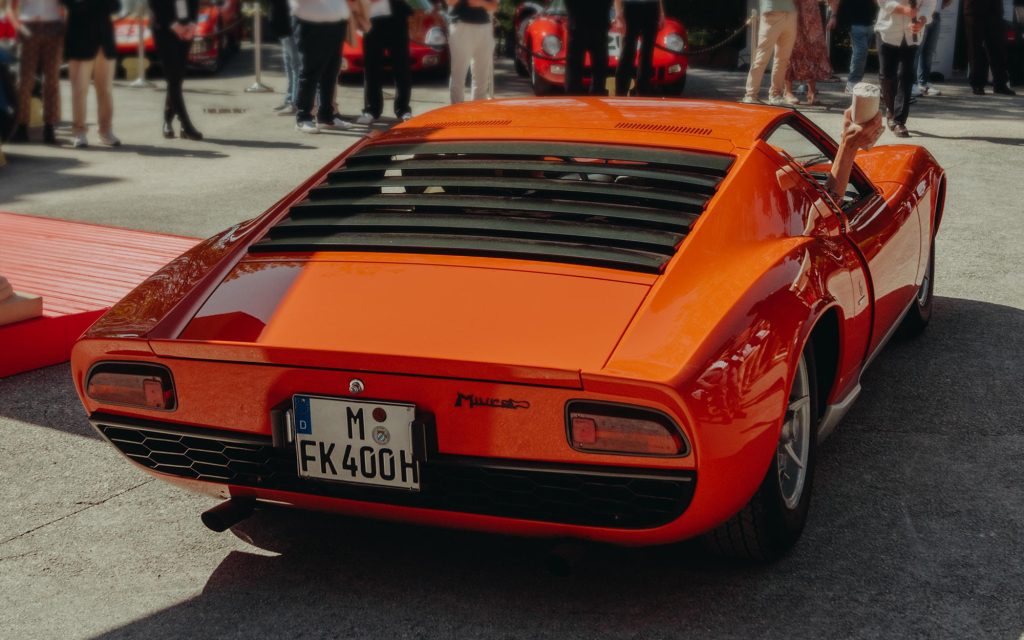
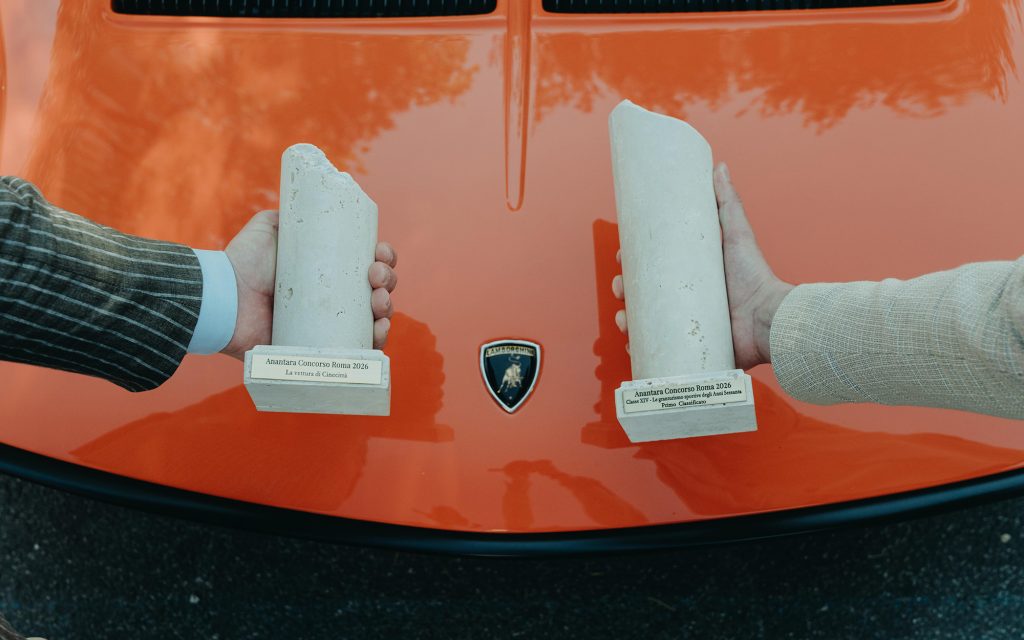
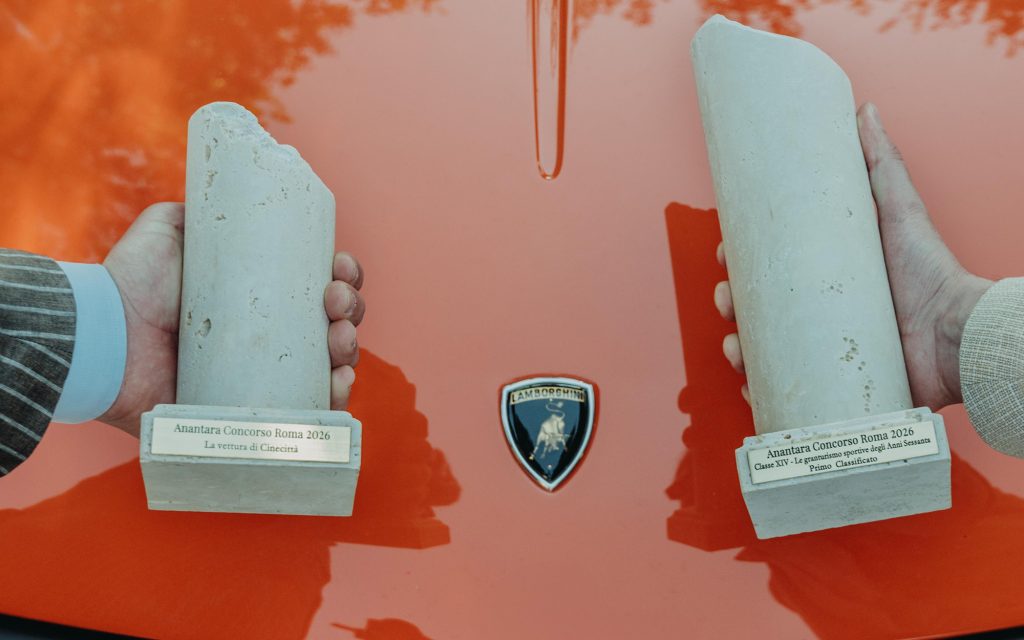
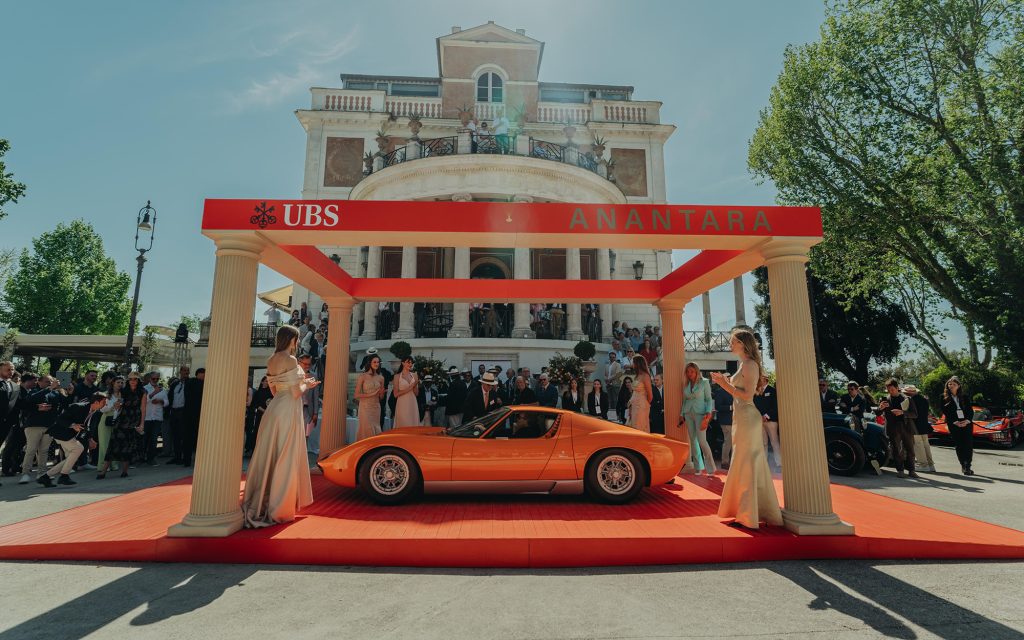
Set against Rome’s historic backdrop, Lamborghini’s presence extended beyond a single car. The restored Miura SV was joined by additional examples entered by private owners, including two Countach 25th Anniversary models and a Miura P400 famously linked to The Italian Job. That particular P400—long associated with one of cinema’s most iconic opening sequences—took top honors in its class and received a special award recognizing its cultural significance.
The broader message from Lamborghini was clear. As the Miura marks its 60th anniversary, the brand is continuing to lean into its origin story—not just as the creator of the modern supercar, but as a steward of its own legacy. Events like this allow Lamborghini to reinforce that position in front of collectors and clients, where authenticity and provenance increasingly carry as much weight as performance.
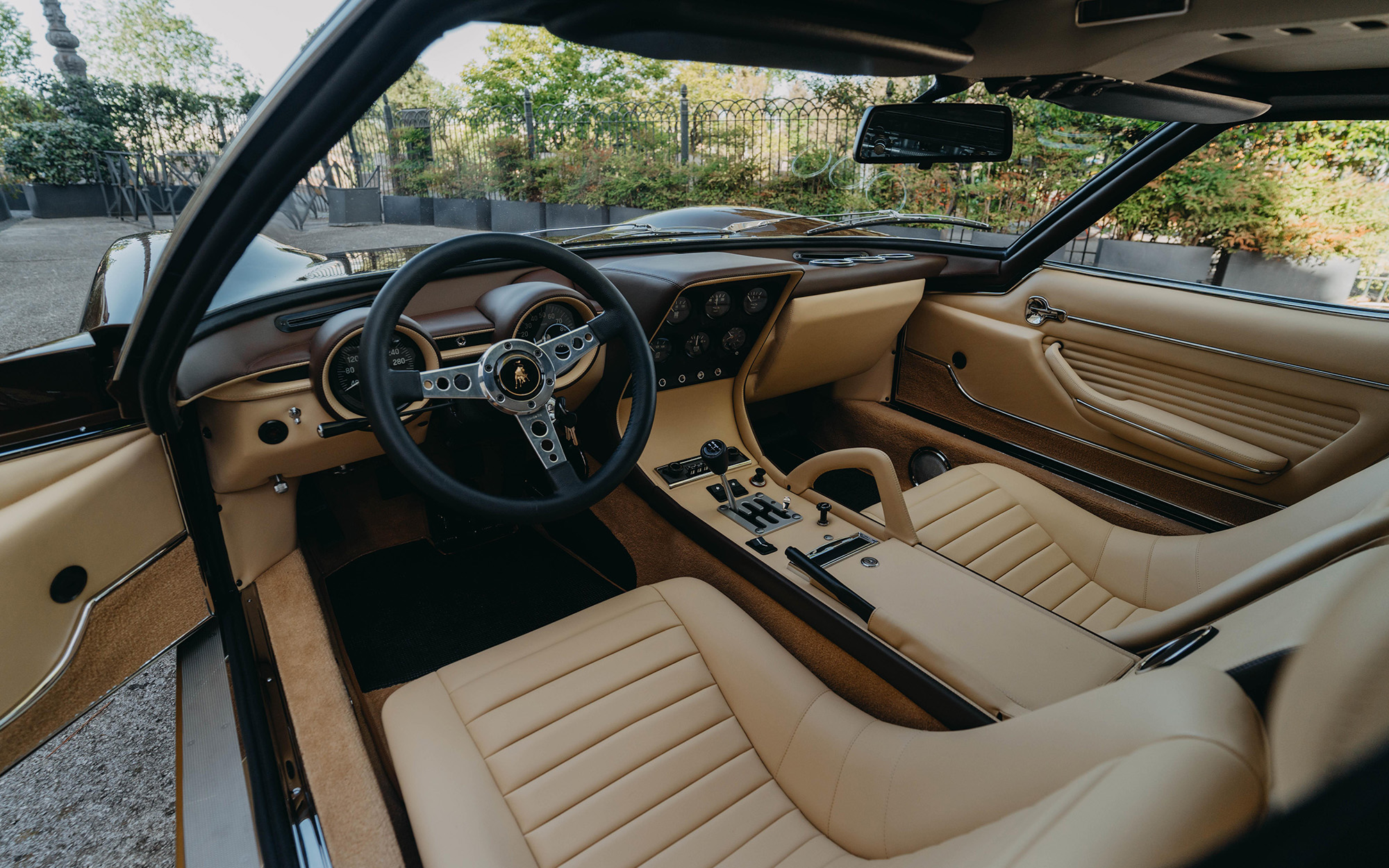
For Tailored Driver readers, it’s a reminder that restoration at this level isn’t about reinterpretation—it’s about precision. And increasingly, factory-backed heritage divisions like Polo Storico are the only ones with the documentation, parts access, and institutional knowledge to get it exactly right.