

Louis Vuitton and Singer have collaborated on two Porsche 911 commissions that combine Singer’s restoration work with Louis Vuitton’s experience in leather, luggage, watchmaking and travel goods.
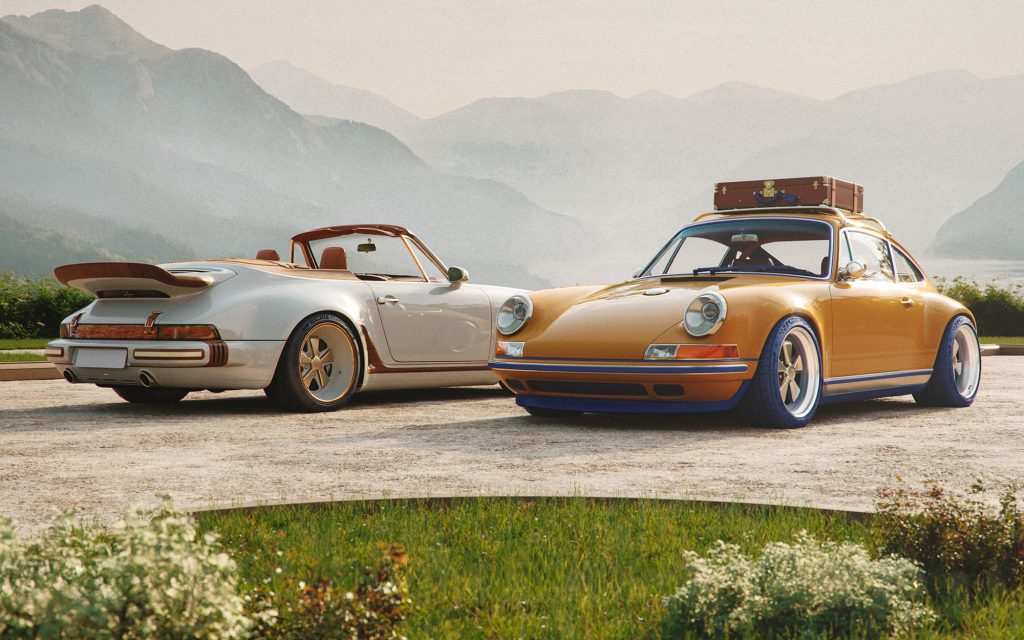
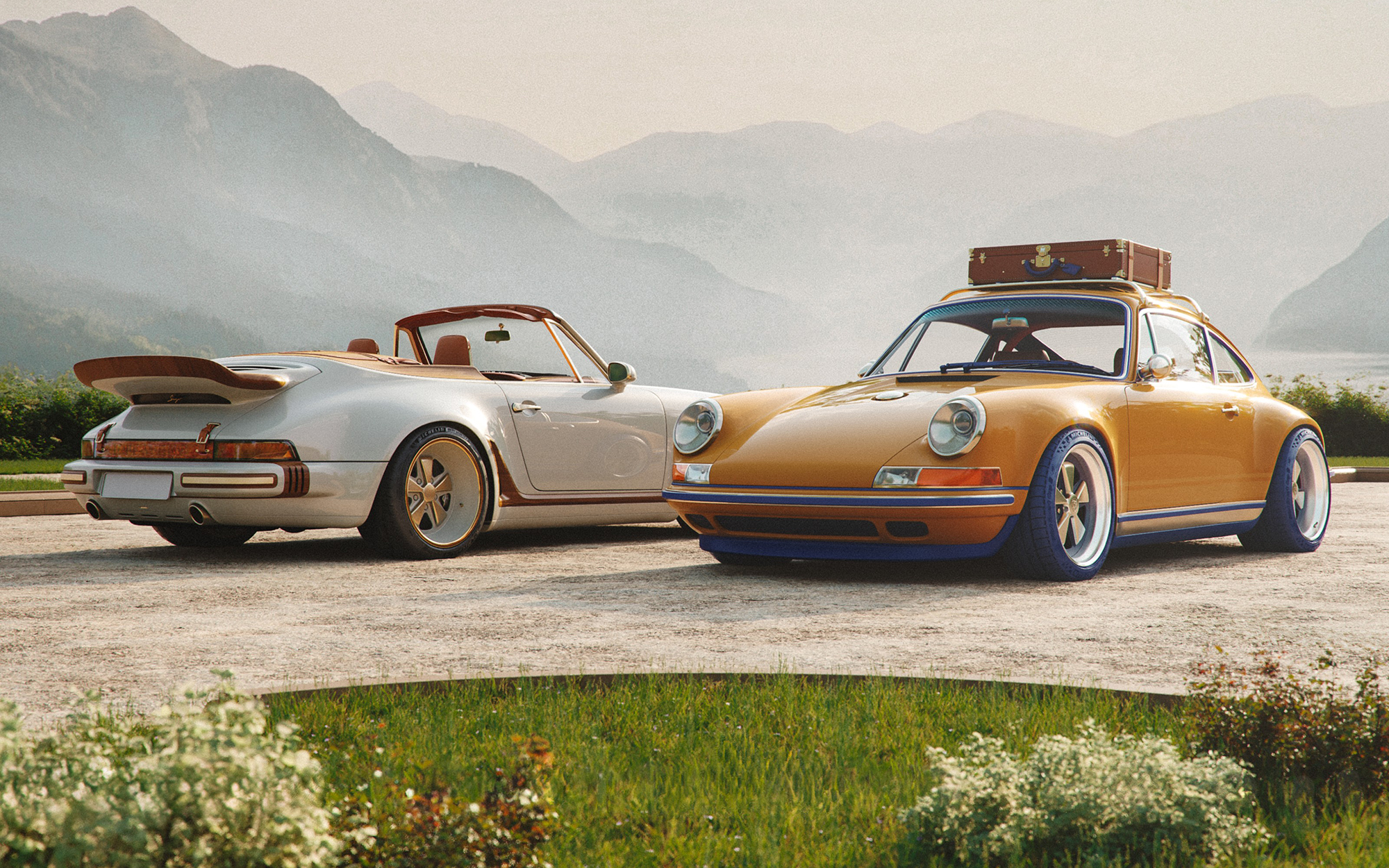
The project includes a Porsche 911 Reimagined by Singer – Classic and a Porsche 911 Reimagined by Singer – Classic Turbo. Both use Type 964-generation Porsche 911s as their foundations, but take distinctly different approaches to the Louis Vuitton theme.
The collaboration began with a considerably smaller project. Louis Vuitton was initially asked to develop a dashboard clock for a Singer restoration. Created by the company’s La Fabrique du Temps watchmaking operation in Switzerland, the detachable mechanical clock is based on the Louis Vuitton Tambour watch and can also be used separately as a desk clock.
That project subsequently expanded to include the instrumentation and ultimately much of the car. Louis Vuitton and Singer spent a year redesigning elements including the speedometer, tachometer and gauges around graphics derived from the Tambour.
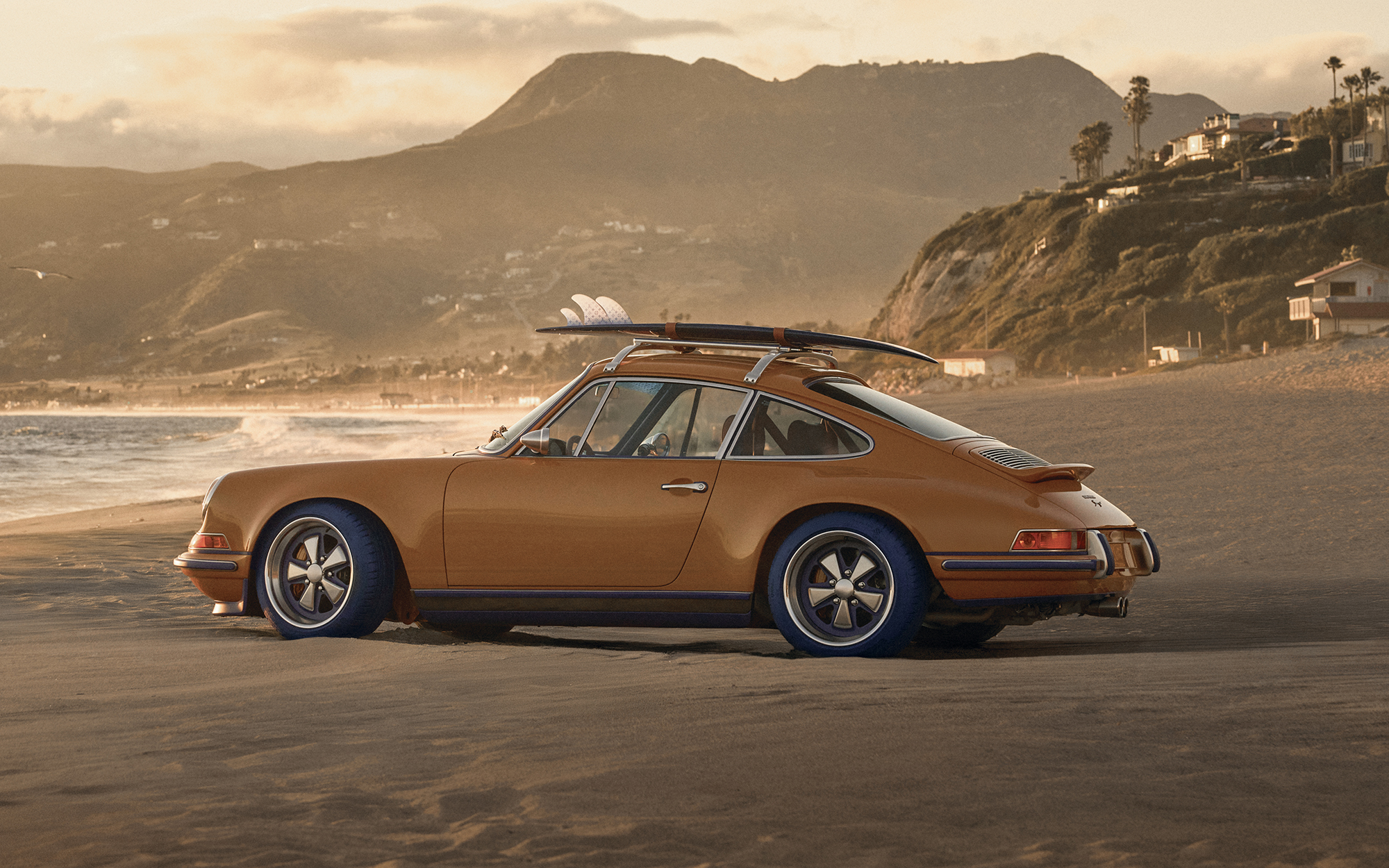
Porsche 911 Reimagined by Singer – Classic
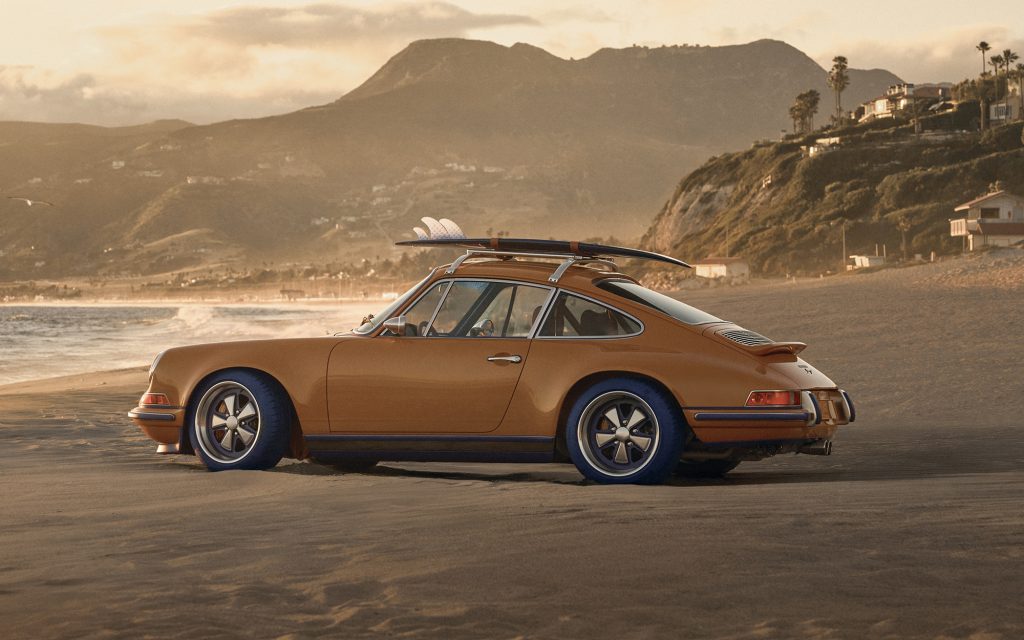
The first car is a naturally aspirated coupe finished in a combination of saffron, cobalt blue and yellow.
Saffron has been used by Louis Vuitton for more than a century and is also connected to the company’s packaging. The color additionally provides a link to Bahama Yellow, a color associated with some of Singer’s earlier commissions.
Louis Vuitton traces the saffron and cobalt combination to its automotive work as far back as 1924, when travel trunks created for Citroën incorporated cobalt blue interior reinforcements.
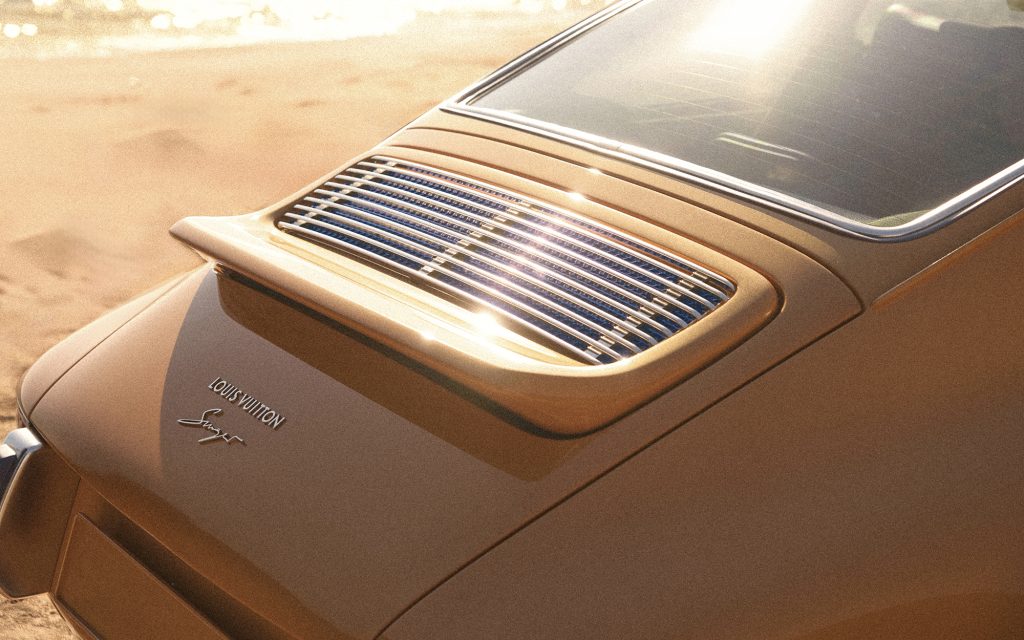
The Classic receives a carbon-fiber body and speed-activated rear wing, while the underlying mechanical specification includes a naturally aspirated 4.0-liter air-cooled flat-six, six-speed manual transmission, rear-wheel drive and carbon-ceramic brakes.
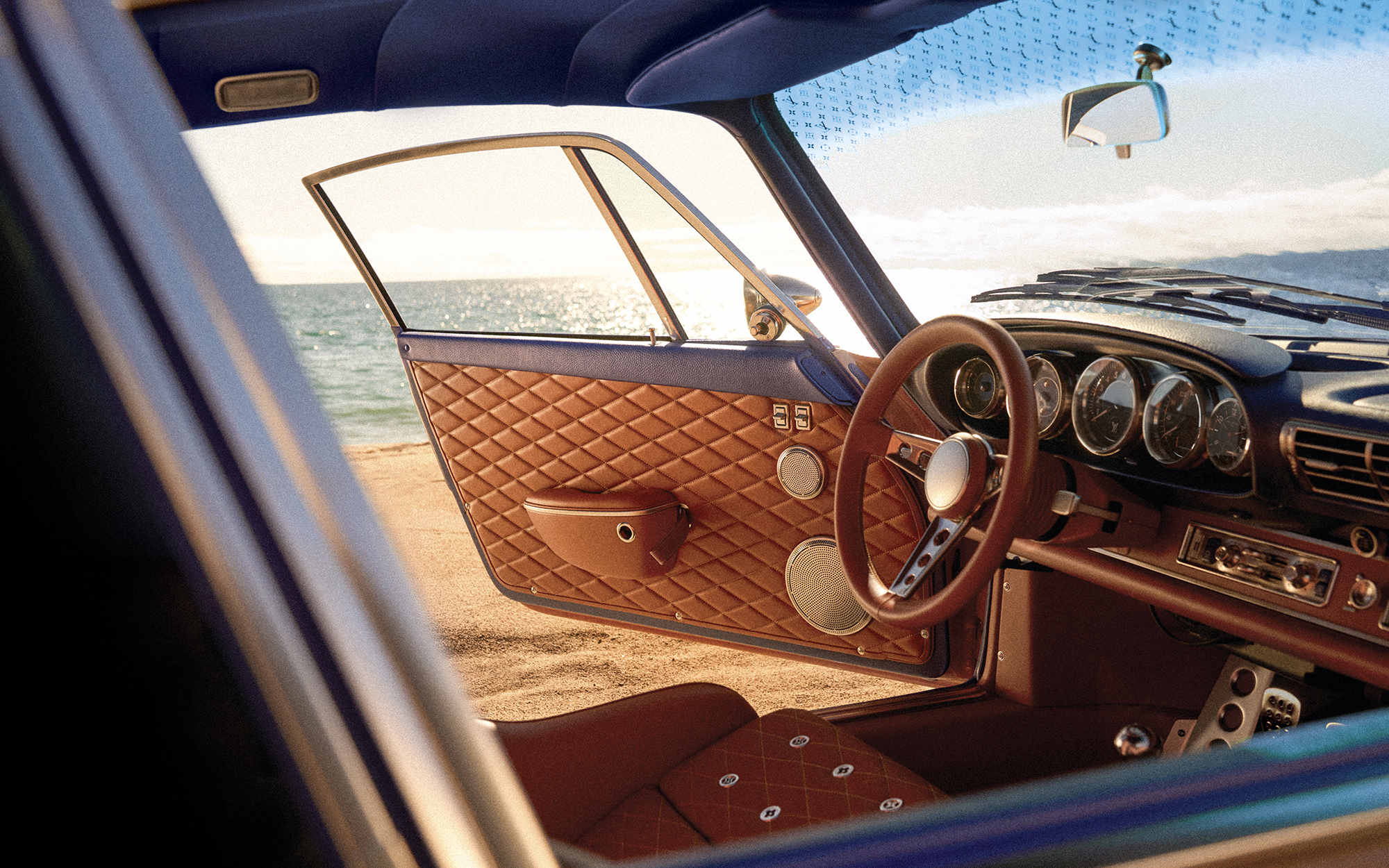
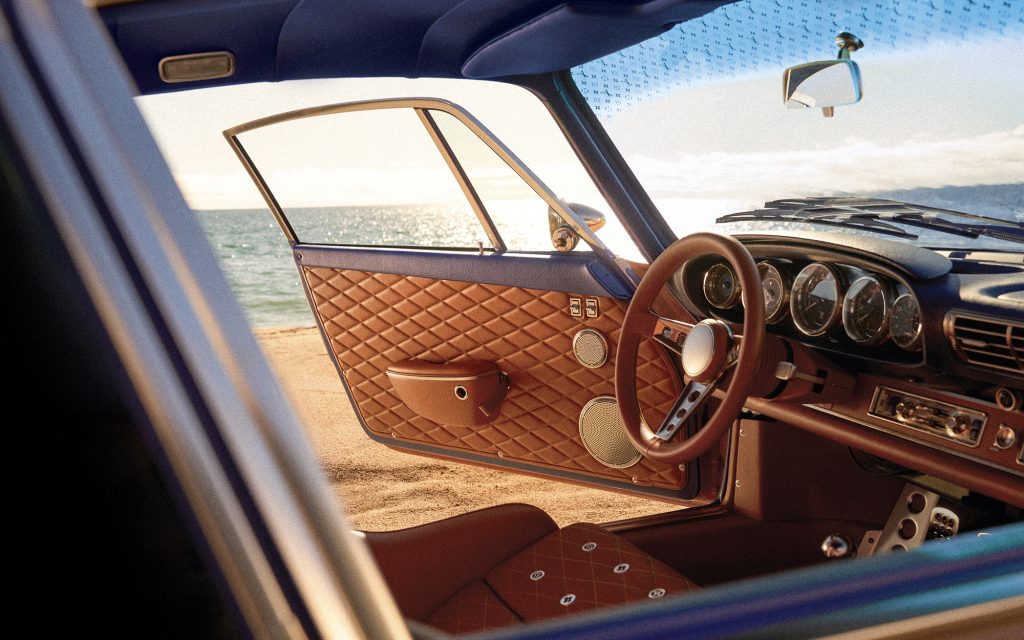
Inside, Louis Vuitton selected natural-colored leather inspired by the VVT leather traditionally used for its luggage and leather goods. Singer executed the upholstery, incorporating yellow stitching, hand-finished ventilation eyelets and a diamond-patterned treatment based on the malletage found inside Louis Vuitton trunks.
Many conventional plastic interior components have been replaced with metal pieces. Switches, knobs, locks, vents and pull tabs are individually finished using techniques more commonly associated with watchmaking.
The car also receives a purpose-designed roof rack capable of carrying bespoke luggage, skis or a Louis Vuitton surfboard. The latter is constructed from blond oak and walnut with Monogram marquetry.
Porsche 911 Reimagined by Singer – Classic Turbo
The second car takes a different direction.
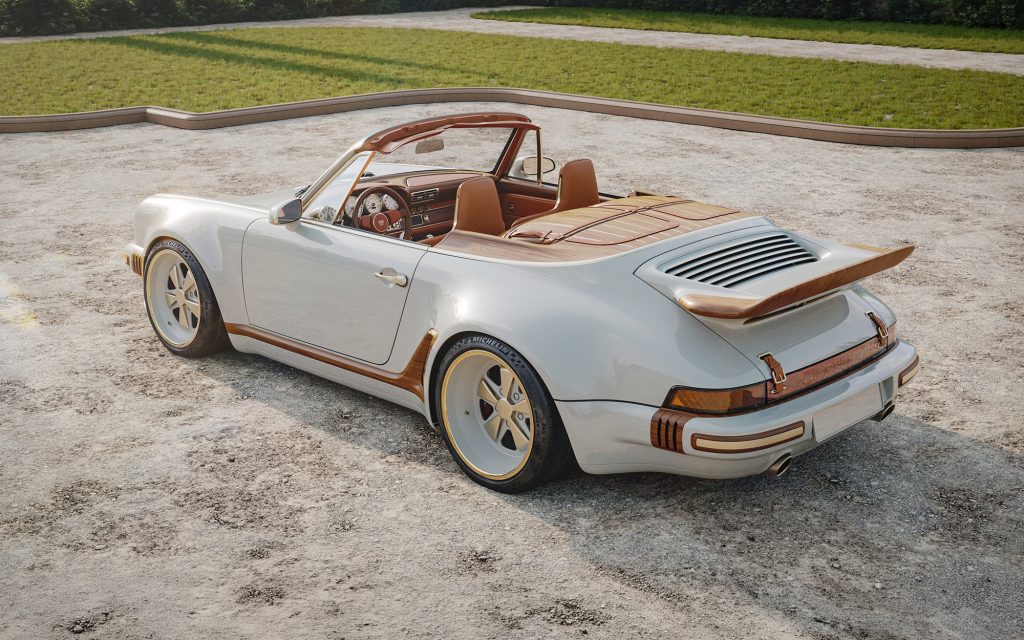
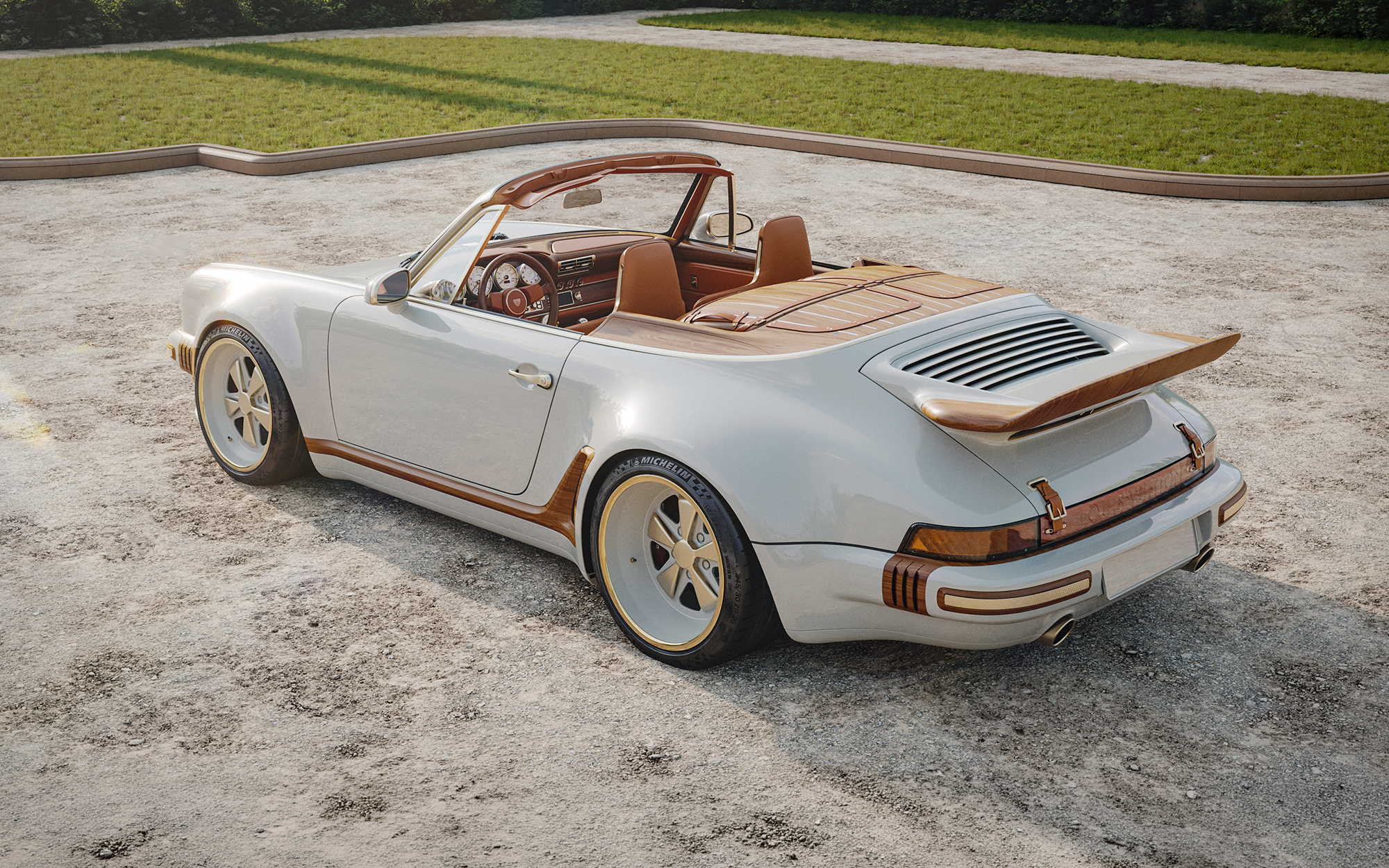
Based on Singer’s Classic Turbo services, the Cabriolet was conceived by Louis Vuitton Women’s Collections Artistic Director Nicolas Ghesquière. Its Calcaire Lutétien white exterior is paired with brown, gold, leather and wood details inspired in part by classic motorboats.
The Turbo Cabriolet uses a Type 964 chassis with carbon-fiber bodywork and a traditional whale-tail rear spoiler. Power comes from a 3.8-liter twin-turbocharged flat-six with air-to-water intercooling, paired with a six-speed manual transmission and rear-wheel drive. Carbon-ceramic brakes are again fitted.
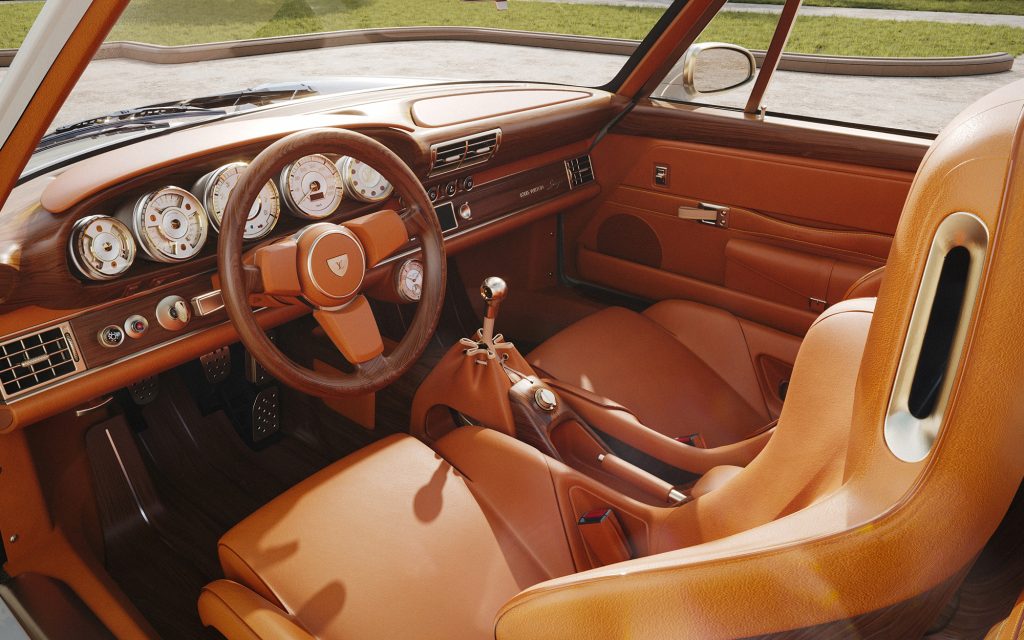
Wood is used extensively throughout the commission, including in the bumpers. Behind the seats is a varnished wooden luggage area constructed using techniques associated with runabout boat decks. Additional wood paneling appears in the engine compartment and front luggage area.
The front compartment houses a bespoke three-piece Louis Vuitton trunk, while leather straps secure the front and rear lids. The Cabriolet’s removable lightweight roof is also influenced by nautical design.
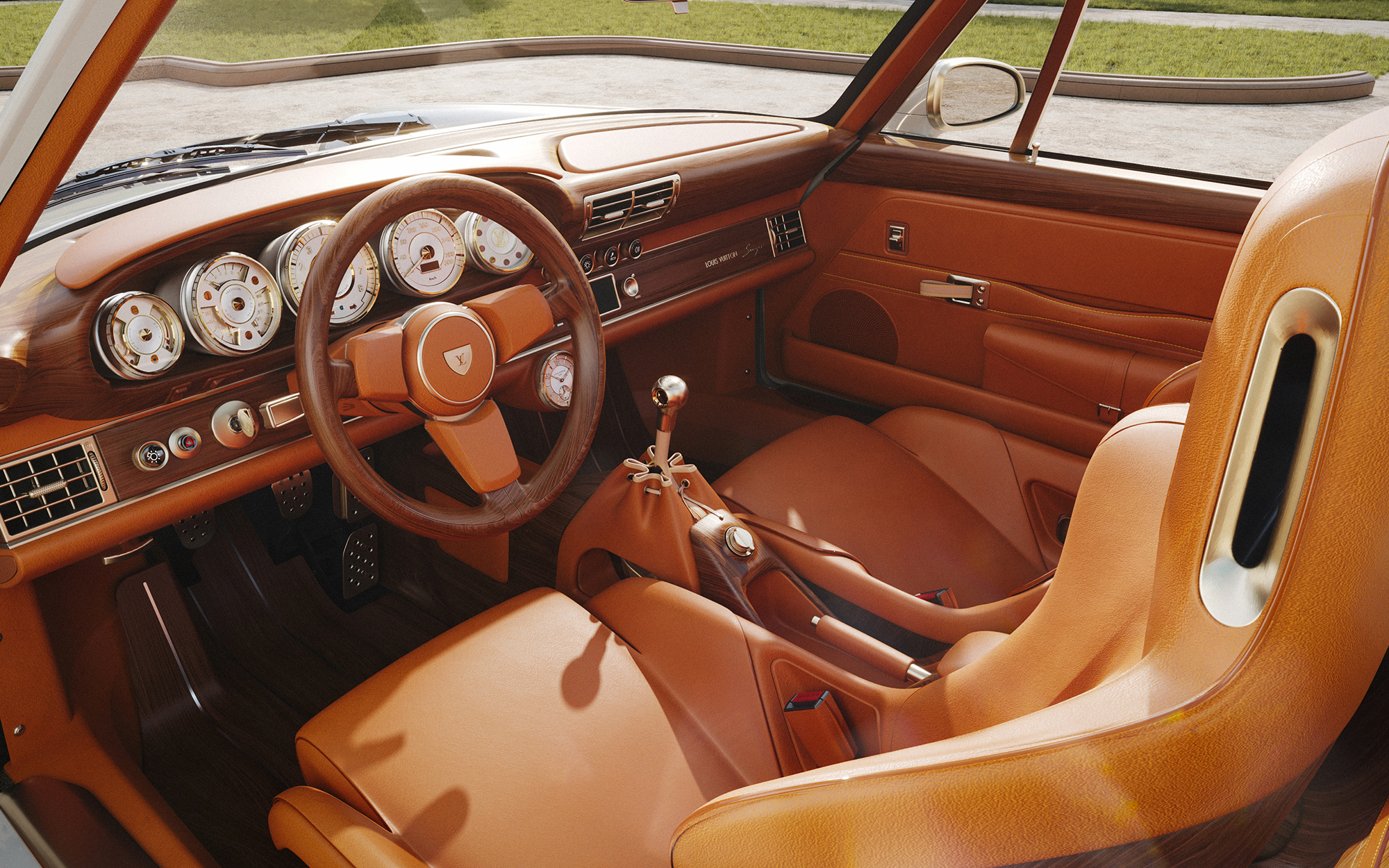
Its Tambour-derived dashboard clock is mounted prominently in the center console rather than within the instrument cluster. Gold-colored gauges, a matching ignition key and metal switchgear continue the theme, while the gearshift surround uses a natural leather drawstring inspired by Louis Vuitton’s Noé bag.
Both cars are accompanied by collections of bespoke Louis Vuitton accessories. The Classic receives fitted luggage, driving clothing, shoes, gloves, helmet, key cases, skis and surfboard. The Classic Turbo has its own coordinated luggage, clothing, driving accessories, helmet and a Tambour Automatic watch.
The collaboration also returns Louis Vuitton to an area with considerable precedent in its history. The company was producing automobile-specific trunks by the late 19th century and subsequently created fitted luggage and accessories for cars, organized concours and rallies and worked with manufacturers and coachbuilders on bespoke automotive projects.
The Singer project takes that relationship considerably further. According to Louis Vuitton, these are the first co-branded products it has created, while Singer says the collaboration is also a first for the California company.